
Huwwara, Za’tara (Tapuah)
Jurish, Huwwara
During our shift we conducted activities with the girls in Jurish and met the club’s coordinator, and Dalya led a circuit of the roads in the area, the long-established checkpoints and Huwwara for the new members.
Za’atara junction, 14:45 and 15:30 – There are no cars; we didn’t see any army personnel. Only on our way back to Tel Aviv did we see two soldiers there.
Jurish. We arrived at 15:00. Eight girls already awaited us, ready and eager. One of them, S., had been designated to substitute for the coordinator today and organized all that was needed intelligently and with charm.
The older women didn’t come because all morning they’d been preparing food for children in six schools – four in Jurish and two in Qusra.
We hadn’t come regularly in recent weeks and the girls were very happy to see us, and especially to see Sarah and Shosh, who teach English and yoga.
Shosh’s report: Eight girls came to the English class today, some for the first time; their English was very poor. In order to meet everyone’s needs Sarah will, in the future, teach them separately (before the yoga class). Today’s class dealt with basic forms, tenses, individual and group exercises and a short story. And, of course, a conversation. We talked about the war in Gaza. They wanted to know what Tel Aviv and Haifa look like; Shosh told them, and will also bring photos. One of the girls asked whether Israeli children were killed in Tel Aviv. One of them has relatives in Israel whom she’s unable to visit. The atmosphere in class was good, cheerful despite everything.
Sarah’s report: The yoga class practiced breathing exercises, standing positions and went through the usual exercises. Some of the girls have attended every class and are making very good progress. Others came yesterday for the first time but fit in quickly. Sarah feels it’s good they’re young and may be able to make yoga part of their lives. They all left smiling broadly.
We met with them all after the classes had ended. We began talking; various ideas came up, including inviting some of the girls to visit us in Tel Aviv – of course, with the permission of their parents, of the army and of the almighty.
The coordinator came to meet us at the end of the activity, even though she was tired. She told us about the women’s food project, their handicrafts for sale and their great need to contribute to family income. This time she also told us about difficulties the women faced, about opposition by some in the village to their initiatives. It’s not easy for them…
While the activities in the club were going on Dalya, Hadas, Nina and Dvorka toured the area to show it to the new members, demonstrate the main problems the occupation causes the Palestinians, and tell them about some of what we do during our shifts, and about the organization.
We stopped at the Huwwara checkpoint, passed the Za’tara checkpoint a few times, drove by the hitchhiking stations some of which were manned by soldiers and passed the Kifl Harith checkpoint.
Dalya recounted the history of each of the checkpoints, of Areas A, B and C, about water shortages on the West Bank, the apartheid roads, etc.
Huwwara. At 16:00 traffic to and from Nablus flows freely. There had apparently just been a shift change and a group of soldiers stood near the pillbox. There were two soldiers at the hitchhiking station at the plaza.
On our way back we saw a jeep on the road down to the town; we’d previously seen a jeep that’s almost always stationed at the entrance to Beita.
Za’tara junction, 17:45. Two soldiers walked around the area.
At the end of the shift although we were tired, we learnt about the food project run by the women and also about the handiwork the women make
Huwwara
See all reports for this place-
The Huwwara checkpoint is an internal checkpoint south of the city of Nablus, at the intersection of Roads 60 and 5077 (between the settlements of Bracha and Itamar). This checkpoint was one of the four permanent checkpoints that closed on Nablus (Beit Furik and Awarta checkpoints to the east and the Beit Iba checkpoint to the west). It was a pedestrian-only barrier. As MachsomWatch volunteers, we watched therre since 2001 two shifts a day - morning and noon, the thousands of Palestinians leaving Nablus and waiting for hours in queues to reach anywhere else in the West Bank, from the other side of the checkpoint the destination could only be reached by public transport. In early June 2009, as part of the easing of Palestinian traffic in the West Bank, the checkpoint was opened to vehicular traffic. The passage was free, with occasional military presence in the guard tower. Also, there were vehicle inspections from time to time. Since the massacre on 7.10.2023, the checkpoint has been closed to Palestinians.
On February 26, 2023, about 400 settlers attacked the town's residents for 5 hours and set fire to property, such as houses and cars. Disturbances occurred in response to a shooting of two Jewish residents of Har Bracha by a Palestinian Terrorist. The soldiers stationed in the town did not prevent the arson and rescued Palestinian families from their homes only after they were set on fire. No one was punished and Finance Minister Smotrich stated that "the State of Israel should wipe out Hawara." Left and center organizations organized solidarity demonstrations and support actions for the residents of Hawara.Hawara continued to be in the headlines in all the months that followed: more pogroms by the settlers, attacks by Palestinians and a massive presence of the army in the town. It amounted to a de facto curfew of commerce and life in the center of the city. On October 5, 2023, MK Zvi established a Sukkah in the center of Hawara and hundreds of settlers backed the army blocked the main road and held prayers in the heart of the town all night and the next day. On Saturday, October 7, 23 The "Swords of Iron" war began with an attack by Hamas on settlements surrounding Gaza in the face of a poor presence of the IDF. Much criticism has been made of the withdrawal of military forces from the area surrounding Gaza and their placement in the West Bank, and in the Hawara and Samaria region in particular, as a shield for the settlers who were taking over and rioting.
On November 12, 2023, the first section of the Hawara bypass road intended for Israeli traffic only was opened. In this way, the settlers can bypass the road that goes through the center of Hawara, which is the main artery for traffic from the Nablus area to Ramallah and the south of the West Bank. For the construction of the road, the Civil Administration expropriated 406 dunams of private land belonging to Palestinians from the nearby villages. The settlers are not satisfied with this at the moment, and demand to also travel through Hawara itself in order to demonstrate presence and control.(updated November 2023)
.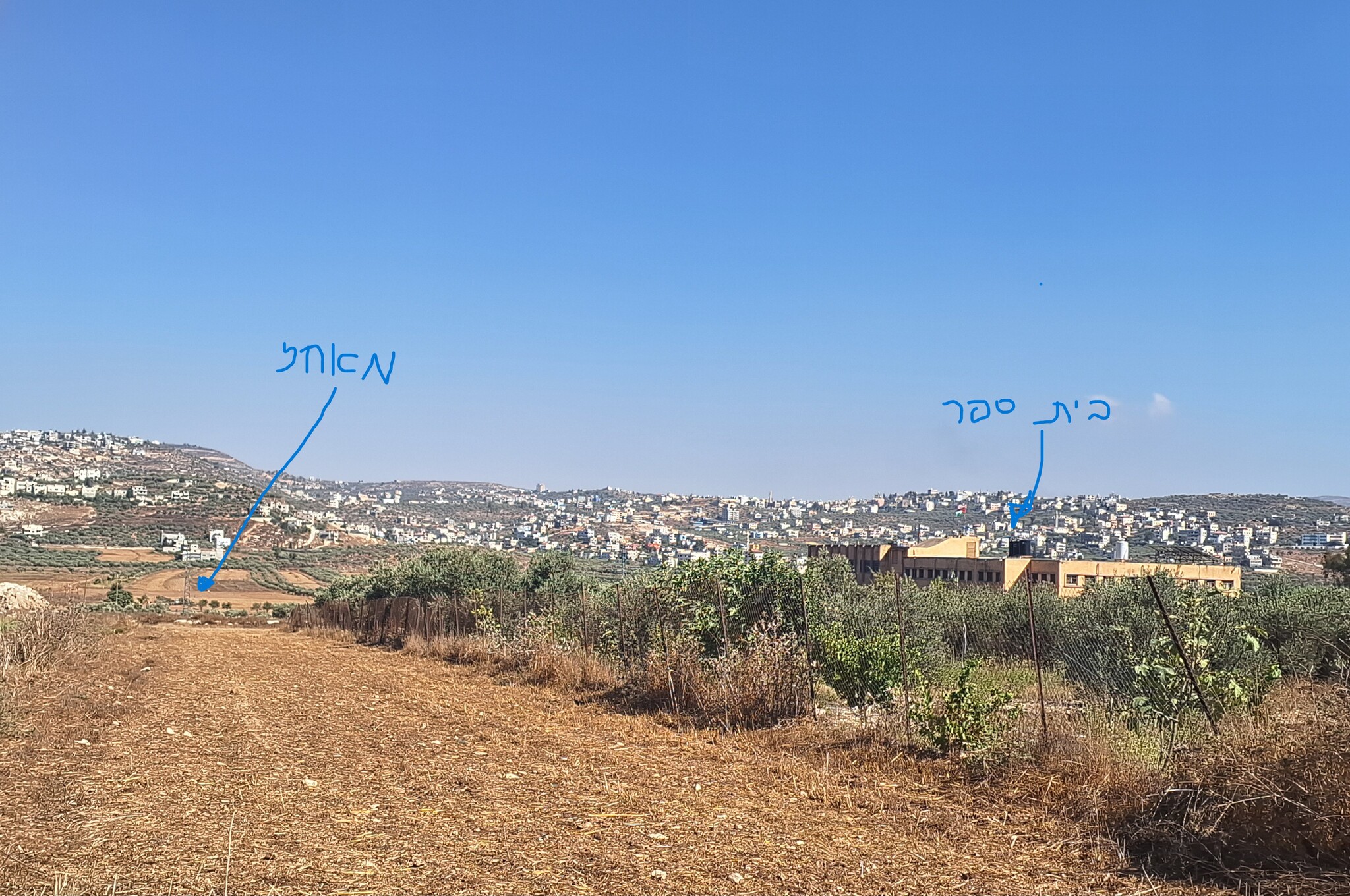 Ronit Dahan-RamatiAug-24-2026Huwara: The school on the outskirts of town and an outpost hidden among the trees
-
Za'tara (Tapuah)
See all reports for this place-
Za'tara (Tapuah) Za'tara is an internal checkpoint in the heart of the West Bank, at the intersection of Road 60 and Road 505 (Trans-Samaria), east of the Tapuah settlement. This checkpoint is the "border" marked by the IDF between the north and south of the West Bank, in accordance with the policy of separation between the two parts of the West Bank that has been in place since December 2005. At the Za'tara checkpoint, there are separate routes for Israelis and Palestinians. In the route for Israelis, there are no inspections and the route for Palestinians inspects. The queue lengthens and shortens suits. The checkpoint is open 24 hours a day. The checkpoint is partially staffed and the people who pass through it are checked at random.
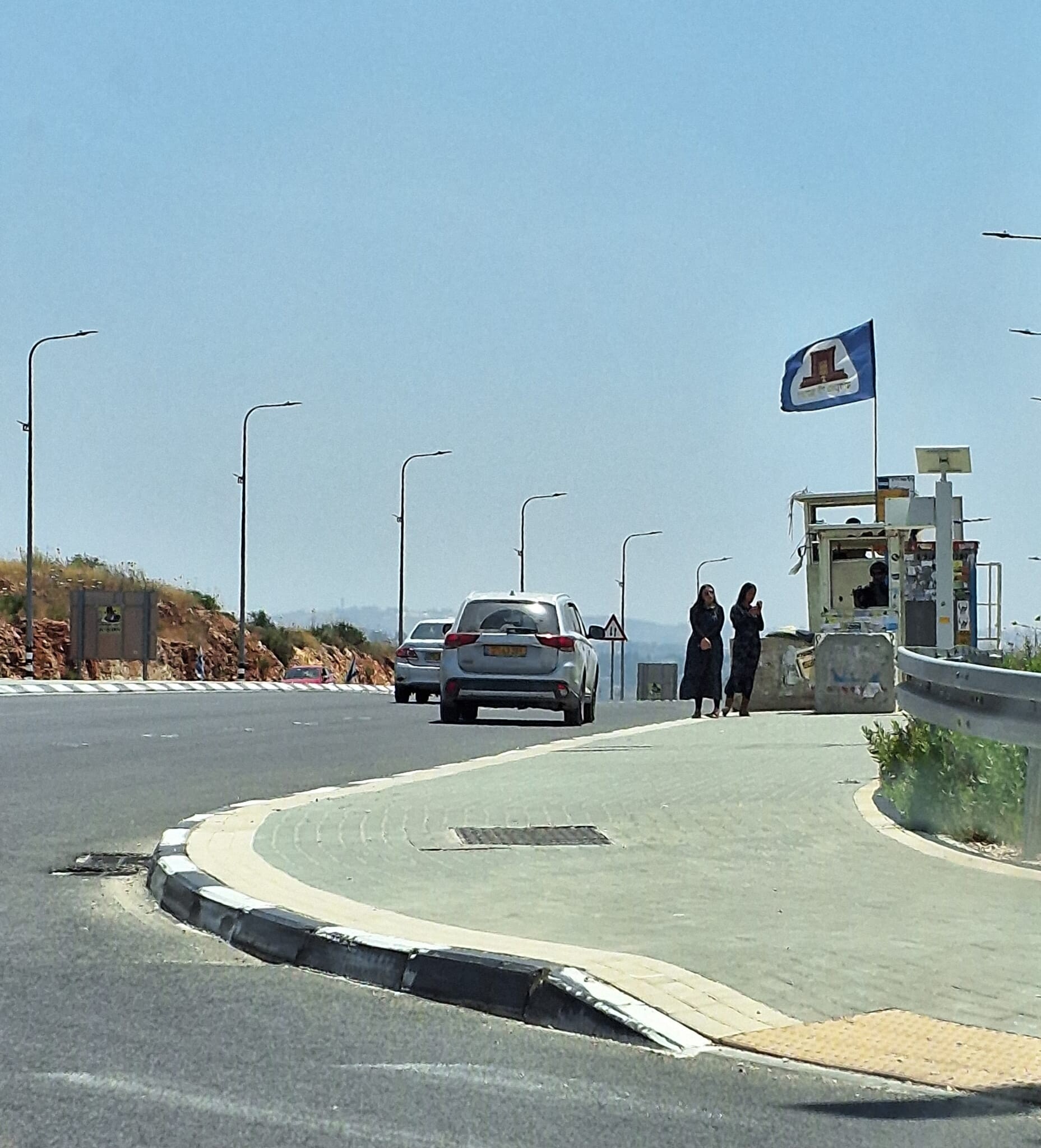 Ronit Dahan-RamatiJun-9-2026Za'atara (Tapuach Junction). The Temple Flag Above a Station
-
