Jordan Valley
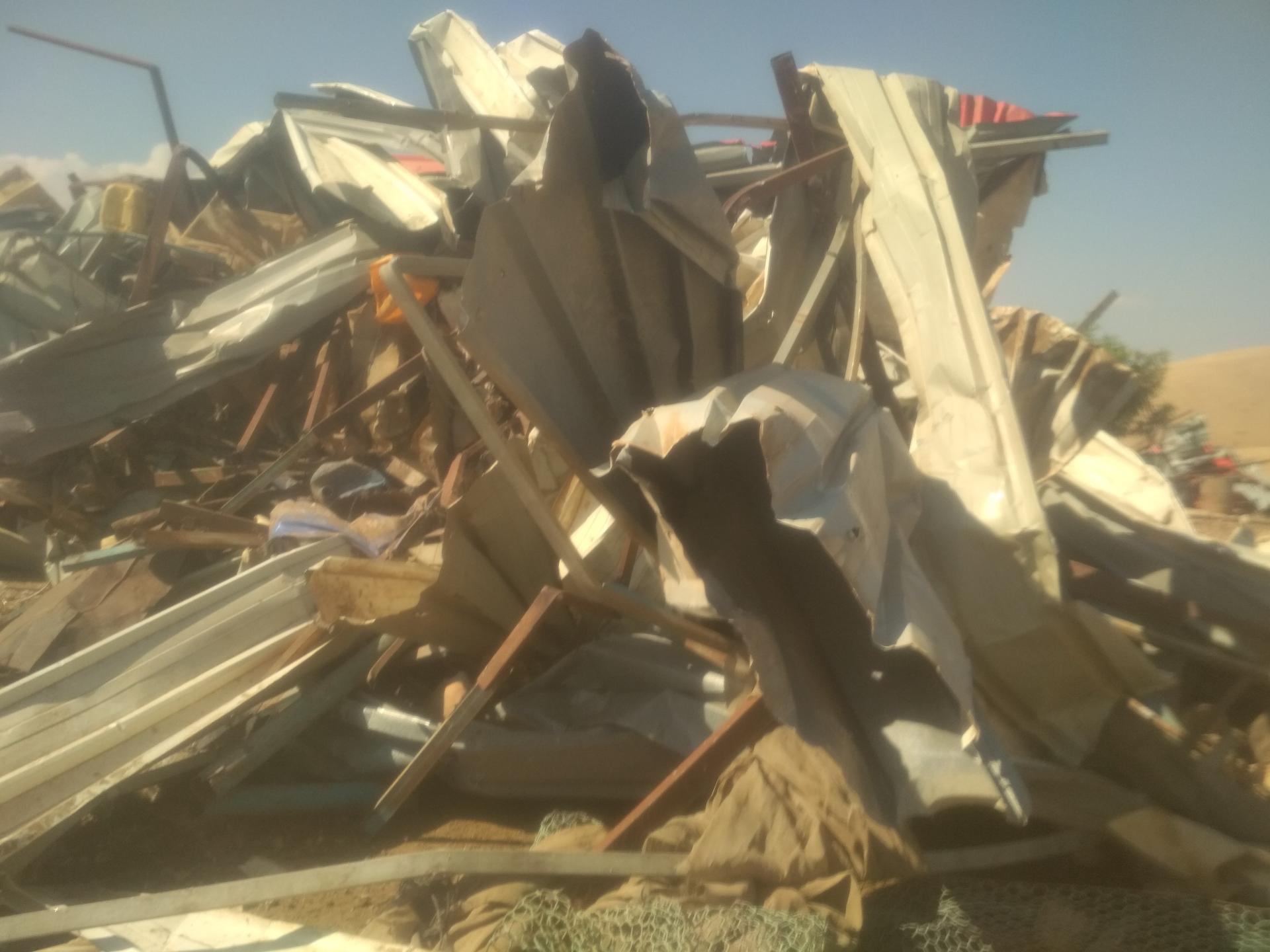
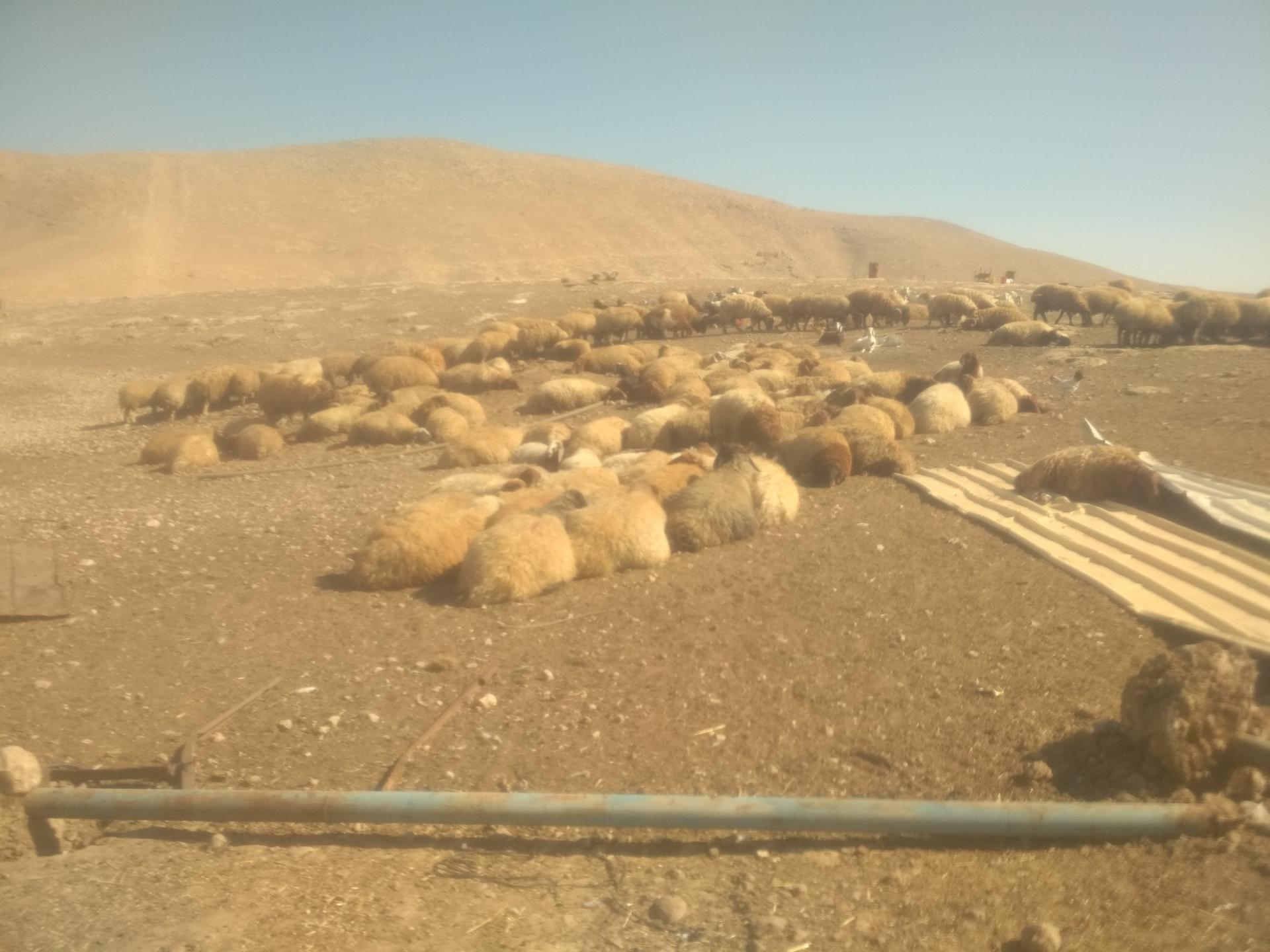
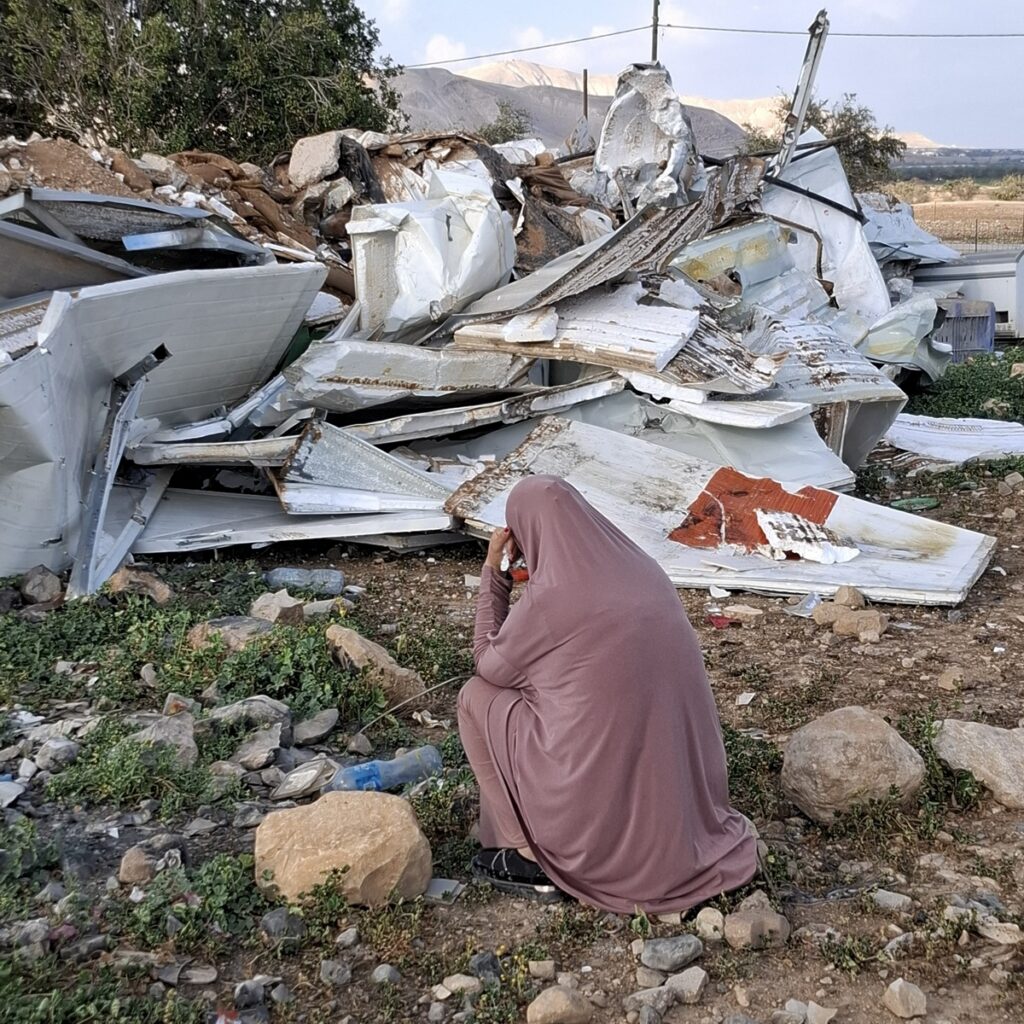
Last Thursday the army demolished the Umar ‘Araf Bisharat family’s encampment in Khadeida, home to four adults and six children. The army also demolished the sheepfolds sheltering the sheep from which they made a living. On the same day the army also demolished five more encampments in Jiftlik village.
The following day Ta’ayush volunteers arrived to support the family in Khadeida and do what they could to help. The army blocked their access. The Palestinian neighbors who also sought to help were also blocked.
That day police arrested three Ta’ayush activists (Guy, Aviv and Shirley) and detained them, handcuffed, for eight hours at the Ariel police station. The basis for the detention isn’t clear. They were released at 22:00 and two were issued an order prohibiting them from being in the area for 15 days. That’s one more aggressive step in the campaign to remove peace and human rights activists, and particularly Ta’ayush, from the Jordan Valley.
We drove to visit the family in Khedeida. We saw no soldiers and no one hindered us. The women we visited were reluctant initially to have contact with us because they feared the army would follow and again blockade them, as it did yesterday. But that didn’t happen. Perhaps because it’s Saturday and the soldiers are on leave.
They told us that on Thursday at 08:00 the soldiers arrived with the bulldozer and told them they had one hour to remove what they could from the tents. “To remove” means to place their belongings out in the open. And then, before their eyes, the soldiers demolished all the tents and sheepfolds and then left. Where their homes had stood was now bare earth, their “property” piled alongside. As usual, no one from the Civil Administration had been in contact with them regarding where and how they’d now live. A family of ten people and the flock from which they made a living.
This is important: Almost every family of shepherds in the Jordan Valley is in daily danger of having its home demolished. Demolition orders have been issued to most of them. Some are being contested, others have been made final. The legal basis includes: the homes are in a “firing zone” (approximately 50 percent of land in the Jordan Valley has been declared a “firing zone); the buildings and sheepfolds are “illegal construction.” Since 1967 the Civil Administration has approved less than 5% of the applications by Palestinians for building permits in Area C. They usually don’t apply because they already know what the answer will be. In other words, everything that’s been built in the past fifty years is illegal construction.
Of course, none of that applies to Jews living in the settlements. There are also a number of “outposts” in the region which the state has declared illegal but which no one dares move against. We saw what happened in Amona.
We didn’t manage to reach the demolished structures in Jiftlik.
11:00 Za’tara checkpoint. A soldier standing in the emplacement facing Huwwara. We didn’t see any detained Palestinian vehicles.
13:45 Two soldiers stationed at each exit from the traffic circle, inspecting Palestinian vehicles.
No activity at the other checkpoints.
Jordan Valley
See all reports for this place-
Jordan Valley The Jordan Valley is the eastern strip of the West Bank. Its area consists of almost a third of the West Bank area. About 10,000 settlers live there, about 65,000 Palestinian residents in the villages and towns. In addition, about 15,000 are scattered in small shepherd communities. These communities are living in severe distress because of two types of harassment: the military declaring some of their living areas, as fire zones, evicting them for long hours from their residence to the scorching heat of the summer and the bitter cold of the winter. The other type is abuse by rioters who cling to the grazing areas of the shepherd communities, and the declared fire areas (without being deported). The many groundwaters in the Jordan Valley belong to Mekorot and are not available to Palestinians living in the Jordan Valley. The Palestinians bring water to their needs in high-cost followers.
 Rachel AfekAug-20-2026Samra. Baby Chick
-