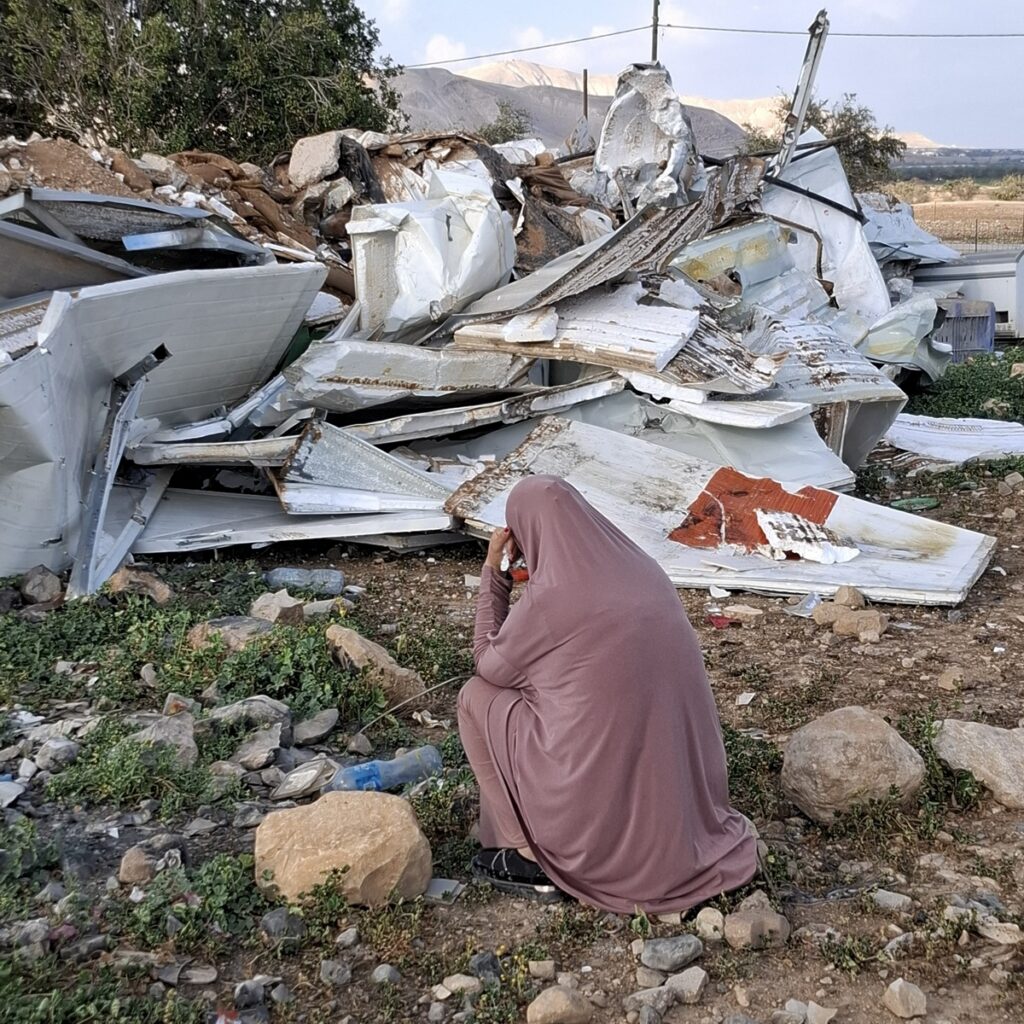
Jordan Valley
Jordan Valley, Tuesday, 31.1.06 PM Observer: Daphna B (reporting)Two guests On the way to the valley, we passed the village of Akraba, east of Zaatra Junction10:15 – rolling checkpoint at entrance to Akraba. Seven cars waiting to leave Akraba, some of them already two hours. Four cars waiting to enter. As we arrive all the incoming cars are passed through immediately. A soldier is attached to us to listen to our conversation. Any car coming from Akraba has to stop 75 metres from the soldiers, and the driver must walk over to the soldiers with his ID and those of his passengers. All the passengers are ordered out of the cars and told to stand by their vehicle. We ask why all this, and the answer “Check!” (from a distance of 75 metres…). This is the reason for the slowness of the passage: the walk to the soldiers, the wait for their verdict, the walk back, and getting back into the car. Nevertheless, within 20 minutes no cars were left.13:45 – same placeOn our way home, we passed again, and six cars were waiting for an exit inspection. Twenty detainees for something like two hours. Young men from Beit Furik, working in the ceramics plant in Akraba. They got a ride on a Transit with Israeli number plates. The checkpoint commander contends that they know they are forbidden to ride in such a vehicle, and when we say that it is prohibited to detain as punishment, he claims that this is not punishment but “they are being checked.” Lies have become the norm, observed out of indifference and mindlessly, in the most natural way. In any event, he released them five minutes later, and within minutes the line got much shorter. 14:40 – Hamra The checkpoint has moved further in to the road leading to Ein el-Bidan and Nablus, and now the transit of northbound cars is smooth and without delays or checks (and the same in the opposite direction). There were no cars at the checkpoint itself. 15:05 – Tayasir Six cars from east to west. All the passengers are spread across the area, some sprawling on the ground – they have obviously been here a long time. The soldiers – all with skullcaps, Nahal Haredi – drive us away from the checkpoint with a threat that they will not process Palestinians. We move aside. They position a soldier to watch over us. Who said there was a shiortage of manpower in the IDF?Upon our arrival, they begin to process car after car, with the usual ritual. A car is called, stops 30 metres from the soldiers, the passengers disembark and stand in a line, and one of them brings the IDs and passes to the soldiers.A soldier comes over to us and requests: “Arrange for them to fix the road. The holes are dangerous” (very true, there are holes which thump mmy car every time), and when he sees we are suprised by the request, he adds: “Not for me, for the Arabs, for them it’s very dangerous…” Why, because he knows that “for the Arabs” we will be prepared to make an effort, and then he and his friends will not be jolted on the road. (the merciful Jewish heart…).An elderly couple gets out of a taxi, the driver goes to the soldiers while I talk to them. Suddenly the man turns pale: “The soldier will make problems. He noted the number of the car, and tomorrow when I come to the checkpoint, he wont let me pass.” This terrible fear of the soldiers…Meanwhile, the same soldier comes over and forbids us to talk with Palestinians waiting to be checked. What else are they going to invent?From each car as it passes, we are thanked for coming, and told that they usually have to wait for hours… we should come every day.The bus that was held till midnight one day last week, and some of its opassengers cuffed (see report from 25.1.06) arrives. Its passengers are workers at Beit HaArava – an hour’s journey away. They start out at 04:00 and return at 15:30. And then, for the most part, they are delayed at the checkpoint. Two of the passengers have been summoned to court in Salem on 27.3.06, accused of rioting. It will be their word against the word of the soldiers, and who will be believed?They were so grateful for the help that night (the truth is that I did not succeed: it’s a fact that they were handcuffed for two and a half hours and detained for eight hours!), that they left me a box of vegetables from the field, which they had brought from the settlement. I felt as though I was depriving their children.16:00 – we left, with only three cars remaining, and with the feeling that they would have to wait a long time.
Jordan Valley
See all reports for this place-
Jordan Valley The Jordan Valley is the eastern strip of the West Bank. Its area consists of almost a third of the West Bank area. About 10,000 settlers live there, about 65,000 Palestinian residents in the villages and towns. In addition, about 15,000 are scattered in small shepherd communities. These communities are living in severe distress because of two types of harassment: the military declaring some of their living areas, as fire zones, evicting them for long hours from their residence to the scorching heat of the summer and the bitter cold of the winter. The other type is abuse by rioters who cling to the grazing areas of the shepherd communities, and the declared fire areas (without being deported). The many groundwaters in the Jordan Valley belong to Mekorot and are not available to Palestinians living in the Jordan Valley. The Palestinians bring water to their needs in high-cost followers.
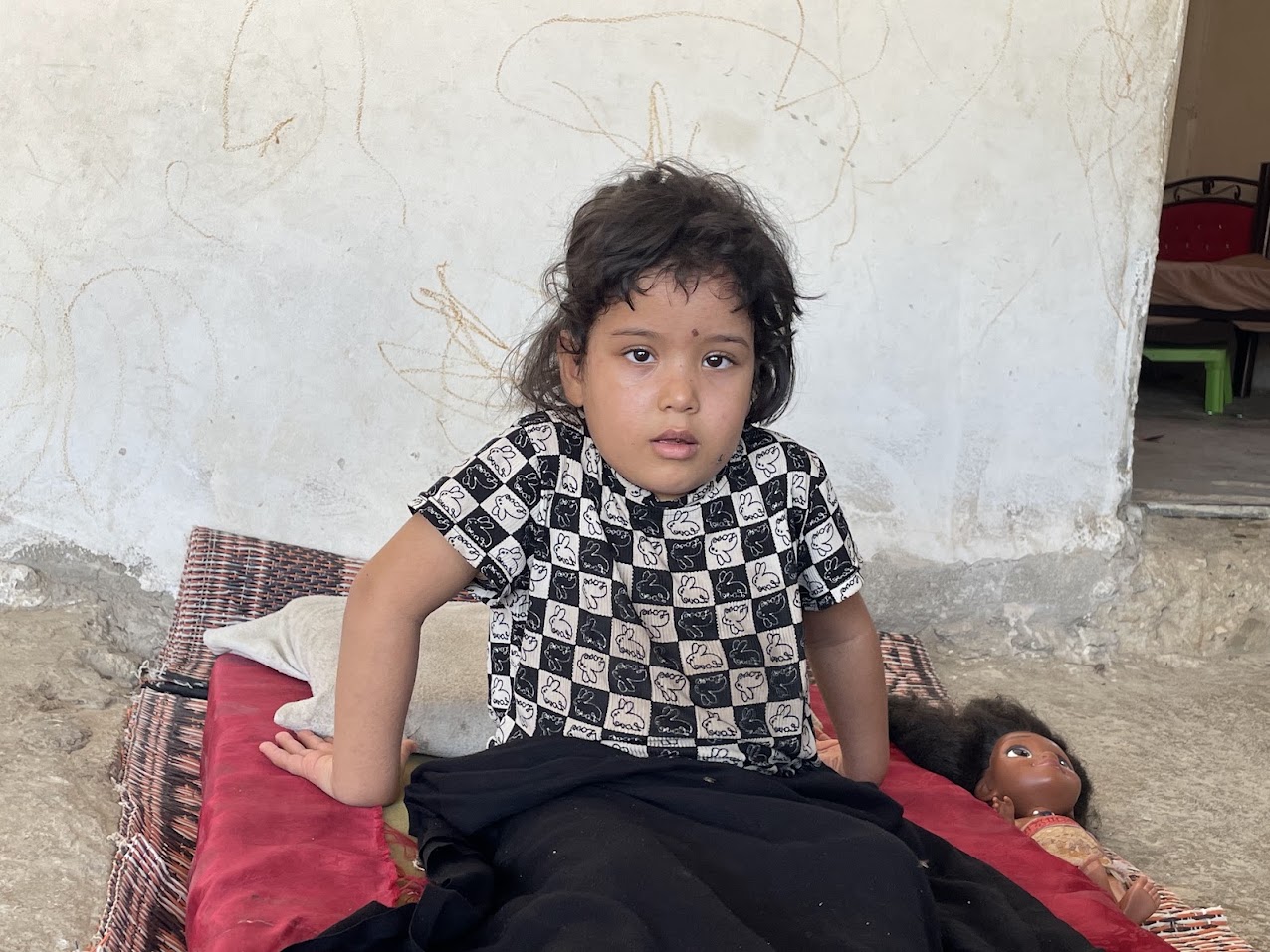 Rachel AfekAug-13-2026Jiftlik: A. was born with spina bifida
-