
Jordan Valley: Above every Palestinian village pops an outpost of marauding violent settlers
The car is full of donations—clothes, toys, food, etc.
General background:
The entire area is under various forms of life-stop: closures, curfew, roadblocks, and grazing bans.
The grazing ban is enforced by the settlers and immediately approved by the army whenever requested.
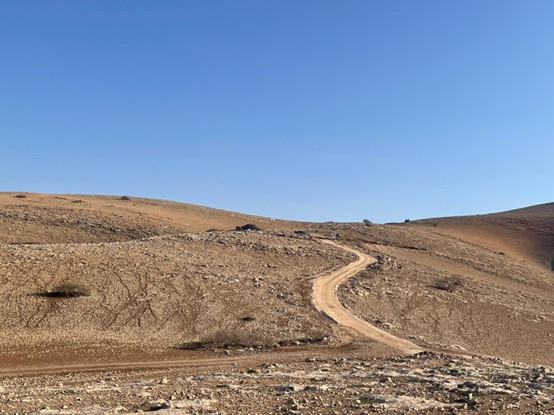
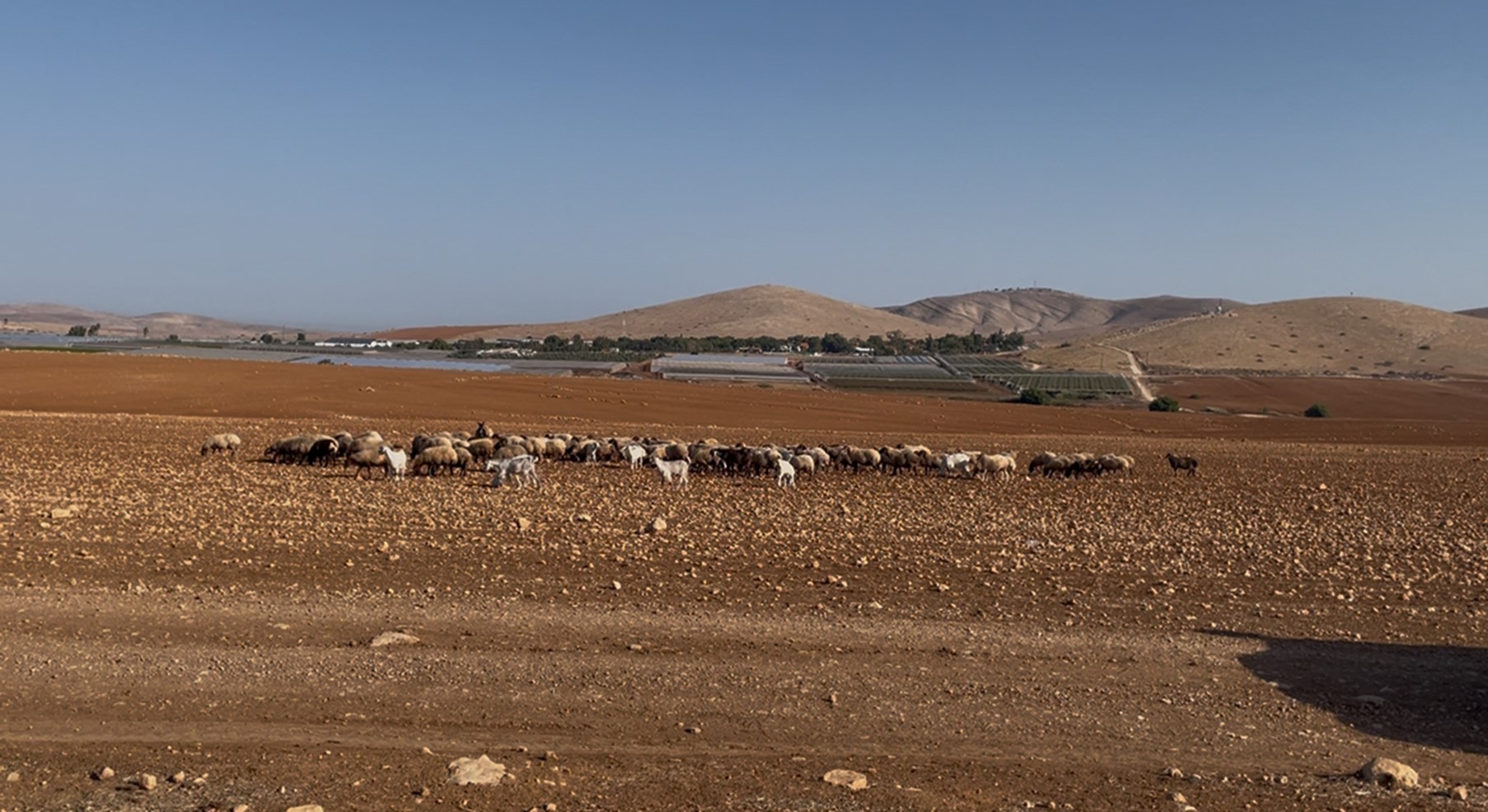
Hadidiya is a shepherding community located east of the settlement Roi and south of the settlement Hemdat, and now an outpost is being built on a hill to its north. Even though construction of the outpost isn’t finished, the settlers have already carved a road to it, and they are already preventing the shepherds of Hadidiya from going out to graze. For five days now, the shepherds have been sitting at home with their flocks. According to them, they have asked the entire world for help, and no one has responded.
T., one of the brothers who acted as head of the family, has been in administrative detention for almost two years. The pain is immense. Grandmother H. has lost weight and her hair has gone white since his arrest.
The school is also not operating today, and will likely remain closed until the army completes its “live exercise” on the villages above. Tubas, Tayasir, Tamun, and Aqaba have been under lockdown for three days, and it is said it will last five days.
We drive toward the new outpost. With no road, we got stuck on the mountain opposite it. And this is how it works: there is a Palestinian shepherding community in the area; settlers build an outpost above or near it, and then they shut down their lives, harass them, embittering their lives, until they leave. And there is no one to talk to.
The girls I knew from Safa’s kindergarten have grown so much. They were happy about everything they received from us.
We received a call to go to Humsa—there is an incident there.
Humsa sits on a narrow strip of land they are allowed to be on. Everything around it is a military zone or some other designation meaning they are forbidden to be there. A few kilometers away is Neriya’s outpost. He comes to Humsa every day on an ATV or other vehicle to disrupt their daily life. “Fabric of life,” they call it in the legal documents. He drives into the herds, comes up to the houses, causes great fear, and mostly prevents them from going to graze.
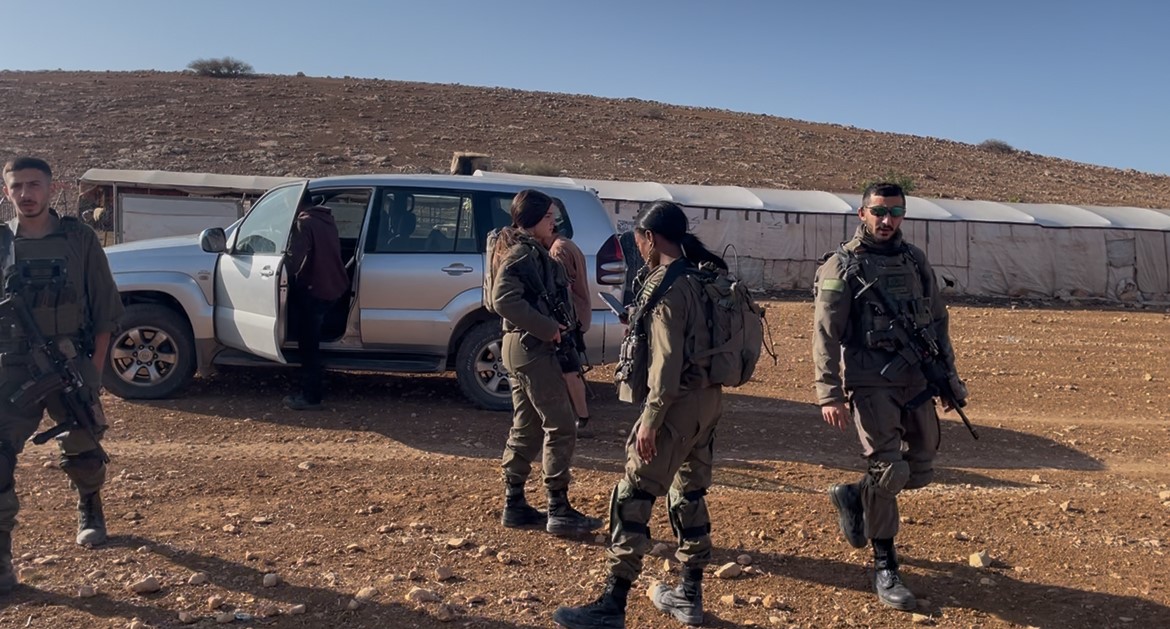
In the incident we witnessed, several settlers arrived in a large vehicle, ordered the shepherds to bring the herd back, and told them they were forbidden to climb the hill next to their homes or the adjacent side either. The army also arrived. When we tried getting closer to hear what was happening, an officer barked at us to stop. He was actually speaking with the Palestinians. When the conversation ended, he shared a friendly moment with the settlers. They drove off—he and two armed female soldiers—not before circling twice in the military jeep and informing us that we are responsible for October 7th.
We sat with the three shepherds who were there. One of them described what they’re going through these days. As mentioned, they cannot go out to graze. They are threatened day and night. They have no help from anywhere. They ask for people to come provide “protective presence,” especially at night.
From there, we went to Ein Hilweh, escorted the cattle to the spring. We sat with a family mourning their son who passed away from an illness. We visited the new warehouse being organized to receive and distribute supplies to the communities. We distributed food and clothing. Also in Khalat Makhoul. Everywhere we heard the same story of lockdown—theft—cruelty—violence. We took a blood sample from Y’s flock for testing at the veterinary institute in Beit Dagan. A cloud of worry hung everywhere.
Conversation with M.A.:
“I live here. The settler who lives here wants to expel us from here. He arrived two years ago. From the first day he was here, he came to us, beat our brother on the head. Every day he increases his control. On the first day he prevented us from going to graze on one mountain, the next day on the mountain beside it, and so on. Day and night he comes. Tells us to leave. He enters our home. Comes with a loud motorcycle. Frightened the flock. The flock ran. The army came and did nothing. The army knows it’s supposed to protect us, but it does nothing.
Neriya’s main goal is to get us out of here. He lives 10 km away. He and other settlers come every day, each time to someone else among us, causing trouble. Every day.
I asked the army for their phone number so we could call when there’s a problem. They refuse to give it to me. I asked the army to protect us, to prevent them from beating us or doing anything against us.”
—Do you really expect the army to help you?
“No. I know they won’t. But I have no other way. Some time ago the army came and detained my son for a few hours at a military base. They told us nothing. Just asked questions. The settler—whatever he does is acceptable to the soldiers. He destroys, beats, breaks—everything is fine. When a settler does what he does, the army arrives and whom do they detain? Us.”
—Why do you call them?
“I call them so they see what is happening here. They (the settlers) come to us. Not us to them. But the army does not believe me—only them. Everything they say is considered truth. And what is left for me to do? The army is the official authority. It can prevent them from being here. I want the army to see what they are doing to us.
We talk, complain, film—and nothing helps. No one does anything for us. Not the army, not the PA, not the police. They are above the law. Everything is allowed to them. They beat, destroy, harm the flock—and then we are always the guilty ones. The liars. No one comes here to see, hear, or help us. Until someone get beaten and ends up in the hospital, no one cares. Two months ago they came to our neighbors. Beat them until blood flowed from their heads. They waited three hours before allowing an ambulance to come. I don’t know what they are waiting for. For them to slaughter us? They threaten us, pressure us. What do they want to happen? Why is he doing this? He lives far away; he wants to live. We also want to live. Let him stay away from me. Let him not come to me. Let him stay in his home. From morning he comes to me. What does he want? To cause trouble.
Before the new settlers arrived, we lived peacefully with the nearby settlements. We would sit together, drink coffee together. With Roi and Beqa’ot there were no problems. We knew each other by name. We gave each other fruit, grapes. Like brothers. I’m talking about three years ago. The whole area was quiet. From the moment the outposts arrived, everything changed.”
I remind him that a few years ago their dwellings were demolished—around 2020.
“Correct. They claimed we were sitting on military land. The army demolished the houses and left. They didn’t beat us, didn’t take the flock, didn’t destroy anything. Nothing. They acted according to the law. They wanted us to move to where the law allows. Only the settlers cause us trouble. The army ensures we don’t sit on military land but on agricultural land. Toufiq J’barin brought a map and showed that this mountain is not military land. It is land we are allowed to graze on. Only the next mountain is military.
The army doesn’t want to hear from me about this matter. Everyone knows everything, but no one can stand up to these settlers. Every day the violence increases.”
After the conversation, when we were already seated in the car, M. came up to us and asked that people come sleep at their place every night. They are afraid.
Location Description
'Ein al-Hilwe
See all reports for this place-
Ein al-Hilwe is a natural spring and a Palestinian grazing area in the Jordan Valley that was used by the Palestinian shepherd communities for watering their flocks and for daily use. As of 2021, settlers from the Maskyot settlement took control of the spring: they fenced it off, built a wading pool and a mikveh, and installed flags and recreational facilities.
Palestinians are effectively denied access to the spring, and are forced to make do with running water in a remote wadi or, when the road is blocked, buy water from vendors at high prices.
The spring is located in the heart of an area where illegal outposts are being established, as part of a broader trend of pushing Palestinian communities away by denying them access to essential resources. Neighboring communities such as Umm Jamal and Khirbet Samra have already left due to the pressure.
Over the years, MachsomWatch members have reported arrests on false claims by settlers, harassment and violence, including damage to herds, intrusion into homes, and the intimidation of children. MachsomWatch volunteers participate in a protective presence in areas around the spring to prevent harassment of shepherds due to the presence of settlers.
-
Humsah
See all reports for this place-
Humsah
A shepherd community in the Jordan Valley. It is located in a remote place in Area C. There are no convenient ways to reach it. Its inhabitants make a living from their flocks. Like other shepherd communities, they live without basic infrastructure. This shepherd community is exposed to settler harassment and demolition of property by the military through civil administration orders.
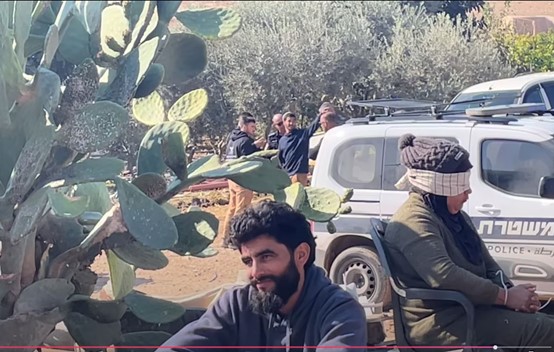 Rachel AfekDec-18-2025Hadidiya: On the right, the woman accused of throwing stones; on the left, the man accused of "something"; in the background, the settler is hanging out with soldiers and police officers
-