
Jordan Valley, Escorting shepherds - A donkey’s tale
We accompanied Barhan in Khalet Makhul.
The day was warm and sunny. From the hills the landscape was glorious, visibility unlimited in all directions. The Jordan River and the bordering villages to the east, the hills rising to the north, we’re as high as Umm Zuka, hills to the west, as far south as Ro’i.

The sheep are pleased with the sparse grass. The aqqub (Gundelia) season has begun. All the shepherds, as well as others hunting aqqub, arrive to slice the plant at ground level, cut off the thorny leaves and keep the fleshy heart to cook and eat. Some even eat it raw.
Don’t tell anyone, because picking it is prohibited. When they bring it home they cut it up, sauté onions in oil, add aqqub to the pan and fry it. A Palestinian delight.

The day passed quietly.

In the afternoon we were called to help one of the shepherds from al-Farisiyah to return the donkey that had been taken from him that morning by a settler from Shadmot Mehola. It was a strange, unclear request, but we drove there nevertheless to see what we could do. We were accompanied by another shepherd’s escort who’d accompanied Yussuf and joined us when he finished.
We reached the area near Mehola, and then Shadmot Mehola. The shepherd has already spoken to the police. An officer he knew promised to return the donkey. It wasn’t as simple as it may sound, but involved many annoying aspects. But we’ll spare you the details. You won’t believe how the story ended! The officer (who lives in Shadmot Mehola) returned Ahmed’s donkey. He also warned him to keep away from Rotem and Shadmot Mehola and told him he was forbidden to graze sheep on the hill.
Ahmed and his son, who’s 11, were grazing their sheep near Shadmot Mehola’s fence. They ran into a tough settler. He hit the boy and brought the donkey through the fence to the settlement’s land. That’s how the story began. So – does the officer deserve a medal? Or is it one of the few times that the police do what they’re supposed to – while also warning the shepherd…


Jordan Valley
See all reports for this place-
Jordan Valley The Jordan Valley is the eastern strip of the West Bank. Its area consists of almost a third of the West Bank area. About 10,000 settlers live there, about 65,000 Palestinian residents in the villages and towns. In addition, about 15,000 are scattered in small shepherd communities. These communities are living in severe distress because of two types of harassment: the military declaring some of their living areas, as fire zones, evicting them for long hours from their residence to the scorching heat of the summer and the bitter cold of the winter. The other type is abuse by rioters who cling to the grazing areas of the shepherd communities, and the declared fire areas (without being deported). The many groundwaters in the Jordan Valley belong to Mekorot and are not available to Palestinians living in the Jordan Valley. The Palestinians bring water to their needs in high-cost followers.
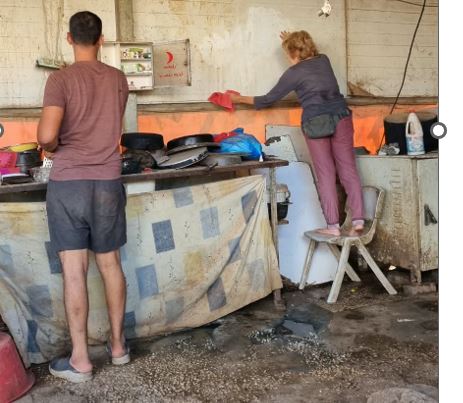 Bosmat HetzroniSep-24-2026Khalet Makhul – An unnecessary cleanup operation...
-
Khalet Makhul
See all reports for this place-
Khalet Makhul
A small settlement of a shepherd community located on the way to the settlement of Hemdat. Two nearby outposts make life miserable for the Palestinians, who make a living from grazing, and the army backs the settlers. As a result, the possible grazing areas are getting smaller.
The local children attend school in the settlement of Ein Al-Beida. Long lines of 3 hours sometimes stretch out at the Hamra and Tayasir checkpoints leading to the town of Tubas, making it difficult to get water, supplies, and sell the cheese, milk, and meat that the residents produce for their living.
Following a deadly attack at the Tayasir checkpoint in February 2025, the checkpoint was closed completely for the time being.
(Updated March 2025)
-
