
Jordan Valley, Khirbet Makhul
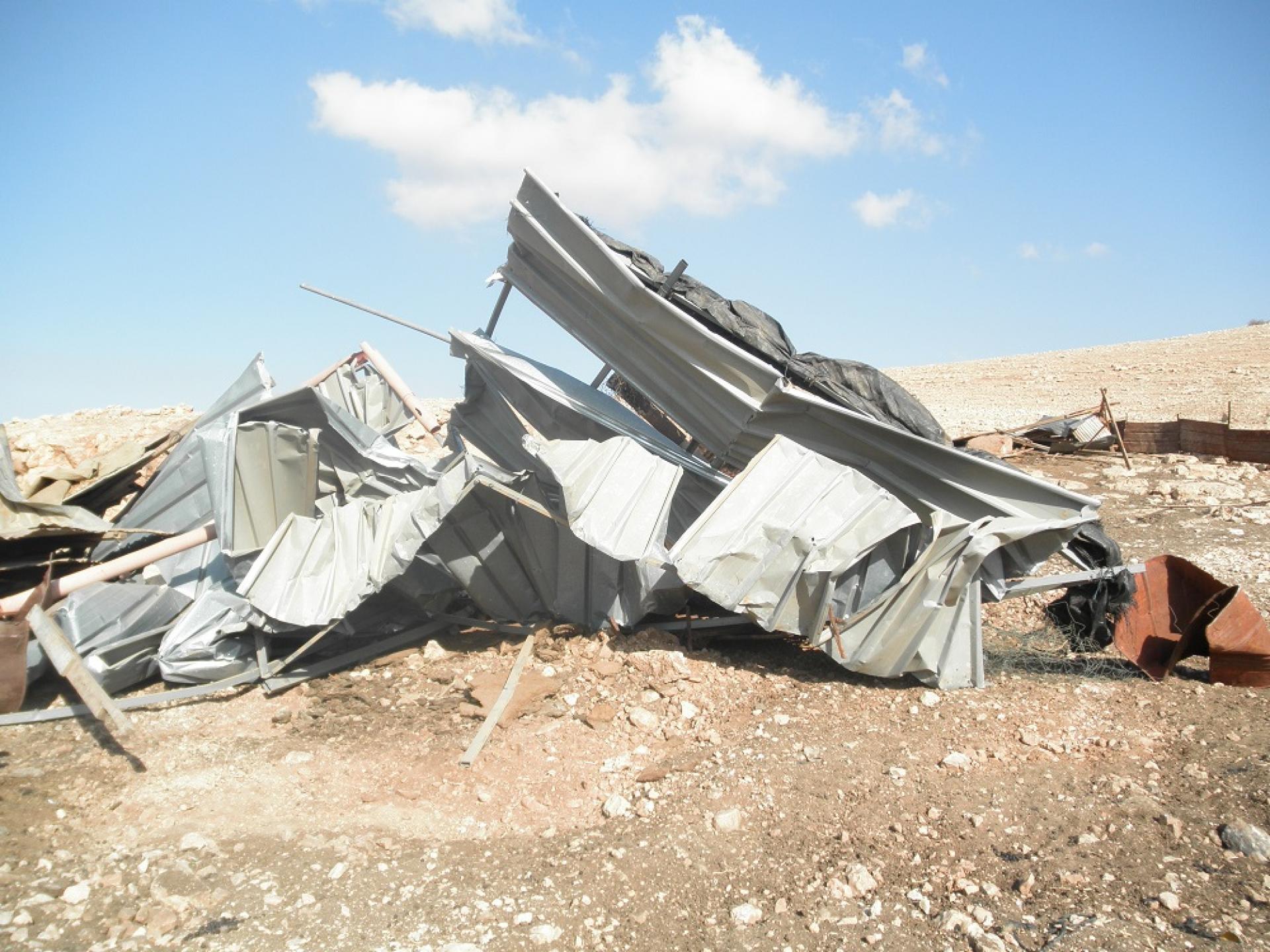
A few days ago we were informed that on October 3, 2017, the Israeli Supreme Court will be reviewing the request made by residents of Khalat Makhoul to approve their tin dwellings shacks and sheep pens. As in the past, this is hopeless – with the team of judges headed by settler-colonist Justice Solberg. Solberg was also the authority who in August 2013 ordered the demolition of this hamlet, which took place on September 16, 2016: the entire locality was razed to the ground. Such demolitions wreck the lives of women, children, the elderly and the domestic a nimals with the fell swoop of bulldozers. Humans whose sole sin is not to have been born to the dominant nation here are left exposed to the scathing sun or freezing cold, to collect mats, pots and pans, schoolbags and pencils and medication left strewn around. Whoever has never seen people gathering around twisted iron stakes, torn cloth sheets and smashed shanties that until an hour earlier held their lives, protected their children and a certain measure of privacy, whoever has not seen the desperate void in their gazes – will never understand this.
But over the years we have deeply befriended Najia and Burhan, rime and Abu Khalaf, we followed Rima’s difficult pregnancy and the birth of Rami with his thrice-perforated heart, the emergency surgery undergone by tiny Hassan, and the heart disease suffered by 80-year old Abu Khalaf. The poorest of the poor, they are so totally generous, warm and funny, so beloved. When it is such close acquaintances who fall victim to this vile cruelty, it all takes on the dimensions of a personal nightmare. Helpless to protect these dear friends, we can only look on, ache and scream with fury at this bullying state of which we are a part. Is there any way to stop this brutality?
We did not intend to tell them, yet, of the anticipated court session, so as not to ruin their approaching holiday, but as we talked with Yusef and Najia, Yusef commented with a note of satisfaction that “Apparently Israel has been asleep for quite a while and has not given us trouble lately!” and then I blurted the news, that this past calm year might be the last. From that moment, Najia’s face and figure crumpled, as if the sorrows of the world have all landed on her shoulders. She will not sleep a whole night now for sheer fear for her home, her children, the not-yet year-old baby, and the tiny herd that barely meets their needs.
We also visited Burham who had just returned by taxi from a meeting with the new governor (the previous passed away recently), where a request was made to replace the electricity-producing solar panels with newer, larger ones. Burhan’s own family is staying in Tamoun at present because of the heat, and because there is no school for the children in the Palestinian Jordan Valley so they have to attend school in Tamoun. This is why lonely Burhan finds solace in the company of the elderly Anu Khalaf, but they both have a very hard time maintaining their small shepherd farms by themselves, for the wife is not mere company but especially a vital work force.
We also paid a visit to Hajar’s family in Fasail. Israel does not stop destroying there too.
Hajar expressed her sincere concern for our friend Tzviya who was injured in a traffic accident, and with whom she maintains a very special relationship. The presence of our guests Yusra and Du’a was an enormous contribution to these visits. The fluent and deep discourse they held everywhere as well as the trust free flow of conversation shows us once more how lacking this all is in our own communication. Especially with the women who do not speak Hebrew. If we could only have Palestinian women join our shifts…
Jordan Valley
See all reports for this place-
Jordan Valley The Jordan Valley is the eastern strip of the West Bank. Its area consists of almost a third of the West Bank area. About 10,000 settlers live there, about 65,000 Palestinian residents in the villages and towns. In addition, about 15,000 are scattered in small shepherd communities. These communities are living in severe distress because of two types of harassment: the military declaring some of their living areas, as fire zones, evicting them for long hours from their residence to the scorching heat of the summer and the bitter cold of the winter. The other type is abuse by rioters who cling to the grazing areas of the shepherd communities, and the declared fire areas (without being deported). The many groundwaters in the Jordan Valley belong to Mekorot and are not available to Palestinians living in the Jordan Valley. The Palestinians bring water to their needs in high-cost followers.
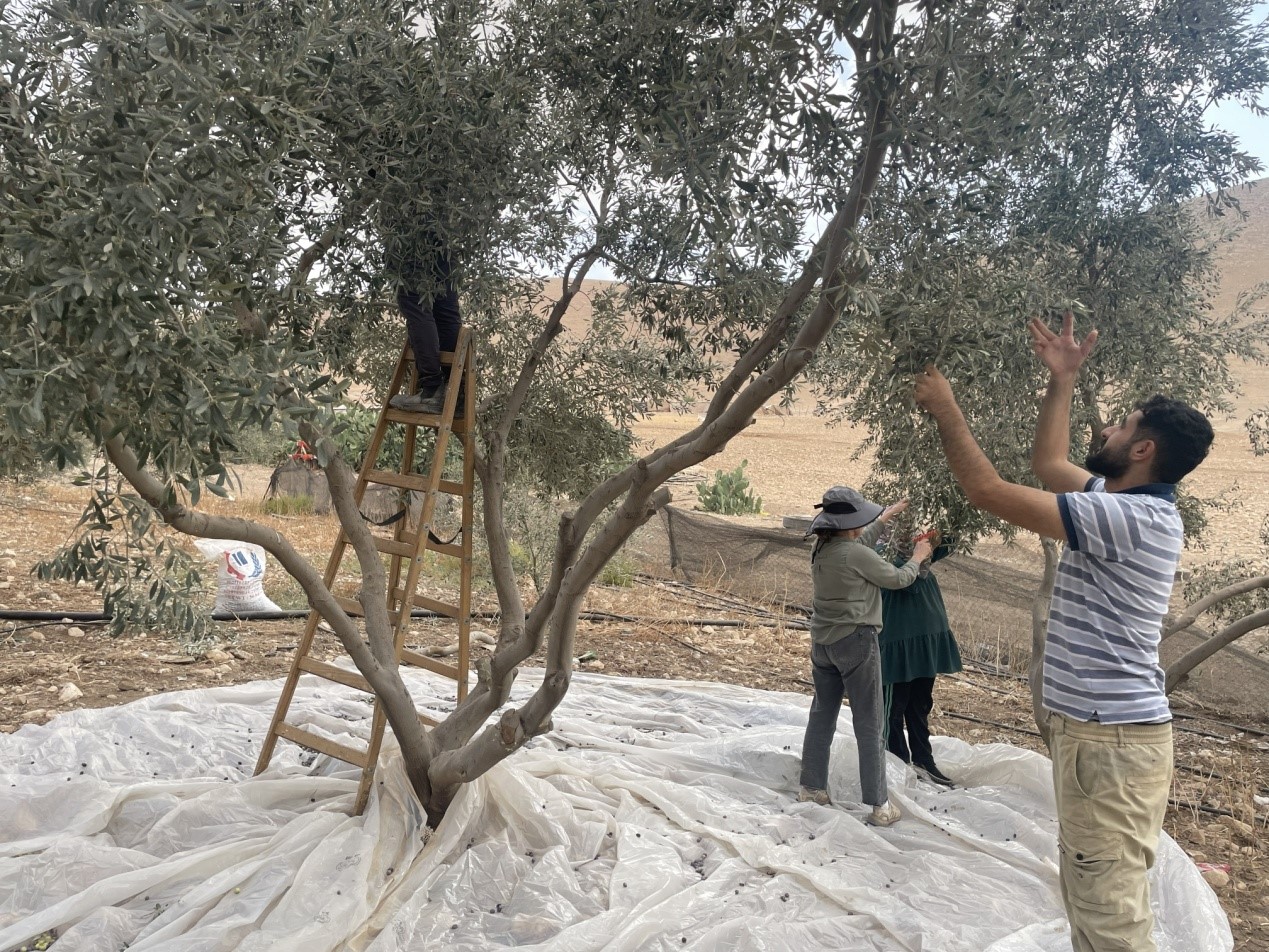 Rachel AfekOct-15-2026Olive Harvest in the Jordan Valley
-
Khalet Makhul
See all reports for this place-
Khalet Makhul
A small settlement of a shepherd community located on the way to the settlement of Hemdat. Two nearby outposts make life miserable for the Palestinians, who make a living from grazing, and the army backs the settlers. As a result, the possible grazing areas are getting smaller.
The local children attend school in the settlement of Ein Al-Beida. Long lines of 3 hours sometimes stretch out at the Hamra and Tayasir checkpoints leading to the town of Tubas, making it difficult to get water, supplies, and sell the cheese, milk, and meat that the residents produce for their living.
Following a deadly attack at the Tayasir checkpoint in February 2025, the checkpoint was closed completely for the time being.
(Updated March 2025)
-
