
Jordan Valley: The settlers' takeover of Palestinian territories continues
Prior to the ride, we drove to a high school in Herzliya – our Arabic teacher collects things for the Palestinian Jordan Valley shepherds from her friends, relatives and neighbors. We went to pick them up from her workplace as a teacher.


On our way, south of the illegal colony (as are all colonies) Gitit, we noticed massive construction. Dror Etkes told us this is a solar field that has been placed without any permit. The “field” lies over hundreds of square meters and wounds the landscape, but especially noticeable is the fact that this is another way to take over more and more land, for we suppose the courts will approve of this insane construction. Environment, no?


We visited Najia (wife of Yusuf Bsharat) who had her tenth daughter a week ago. This birth was difficult as were all the others, but one hour after giving birth she already reported to the family encampment and began to work. The previous daughter is called Jana and is one and a half years old. The newest daughter is called Jenat.
We then visited Rima and Ashraf and their sweet children. From there we called Rima’s sister, married as a second wife at En Al Beida – she has called Daphne several times and sounded very stressed. Her husband came to the village entrance to welcome us for they live in the eastern outskirts of the village beyond complicated, muddy alleys. We couldn’t have found our way to their home on our own. The tin shanty where they live with the first wife, the husband’s parents and their little daughter (Firial, a year and a half old) is miserable. It is dark and moldy, its roof punctured, has no windows and only an earthen floor. The husband said he is unemployed because he is blacklisted and has no idea why – he has never been arrested, nor questioned. His father used to work at the Mekhola colony in the past, but is now old and brings nothing in. They asked us to fix their roof because the rain comes into their room which is also their bedroom.
On our way back we saw that the poles erected alongside road 90 had already been connected with barbed wire. The point is to fence in the firing zone and the Umm Zuka nature reserve on the east (having fenced the western side as well) in order to possess the entire area – about 25,000 dunams, to the illegal colonist outposts of Uri and Menachem.

In the south, near the road, we met Mahdi’s brothers with their scrawny cows. It was already late afternoon and a cold wind was blowing. We hurried back to the car, but they stayed the night, the way they do every night from September until the summer. They asked us for a phone charger because their battery is out and they cannot get to a place where they can charge their phones regularly, and are disconnected from their families. They complained, justly, that the fences will keep them away from their grazing grounds and put an end to their livelihood. Like everything else we witness here – the point is the total takeover of the region while dispossessing and expelling the Palestinians, the Jordan Valley’s original and legal inhabitants.
Jordan Valley
See all reports for this place-
Jordan Valley The Jordan Valley is the eastern strip of the West Bank. Its area consists of almost a third of the West Bank area. About 10,000 settlers live there, about 65,000 Palestinian residents in the villages and towns. In addition, about 15,000 are scattered in small shepherd communities. These communities are living in severe distress because of two types of harassment: the military declaring some of their living areas, as fire zones, evicting them for long hours from their residence to the scorching heat of the summer and the bitter cold of the winter. The other type is abuse by rioters who cling to the grazing areas of the shepherd communities, and the declared fire areas (without being deported). The many groundwaters in the Jordan Valley belong to Mekorot and are not available to Palestinians living in the Jordan Valley. The Palestinians bring water to their needs in high-cost followers.
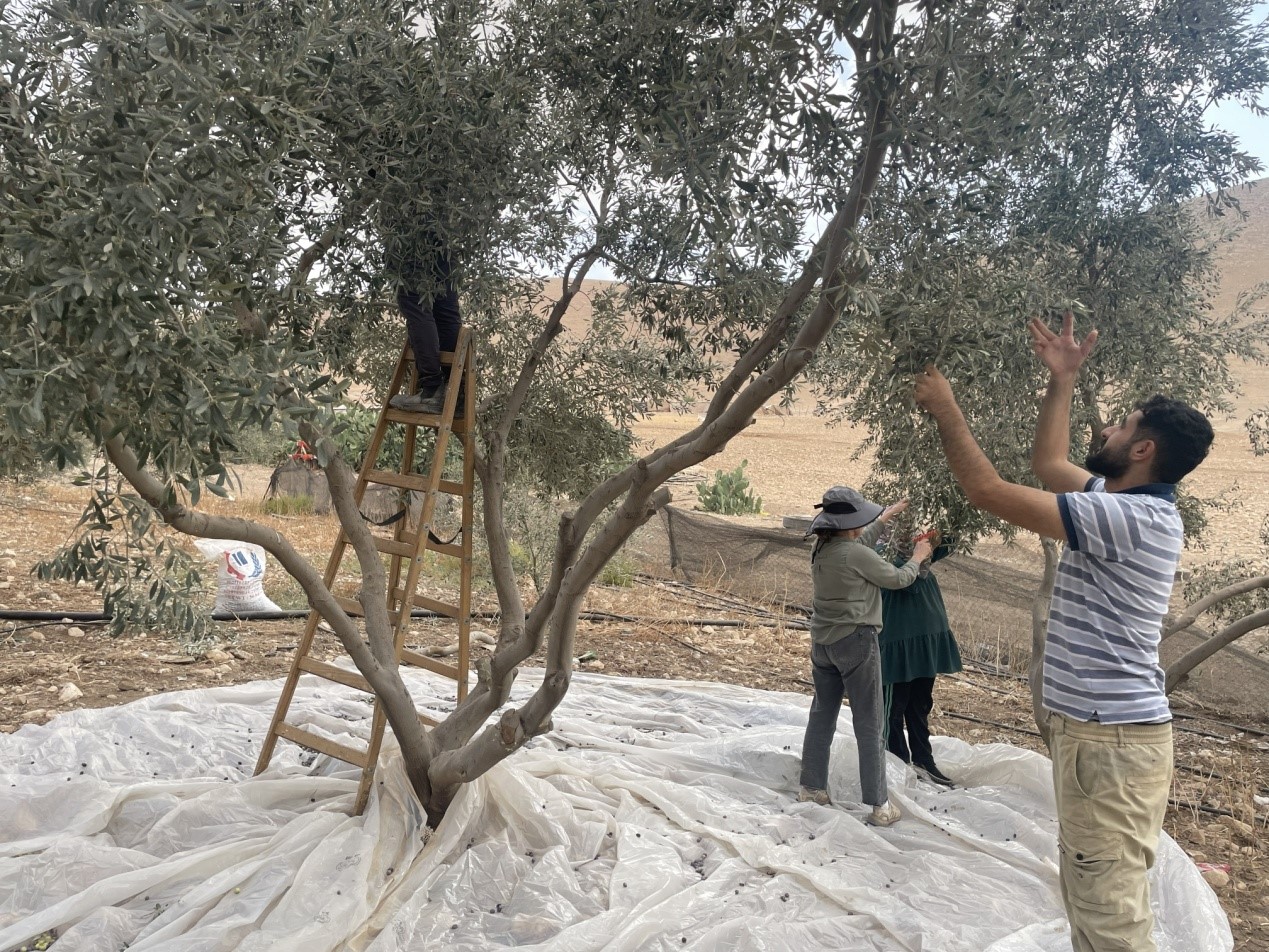 Rachel AfekOct-15-2026Olive Harvest in the Jordan Valley
-
Khalet Makhul
See all reports for this place-
Khalet Makhul
A small settlement of a shepherd community located on the way to the settlement of Hemdat. Two nearby outposts make life miserable for the Palestinians, who make a living from grazing, and the army backs the settlers. As a result, the possible grazing areas are getting smaller.
The local children attend school in the settlement of Ein Al-Beida. Long lines of 3 hours sometimes stretch out at the Hamra and Tayasir checkpoints leading to the town of Tubas, making it difficult to get water, supplies, and sell the cheese, milk, and meat that the residents produce for their living.
Following a deadly attack at the Tayasir checkpoint in February 2025, the checkpoint was closed completely for the time being.
(Updated March 2025)
-
