
Jubara, Irtah, Anabta
Irtah, Anabta, Jubara, Sun., 6.3.05, am.Observers: Dafna A., Orna P. (reporting), Visitors: Ephrat, Edva.Irtah0730: No line, and almost nobody waiting. According to Palestinians and soldiers the checkpoint was opened at about 05.45. The soldiers said that there was pressure until about 07.00. The soldiers were polite to Palestinians and to us.Three police patrol cars were waiting for four buses transporting prisoners’ families.The people of Kfar Kafin, near Baq’at al-Jarbiya, complain that they must make a huge detour to get to their work in the Jordan valley, even though they have all the required permits. They want to pass through the checkpoint near Najla, close to the Jordan Valley. The detour takes a long time, and costs them NIS 80 in each direction.We went to buy pitta on the other side of the checkpoint. Two soldiers went with us to protect us (though we didn’t ask them to). The pitta was very good…Jubara08.00: We had to park under the watch-tower, since the soldiers stopped us from parking next to Abu Hattam. The CO of the checkpoint, a conscript soldier, told the soldiers not to talk to us; according to him, only he was allowed to talk to us. The northern checkpoint at the entrance to Tulkarm is still manned; the military police point from west to east is not manned. The soldiers are tense, and meticulous in carrying out orders. They wear steel helmets. Female MPs try to make things more flexible, but don’t succeed. An elderly woman without an entry permit to Israel tries to visit her sister in Taibeh (she has a document to prove that her sister lives there). The woman soldier wanted to let her through, but the CO refused. We advised her to ask the DCO for a permanent transit permit. Three workers without permits apparently tried, unsuccessfully (for the time being), to get into Israel. They said that they were looking for work, but don’t have a permanent employer to pay for the permit. The porters again have their carts taken away from them. They say that they can’t make a living like this. The soldiers say that they disturb the routine of the checkpoint, and they can do their work without carts. Before we left, the CO advised us not to stay, since there were urgent warnings of disturbances in the area of the checkpoint, particularly at the entrance to Tulkarm.Anabta:08.45: The checkpoint is locked, and unmanned. Four cars, one bus, little traffic. A young man tells us that his father has a flock of sheep which feed on Mt. Gilboa, near Eravon, in the Jamleh area. He said that his father’s sheep came close to the fence, and soldiers of the Border Police beat him for it. There is nowhere else for his sheep to feed. He told the Palestinian police, and the affair is being checked.
Jordan Valley
See all reports for this place-
Jordan Valley The Jordan Valley is the eastern strip of the West Bank. Its area consists of almost a third of the West Bank area. About 10,000 settlers live there, about 65,000 Palestinian residents in the villages and towns. In addition, about 15,000 are scattered in small shepherd communities. These communities are living in severe distress because of two types of harassment: the military declaring some of their living areas, as fire zones, evicting them for long hours from their residence to the scorching heat of the summer and the bitter cold of the winter. The other type is abuse by rioters who cling to the grazing areas of the shepherd communities, and the declared fire areas (without being deported). The many groundwaters in the Jordan Valley belong to Mekorot and are not available to Palestinians living in the Jordan Valley. The Palestinians bring water to their needs in high-cost followers.
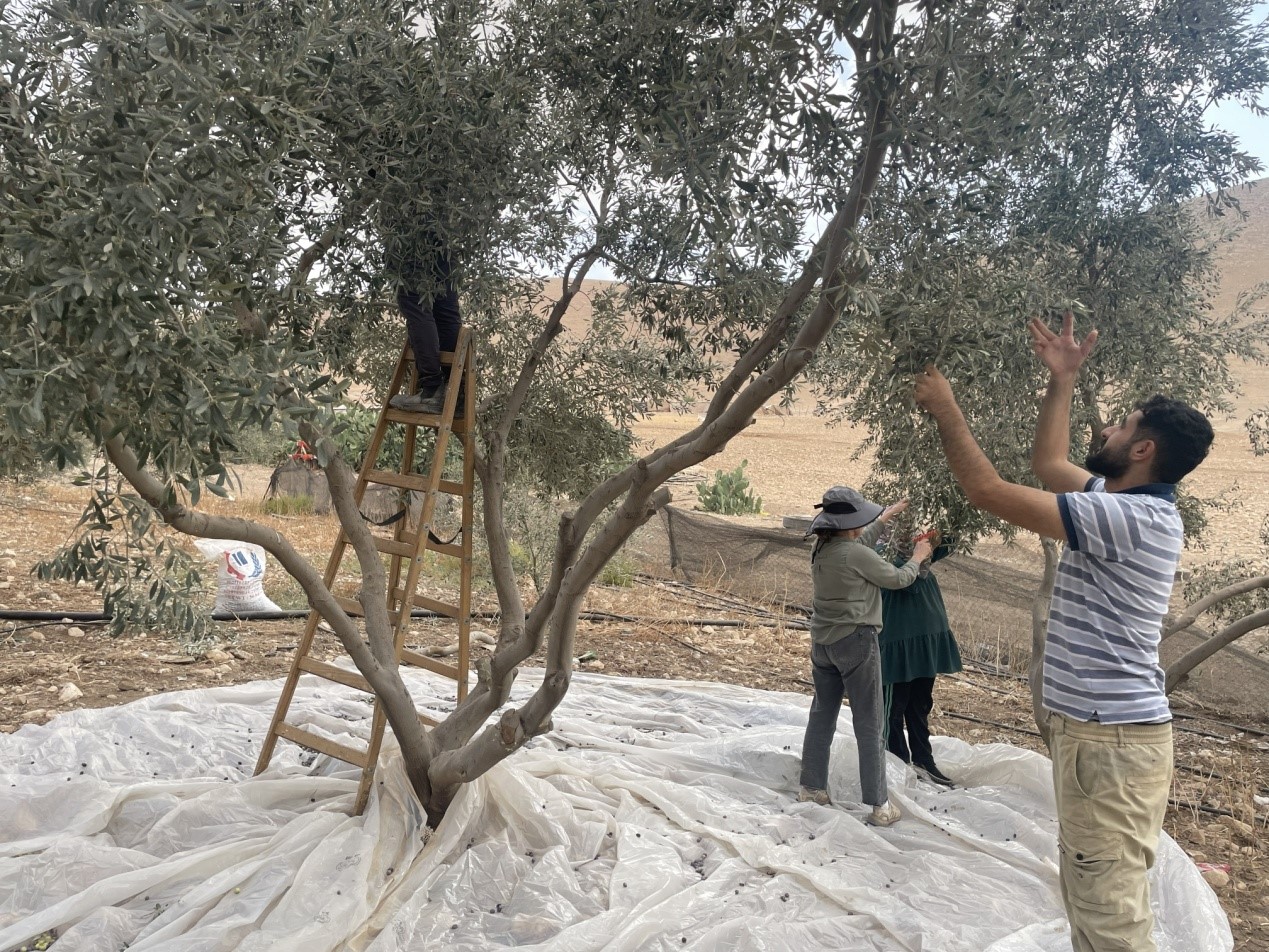 Rachel AfekOct-15-2026Olive Harvest in the Jordan Valley
-
