
Khalet al Daba' - destruction in Masafer Yatta


We went to Khalet El Daba’
Area C where no one goes, four kilometer to the east of the settlement of Maon and Tuwani. We wanted to see the people and what was left of their belongings in their homes after we received pictures of the destruction on 16.6. When the army wants to destroy they know how to find them.
People say they have lived there for 300 years. But now they are told that this is a firing zone.
The last time, a year ago, a building was destroyed and five years ago all the miserable other dwellings.
This time the army came without warning and destroyed and beat people with no mercy.
Now men, women and children sit with all their belongings exposed to the burning sun and in despair.
The water pipes were torn, the sun panels which European organizations had given them were destroyed. There are still remains of the effort to remain there.
We went to visit the man who had been beaten. He lies groaning on a mattress. They broke his bones and he was sent to hospital and then discharged while he still is very swollen. The sunflowers are a silent testimony to what was there before the destruction.
At Tuwani we were told that they have made several organized efforts to help them. They made a road through which they sent a water pipe in place of the one that was damaged.
It is admirable.
They ask if we can help with contributions.
South Hebron Hills
See all reports for this place-
South Hebron Hills
South Hebron Hills is a large area in the West Bank's southern part.
Yatta is a major city in this area: right in the border zone between the fertile region of Hebron and its surroundings and the desert of the Hebron Hills. Yatta has about 64,000 inhabitants.
The surrounding villages are called Masafer Yatta (Yatta's daughter villages). Their inhabitants subsist on livestock and agriculture. Agriculture is possible only in small plots, especially near streams. Most of the area consists of rocky terraces.Since the beginning of the 1980s, many settlements have been established on the agricultural land cultivated by the Palestinians in the South Hebron Hills region: Carmel, Maon, Susia, Masadot Yehuda, Othniel, and more. Since the settlements were established and Palestinians cultivation areas have been reduced; the residents of the South Hebron Hills have been suffering from harassment by the settlers. Attempts to evict and demolish houses have continued, along with withholding water and electricity. The military and police usually refrain from intervening in violent incidents between settlers and Palestinians do not enforce the law when it comes to the investigation of extensive violent Jewish settlers. The harassment in the South Hebron Hills includes attacking and attempting to burn residential tents, harassing dogs, harming herds, and preventing access to pastures.
There are several checkpoints in the South Hebron Hills, on Routes 317 and 60. In most of them, no military presence is apparent, but rather an array of pillboxes monitor the villages. Roadblocks are frequently set up according to the settlers and the army's needs. These are located at the Zif Junction, the Dura-al Fawwar crossing, and the Sheep Junction at the southern entrance to Hebron.
Updated April 2022
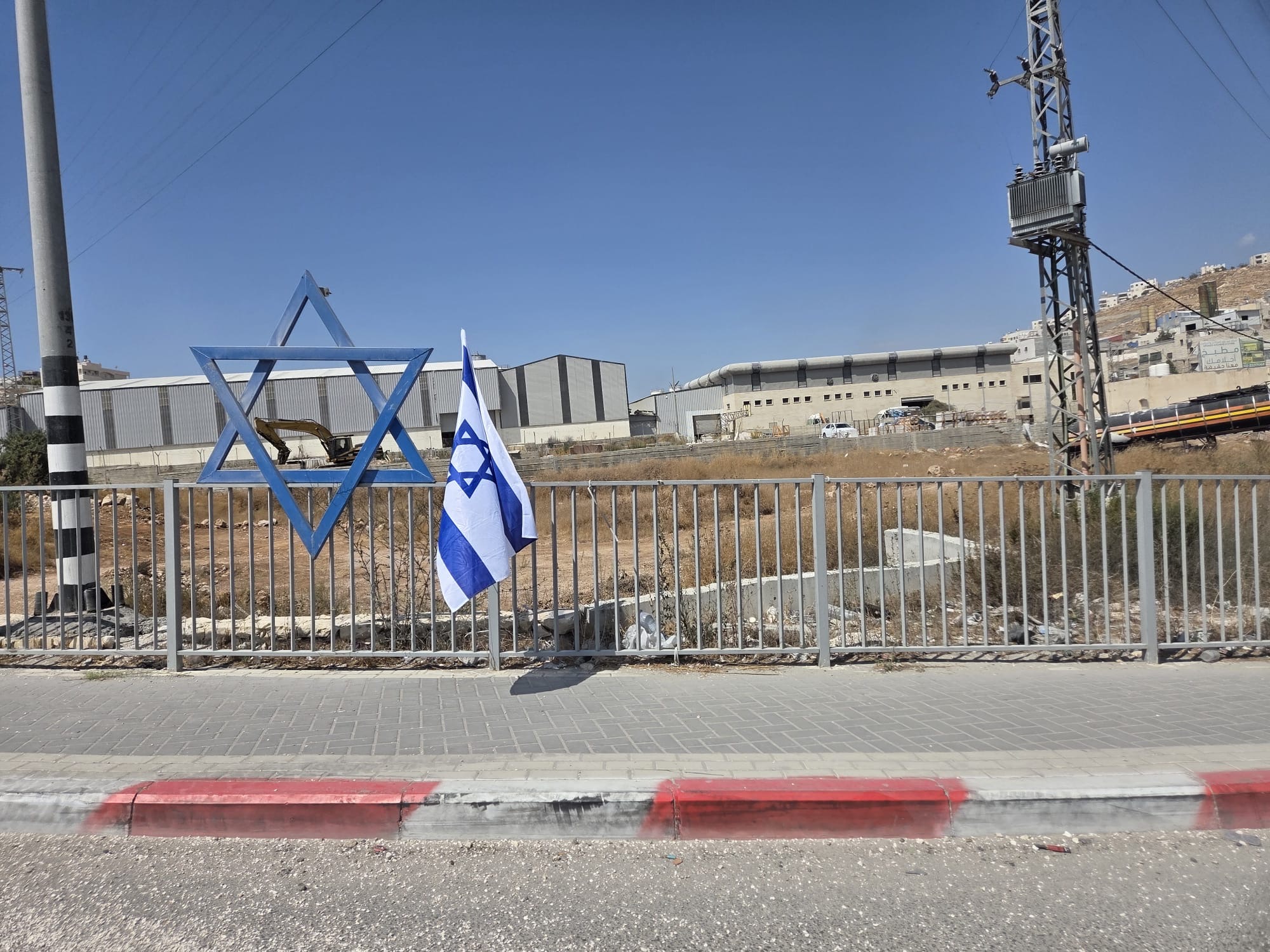 Timna OrevSep-24-2026Replacing flags on Highway 6
-
