
Mufakara- Hard to get used to daily abuse


Mufakara
The residents of Mufakara constantly suffer from the settlers of Havat (Farm) Maon to the east and Mitzpe Abigail to the west. Especially when they take the flock out to pasture. It was important to hear their stories.
At Lahavim many people have donated toys and clothes and brought them to Smadar, and the kids in these places are happy for any toy and dolls, not to mention the shoes and clothes that are really Tawny
At-Tuwani
We were happy to meet Yuval Avraham, whose articles we read all the time. He and Bassel are working on a film about life there.
They say that since all the breaches in the fence were closed near the Meitar checkpoint, the need to go on living means that necessity is the father of invention. This forces people to somehow go to work in Israel through Jimba, the Judean Desert threshold area, which is desolate and difficult for the army to monitor because of the many dirt trails. Therefore, it is very difficult to catch illegal workers.
The IDF also patrols constantly. Southeast of At-Tuwani is no man’s land. It is not possible to really block the routes there, and those who want to bring bread home find ways to get in despite everything.
South Hebron Hills
See all reports for this place-
South Hebron Hills
South Hebron Hills is a large area in the West Bank's southern part.
Yatta is a major city in this area: right in the border zone between the fertile region of Hebron and its surroundings and the desert of the Hebron Hills. Yatta has about 64,000 inhabitants.
The surrounding villages are called Masafer Yatta (Yatta's daughter villages). Their inhabitants subsist on livestock and agriculture. Agriculture is possible only in small plots, especially near streams. Most of the area consists of rocky terraces.Since the beginning of the 1980s, many settlements have been established on the agricultural land cultivated by the Palestinians in the South Hebron Hills region: Carmel, Maon, Susia, Masadot Yehuda, Othniel, and more. Since the settlements were established and Palestinians cultivation areas have been reduced; the residents of the South Hebron Hills have been suffering from harassment by the settlers. Attempts to evict and demolish houses have continued, along with withholding water and electricity. The military and police usually refrain from intervening in violent incidents between settlers and Palestinians do not enforce the law when it comes to the investigation of extensive violent Jewish settlers. The harassment in the South Hebron Hills includes attacking and attempting to burn residential tents, harassing dogs, harming herds, and preventing access to pastures.
There are several checkpoints in the South Hebron Hills, on Routes 317 and 60. In most of them, no military presence is apparent, but rather an array of pillboxes monitor the villages. Roadblocks are frequently set up according to the settlers and the army's needs. These are located at the Zif Junction, the Dura-al Fawwar crossing, and the Sheep Junction at the southern entrance to Hebron.
Updated April 2022
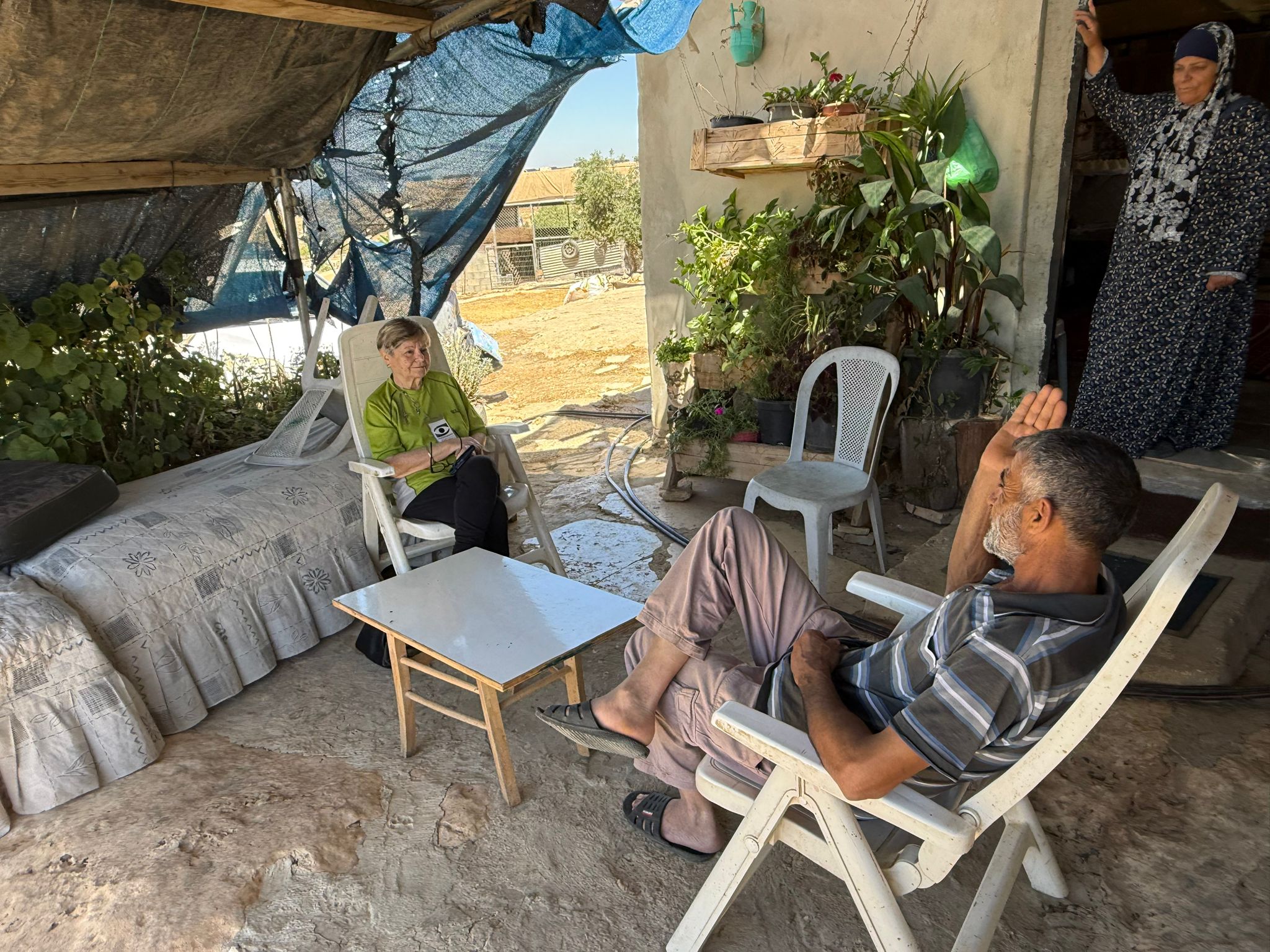 Muhammad D.Jun-14-2026Smadar with Azzam and Wadha in Susiya
-