
Nabi Samuel: An ancient Palestinian village that is also an archaeological site, a national park, and a declared “Seam Zone” enclave
To live in a place that is at once an archaeological site, a national park, and has been declared a “Seam Zone” enclave is a punishment that even the Prophet Samuel — who, according to tradition, is buried there — would not have wished upon his greatest enemies.
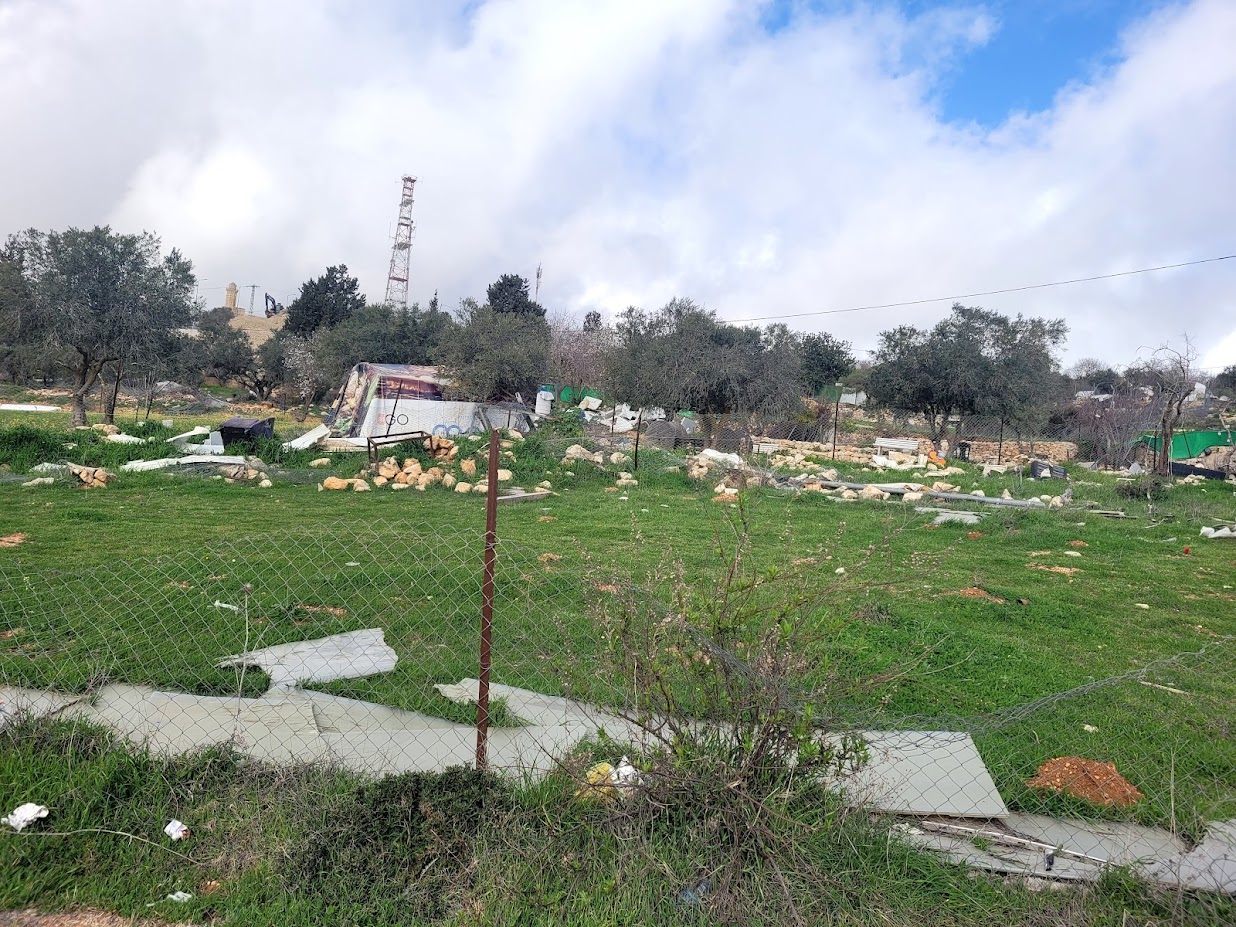
The 300 residents of the village — their guests, relatives, teachers, doctors, and tradespeople — are required to obtain special permits in order to enter or leave through a single checkpoint to the rest of the West Bank (entry into Jerusalem is, of course, forbidden). It has always been difficult to obtain transit permits, but since October 7 it has become nearly impossible. The 300 residents of the ancient village are under siege and face daily hardships: neglected infrastructure, prohibition on cultivating private lands, demolition of any installation or construction, and a ban on bringing in goods of any kind. The treatment toward them is degrading, as though they are not entitled to human rights at all.
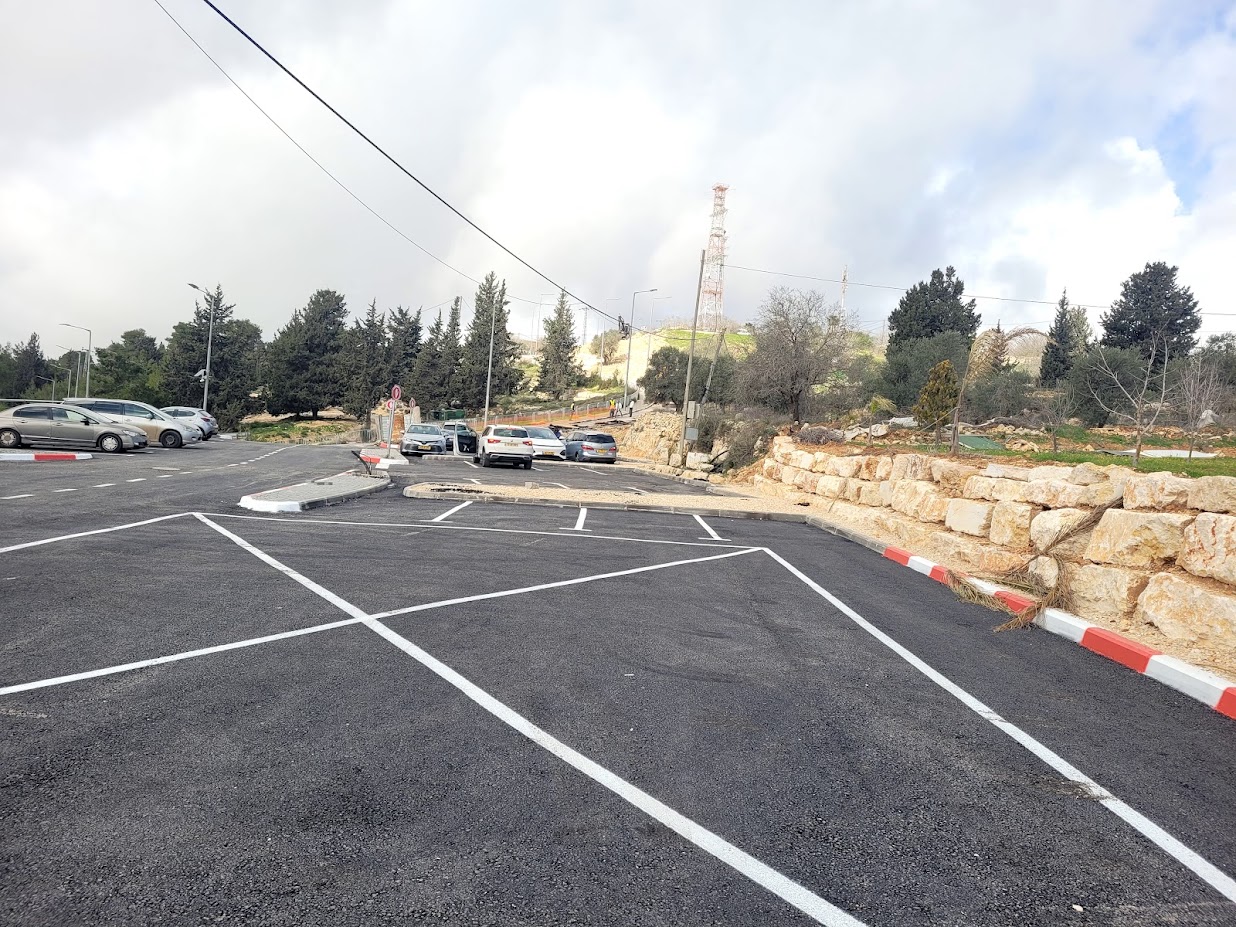
Spontaneously, we decided to visit our longtime friend Eid and see what has transpired since the beginning of the official isolation as a “Seam Zone” enclave. We scheduled a meeting, but Eid canceled at the last minute and we missed the message. We drove to the place we had visited many times before. This time we found the main road blocked. Why? What happened? You guessed it — they are renewing the road with a roundabout and preparing a parking lot for Jewish worshippers who have “taken over” most of the site, leaving the Palestinians a remote corner in the mosque, at a distant, marginal spot.
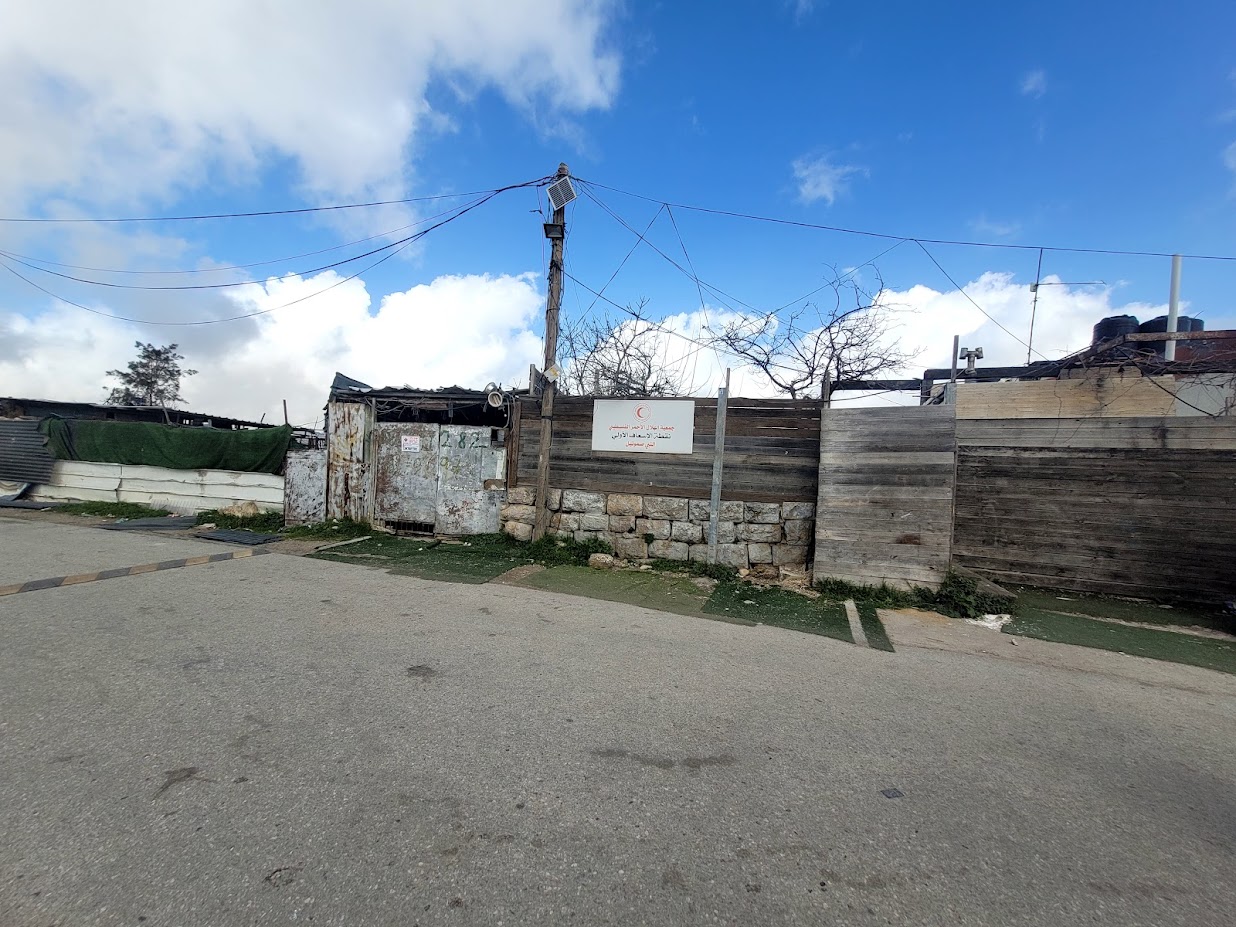
On our way back to the car, we encountered a group of women heading to the village council offices. From them we received the phone number of the village head, who agreed to meet us. Upon our arrival, he immediately explained that the group of women had come to the clinic to meet the oncologist, but the accompanying nurse had already been delayed for two hours at the Jib checkpoint, and apparently the treatments could not proceed without her.
We heard more about the hardships facing the villagers, who are effectively confined there. Almost every day the village head handles cases in which residents or visitors are denied permission to enter or leave the village. In the past there was contact with the Civil Administration; today, there is usually no response. Even now, the village head has been unable to reach the liaison officer to secure approval for the nurse to pass through the checkpoint and carry out the scheduled treatments.
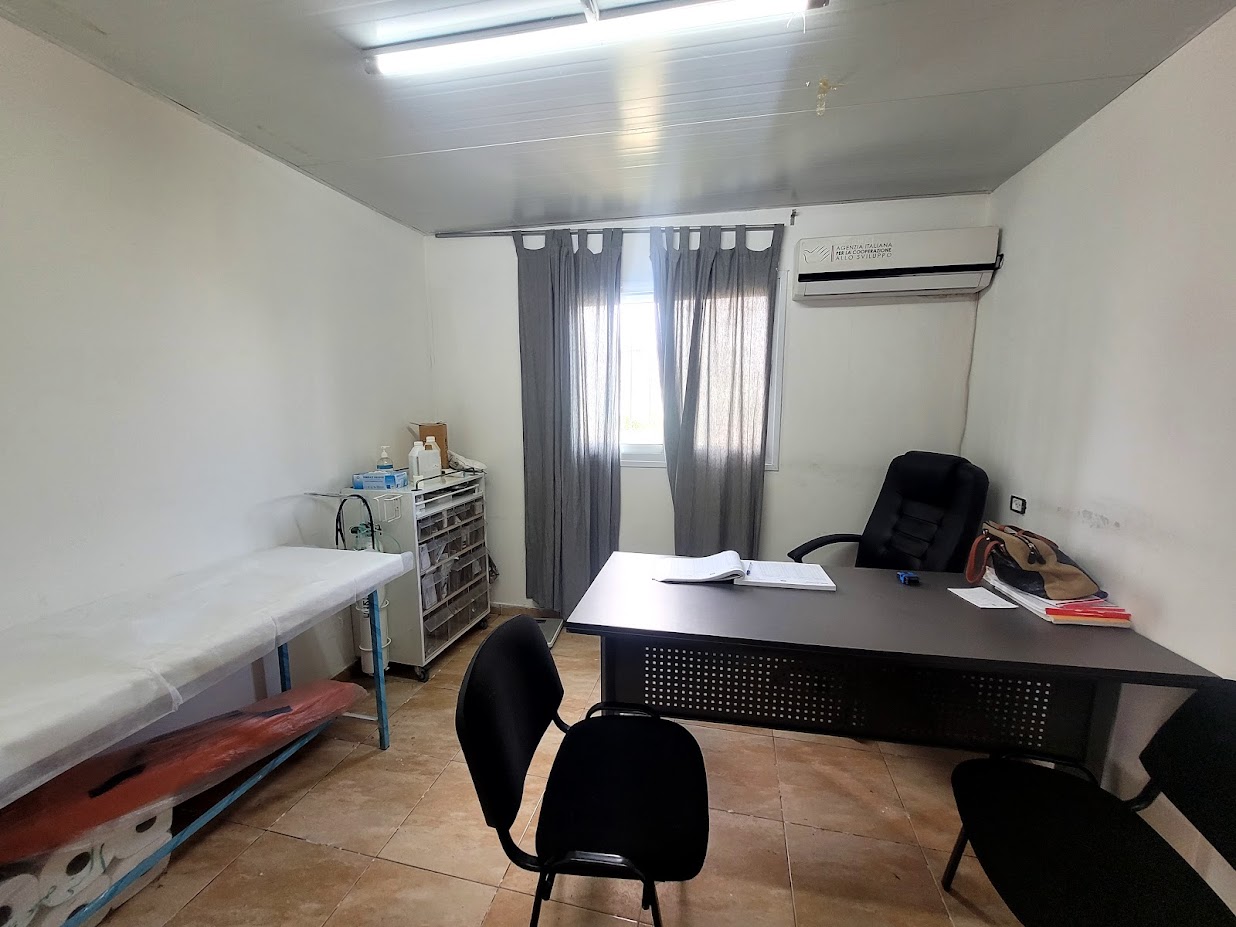
We visited the modest clinic and spoke with the doctor. She is affiliated with Augusta Victoria Hospital — yet the women of Nabi Samuel have no access to it, and permits to travel to the hospital in Ramallah are issued sparingly.
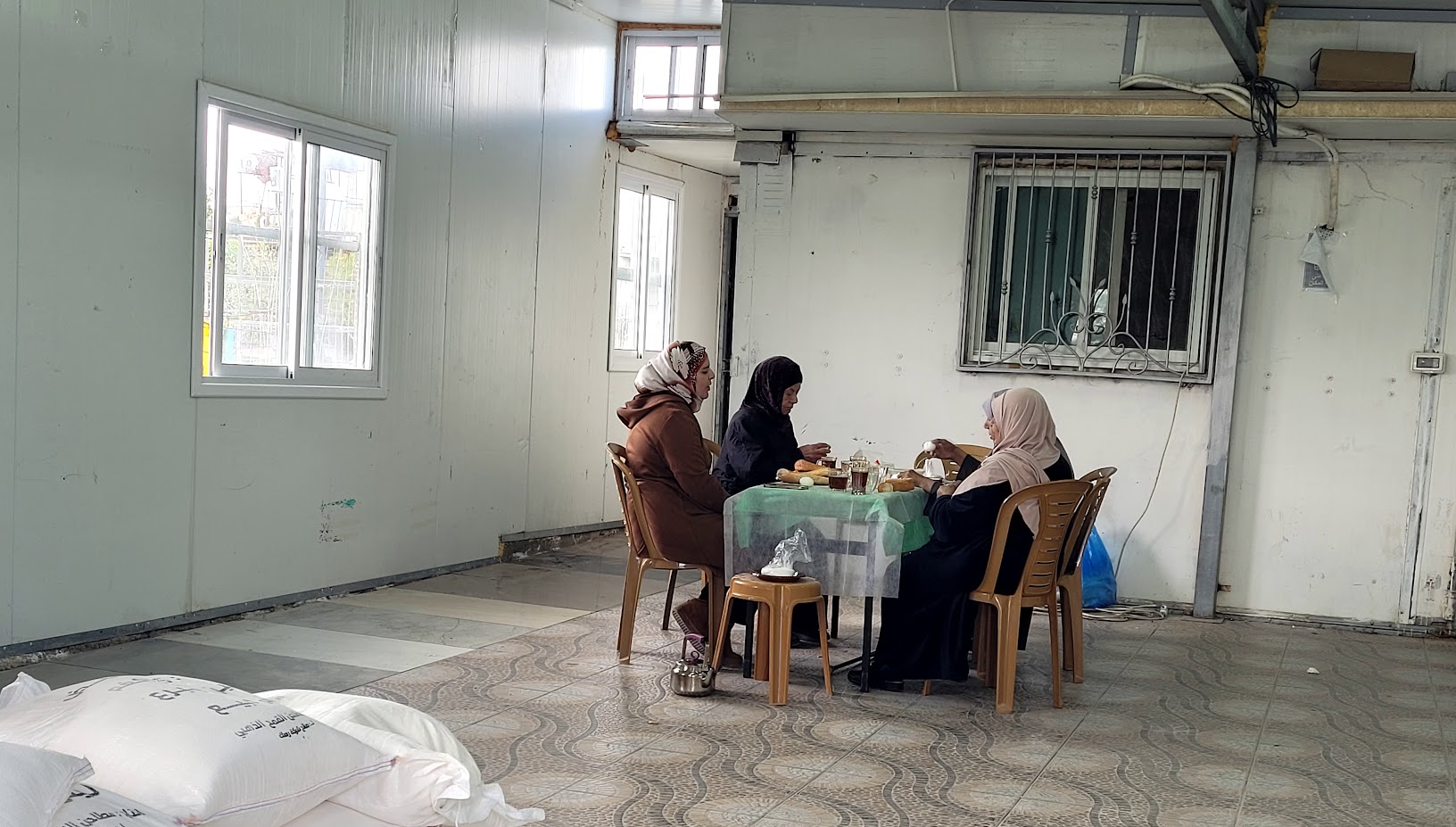
As we were preparing to leave, the doctor and her patients sat down to breakfast and invited us to join them. Pressed for time, we said our goodbyes.
We had also planned to visit Kufr Aqab, but because of time constraints we spoke only by phone with our contact there and will visit on another occasion. From that conversation we heard of endless difficulties there as well, and of ongoing harassment of residents. Some 90,000 of them are Jerusalem residents holding blue identity cards, many employed in both East and West Jerusalem. Yet at the Qalandiya checkpoint they are not treated as Jerusalem residents with legal rights. They are detained for long periods and face constant obstacles to maintaining a normal routine of work and daily life.
This is what life looks like in the occupied territories — all of it in Jerusalem’s backyard. In Nabi Samuel, the single checkpoint to the outside world opens at 7 a.m. and closes at 4 p.m. How can anyone sustain a normal life under such draconian restrictions and daily delays? It seems that the overriding objective is to push as many residents as possible to leave and to empty the ancient village. The residents, for their part, say they have no intention of going.
The only positive note of the day was the beauty of the landscape after the rain — the green hills and the flowers beginning to emerge everywhere. The almond trees are already in bloom. Has spring arrived?
Location Description
Nabi Samwil
See all reports for this place-
Nabi Samwil - a village literally placed in a transparent cage.
This Palestinian village is 800 years old. It is located on top of a hill, its altitude 890 meters above sea level, and overlooks the entire area. According to Jewish, Christian, and Muslim traditions, the Prophet Samuel was buried here. In recent years the mosque has been turned into a popular Jewish prayer site. Jews use the basement for prayer, and Muslims the upper part of the mosque. New signs are placed here, containing verses from the Jewish scriptures and mention of exclusively Israeli historical times. The nearby spring has become a popular site of ritual bathing. On Iyar 28th, every year, a mass-celebration is held in memory of the Prophet Samuel.
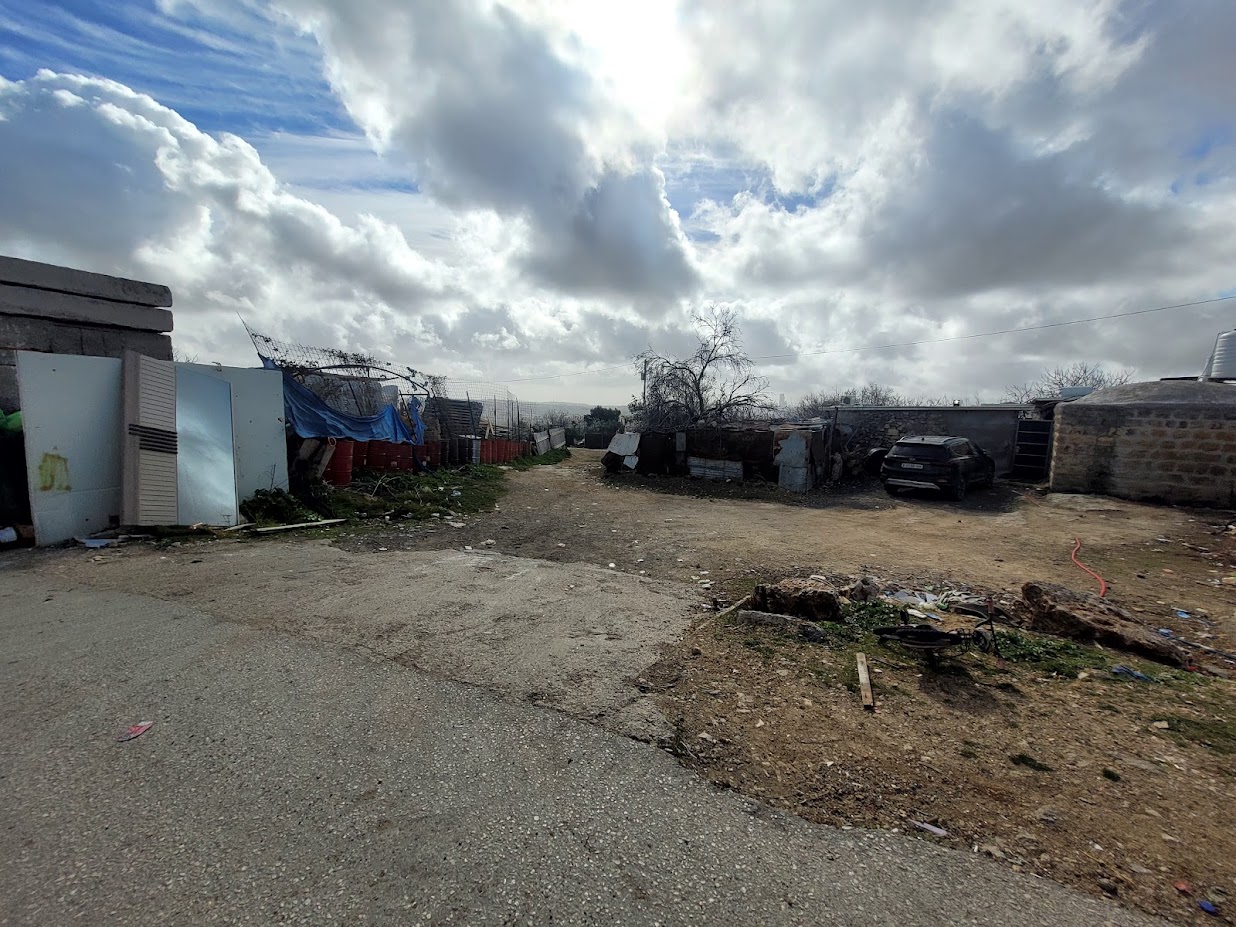
Until 1967 this was a well-off village that developed around the mosque, with a population of 1,000 owning thousands of dunams of farmland. In 1967 most of the villagers fled, and only 250 remained. In 1971 Israel expelled them, and until the 1990s completely razed its houses that were sitting on a Crusader and Hellenist archeological stratum, without any kind of compensation for the expelled inhabitants. Parts of the village lands are at present used for the settler-colony of Har Shmuel, another part has been declared a national park. Villagers have tried to restore their lives on their remaining lands, a short distance from their original homes, in an area that formerly held structures to house the village’s livestock.
Then the Separation Fence was erected in the West Bank, the village remained an enclave caught between the Green Line and the Fence, and its inhabitants were torn away from other West Bank villages. Any exit to the West Bank requires crossing the distant Jib checkpoint, with a permit. The movement to Israel inside the Green Line is forbidden as well. In 1995 the entire village area was declared a national park – not only around the mosque and antiquities around it which take up about 30 dunams, but an area of no less than 3,500 dunams including the new village and all of its land. Any additional construction is forbidden: any room, caravan, fence, a newly planted tree. Work permits are issued sparingly. There is a tiny school made up of several caravans.
Watch the movie by Eran Turbiner and MachsomWatch: NABI SAMWIL 1099-2099, a film by Eran Torbiner
-