
Palestinian Jordan Valley: all the sins of the Occupation, time and again
We went on a short visit to the Palestinian Jordan Valley, to the hamlets of Khalat Makhoul and En Al Hilwa, bringing packs of clothes, and money that Yaacov Manor asked us to take there. We thus heard about harsh cases that have become routine in this area, and it’s worse than if these were the exceptions…
A shepherd from En Al Hilwa was detained by the Israeli army for hours. The grounds – he let his flock graze close to the Jewish settler-colony of Shadmot Mekhola. Rains have indeed fallen lately but the situation on the ground is not much different from the end of the summer, the new grass is still too minor and insufficient. Every place where some grass grows is a rarity. And where are these places? Near the fences of the settler-colonies, where shepherds don’t dare to tread with their flocks for fear of the same settler-colonists. So this Palestinian shepherd, H., dared and endangered himself, for there is no other option. No grass elsewhere. And indeed, as it has already become routine, the local military security official summons the army, soldiers come and pick the shepherd up, usually shackled and blindfolded, for some punitive hours at the nearby military base. Then they release him and every time (again – as punishment) further and further from his home.
This “routine” has been going on for about two months now. Over 15 times with the same shepherd. It’s a game with rules that are known in advance. But the odds are so unfair: on the one hand, a person struggling over a meager livelihood for his family, and on the other hand, a sated apparatus that does everything to push him and his family to desperation, have them break and leave the area and the only kind of livelihood they have.
Lately, the detention of shepherds for hours by soldiers, usually with shackles and blindfolds (for what, besides humiliation and intimidation?) has become routine. The excuses vary: grazing inside a firing zone, in a nature reserve, close to a settler-colony fence. (How close? Who decides? Who has ruled?)
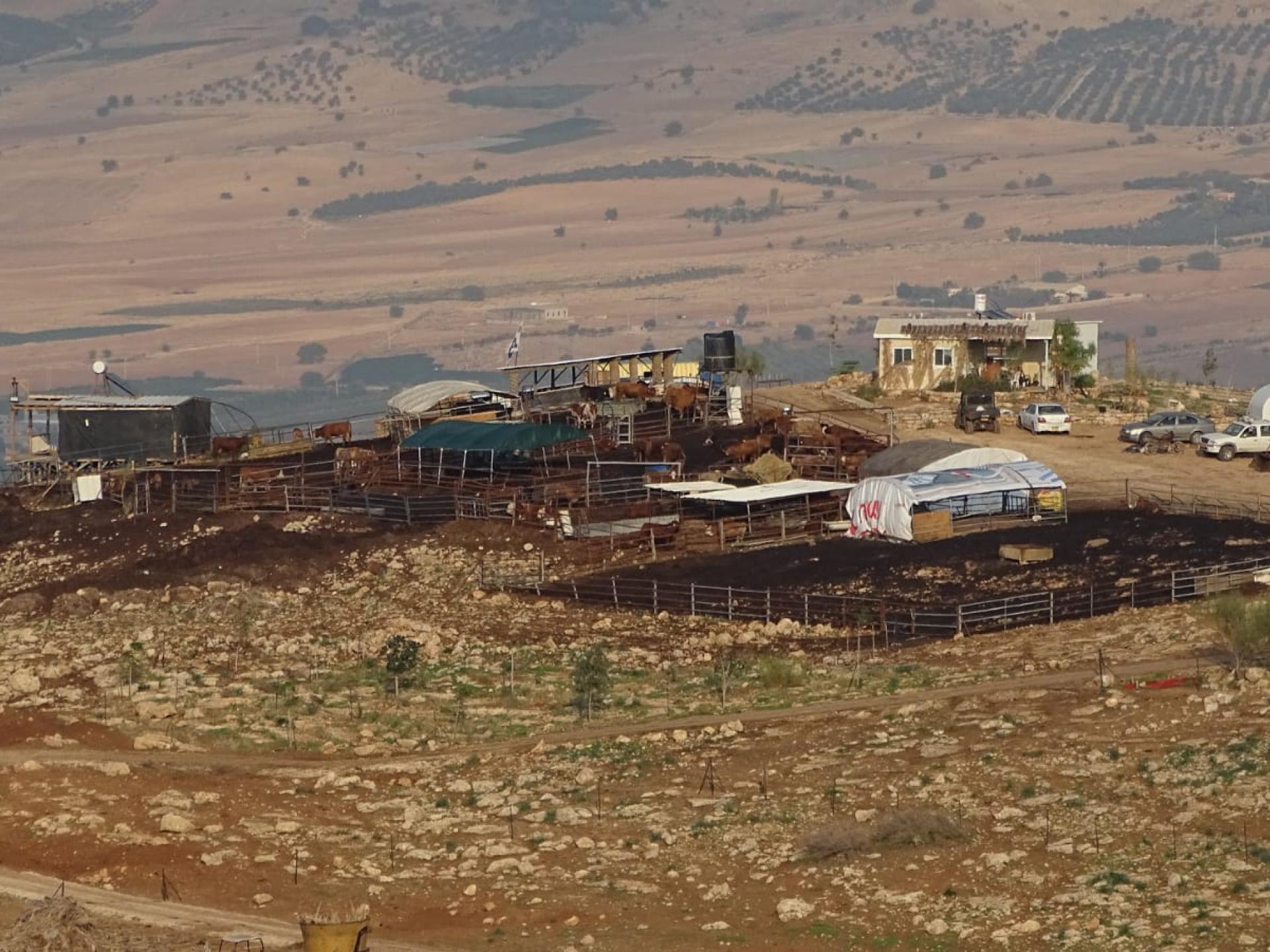
Another matter has become routine: yesterday someone from the Judea and Samaria Israel Police confiscated a cell phone belonging to Taayush activist Guy Hirschfeld. In recent months he has been personally hounded by the police and army. Guy and other Taayush activists as well as Combatants for Peace accompany Palestinian shepherds to their grazing grounds, to help them face the settler-colonists’ aggression, and the army that backs it up. This is a struggle over the survival of the shepherds who barely manage to make a living with their sheep and cattle flocks.
Jordan Valley
See all reports for this place-
Jordan Valley The Jordan Valley is the eastern strip of the West Bank. Its area consists of almost a third of the West Bank area. About 10,000 settlers live there, about 65,000 Palestinian residents in the villages and towns. In addition, about 15,000 are scattered in small shepherd communities. These communities are living in severe distress because of two types of harassment: the military declaring some of their living areas, as fire zones, evicting them for long hours from their residence to the scorching heat of the summer and the bitter cold of the winter. The other type is abuse by rioters who cling to the grazing areas of the shepherd communities, and the declared fire areas (without being deported). The many groundwaters in the Jordan Valley belong to Mekorot and are not available to Palestinians living in the Jordan Valley. The Palestinians bring water to their needs in high-cost followers.Rachel AfekOct-8-2026Jordan Valley. Widening of Road 505
-
