
PM
Ar-Ram, Qalandiya 6/5/2004 Watchers: Tami B., Limor Y. (reporting) Qalandiya. There was a long line for the whole duration of our watch. The wall under construction, with its endless concrete, fences and other items, makes one dizzy. The latest instruction is that everyone, including women and old people and excluding only residents of the Ramallah area, need permits to cross.When we arrived, me met M., a big man around 35 years old, who only wanted to get home to Hebron, but couldn’t. All our requests to the commander, and his plea that he didn’t have enough money to go by way of Surda didn’t help. The commander of the checkpoint (Ma’ayan) refused to listen. If M. had begun as an advocate of peace, he ended by burying all hopes at Qalandiya. The most difficult moment was when a grown man broke down in tears, in absolute despair. Finally, after a long wait, we saw that he was able to pass. Two happenings: One was how soldiers dealt with an injured person, and the second was when a young child waiting at the checkpoint exploded a balloon — which almost led to a loss of control, because of the extreme reactions of one of the soldiers who was just waiting for an opportunity to really “give it to them”. Women with children, the ill, and old were all directed to the regular long line. So too a physician who was carrying medicines that had to be kept on ice. Only after the initiative taken by one of the soldiers was a separate line opened for women, the old, and special cases. In the wake of an alert received while we were waiting, the soldiers started checking people with a magnetic device. We also noticed that they were setting up a magnetic gate (we advised the commander that it was important to warn pregnant women and people with pace makers, but we saw no indication that that was done). Another commander arrived at the checkpoint (Oron) who, unlike his predecessor, was prepared to use some flexibility in allowing people to pass — some of whom had been previously prevented from doing so. It was not clear what convinced him to do so. Perhaps it was the simple understanding that it was not humanitarian or legal to prevent people, against whom there was no reason for suspicion, to return home. In light of the reports that Aya K. received, and following a discussion with transit drivers, it appeared that in the morning, border policemen and the police came and conducted terrible actions against some of the drivers. Some were made to sign that they would not drive vehicles with yellow plates. Others were told to “beat it’ It was apparently an attempt to keep them away from the area of the wall. We saw that the army took over the roof of one of the houses near the wall. In the course of our watch, we heard that people were not allowed to cross at Surda. On our way back, a student in the transit told us that in the hours around noon, Surda was totally closed to traffic for three hours. She said that the soldiers were brutal, could not have cared less that they were hurrying to exams, and even the elderly and the sick had to wait for hours in the burning sun. As if that was not enough, they also threw tear gas. 19:00, Ar-Ram. The soldiers were very slow about inspecting, but we did not see any detainees.
Hebron
See all reports for this place-
According to Wye Plantation Accords (1997), Hebron is divided in two: H1 is under Palestinian Authority control, H2 is under Israeli control. In Hebron there are 170,000 Palestinian citizens, 60,000 of them in H2. Between the two areas are permanent checkpoints, manned at all hours, preventing Palestinian movement between them and controlling passage of permit holders such as teachers and schoolchildren. Some 800 Jews live in Avraham Avinu Quarter and Tel Rumeida, on Givat HaAvot and in the wholesale market.
Checkpoints observed in H2:
- Bet Hameriva CP- manned with a pillbox
- Kapisha quarter CP (the northern side of Zion axis) - manned with a pillbox
- The 160 turn CP (the southern side of Zion axis) - manned with a pillbox
- Avraham Avinu quarter - watch station
- The pharmacy CP - checking inside a caravan with a magnometer
- Tarpat (1929) CP - checking inside a caravan with a magnometer
- Tel Rumeida CP - guarding station
- Beit Hadassah CP - guarding station
Three checkpoints around the Tomb of the Patriarchs
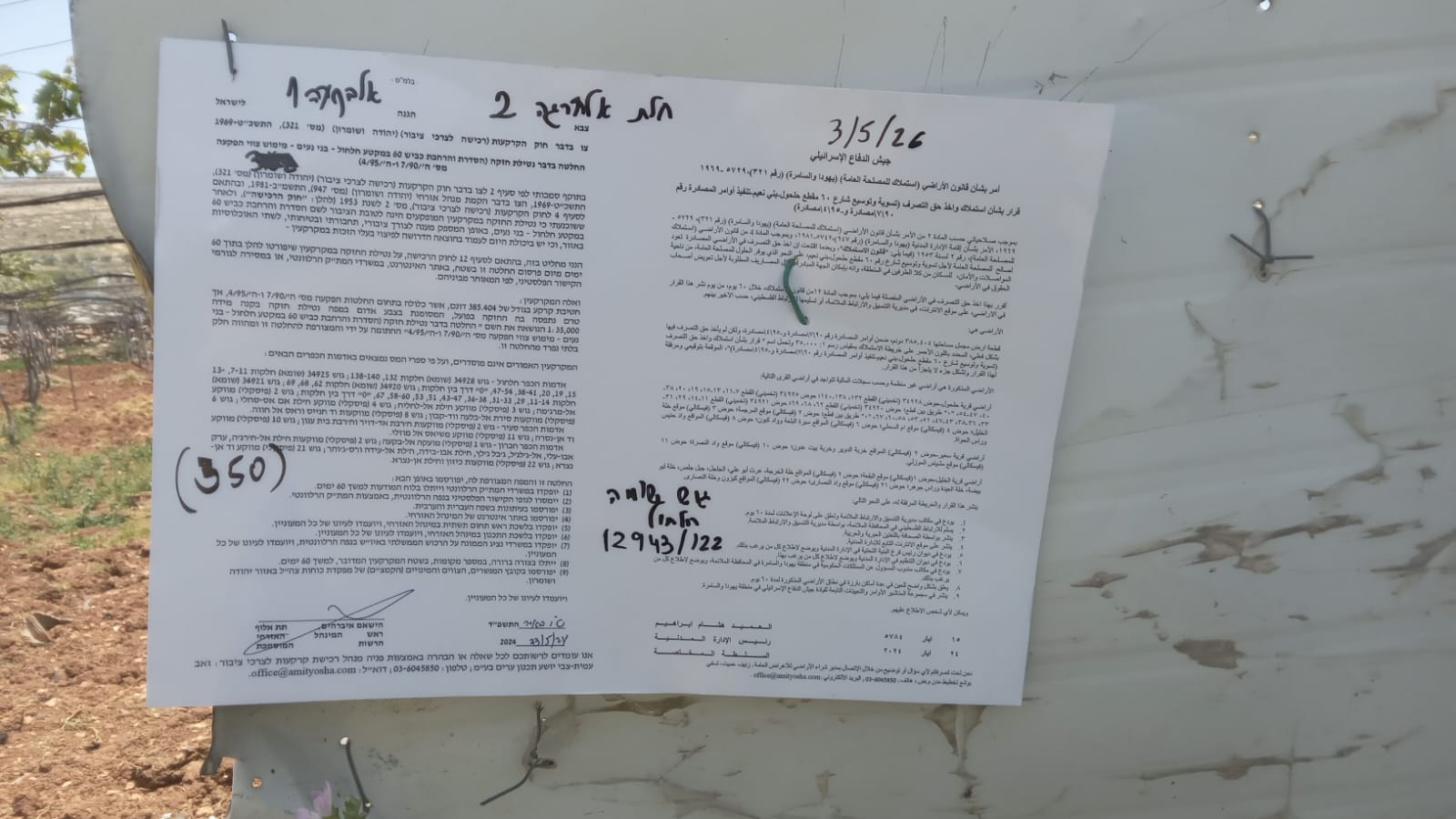 Muhammad D.May-13-2026Hebron - Request for compensation for land expropriation
-