
PM
HUWWARA, Monday 10 May 2004 PMObservers: Ruti K., Meki S., Maya K., Noya and Anat D. (reporting ) colour = red>This report should be read in conjunction with the one of the same date for Beit Iba. The team observed both checkpoints on the same afternoon.Huwwara South There was considerable traffic at the checkpoint on this hazy, hamsin day. On arrival, we noticed that the protective shade over the detainees’ area had been folded away. When we asked why, the commander said that the detainees had leaned on one of the posts and caused it to collapse. He promised us that it would be re-erected that same evening . I have asked the next morning watch to check this.Checking of the detainees was relatively rapid. Most didn’t wait more than an hour for passage permits. In two exceptional cases in which we intervened, the commander displayed consideration and exercised humane discretion. His behaviour made it clear that it is possible to observe the procedures and still behave pleasantly and courteously towards the Palestinians and towards us. It left a good impression.Huwwara North Here, the situation was quite the opposite. The protective shade was still in place but the soldiers were rude and contemptuous of the Palestinians. Two women soldiers stood at the pedestrian passage to check the women. They behaved rudely towards those going through and when we approached the checkpoint commander, he said that they were there temporarily as part of a Border Police course, and thus he thought there was no point in commenting to them on their insupportable behavior. “It’s a question of character.” During their lunch break, the two of them went off to eat together, halting the checking. The Palestinian women were forced to wait until they had finished eating. When we asked why they were taking a break together, we didn’t receive a satisfactory reply. When we asked about the detainees, the answers were very incoherent; the main pretext was lack of manpower.We gained a strong impression of a lack of order and discipline: there was no authority capable of guiding events, each soldier was doing as he chose, and this was particularly so of the two women soldiers.In conclusion: the two water tanks on either side of the checkpoint were oput of commission. One had collapsed on its side and the other had holes in it. The soldiers claimed that the Palestinians sabotaged them and so there was no immediate intention of mending them.
Beit Iba
See all reports for this place-
A perimeter checkpoint west of the city of Nablus. Operated from 2001 to 2009 as one of the four permanent checkpoints closing on Nablus: Beit Furik and Awarta to the east and Hawara to the south. A pedestrian-only checkpoint, where MachsomWatch volunteers were present daily for several hours in the morning and afternoon to document the thousands of Palestinians waiting for hours in long queues with no shelter in the heat or rain, to leave the district city for anywhere else in the West Bank. From March 2009, as part of the easing of the Palestinian movement in the West Bank, it was abolished, without a trace, and without any adverse change in the security situation.
 Jun-4-2014Beit-Iba checkpoint 22.04.04
-
Huwwara
See all reports for this place-
The Huwwara checkpoint is an internal checkpoint south of the city of Nablus, at the intersection of Roads 60 and 5077 (between the settlements of Bracha and Itamar). This checkpoint was one of the four permanent checkpoints that closed on Nablus (Beit Furik and Awarta checkpoints to the east and the Beit Iba checkpoint to the west). It was a pedestrian-only barrier. As MachsomWatch volunteers, we watched therre since 2001 two shifts a day - morning and noon, the thousands of Palestinians leaving Nablus and waiting for hours in queues to reach anywhere else in the West Bank, from the other side of the checkpoint the destination could only be reached by public transport. In early June 2009, as part of the easing of Palestinian traffic in the West Bank, the checkpoint was opened to vehicular traffic. The passage was free, with occasional military presence in the guard tower. Also, there were vehicle inspections from time to time. Since the massacre on 7.10.2023, the checkpoint has been closed to Palestinians.
On February 26, 2023, about 400 settlers attacked the town's residents for 5 hours and set fire to property, such as houses and cars. Disturbances occurred in response to a shooting of two Jewish residents of Har Bracha by a Palestinian Terrorist. The soldiers stationed in the town did not prevent the arson and rescued Palestinian families from their homes only after they were set on fire. No one was punished and Finance Minister Smotrich stated that "the State of Israel should wipe out Hawara." Left and center organizations organized solidarity demonstrations and support actions for the residents of Hawara.Hawara continued to be in the headlines in all the months that followed: more pogroms by the settlers, attacks by Palestinians and a massive presence of the army in the town. It amounted to a de facto curfew of commerce and life in the center of the city. On October 5, 2023, MK Zvi established a Sukkah in the center of Hawara and hundreds of settlers backed the army blocked the main road and held prayers in the heart of the town all night and the next day. On Saturday, October 7, 23 The "Swords of Iron" war began with an attack by Hamas on settlements surrounding Gaza in the face of a poor presence of the IDF. Much criticism has been made of the withdrawal of military forces from the area surrounding Gaza and their placement in the West Bank, and in the Hawara and Samaria region in particular, as a shield for the settlers who were taking over and rioting.
On November 12, 2023, the first section of the Hawara bypass road intended for Israeli traffic only was opened. In this way, the settlers can bypass the road that goes through the center of Hawara, which is the main artery for traffic from the Nablus area to Ramallah and the south of the West Bank. For the construction of the road, the Civil Administration expropriated 406 dunams of private land belonging to Palestinians from the nearby villages. The settlers are not satisfied with this at the moment, and demand to also travel through Hawara itself in order to demonstrate presence and control.(updated November 2023)
.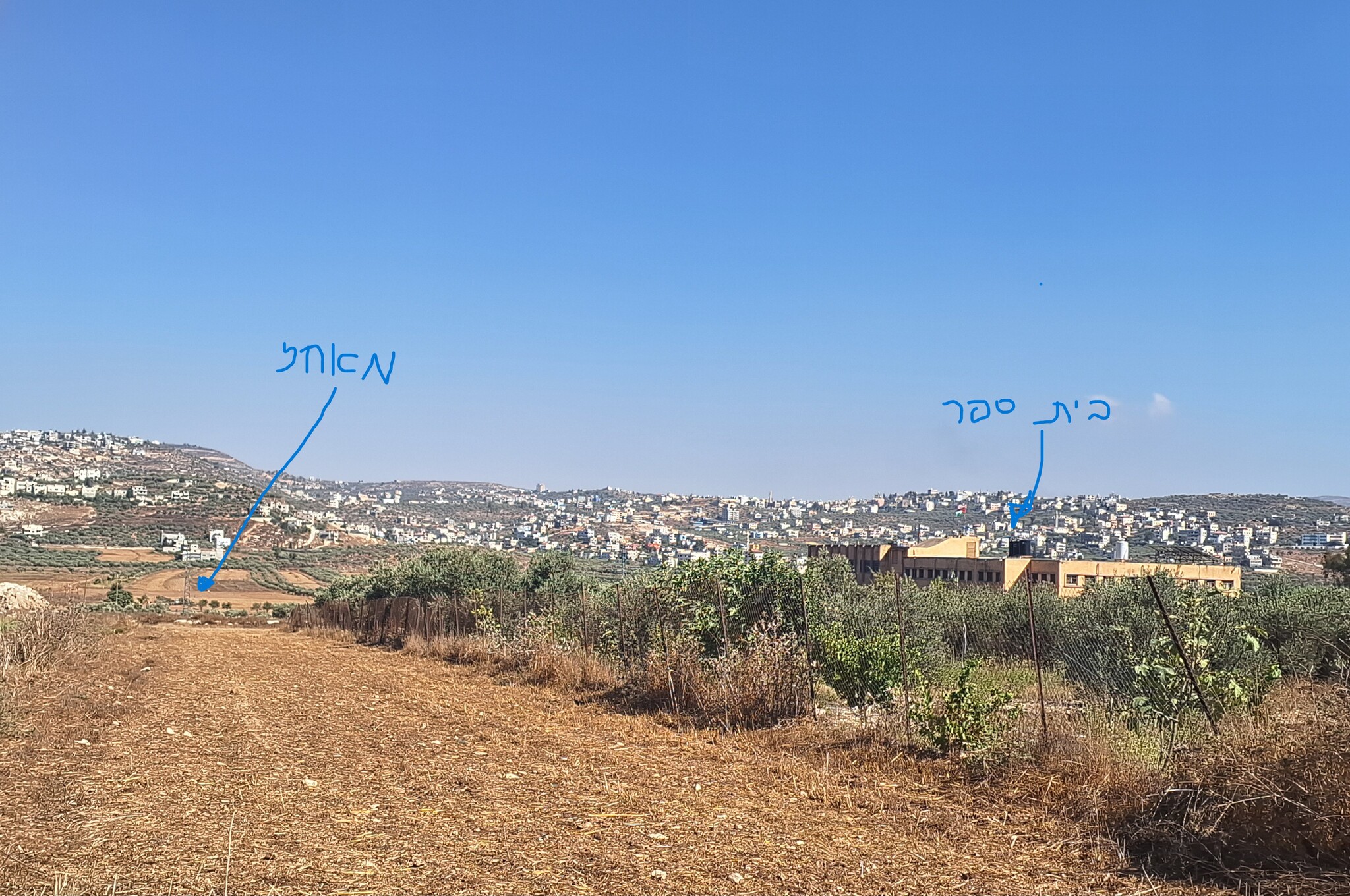 Ronit Dahan-RamatiAug-24-2026Huwara: The school on the outskirts of town and an outpost hidden among the trees
-
