
PM
Sarra, Beit Iba, Huwwara and Beit Furik Monday PM, February 9, 2004 Watchers: Menucha, Noya, Miri, Maya (Reporting) Summary: We were at 4 checkpoints. Except for Sarra where we argued with the soldiers, we begged and pleaded at the others — but were we helpful? The detainees waited for so long, they might have been released anyway without our help! (This pessimistic summary is the reporter’s personal opinion). 13:00 – We decided to pass Sarra Checkpoint, while attempting to enter the village and look for the checkpoint of which horror stories are heard. The checkpoint can’t be reached by car, so we had an uphill walk, on a wonderful spring day. 3 soldiers and 6 detainees were up there. We wanted to enter the village first – but faced the strong objections of the soldiers who physically blocked the passage. We gave in after a harsh argument. The detainees, Israelis residents – blue IDs, were held over an hour, wanted to sell books at Nablus. The checkpoint commander, Arabic literate, inspect the books, and he found among them, one book which deals with the Shahids (Moslem martyrs) – picture and story off each Shahid. The Checkpoint commander agreed to release them all (back home – they can’t go in Nablus as they have Israeli IDs), except two: one who, according to the soldiers , was caught while he tried to cross through the hills ( according to the other detainees he came with them – and went up to answer the call of nature…) ; the other one was a young woman who “verbally attacked” one of the soldiers. The man told us that he has been handcuffed ( we saw the marks on his hands). We tried to help, but the soldiers were hostile. We talked with the IDF Humanitarian Alert Center. They were released after we left. They had been held for more than 4 hours and called us after they were freed. 14:30, Beit Iba Checkpoint: The line of people was short, and they crossed quickly. Sami from DCO, whom we know from previous shifts, was there and quicken passage, at least at our presents. On the other end many detainees were there (20 or more. After we left one of them told us that they were over 50). Most of the detainees were students. Sami and the soldiers explained the order as follow: Students staying at Nablus allow to Nablus on Saturdays (back to the university) and on Wednesdays (Back to there families). This doesn’t apply for students who stay at near villages – they allow passage every day. Except of the students some detainees were captured while trying to go around the checkpoint (according to Sami), or for no reason (according to the detainees). Three detainees said they were bitten when they were captured while tried to go around. All detainees were young. Checking their IDs took hours- The Palestinians claimed that they waited 5 hours before we arrived, the soldiers denied. Sami called a soldier, while he spoke with us: “Check what about the IDs”. If any one actually checked- we don’t know. Drinking water was a problem – as the detainees were held for hours and the soldiers didn’t take care of it. Eventually they were released around 5pm (After we left- we find out through Telephone). By the way: Sami from the DCO said that there is no order to free detainees after 4 hours! 16:00 Beit Furik: We arrived at the end of the day. Few pedestrians pass the checkpoint. They said that there were detainees during the day. “ As usual” said the officer- “ in the wrong age” (age 16 to 35). We rapidly left. 16:30 Huwwara Checkpoint, North entry (from Nablus): Traffic flowed. There were 10 detainees, all of them young. One of them had an X-ray film, which he said had just had taken in Nablus. Ofer from the DCO was present and gave us long explanation ( which he gave the detainees before) about the importance of Magnetic Card as facilitator for there passage. One of the detainees showed us a form he filed for that card and claimed it was infinite mission because you need to do one thing at Nablus – than you have to go to the DCO, and he lives in a village and have to go through many checkpoint every time.Menucha spoke to the “Moked” (Center for the defense of the individual) about the guy with the X-ray negative. They still were held when we left at 17:30. Shortly after they were released (Phone query).
Beit Iba
See all reports for this place-
A perimeter checkpoint west of the city of Nablus. Operated from 2001 to 2009 as one of the four permanent checkpoints closing on Nablus: Beit Furik and Awarta to the east and Hawara to the south. A pedestrian-only checkpoint, where MachsomWatch volunteers were present daily for several hours in the morning and afternoon to document the thousands of Palestinians waiting for hours in long queues with no shelter in the heat or rain, to leave the district city for anywhere else in the West Bank. From March 2009, as part of the easing of the Palestinian movement in the West Bank, it was abolished, without a trace, and without any adverse change in the security situation.
 Jun-4-2014Beit-Iba checkpoint 22.04.04
-
Huwwara
See all reports for this place-
The Huwwara checkpoint is an internal checkpoint south of the city of Nablus, at the intersection of Roads 60 and 5077 (between the settlements of Bracha and Itamar). This checkpoint was one of the four permanent checkpoints that closed on Nablus (Beit Furik and Awarta checkpoints to the east and the Beit Iba checkpoint to the west). It was a pedestrian-only barrier. As MachsomWatch volunteers, we watched therre since 2001 two shifts a day - morning and noon, the thousands of Palestinians leaving Nablus and waiting for hours in queues to reach anywhere else in the West Bank, from the other side of the checkpoint the destination could only be reached by public transport. In early June 2009, as part of the easing of Palestinian traffic in the West Bank, the checkpoint was opened to vehicular traffic. The passage was free, with occasional military presence in the guard tower. Also, there were vehicle inspections from time to time. Since the massacre on 7.10.2023, the checkpoint has been closed to Palestinians.
On February 26, 2023, about 400 settlers attacked the town's residents for 5 hours and set fire to property, such as houses and cars. Disturbances occurred in response to a shooting of two Jewish residents of Har Bracha by a Palestinian Terrorist. The soldiers stationed in the town did not prevent the arson and rescued Palestinian families from their homes only after they were set on fire. No one was punished and Finance Minister Smotrich stated that "the State of Israel should wipe out Hawara." Left and center organizations organized solidarity demonstrations and support actions for the residents of Hawara.Hawara continued to be in the headlines in all the months that followed: more pogroms by the settlers, attacks by Palestinians and a massive presence of the army in the town. It amounted to a de facto curfew of commerce and life in the center of the city. On October 5, 2023, MK Zvi established a Sukkah in the center of Hawara and hundreds of settlers backed the army blocked the main road and held prayers in the heart of the town all night and the next day. On Saturday, October 7, 23 The "Swords of Iron" war began with an attack by Hamas on settlements surrounding Gaza in the face of a poor presence of the IDF. Much criticism has been made of the withdrawal of military forces from the area surrounding Gaza and their placement in the West Bank, and in the Hawara and Samaria region in particular, as a shield for the settlers who were taking over and rioting.
On November 12, 2023, the first section of the Hawara bypass road intended for Israeli traffic only was opened. In this way, the settlers can bypass the road that goes through the center of Hawara, which is the main artery for traffic from the Nablus area to Ramallah and the south of the West Bank. For the construction of the road, the Civil Administration expropriated 406 dunams of private land belonging to Palestinians from the nearby villages. The settlers are not satisfied with this at the moment, and demand to also travel through Hawara itself in order to demonstrate presence and control.(updated November 2023)
.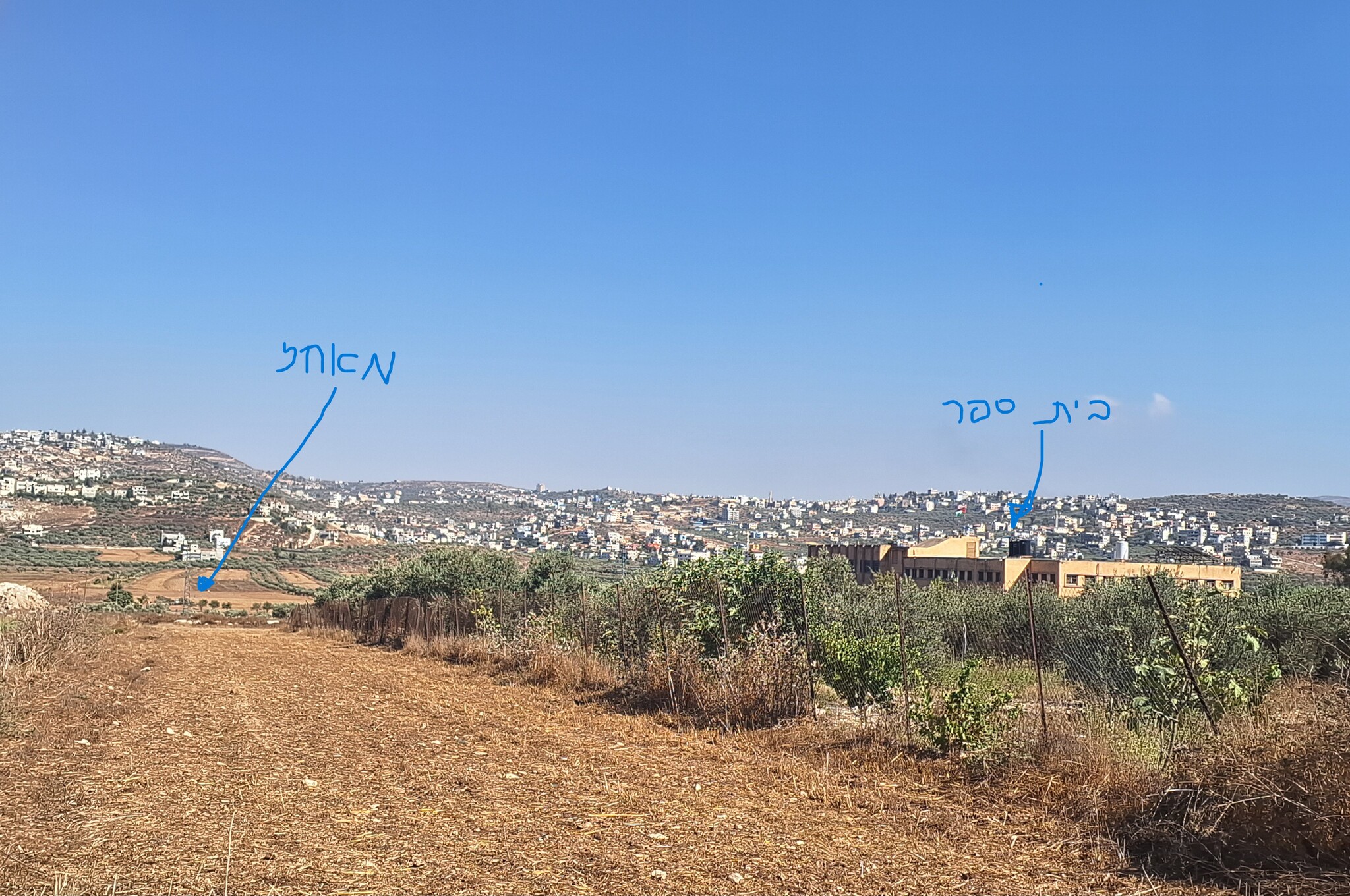 Ronit Dahan-RamatiAug-24-2026Huwara: The school on the outskirts of town and an outpost hidden among the trees
-
Sarra
See all reports for this place-
Sarra
The checkpoint is installed between the Palestinian village of Sera and the district city of Nablus,
Since 2011, internal barriers Located among the West Bank Israeli settlements have somehow allowed, Palestinian residents to travel and move and reach various Palestinian cities.
After the terrible massacre by the Hammas on October 7 upon Israelis in the communities around Gaza, internal checkpoints manned by the army were installed to prevent free passage for Palestinians.
Many restrictions were imposed on the Palestinians in the West Bank. The prevention of movement shuttered the possibility of making a living in Israel. The number of Palestinian attacks by Israeli extremist settlelers increased along with the radicalization of the army against the Palestinians.
The conduct at the Sera checkpoint is one of the manifestations of the restrictions on all aspects of the Palestinians' lives.
-
