
PM
Abu-Dis 22/2/2004 Watchers: Yael I. and Ronny P. (reporter) plus Riese Ehrlich, public radio reporter We arrived at the Pishpash gate and saw how people were crossing without any interference from the few BPs there. We took a taxi to the container and were told there is total closure. Because of our guest we decided to walk to the checkpoint. There were many vehicles parked on the side of the road waiting for the checkpoint to reopen. We met a group of students and naively hoped we may help to persuade the soldiers to let them pass. But as we arrived at the checkpoint we felt the nervousness and tension fully. The soldiers were chasing people away from far before the checkpoint itself equipped with wooden sticks. We saw people on the roofs watching the road past the checkpoint and met a whole group of students-only women who said they were turned down when they climbed down the hill and reached the road – military police vans were hiding round the corners and catchiing the tresspassers. We spoke to an AP reporter who lives in Hebron who was standing and waiting and constantly on the phone. Suddenly, as if a public announcement was made, people started walking down the hill 20 meters before the totally “closured” checkpoint with suitcases, with bags, women, workers and a whole busload of scouts, boys with their scout scarfs. More transits arrived and people poured out, and our AP reporter showed us his car safely parked in the yard of a nearby home also walking with his cameras down the hill. We gave the Human Rights Hotline cards to a couple of people and to the doctor of the ambulance which was refused. We also gave him the phone number for the Doctors for Human Rights and noted how absolutely unwilling the drivers and the doctor were to have any contact with us. An experience deserving contemplation. We returned to Abu-Dis and as we arrived we witnessed a scene so violent and swift that characterizes the most difficult moments of total helplessness we know when there are incidents at the checkpoint. Two BPS ran into a metal shop right next to the Pishpash gate and pulled out a very frightened guy brutally and dragged him to the van. The charge was that he threw a stone at the soldiers. Many people were trying to tell the soldiers that it was a kid who did it and not the guy whom they took. There was quite a number of BPs there, and suddenly they started checking everyone and acting harsh. We saw an older officer and asked him to speak to the soldiers, “since we have a foreign reporter here – so why should he witness such brutality”. We were amazed that he actually took the guy aside and spoke to him. The shop owner who employed the guy pleaded with the officer did not succeed, and the van took him. We took the van number, got the name and phonenumber of the guy who was taken and called the Moked (Center for the Defense of the Individual). The soldiers told us he was taken to the Russian Compound and the men in the shop told us that this unit always takes them to Shalem Police station in Sallah A-Din street. We were unbelievably happy when 2 hours later we got a call that the guy is back home in Al Ezariya. For once we felt we helped and felt a small sense of satisfaction on a miserable day like yesterday.
Hebron
See all reports for this place-
According to Wye Plantation Accords (1997), Hebron is divided in two: H1 is under Palestinian Authority control, H2 is under Israeli control. In Hebron there are 170,000 Palestinian citizens, 60,000 of them in H2. Between the two areas are permanent checkpoints, manned at all hours, preventing Palestinian movement between them and controlling passage of permit holders such as teachers and schoolchildren. Some 800 Jews live in Avraham Avinu Quarter and Tel Rumeida, on Givat HaAvot and in the wholesale market.
Checkpoints observed in H2:
- Bet Hameriva CP- manned with a pillbox
- Kapisha quarter CP (the northern side of Zion axis) - manned with a pillbox
- The 160 turn CP (the southern side of Zion axis) - manned with a pillbox
- Avraham Avinu quarter - watch station
- The pharmacy CP - checking inside a caravan with a magnometer
- Tarpat (1929) CP - checking inside a caravan with a magnometer
- Tel Rumeida CP - guarding station
- Beit Hadassah CP - guarding station
Three checkpoints around the Tomb of the Patriarchs
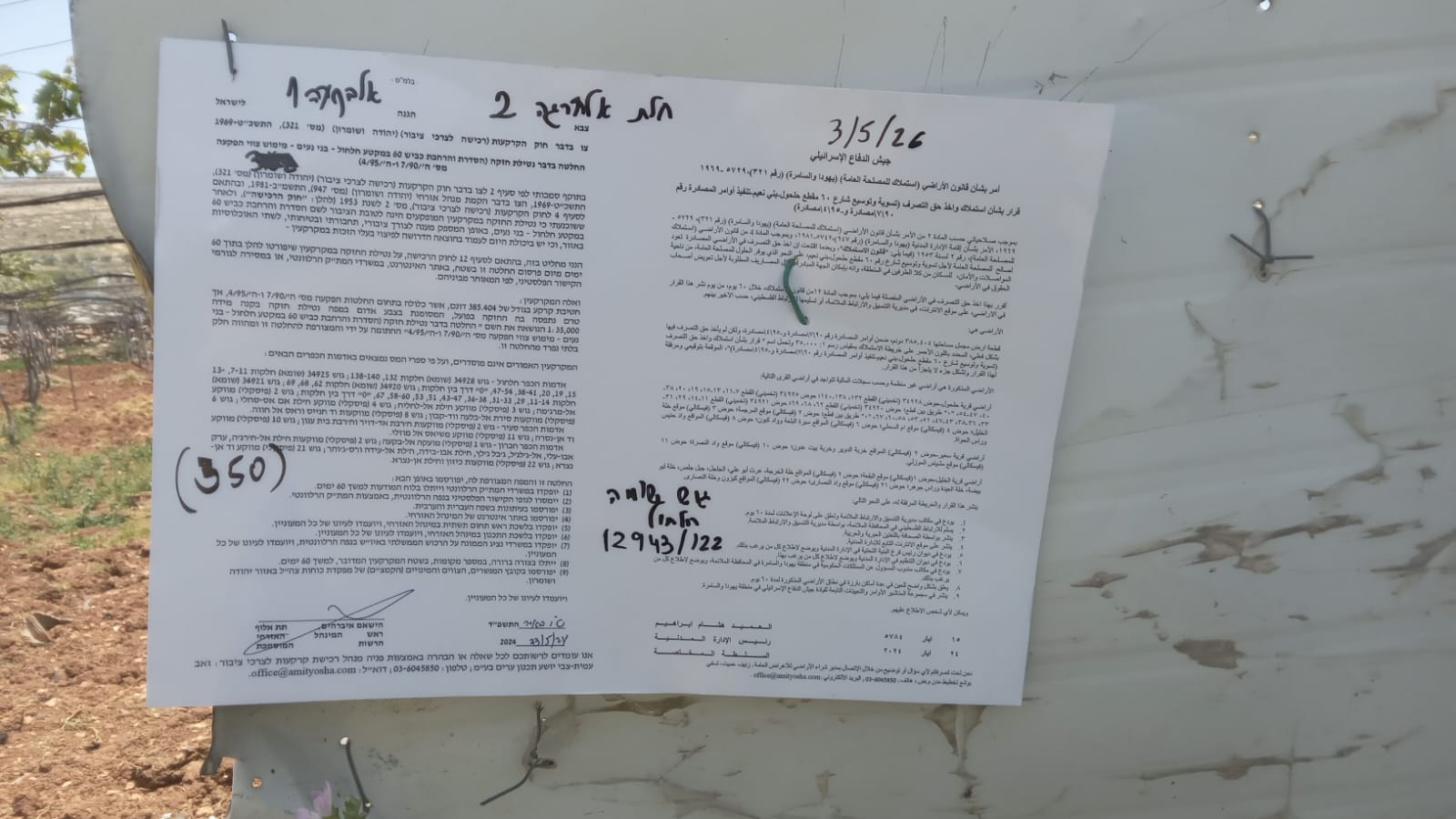 Muhammad D.May-13-2026Hebron - Request for compensation for land expropriation
-