
Qalandiya checkpoint: no work, no money, no food
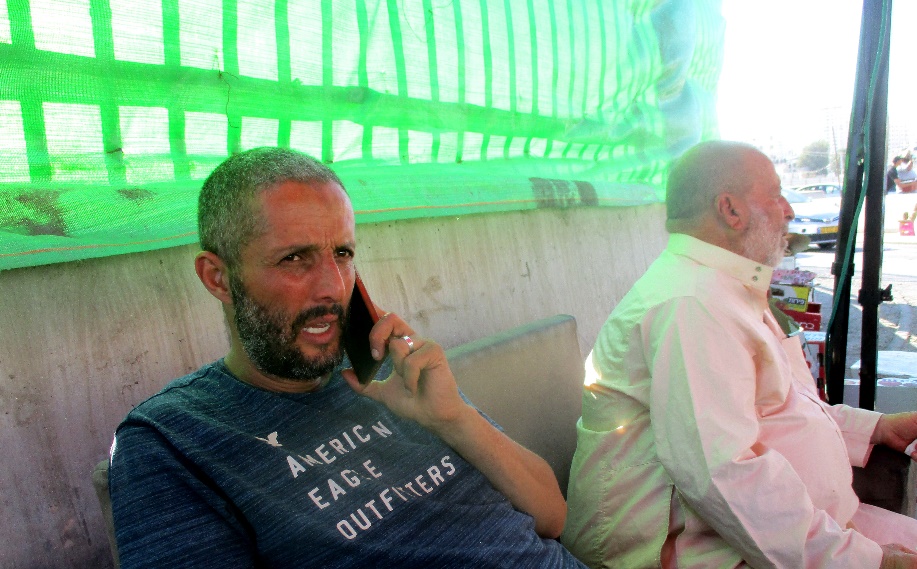
Two months have gone by since my friend Abdallah Tamimi came back to his family after being released from about a year in a military prison, and the signs of prison are etched in his body and soul like a fire brand.
Memories of starvation, lack and violence remind him of a narrow, dark tunnel whose end is unknown even when he tries to chase them away, as if they have a kind of independent power that returns time and again to strike one’s consciousness and body.
The white hair on his head and beard are evidence not only of his age but also of the suffering he underwent.
So far his body has returned half the weight he lost in prison – twenty of the forty kilos are back but signs of the wounds on his legs and lower body caused by blows of the wardens’ clubs and kicks are still seen in the living flesh still spotted black and blue.
“When they (the guards) kick or beat you up” Abdallah says, “there is no way there, in prison, to clean up the wounds, wipe away the blood or clean the blow, so the wounds get infected and inflammation sets in”.
I didn’t ask much for even when he repeatedly declared – as if trying to convince me or himself – “I am strong”, I noticed the pain that makes him mention the memories from there, from that dark side when he was forced to be behind bars and did not know when he would be released.
What else was there in Qalandiya?
In the area around the Qalandiya Checkpoint and next to the refugee camp, a place bustling with adults and children trying to make a few shekels to bring a piece of bread home – until a about two years ago, when war broke out, the place saw Israelis too. Not many, some. By “Israelis” I do not include armed men and women. Now, except for these, there are no Israelis to be seen here, perhaps for their fear of the other, perhaps they have been consciously poisoned. As far as I can see, I am the only Israeli Jew coming to meet acquaintances to have a chat and express solidarity and hope.
They talk about unemployment, no money, no food, exploitation and dispossession, and ask me:
- Why are we victims of what has happened and is happening in the Gaza Strip?
- We want to live in peace and quiet with our children and wife, why is Israel not allowing this?
- Is there a chance that Netanyahu will meet the same fate as Rabin?
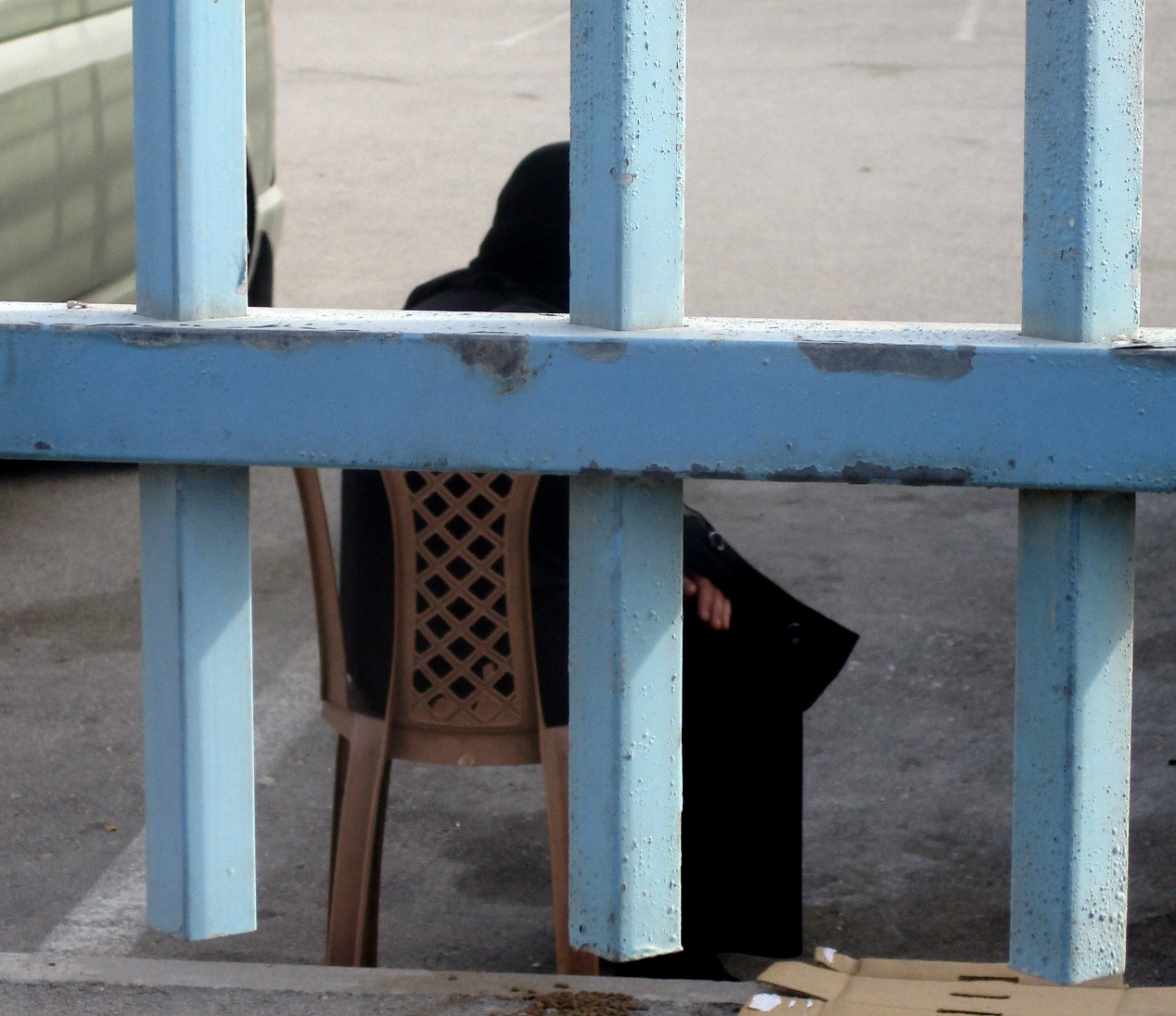
Location Description
Qalandiya Checkpoint / Atarot Pass (Jerusalem)
See all reports for this place-
Click here to watch a video from Qalandiya checkpoint up to mid 2019 Three kilometers south of Ramallah, in the heart of Palestinian population. Integrates into "Jerusalem Envelope" as part of Wall that separates between northern suburbs that were annexed to Jerusalem in 1967: Kafr Aqab, Semiramis and Qalandiya, and the villages of Ar-Ram and Bir Nabala, also north of Jerusalem, and the city itself. Some residents of Kafr Aqab, Semiramis and Qalandiya have Jerusalem ID cards. A terminal operated by Israel Police has functioned since early 2006. As of August 2006, northbound pedestrians are not checked. Southbound Palestinians must carry Jerusalem IDs; holders of Palestinian Authority IDs cannot pass without special permits. Vehicular traffic from Ramallah to other West Bank areas runs to the north of Qalandiya. In February 2019, the new facility of the checkpoint was inaugurated aiming to make it like a "border crossing". The bars and barbed wire fences were replaced with walls of perforated metal panels. The check is now performed at multiple stations for face recognition and the transfer of an e-card. The rate of passage has improved and its density has generally decreased, but lack of manpower and malfunctions cause periods of stress. The development and paving of the roads has not yet been completed, the traffic of cars and pedestrians is dangerous, and t the entire vicinity of the checkpoint is filthy. In 2020 a huge pedestrian bridge was built over the vehicle crossing with severe mobility restrictions (steep stairs, long and winding route). The pedestrian access from public transport to the checkpoint from the north (Ramallah direction) is unclear, and there have been cases of people, especially people with disabilities, who accidentally reached the vehicle crossing and were shot by the soldiers at the checkpoint. In the summer of 2021, work began on a new, sunken entrance road from Qalandiya that will lead directly to Road 443 towards Jerusalem and Tel Aviv. At the same time, the runways of the old Atarot airport were demolished and infrastructure was prepared for a large bus terminal. (updated October 2021)
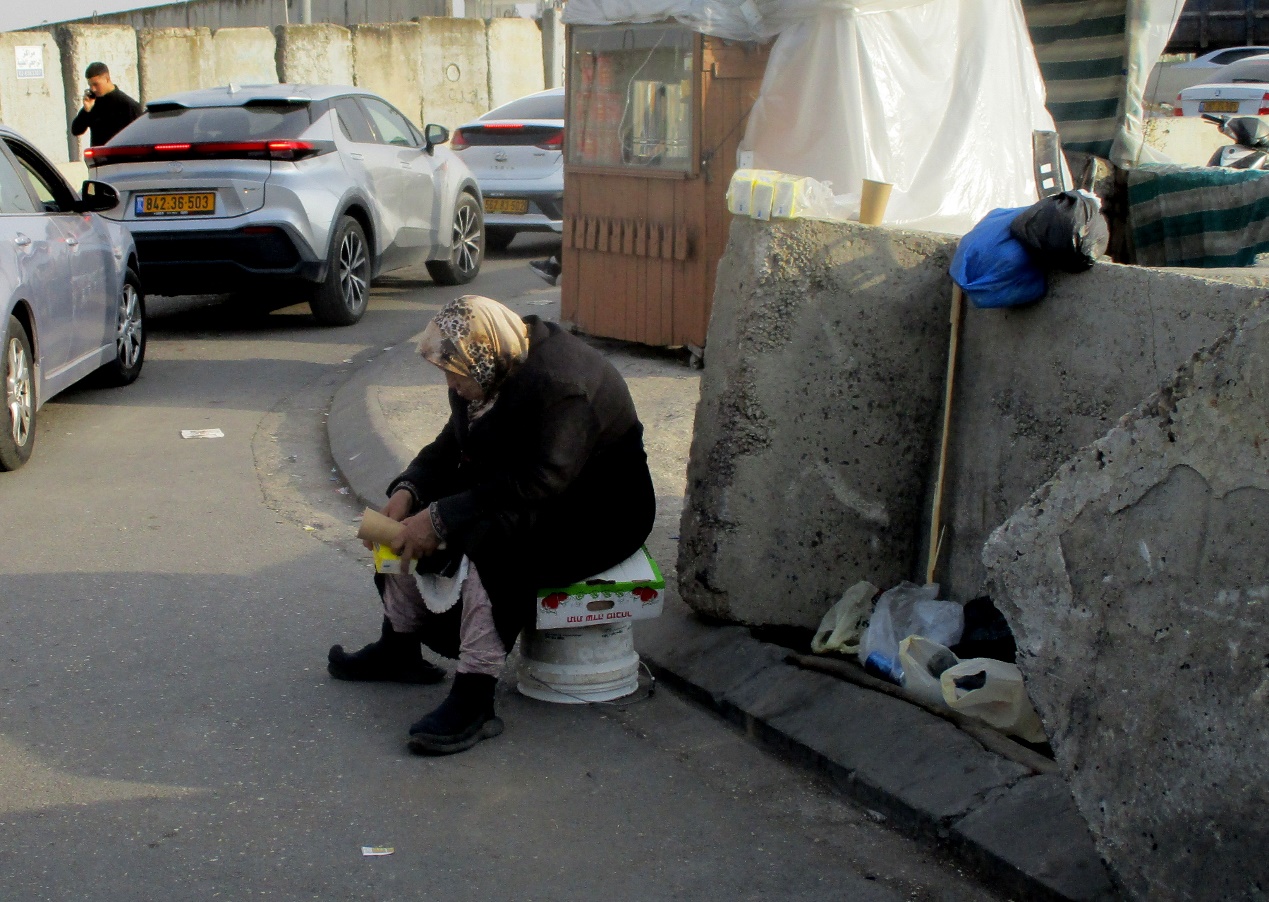 Tamar FleishmanOct-11-2026Qalandiya. Female Beggar
-
