
Qalandiya, Sun 1.4.12, Morning
Translation: Judith Green
At 5:30, the line spread out into the road. People were standing in line without pushing or any violence. The soldiers who was sitting in the protected booth, responsible for the opening of the turn stiles, actually responded to our "good morning" greetings, which was quite a concession! As though that wasn't enough, he even opened the window in the "bunker" where he sat, in order to listen to us, see us, and relate to us. We asked him to open the turn stiles more frequently, in order to stream more people into the inner courtyard, even just to give them the feeling that they were making some progress. According to him, they are forbidden to overload the inner courtyard lest a riot should break out in it and they would not have any way to get to the troublemakers or to control them. This did sound logical. But what should really determine the policy, in the long run, is maximizing the efficiency of the soldiers' task of inspecting the permits and documents of the people going through. It seemed that this was a very good day altogether, from every point of view: the soldiers who inspected the documents, and the soldier who sat in the protected booth, as well as the officer who arrived at 6:15 – all of them worked very efficiently and with good will. Even though there was a great number of people, as always, there was a good flow and those standing in line were patient. I don't know whether this was just luck, or things which were unknown to us, or perhaps a new policy; it was nicest to believe that the third possibility was the correct one.
Blessed is the believer!
Qalandiya Checkpoint / Atarot Pass (Jerusalem)
See all reports for this place-
Click here to watch a video from Qalandiya checkpoint up to mid 2019 Three kilometers south of Ramallah, in the heart of Palestinian population. Integrates into "Jerusalem Envelope" as part of Wall that separates between northern suburbs that were annexed to Jerusalem in 1967: Kafr Aqab, Semiramis and Qalandiya, and the villages of Ar-Ram and Bir Nabala, also north of Jerusalem, and the city itself. Some residents of Kafr Aqab, Semiramis and Qalandiya have Jerusalem ID cards. A terminal operated by Israel Police has functioned since early 2006. As of August 2006, northbound pedestrians are not checked. Southbound Palestinians must carry Jerusalem IDs; holders of Palestinian Authority IDs cannot pass without special permits. Vehicular traffic from Ramallah to other West Bank areas runs to the north of Qalandiya. In February 2019, the new facility of the checkpoint was inaugurated aiming to make it like a "border crossing". The bars and barbed wire fences were replaced with walls of perforated metal panels. The check is now performed at multiple stations for face recognition and the transfer of an e-card. The rate of passage has improved and its density has generally decreased, but lack of manpower and malfunctions cause periods of stress. The development and paving of the roads has not yet been completed, the traffic of cars and pedestrians is dangerous, and t the entire vicinity of the checkpoint is filthy. In 2020 a huge pedestrian bridge was built over the vehicle crossing with severe mobility restrictions (steep stairs, long and winding route). The pedestrian access from public transport to the checkpoint from the north (Ramallah direction) is unclear, and there have been cases of people, especially people with disabilities, who accidentally reached the vehicle crossing and were shot by the soldiers at the checkpoint. In the summer of 2021, work began on a new, sunken entrance road from Qalandiya that will lead directly to Road 443 towards Jerusalem and Tel Aviv. At the same time, the runways of the old Atarot airport were demolished and infrastructure was prepared for a large bus terminal. (updated October 2021)
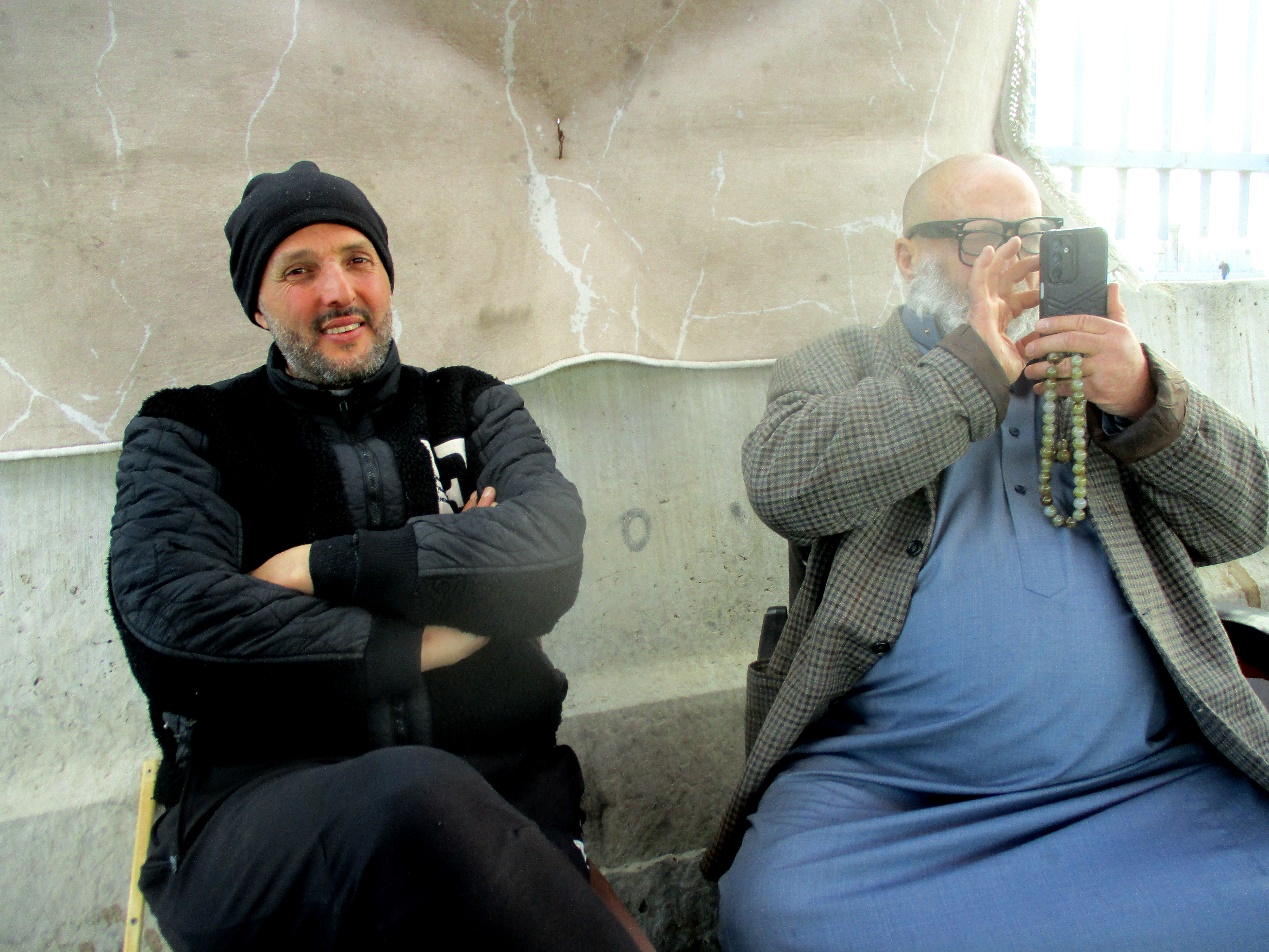 Tamar FleishmanApr-12-2026Qalandiya. Abdallah at his fruit stand
-