
Rahawa: Frequent Settler Incursions into Abu Sharakh Family Lands
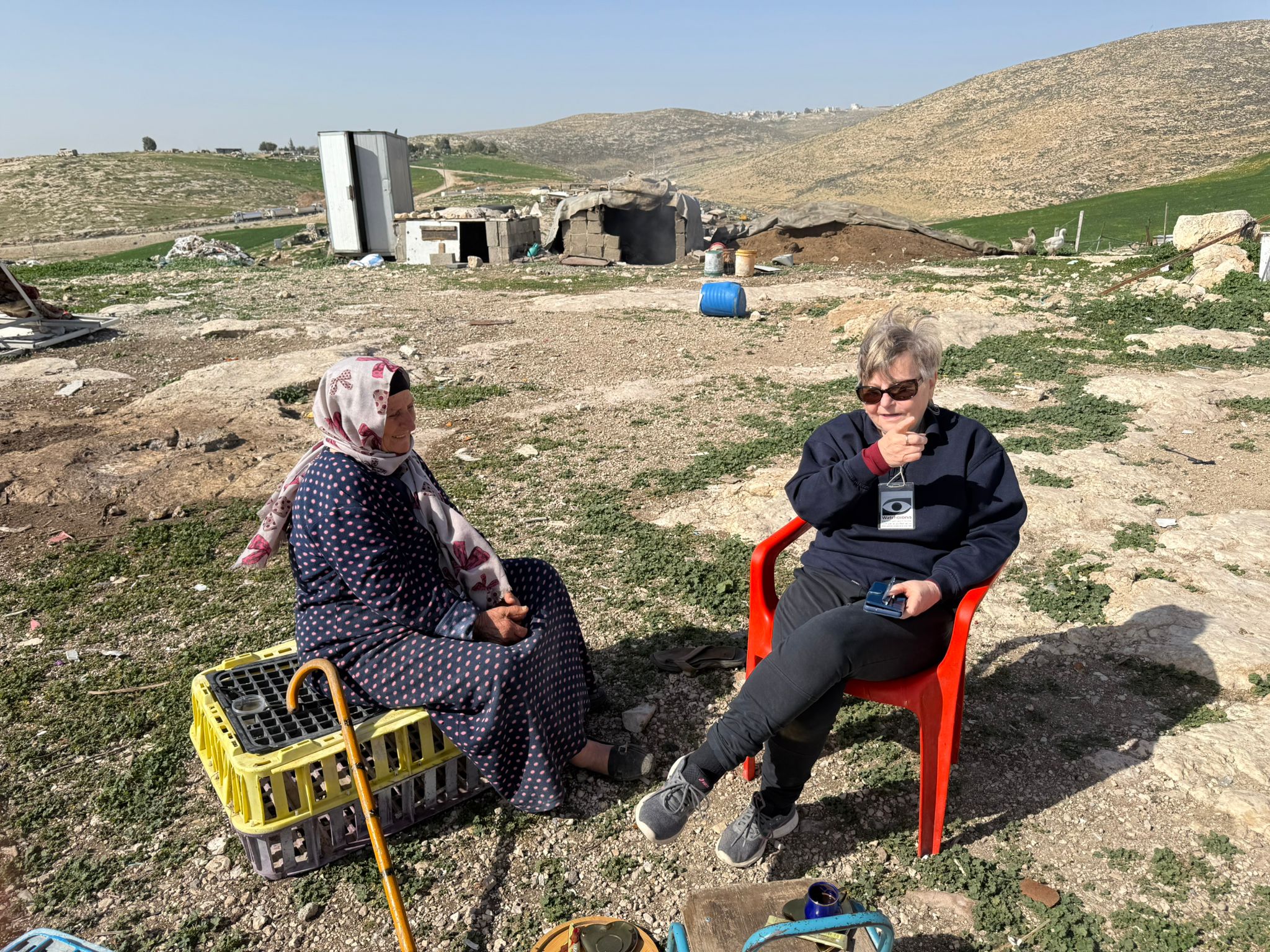
Donia and Samer Abu Sharakh requested our presence following frequent settler incursions into their territory. Jamal is with the flock; grazing is conducted within a very limited area because the local rulers—settler Yinon Levi and his men—do not allow grazing beyond approximately 100 meters from the residential area and the pen.
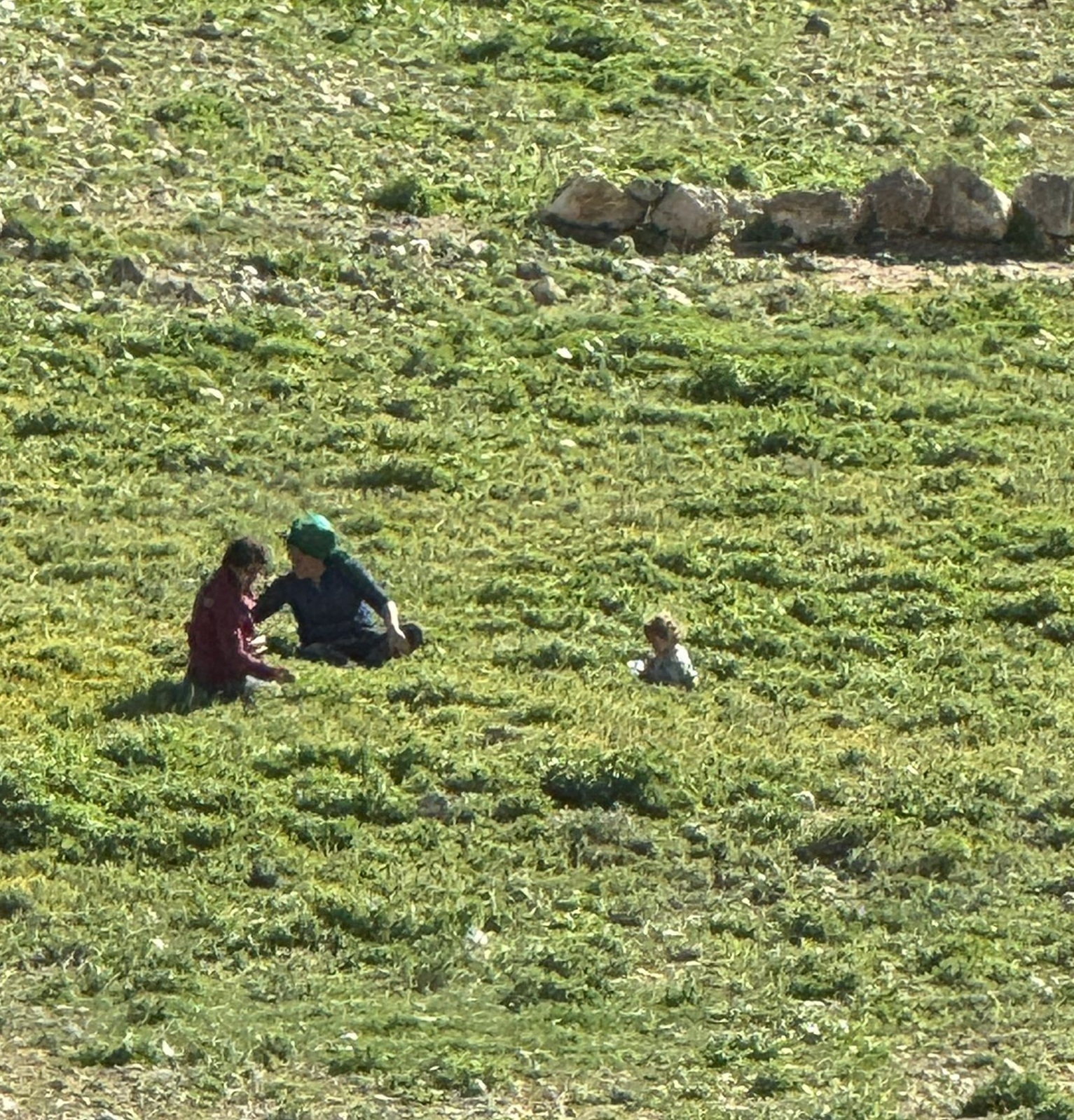
The family once had 200 sheep heads, but only 100 remained. Some were sold, while others died in several incidents caused by the settlers. We notice an ATV descending from Shabtai’s Farm, one of two outpost farms located a few hundred meters above Rahawa. It is driven by a woman (according to Donia, Shabtai’s wife) accompanied by another woman and a toddler. They pick herbs calmly—a truly pastoral scene.
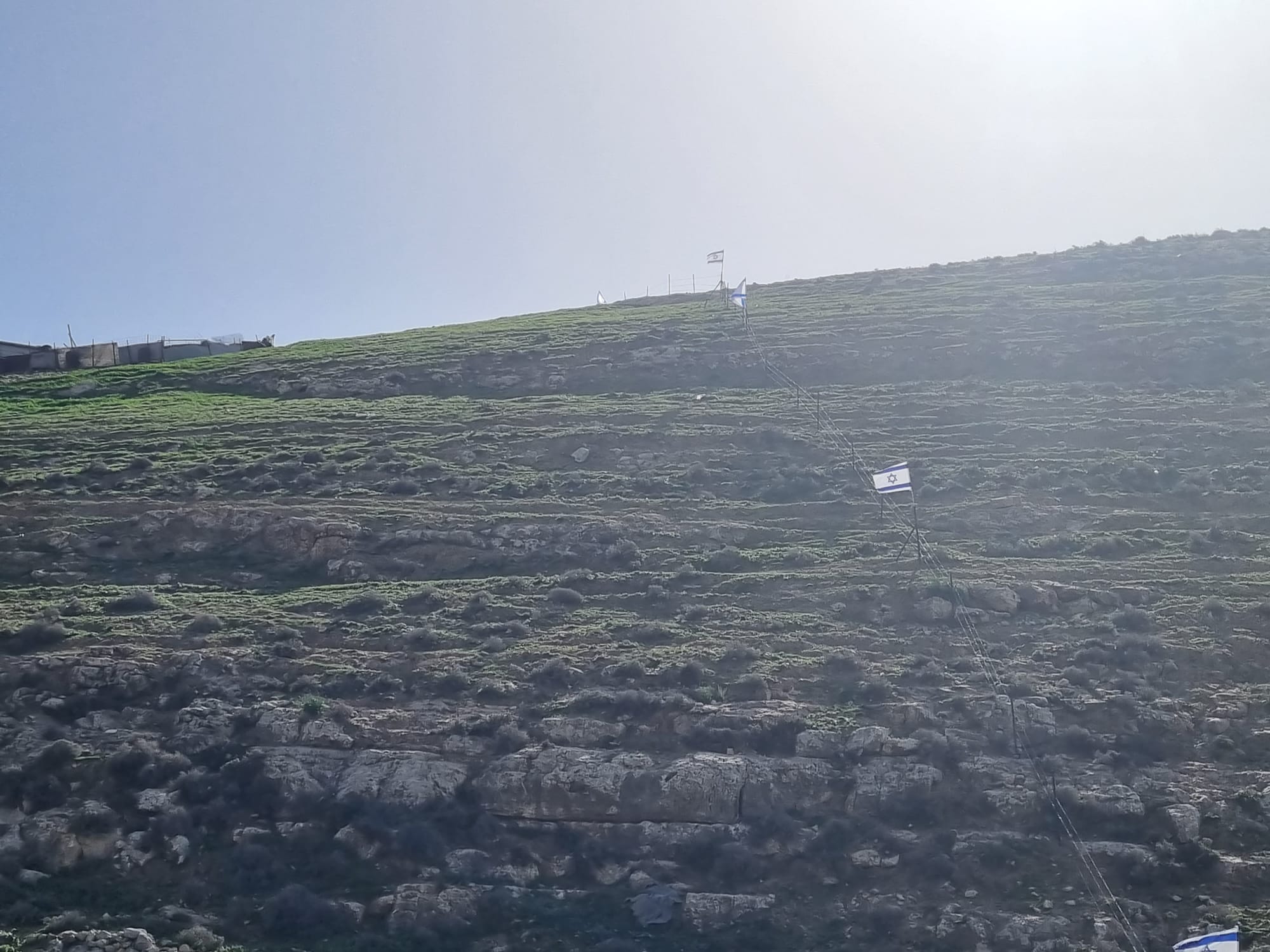
Donia and her sisters-in-law recount that yesterday, Sunday, February 1, 2026, about 50 settlers, including youths, arrived. From 4:00 AM until 4:00 PM, they planted flags around the Abu Sharakh family’s land, drove pickup trucks through the residential area, and erected fences to demarcate the territory. When the family tried to take the flock out, they were forbidden, and the women were prohibited from leaving their living quarters.
In the video I filmed, the fence and flags can be seen to the west, and further up, near Route 60, additional fencing and flags are visible. Yesterday, the settlers prevented the children from leaving for school in Ramadin. They are also barred from reaching the main water well. We left a food basket, clothes, shoes, and games from the donations.
We continued to another family in Rahawa, the Till family. Two sons are out grazing; Majdi, a teacher in Hebron, will join them upon his return. The grazing area here is also restricted due to the fence and flags placed by settlers yesterday.
Each time they approach, they are shouted at to “go to Dahariya.”
The women take turns staying on their land. The matriarch, Fatima, says: “We didn’t know the settlers would gain such power and control as is happening now. There is no possibility of us leaving because there is nowhere to keep the flock in Dahariya, and we have been here for generations.”
The children were delighted with the toys we brought. We left a food basket and clothes here as well.
There is no doubt that the events are escalating; the goal is single and unequivocal:
Ethnic Cleansing.
#ThisIsTheOccupation
Location Description
ramadin
See all reports for this place-
Ramadin and Arab al-Furijat, were established in the suburbs of Dahariya by Bedouins who came from the Be'er Sheva area after 1948. The village of Ramadin, numbers about 6,000 people, is located on the eastern side of the separation barrier. The checkpoint that was established at the entrance to the village (crossing by list only) to prevent passage to Israeli territory was removed in October 2007, and the road to the Meitar checkpoint leading to Israel is open.
-
South Hebron Hills
See all reports for this place-
South Hebron Hills
South Hebron Hills is a large area in the West Bank's southern part.
Yatta is a major city in this area: right in the border zone between the fertile region of Hebron and its surroundings and the desert of the Hebron Hills. Yatta has about 64,000 inhabitants.
The surrounding villages are called Masafer Yatta (Yatta's daughter villages). Their inhabitants subsist on livestock and agriculture. Agriculture is possible only in small plots, especially near streams. Most of the area consists of rocky terraces.Since the beginning of the 1980s, many settlements have been established on the agricultural land cultivated by the Palestinians in the South Hebron Hills region: Carmel, Maon, Susia, Masadot Yehuda, Othniel, and more. Since the settlements were established and Palestinians cultivation areas have been reduced; the residents of the South Hebron Hills have been suffering from harassment by the settlers. Attempts to evict and demolish houses have continued, along with withholding water and electricity. The military and police usually refrain from intervening in violent incidents between settlers and Palestinians do not enforce the law when it comes to the investigation of extensive violent Jewish settlers. The harassment in the South Hebron Hills includes attacking and attempting to burn residential tents, harassing dogs, harming herds, and preventing access to pastures.
There are several checkpoints in the South Hebron Hills, on Routes 317 and 60. In most of them, no military presence is apparent, but rather an array of pillboxes monitor the villages. Roadblocks are frequently set up according to the settlers and the army's needs. These are located at the Zif Junction, the Dura-al Fawwar crossing, and the Sheep Junction at the southern entrance to Hebron.
Updated April 2022
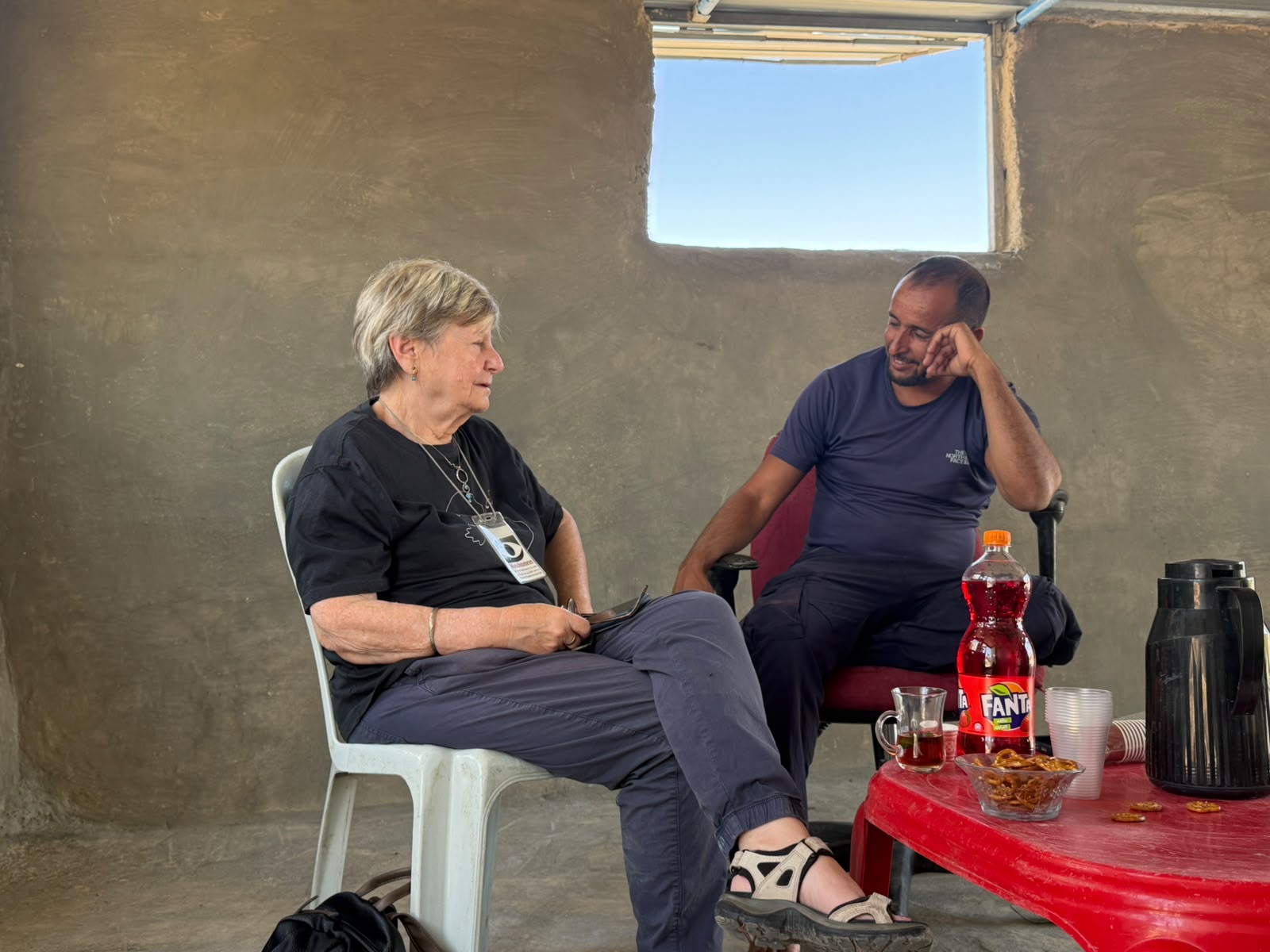 Muhammad D.Oct-10-2026Smadar with Najeh in Umm Qusa
-
