
Sansana (Meitar Crossing), South Hebron Hills
According to Mohammשd, at the Meitar checkpoint, there was great pressure in the morning, after a few days without work (due to the “round” in Gaza). We went through 317 and the way, after Susiya which goes to Koasis and Al Fakara is blocked.
We came to Al Tuwani. We arrived at Nasser’s house and Basel’s home, who was bitten by a settler’s dog. Nasser said that on Friday they went to the Yatta market, and Basel met with a French journalist, with whom they went out to see the areas of the villages in the area. There were also people from Taayush and Basel explained to them what was happening in the area of El Fakara’s territory. In the process, he saw a Palestinian, with his sons, who cultivates an area close to the Maon farm and 6 settlers left the forest and approached the farmer. He called on activists in the village to come to help and Basel also went there. The settlers began to approach along a way which is forbidden to them. One of them came with a dog and released him, so that he would chase the Palestinians. At that point, the dog was still held by the leash, one of the Italians in the group photographed when the dog attacked Basel. The settler tried to pull the dog away but was unsuccessful. Many people came from the village and the surroundings and police and army arrived. Some of the settlers fled, including the dog owner. But we know who it is. The settlers were sent away and the Palestinians asked to disperse.
This time they did not close the area and an ambulance was called . They have not yet filed a complaint, but want to file. There is also a debate about a lawsuit against the dog owner.
A year ago a similar case happened with a dog, with the same farmer. Recently, according to Nasser, the settlers are becoming more and more provoking. He said that the villagers in the area have organized and there is a kind of committee of village representatives, both to defend and to create pressure. Nasser wants all the organizations involved (Machsomwatch, Taayush , B’Tselem, Yesh Din and others) to meet with them, think about plans how to cope with the problem
Meitar checkpoint / Sansana
See all reports for this place-
Meitar Checkpoint / Sansana The checkpoint is located on the Green Line and serves as a border crossing between Israel and the West Bank. It is managed by the Border Crossing Authority of the Defense Ministry. It is comprised of sections for the transfer of goods as well as a vehicle checkpoint (intended for holders of blue identity cards, foreign nationals or diplomats and international organizations). Passing of Palestinians is prohibited, except for those with entry permits to Israel. Palestinians are permitted to cross on foot only. The crossing has a DCO / DCL / DCL / DCL (District Coordination Office), a customs unit, supervision, and a police unit. In the last year, a breach has been opened in the fence, not far from the crossing. This breach is known to all, including the army. There does not appear to be any interest in blocking it, probably as it permits needed Palestinian workers without the bureaucratic permits to get to work in Israel. Food stalls and a parking area economy have been created, but incidents of violent abuse by border police have also been recorded. Updated April 2022
-
South Hebron Hills
See all reports for this place-
South Hebron Hills
South Hebron Hills is a large area in the West Bank's southern part.
Yatta is a major city in this area: right in the border zone between the fertile region of Hebron and its surroundings and the desert of the Hebron Hills. Yatta has about 64,000 inhabitants.
The surrounding villages are called Masafer Yatta (Yatta's daughter villages). Their inhabitants subsist on livestock and agriculture. Agriculture is possible only in small plots, especially near streams. Most of the area consists of rocky terraces.Since the beginning of the 1980s, many settlements have been established on the agricultural land cultivated by the Palestinians in the South Hebron Hills region: Carmel, Maon, Susia, Masadot Yehuda, Othniel, and more. Since the settlements were established and Palestinians cultivation areas have been reduced; the residents of the South Hebron Hills have been suffering from harassment by the settlers. Attempts to evict and demolish houses have continued, along with withholding water and electricity. The military and police usually refrain from intervening in violent incidents between settlers and Palestinians do not enforce the law when it comes to the investigation of extensive violent Jewish settlers. The harassment in the South Hebron Hills includes attacking and attempting to burn residential tents, harassing dogs, harming herds, and preventing access to pastures.
There are several checkpoints in the South Hebron Hills, on Routes 317 and 60. In most of them, no military presence is apparent, but rather an array of pillboxes monitor the villages. Roadblocks are frequently set up according to the settlers and the army's needs. These are located at the Zif Junction, the Dura-al Fawwar crossing, and the Sheep Junction at the southern entrance to Hebron.
Updated April 2022
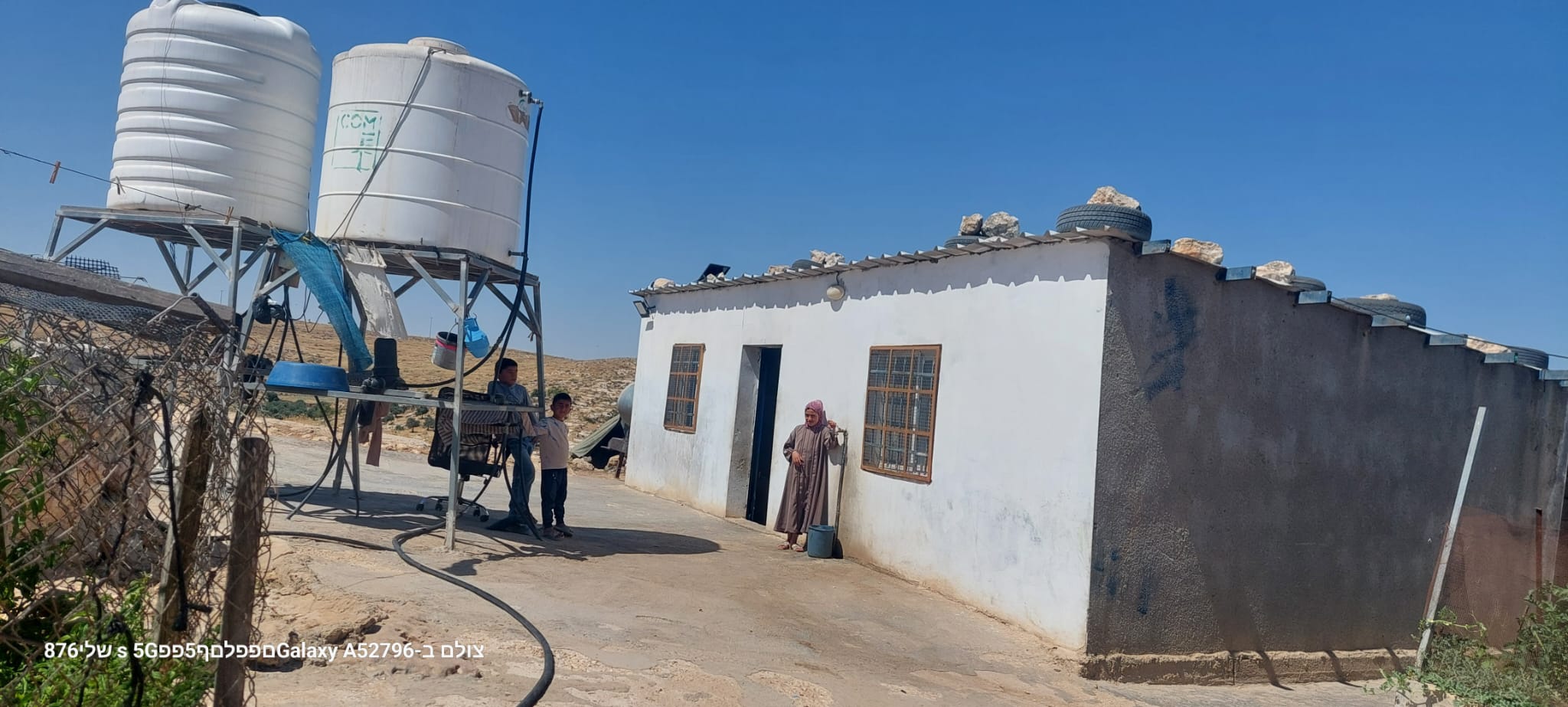 Michal TsadikJun-21-2026Sha'ab al-Butum - the residential complex of the Najjar family
-