
Sarra and Huwwara
Sarra and Huwwara north 20.9.04 PMObservers: Ruth K, Ronny C, Yael L, Anat D. (reporting)Jit junction 13.30: an unannounced checkpoint at Jit junction. A long line of cars and trucks but traffic is flowing, passengers are not being taken out for checking; the soldiers merely peek into the cars.Sarra 13.50: almost no pedestrian traffic. Two soldiers and their commander at the deserted position, friendly towards us and ready to answer questions. Traffic of all kiinds is permitted only towards Beit Iba. The soldiers claim that the route from Jit to Sarra is sterile and permitted only to the army and the local inhabitants, pedestrians with entry permits to Israel.About 20 meters from the checkpoint is a pipe which is the sole water supply of the village. A truck driver who arrives in order to fill the water tank on his truck tells us that the pipe was laid by the Mekorot Water Company and this is how water is conveyed to the village. A taxi arrived from the village, halted and the passengers got down and went one by one to the checking position. They then returned to the taxi and drove on to Beit Iba (for a further check). A man mounted on a donkey also came to take water and returned to the village. A taxi arrives from Beit Iba, the passengers dismount and stand in line between the concrete fences to be checked and continue their journey into the village.Huwwara south 14.20: the four of us reached the south checkpoint where a group of 5 women settlers were waiting, accompanied by two small children. They did not really harass us apart from making crude comments to which we have become accustomed in the past month. The soldiers told us that the “blue-and-white women” came this morning, distributed cakes and Cokes and provoked our morning watch at the north checkpoint.About 30 detainees are sitting on a rickety bench in the detainees’ hut, most of them very young. The soldiers’ shift claim that most of the special cases are known to them (dealt with by our previous watch) and that most of the detainees will be released within 5 minutes. Since the soldiers were changing shifts, the checkpoint was not operative and everyone was waiting. Ruthi and Ronny decided to go over to Huwwara north and Yael and I remained in the south. While I was talking to the commander about the prospective release of detainees and the fact that they were forced to squat, one of the settler women came over and began shouting at us: “Don’t you dare tell him what to do!” and “Don’t listen to her. You don’t owe her a thing.” “How dare you complain about soldiers who are performing a sacred task.” Because of this distraction, it was hard for us to achieve a dialogue. This particular commander is influenced by their proclamations and during previous encounters with the blue-and-white women, I’ve noticed that the soldiers are impressed with them. The commander also likes to go off in the middle of the shift to the spot where the settlers hitch rides to chat with them.In any event, I decided to contact the humanitarian hotline in order to complain about the forced seating of the detainees. While I was taking out my list of telephone numbers, several more women settlers arrived with an additional group of secular women, unidentified as belonging to any particular organization, and joined in the curses. There were 10 of them and they surrounded us (Yael and me) and prevented us from moving. When someone replied to my telephone call I walked aside to talk quietly and one of the women followed me and tried to pull away the notebook I was holding, screaming at me wildly and mindlessly. I gripped the phone, trying to talk to the hotline and staving her off, clutching my notebook. She managed to snatch the list of telephone numbers and went over to give it to the soldiers. The moment the incident turned physically violent, we decided to lower our profile and avoid doing anything which would evoke further violence. As noted, there were only two of us and they were an aggressive and angry crowd. They pushed close to us wherever we went.15.00: half of the detainees were released (though not “within five minutes” as promised) and new ones arrived.A group of border policemen took up a position between the taxi parking lot and the checkpoint and they too checked people going into Nablus. The commander claimed that they had to fill in a certain quota of checks. Since we were out of action because of the women settlers, we were unable to query this further.15.30: a police jeep drove past the south checkpoint and halted at Huwwara north. It had been summoned by Ruthi and arrived within ten minutes.15.45: we were given a “royal” escort of two settlers to Ruthi’s car and drove to the Ariel police station.Huwwara north. A similar atmosphere to the one described above. The women settlers harassed and assaulted Ruthi and Ronny and prevented them from functioning. Ruthi eventually decided to go over to her car but one of the women accompanied her and physically prevented her from closing the car door.. At the checkpoint, Ronny was left alone with 6-7 screaming women (with a megaphone) who barred her way to the car, kicked her and lifted her blouse. Ruthi called the police and the police car which arrived dispersed the crowd. Two women settlers were taken to Ariel police station and we made our way there independently to submit a complaint. We spent the next two hours there.It should be noted that this initiative is becoming institutionalized. The assaults are no longer sporadic as in the past and the main problem is that they prevent us from functioning. If we don’t want to spend most of our time at the checkpoint confronting them but wish to continue our work as in the past, we must give serious thought to the problem.
Beit Iba
See all reports for this place-
A perimeter checkpoint west of the city of Nablus. Operated from 2001 to 2009 as one of the four permanent checkpoints closing on Nablus: Beit Furik and Awarta to the east and Hawara to the south. A pedestrian-only checkpoint, where MachsomWatch volunteers were present daily for several hours in the morning and afternoon to document the thousands of Palestinians waiting for hours in long queues with no shelter in the heat or rain, to leave the district city for anywhere else in the West Bank. From March 2009, as part of the easing of the Palestinian movement in the West Bank, it was abolished, without a trace, and without any adverse change in the security situation.
 Jun-4-2014Beit-Iba checkpoint 22.04.04
-
Huwwara
See all reports for this place-
The Huwwara checkpoint is an internal checkpoint south of the city of Nablus, at the intersection of Roads 60 and 5077 (between the settlements of Bracha and Itamar). This checkpoint was one of the four permanent checkpoints that closed on Nablus (Beit Furik and Awarta checkpoints to the east and the Beit Iba checkpoint to the west). It was a pedestrian-only barrier. As MachsomWatch volunteers, we watched therre since 2001 two shifts a day - morning and noon, the thousands of Palestinians leaving Nablus and waiting for hours in queues to reach anywhere else in the West Bank, from the other side of the checkpoint the destination could only be reached by public transport. In early June 2009, as part of the easing of Palestinian traffic in the West Bank, the checkpoint was opened to vehicular traffic. The passage was free, with occasional military presence in the guard tower. Also, there were vehicle inspections from time to time. Since the massacre on 7.10.2023, the checkpoint has been closed to Palestinians.
On February 26, 2023, about 400 settlers attacked the town's residents for 5 hours and set fire to property, such as houses and cars. Disturbances occurred in response to a shooting of two Jewish residents of Har Bracha by a Palestinian Terrorist. The soldiers stationed in the town did not prevent the arson and rescued Palestinian families from their homes only after they were set on fire. No one was punished and Finance Minister Smotrich stated that "the State of Israel should wipe out Hawara." Left and center organizations organized solidarity demonstrations and support actions for the residents of Hawara.Hawara continued to be in the headlines in all the months that followed: more pogroms by the settlers, attacks by Palestinians and a massive presence of the army in the town. It amounted to a de facto curfew of commerce and life in the center of the city. On October 5, 2023, MK Zvi established a Sukkah in the center of Hawara and hundreds of settlers backed the army blocked the main road and held prayers in the heart of the town all night and the next day. On Saturday, October 7, 23 The "Swords of Iron" war began with an attack by Hamas on settlements surrounding Gaza in the face of a poor presence of the IDF. Much criticism has been made of the withdrawal of military forces from the area surrounding Gaza and their placement in the West Bank, and in the Hawara and Samaria region in particular, as a shield for the settlers who were taking over and rioting.
On November 12, 2023, the first section of the Hawara bypass road intended for Israeli traffic only was opened. In this way, the settlers can bypass the road that goes through the center of Hawara, which is the main artery for traffic from the Nablus area to Ramallah and the south of the West Bank. For the construction of the road, the Civil Administration expropriated 406 dunams of private land belonging to Palestinians from the nearby villages. The settlers are not satisfied with this at the moment, and demand to also travel through Hawara itself in order to demonstrate presence and control.(updated November 2023)
.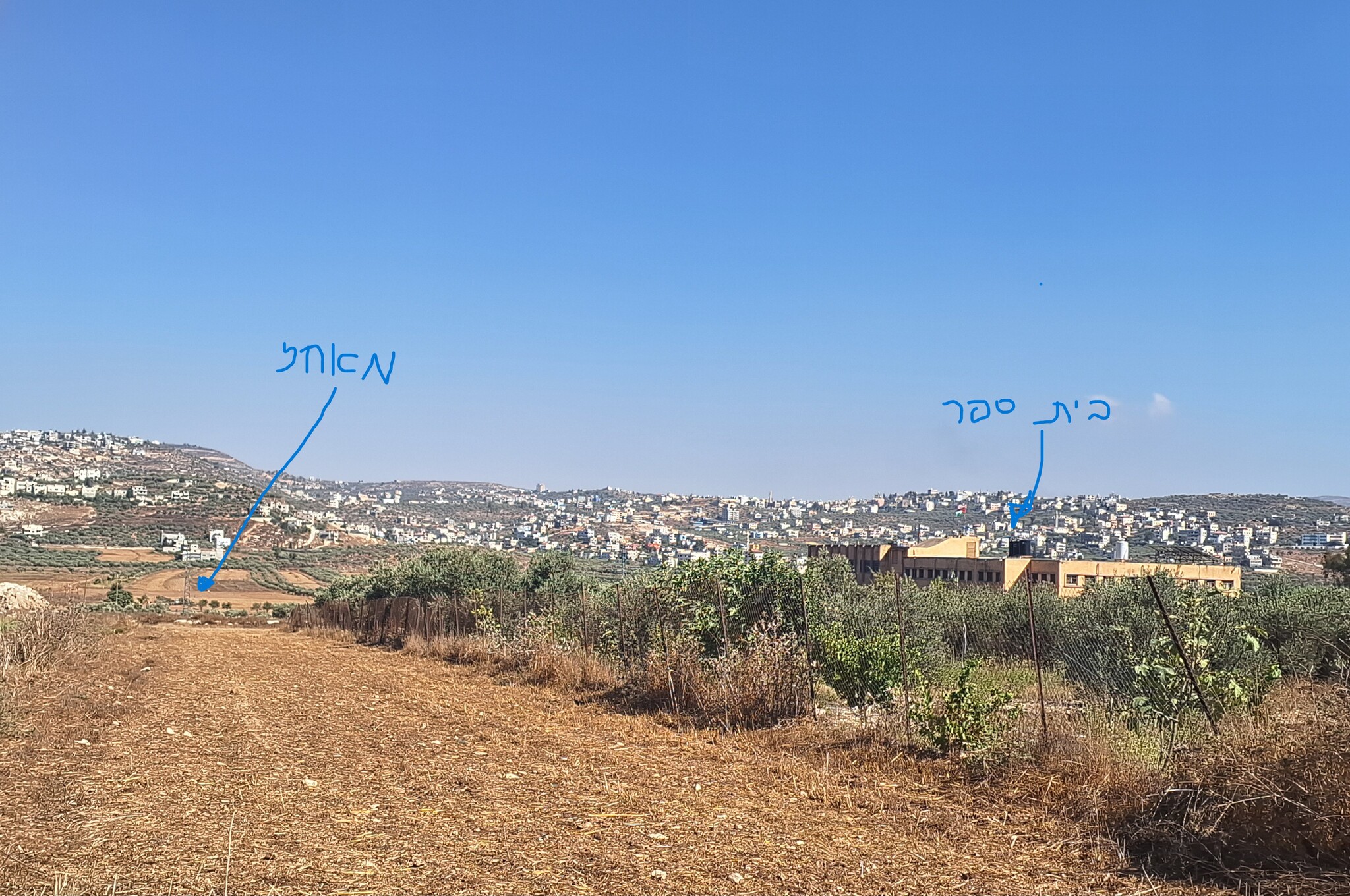 Ronit Dahan-RamatiAug-24-2026Huwara: The school on the outskirts of town and an outpost hidden among the trees
-
Jit Junction
See all reports for this place-
The checkpoint is located on Route 60 near at the junction with Route 55, near the village of Jit. There was a checkpoint for vehicles passing between the north and south of the West Bank, which was abolished towards 2010. Since then, surprise checkpoints have been set up there from time to time with a police or Border Police vehicle, and vehicles and their passengers are inspected.
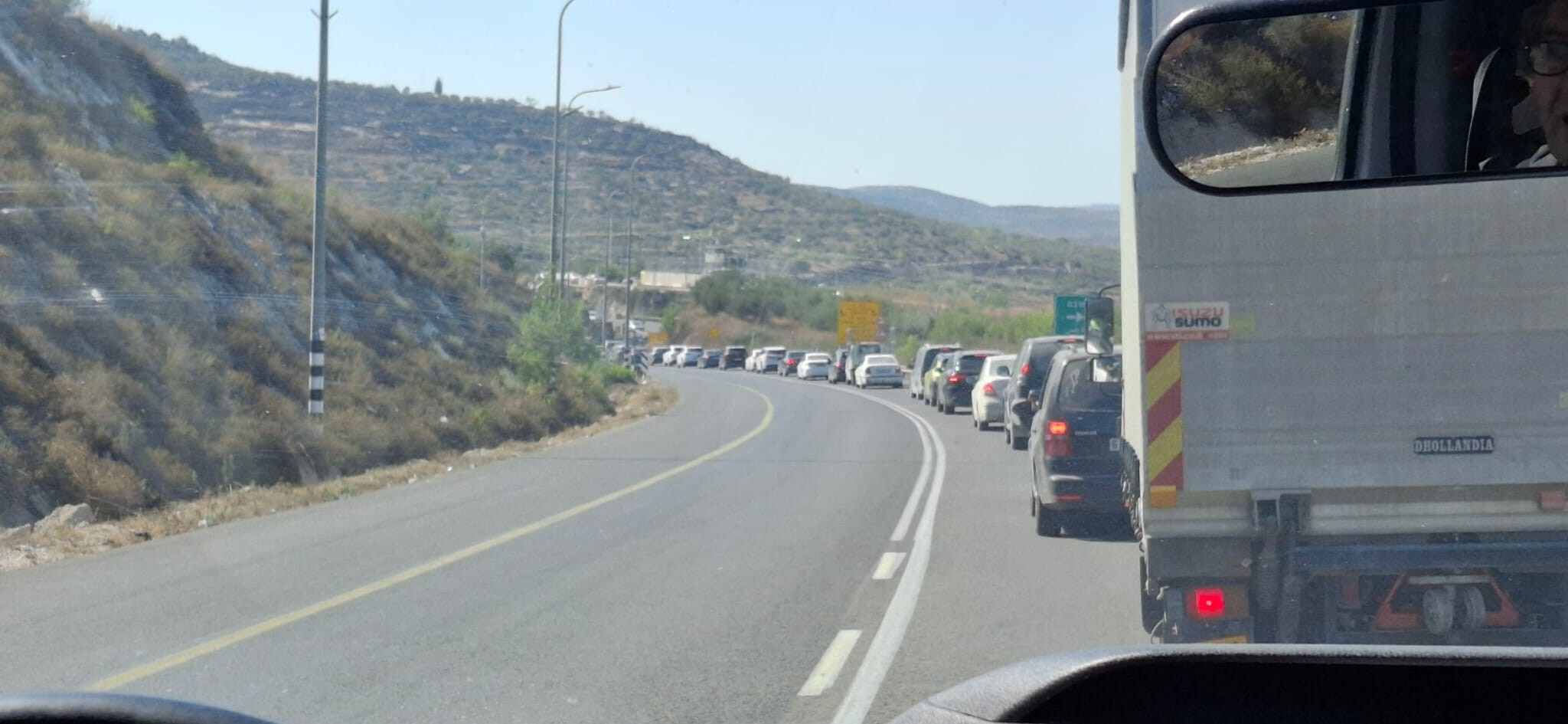 Anat PolakJul-17-2025Yitzhar Road, Jit Junction: traffic jam
-
Sarra
See all reports for this place-
Sarra
The checkpoint is installed between the Palestinian village of Sera and the district city of Nablus,
Since 2011, internal barriers Located among the West Bank Israeli settlements have somehow allowed, Palestinian residents to travel and move and reach various Palestinian cities.
After the terrible massacre by the Hammas on October 7 upon Israelis in the communities around Gaza, internal checkpoints manned by the army were installed to prevent free passage for Palestinians.
Many restrictions were imposed on the Palestinians in the West Bank. The prevention of movement shuttered the possibility of making a living in Israel. The number of Palestinian attacks by Israeli extremist settlelers increased along with the radicalization of the army against the Palestinians.
The conduct at the Sera checkpoint is one of the manifestations of the restrictions on all aspects of the Palestinians' lives.
-
