
Sarra,Beit Iba, Shavei Shomron
SARRA, BEIT IBA, SHAVEI SHOMRON, Wednesday 2 March 2005 PMObservers: Edna and Ayelet (reporting) colour=red> Jit Junction13:30 – An unannounced roadblock had brought to a halt a line of about 30 cars from the direction of Beit Iba, with another 10 from the direction of Huwwara. We stayed there for about half an hour. All the passengers of a bus were ordered off and subjected to a careful inspection, and throughout that time no other vehicle was allowed through. We phoned the District Coordinating Office (DCO) to protest [ the DCO is the army section that handles civilian matters; it generally has representatives at the checkpoints ostensibly to alleviate the lot of the Palestinians]. Sarra 14:00 – We had a warm welcome from one of the reserve soldiers manning the checkpoint. Passengers who got out of a taxi for inspection were waited at the entrance of the village, with all of their possessions and children. Once the checking of the taxi was over they all got back in and the taxi drove into the village. The next one underwent the same procedure. With the exception of a Qalqiliya resident who arrived with his family in his own car to visit relatives in Til village ( he had come from the direction of Jit junction) and was refused entry, there weren’t any exceptional incidents. The soldier’s reaction to the case Qalqiliya resident was: “What’s the problem? He should just take himself off a five minute journey and he can get a permit”!We hurried back to Jit junction, where there was now a considerable number of soldiers, among them several officers (the telephone to the DCO has obviously been effective) and the junction was pretty empty compared with before. Six cars were waiting from the direction of Beit Iba. We stayed to see the completion of a check on two ambulances and then continued to Beit Iba. Beit Iba 14:20 – Many taxis, cars and pedestrians. Cars (from west to east) were checked and went through quickly. Several came from Nablus and went through pretty fast. A young woman fell on the other side of the turnstile and a soldier ran to help her, but said that he was afraid to go beyond the turnstile.. After she’d gone through, he offered her first aid, etc. She refused. There was one detainee in the shed, held because he’d been “fresh” to the soldiers. He was released while we were there, but not before getting a sermon about politeness and correct behaviour towards the master race. Because of certain things that happened, we stayed at Beit Iba a much shorter time than we had planned. A man from the village of Thulth reported that a roadblock had been set up recently at the entrance to the village (next to Azzun, in the area of Qalqiliya). Yesterday, local people waited from 16:00 to 21:00 in order to enter their village. We intended to go by there on the way back, but the occupation had other plans… This morning I talked with him again and he reported that yesterday, after he’d spoken with me, there’s been another roadblock at the entrance to Azzun and they had been held up there for an hour; after that, there’d been another one at the entrance to Thulth – and that had held them up for two hours. That is, he arrived home about three and a half hours after leaving Beit Iba.Shavei Shomron15:00 – Drivers at Beit Iba reported the presence of an roadblock that was seriously slowing vehicular traffic at Shavei Shomron. We went there and found a line of about 30 trucks and taxis going northward. There was no line in the opposite direction, but vehicles were being very carefully inspected by two reserve soldiers. We timed passage : it took 25 minutes to get through. We asked the DCO representative to increase the manpower so that the checks could be speeded up, only to be told that there weren’t enough soldiers available. Among the many “Israeli” vehicles passing through without any delay at the roadblock were many trucks loaded with cement and building materials. And in my innocence I had really believed there was a programme to dismantle the settlements in northern Samaria. On the way back to Beit Iba, we heard from a driver that the checkpoint at Jit junction was extremely full and there were handcuffed detainees and violent soldiers there. We decided to go there immediately instead of going back to Beit Iba. On the way south, before the junction, we saw in the distance that the road going up to Izhar was dotted with what looked like a caravan of cars… Jit Junction 15:30 – There were no cars from either either east or west. “Only” 10 cars from the north. We didn’t see any detainees. We continued to road #60. One kilometre before the turn to the west to road #55, there was a military vehicle, a kind of jeep/tank on the right hand side of the road and, on the left , on the road leading from Huwwara, about 60 cars of all sorts being checked by two very irritable reservists.”Move it ! Get out of here! Here’s a serious alert about three terrorists at large! We’ve already captured one!” And so on and so forth in the same vein. We hung around for about a quarter of an hour, trying to keep our distance from the terrorist hunters and talking to some of the drivers who told us that they’d just come through a checkpoint at Izhar junction before turning onto this road!At Izhar junction there was some military presence, but no cars. The same story repeated itself when we came back this way after a watch at Huwwara.17:50 — Za’tara JunctionThere were about 20 vehicles awaiting checking on the north-south axis and nothing that we could see waiting in any other direction.
Beit Iba
See all reports for this place-
A perimeter checkpoint west of the city of Nablus. Operated from 2001 to 2009 as one of the four permanent checkpoints closing on Nablus: Beit Furik and Awarta to the east and Hawara to the south. A pedestrian-only checkpoint, where MachsomWatch volunteers were present daily for several hours in the morning and afternoon to document the thousands of Palestinians waiting for hours in long queues with no shelter in the heat or rain, to leave the district city for anywhere else in the West Bank. From March 2009, as part of the easing of the Palestinian movement in the West Bank, it was abolished, without a trace, and without any adverse change in the security situation.
 Jun-4-2014Beit-Iba checkpoint 22.04.04
-
Huwwara
See all reports for this place-
The Huwwara checkpoint is an internal checkpoint south of the city of Nablus, at the intersection of Roads 60 and 5077 (between the settlements of Bracha and Itamar). This checkpoint was one of the four permanent checkpoints that closed on Nablus (Beit Furik and Awarta checkpoints to the east and the Beit Iba checkpoint to the west). It was a pedestrian-only barrier. As MachsomWatch volunteers, we watched therre since 2001 two shifts a day - morning and noon, the thousands of Palestinians leaving Nablus and waiting for hours in queues to reach anywhere else in the West Bank, from the other side of the checkpoint the destination could only be reached by public transport. In early June 2009, as part of the easing of Palestinian traffic in the West Bank, the checkpoint was opened to vehicular traffic. The passage was free, with occasional military presence in the guard tower. Also, there were vehicle inspections from time to time. Since the massacre on 7.10.2023, the checkpoint has been closed to Palestinians.
On February 26, 2023, about 400 settlers attacked the town's residents for 5 hours and set fire to property, such as houses and cars. Disturbances occurred in response to a shooting of two Jewish residents of Har Bracha by a Palestinian Terrorist. The soldiers stationed in the town did not prevent the arson and rescued Palestinian families from their homes only after they were set on fire. No one was punished and Finance Minister Smotrich stated that "the State of Israel should wipe out Hawara." Left and center organizations organized solidarity demonstrations and support actions for the residents of Hawara.Hawara continued to be in the headlines in all the months that followed: more pogroms by the settlers, attacks by Palestinians and a massive presence of the army in the town. It amounted to a de facto curfew of commerce and life in the center of the city. On October 5, 2023, MK Zvi established a Sukkah in the center of Hawara and hundreds of settlers backed the army blocked the main road and held prayers in the heart of the town all night and the next day. On Saturday, October 7, 23 The "Swords of Iron" war began with an attack by Hamas on settlements surrounding Gaza in the face of a poor presence of the IDF. Much criticism has been made of the withdrawal of military forces from the area surrounding Gaza and their placement in the West Bank, and in the Hawara and Samaria region in particular, as a shield for the settlers who were taking over and rioting.
On November 12, 2023, the first section of the Hawara bypass road intended for Israeli traffic only was opened. In this way, the settlers can bypass the road that goes through the center of Hawara, which is the main artery for traffic from the Nablus area to Ramallah and the south of the West Bank. For the construction of the road, the Civil Administration expropriated 406 dunams of private land belonging to Palestinians from the nearby villages. The settlers are not satisfied with this at the moment, and demand to also travel through Hawara itself in order to demonstrate presence and control.(updated November 2023)
.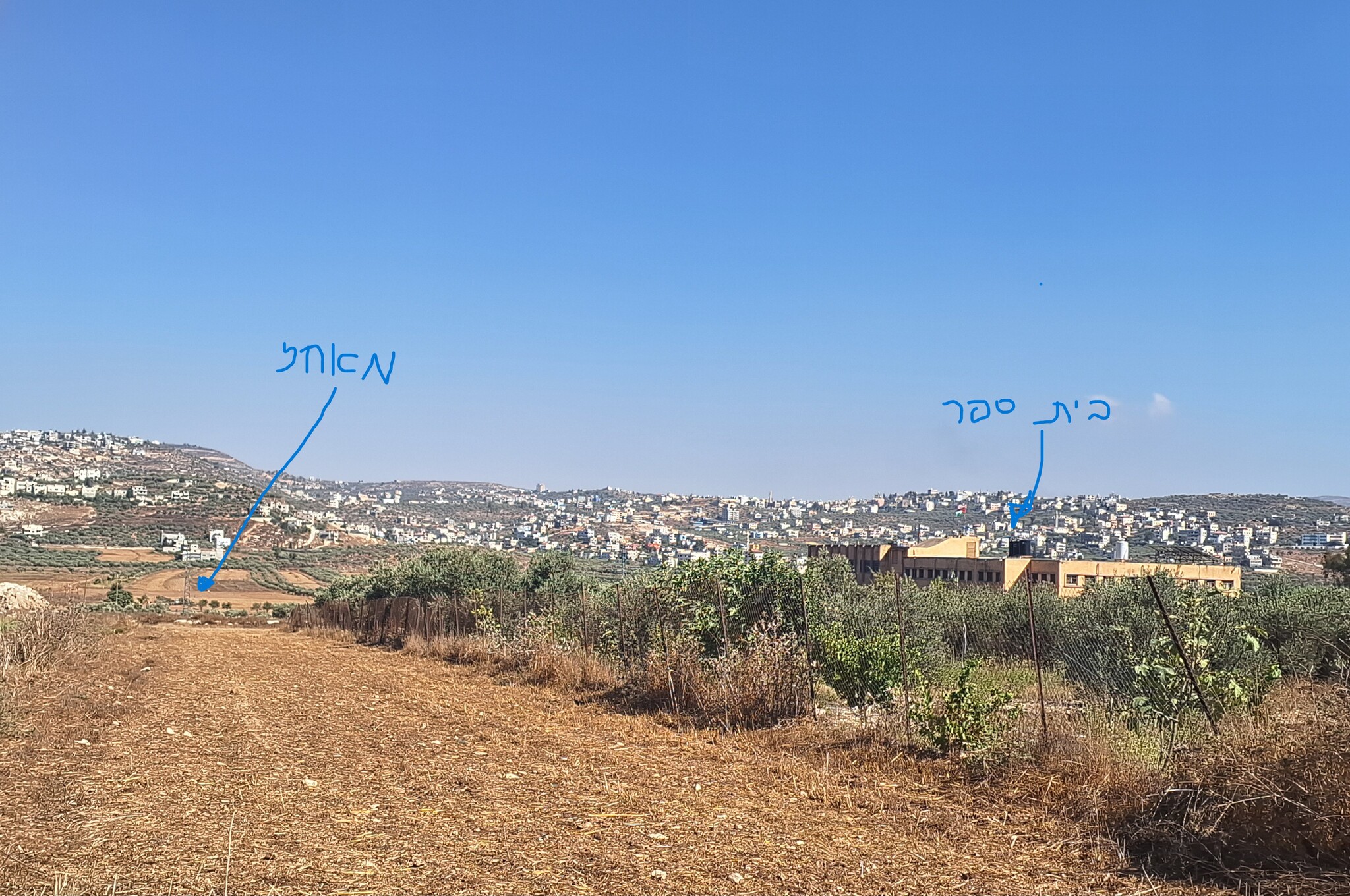 Ronit Dahan-RamatiAug-24-2026Huwara: The school on the outskirts of town and an outpost hidden among the trees
-
Jit Junction
See all reports for this place-
The checkpoint is located on Route 60 near at the junction with Route 55, near the village of Jit. There was a checkpoint for vehicles passing between the north and south of the West Bank, which was abolished towards 2010. Since then, surprise checkpoints have been set up there from time to time with a police or Border Police vehicle, and vehicles and their passengers are inspected.
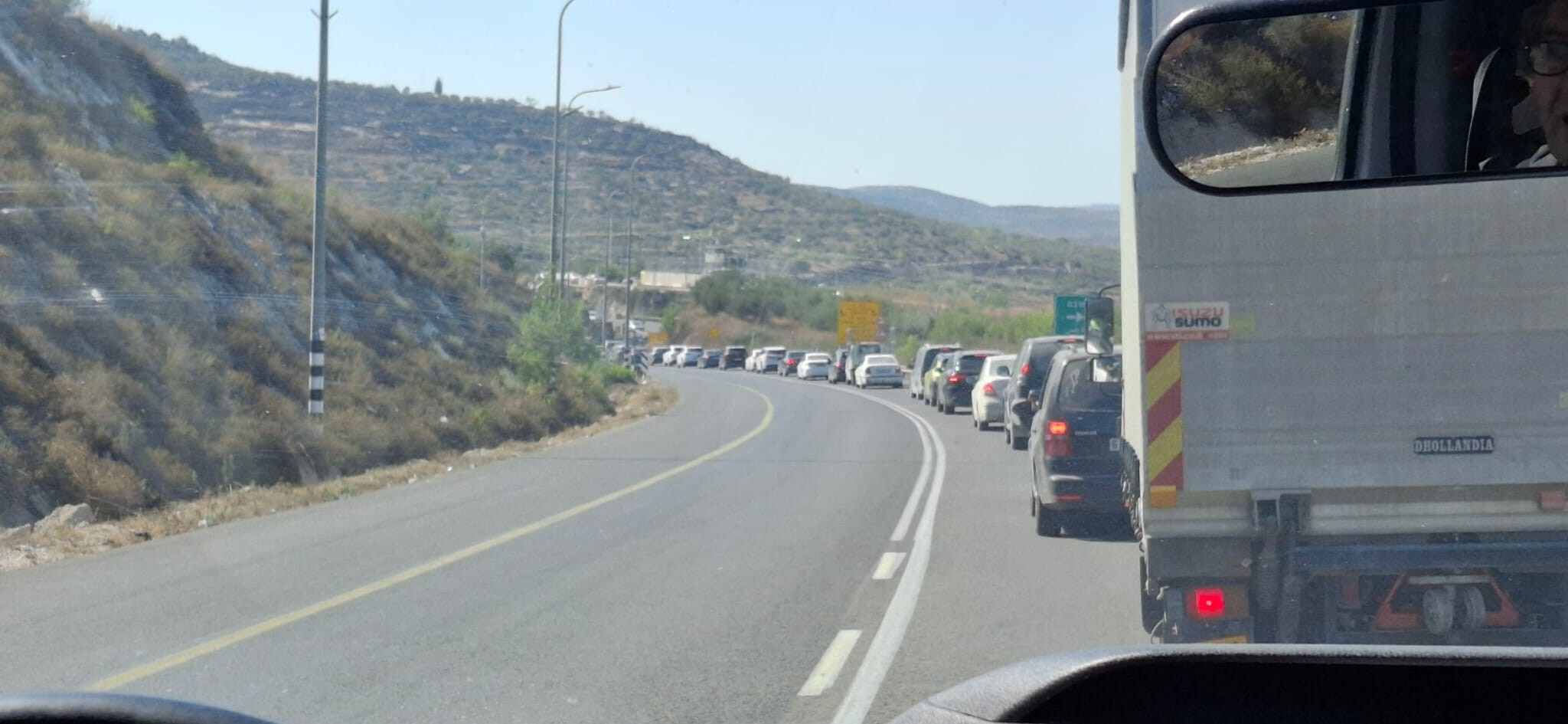 Anat PolakJul-17-2025Yitzhar Road, Jit Junction: traffic jam
-
Sarra
See all reports for this place-
Sarra
The checkpoint is installed between the Palestinian village of Sera and the district city of Nablus,
Since 2011, internal barriers Located among the West Bank Israeli settlements have somehow allowed, Palestinian residents to travel and move and reach various Palestinian cities.
After the terrible massacre by the Hammas on October 7 upon Israelis in the communities around Gaza, internal checkpoints manned by the army were installed to prevent free passage for Palestinians.
Many restrictions were imposed on the Palestinians in the West Bank. The prevention of movement shuttered the possibility of making a living in Israel. The number of Palestinian attacks by Israeli extremist settlelers increased along with the radicalization of the army against the Palestinians.
The conduct at the Sera checkpoint is one of the manifestations of the restrictions on all aspects of the Palestinians' lives.
-
