
Sheikh Sa’ad, Bethlehem, and al-Khader: Tightening Checkpoints and Expanding Construction
Sheikh Sa’ad
We met N., a member of the neighborhood committee, with whom we are in close contact. The checkpoints at Sheikh Sa’ad and Sawahra were completely closed (including to blue ID holders) since the beginning of Operation “Roar of the Lion,” causing severe disruption to the daily lives of residents in both neighborhoods. Most residents center their lives in Jabal al-Mukabber, and the prolonged closure prevented them from accessing essential services.
The neighborhood committee sent a letter to security authorities at the Jerusalem Municipality and also asked for our help (we forwarded it to the municipal spokesperson and to Nir Hasson). After a few days, the checkpoints were opened for students and permanent residents (blue IDs). Aside from that, entry into Jerusalem is only permitted with special authorization for serious medical cases.


Since reopening, crossing has been extremely slow, with delays of more than an hour and a half. When we arrived at 8:00 a.m., most school transports had already passed. Those stuck at the checkpoint waited for buses traveling along the American Road, from where they would walk to schools in Jabal Mukabber (a parent neighborhood split by the wall) or to schools in East Jerusalem.
N. told us—and we also saw—that some students, mainly boys, decide to return home and give up school for the day. At the Sawahra East checkpoint, the issue of children under age 12 being unable to cross has resurfaced, as they were not included on the special list of those permitted to pass. Another letter was sent to municipal security authorities, who are supposed to obtain approval from the Civil Administration. We also sent messages to the East Jerusalem municipal spokesperson and to Nir Hasson.
On 6.5.26 it was reported that the problem at Sawahra checkpoint had been resolved, but at Sheikh Sa’ad there has been no relief in the morning congestion, and students are still significantly delayed.

Bethlehem Checkpoint
The vehicle crossing checkpoint has been closed since two weeks before Ramadan and has still not reopened, under the pretext of renovations. We saw no workers at the site. The detour to enter Bethlehem and its neighborhoods via the Tunnels Road is long and heavily congested.
The pedestrian crossing is supposed to operate continuously from 5:00 a.m. to midnight, but due to lack of personnel (so we were told), it opens and closes intermittently. We were told there has been no fundamental change in the policy of denying work permits.
At this checkpoint, through which thousands of workers passed daily before the October war, only a few hundred now cross each day. Most buses wait idly in the parking lot. We heard yesterday that about 400,000 foreign workers are currently in Israel, many of them Chinese and Indian, especially in construction. The future for Palestinian workers appears bleak.
There has also been a change in access to the very popular Rachel’s Tomb. Entry is now only via buses from Jerusalem or organized transport; private vehicles are no longer allowed. This comes after we were told that the parking lot would be expanded.
An investigation using Gemini indicated that all this is connected to the transfer of authority over holy sites in the West Bank from the Palestinian Authority and Israeli security bodies to a designated Israeli civilian administration (as also happened at the Cave of the Patriarchs in Hebron). Thus, the administrative authority of Bethlehem Municipality over the tomb area was expropriated, and building permit authority was transferred to the Civil Administration. As part of this, renovations to the site and its access roads will be carried out, along with expansion of the Jewish settlement operating there.
We traveled via Lieberman Road to the Tekoa junction, and from there bypassed the settlement of Efrat to the home of Nafuz Dadua, on the outskirts of al-Khader (at the southern entrance to the large settlement of Efrat).
Route 60 is being steadily widened (two lanes in each direction), in line with the large-scale, well-funded plans of the Ministry of Transportation. Settlers in the area known as “Eastern Gush Etzion” (Tekoa, Nokdim, Ma’ale Amos and many outposts) are frustrated that they must still travel on a narrow road shared with Palestinians to connect to Route 60 (Road 3157). But this too is expected to change.
Construction has already begun on the massive eastward expansion of Efrat (2,500 housing units), known as Givat Eitam. It will be connected via a bypass “apartheid road” both to Tekoa and to Route 60. This will complete the encirclement of Bethlehem from the south and east, involving extensive expropriation of Palestinian land.
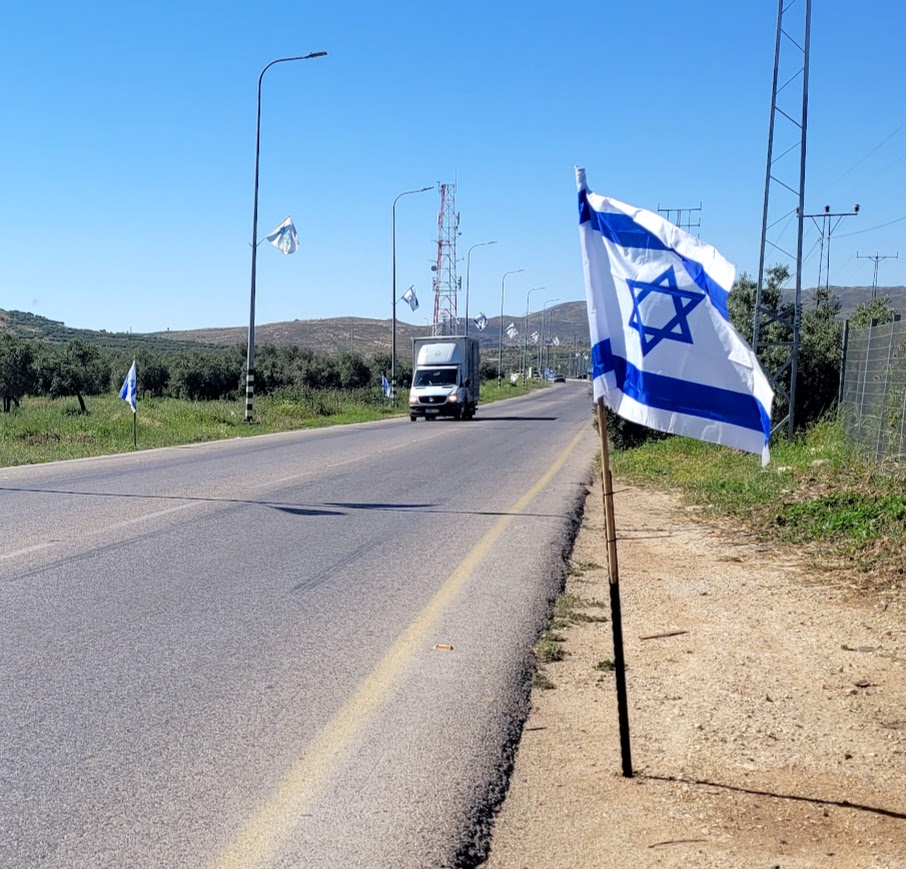
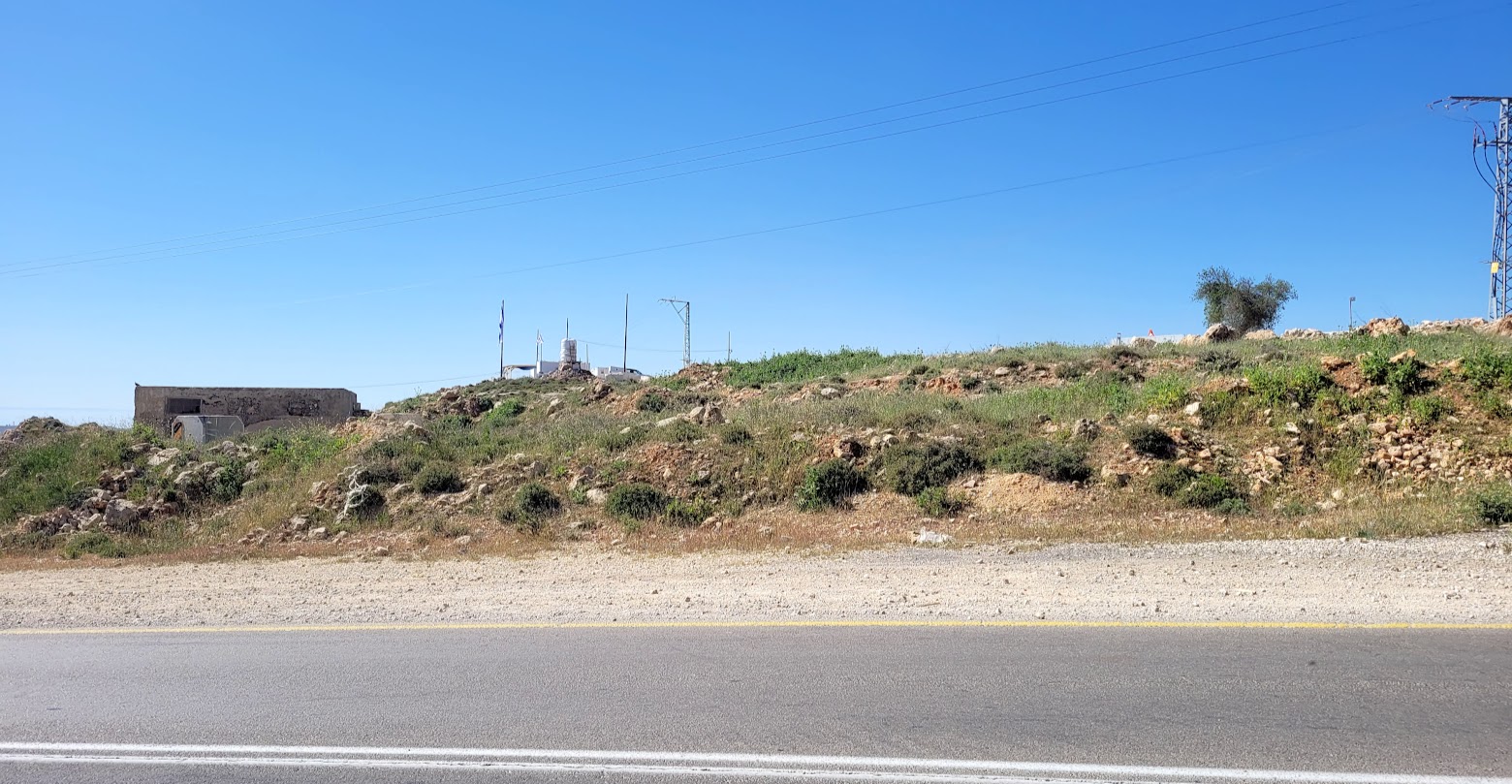
Large stretches of the road from Tekoa to Efrat are densely lined with Israeli flags. We also photographed a new outpost near the northern entrance to Efrat.
Visiting Nafuz:
We had not visited our dear friend since the start of the latest escalation with Iran. Her garden is flourishing. Her youngest son underwent arm surgery and has finally returned to school in al-Khader (walking there). One 17-year-old daughter married her cousin from Beit Ummar and is already about to give birth; another daughter is studying law at Bethlehem University.
The eldest son did not go to school today because he washes cars near the house entrance—livelihood needs take precedence over education. Nafuz says she survives on 600 NIS per month (with additional support from us and from Kamal, our driver). A bureaucratic dispute over her 400-shekel widow’s allowance from the Palestinian Authority has still not been resolved.
The biggest problem is a demolition order for the entire house, approved by the High Court two years ago on “security grounds,” with no meaningful humanitarian consideration for the family’s situation. This is a heavy and frightening cloud hanging over them, which could materialize at any moment. For now, bulldozers are operating in Gaza and elsewhere in the West Bank—but no one knows when it will be Nafuz’s turn.
Location Description
Sheikh Abdallah Ibrahim / Wadi Rahal (Efrat, Gush Etzion)
See all reports for this place-
The Sheikh Abdallah Ibrahim / Wadi Rahal (Efrat, Gush Etzion) CP is located on the access road to the Efrat settlement.
The road also leads to land owned by Palestinians from Wadi Rahal and manned by the security guards of the Efrat settlement. The checkpoint is open to passing Israelis 24 hours a day. Palestinian workers and cleaners can pass only according to a list of contractors and in their presence.
In light of the enormous expansion of Efrat, it sounds reasonable that about 1000 workers pass there every morning.
We met a laborer on his way to the checkpoint and asked whether he had a work permit. He showed us a permit that was bought from a contractor for a considerable amount of money.The last time we visited this checkpoint (07:00 in the morning) we could witness the "slave market" held there. Contractors "sell" each other workers and professionals. The workers come mainly from the surrounding villages and they are spared the detour through the Bethlehem checkpoint. The eastward expansion of the Efrat is a link in a broader plan that aims to create a territorial continuum between the Gush Etzion bloc and the Dead Sea area while crossing the occupied territories (thereby preventing continuous Palestinian control of the West Bank." (From a MahsomWatch report, 2022)
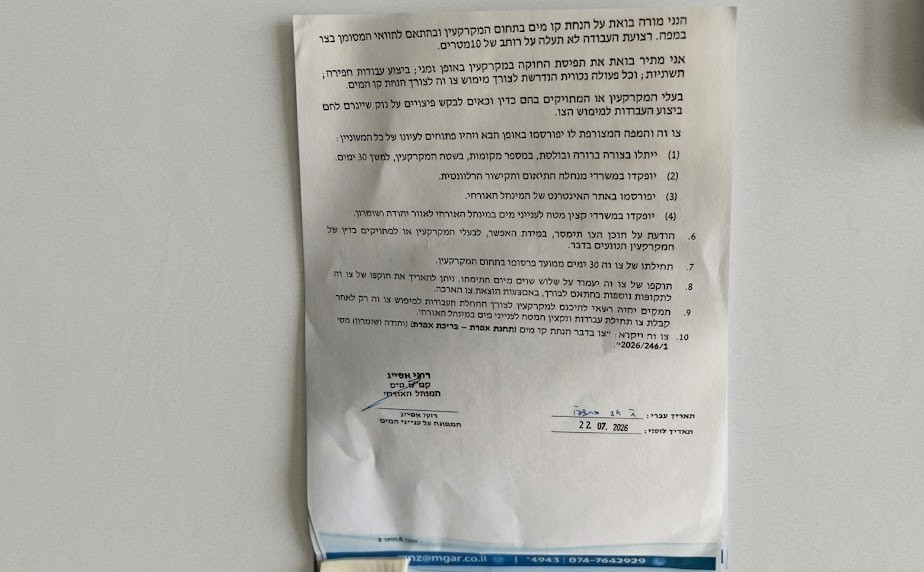 Natanya GinsburgAug-10-2026Gush Etzion. Water Line Laying Order
-
Sheikh Sa'ed
See all reports for this place-
A checkpoint limited to pedestrians, located on Jerusalem’s municipal boundary.
The checkpoint sits on the separation fence at the entrance to Sheikh Sa’ad, dividing it from its neighbourhood of Jabel Mukkabar. It’s manned by Border Police soldiers and private security companies and operates 24 hours a day. Palestinians are forbidden to go through, other than residents of Jabel Mukkabar or Sheikh Sa'ad who have permits. Both groups are permitted through only on foot. Residents of East Jerusalem who don’t live in Jabel Mukkabar are also allowed to cross to Sheikh Sa’ad, but not in the opposite direction; they must return through the Sawahira ash Sharqiya checkpoint.
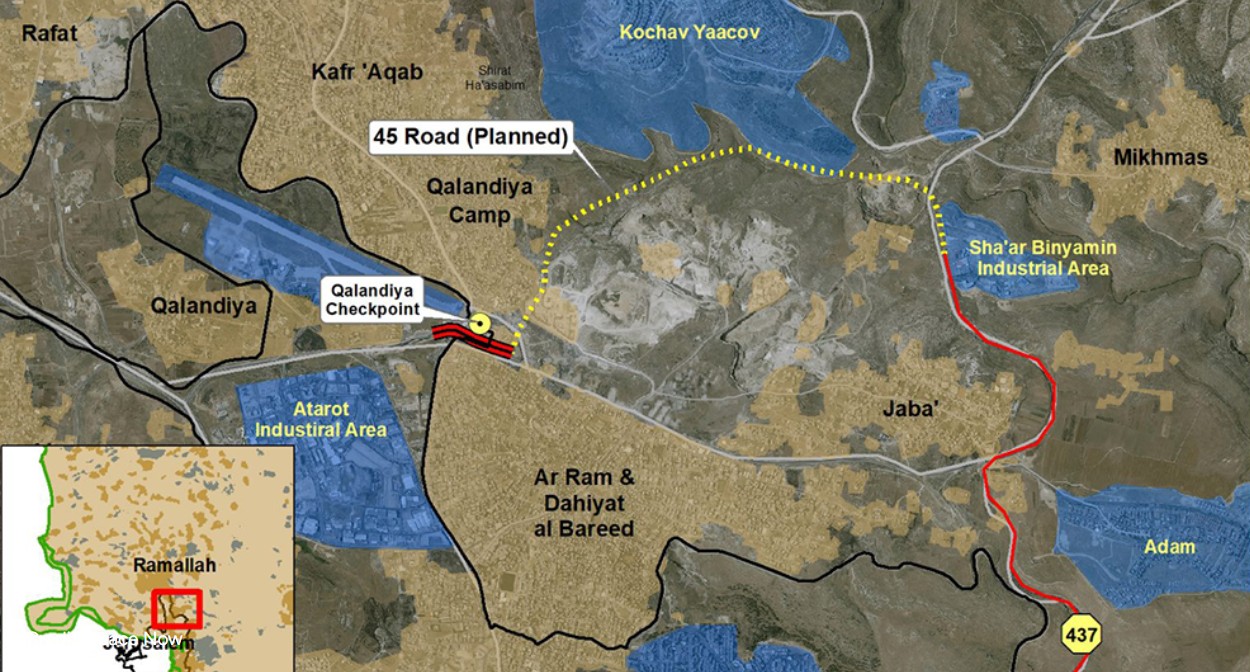 Anat TuegSep-9-2026Road 45. For Israelis only, from Road 60 near Kochav Ya'akov to the Qalandiya underpass
-
