
Shu'afat refugee camp, Jaba (Lil), Hizma, Turmusaya


In Jerusalem, the checkpoints of the neighborhoods beyond the wall were open both during the last closure and during the holiday season for blue certificate holders and work permit holders (not merchants). We were as usual impressed by the overcrowding, dirt and illegal construction. From there we drove north through Jaba (not blocked) and Hizma (without tests). All along Road 60 there are signs of expansion and deepening of the quality of life of the settlements close to the main axis. We traveled following Yesh Din’s report of an attack on a Palestinian farmer from the Esh Kodesh outpost, and saw that in Shilo block a belt of outposts and settlements was being formed on the hills around the large Palestinian agricultural valley of the Turmusaya. The aim of the settlers is to block the Palestinian villages in the valley below and to prevent their expansion, to hinder the working of the fields and the shepherds with their flocks. The settlement blocs are the biggest checkpoints for the Palestinians. They are an important addition to all the other barriers and the bureaucracy which the Palestinians suffer from.
6.45 Shuafat refugee camp
We meet two young residents of the camp with blue certificates who returned from night work at Gad Dairies in the Tel Aviv area. They sounds happy, and said they signed up for citizenship. May there be more like them.
The children are on vacation during the week, so there are almost no buses and Corona tests are not made for those moving to Jerusalem. And yet there is a traffic jam on the way to the exit checkpoint. There is no vaccination tent near the checkpoint, but the blue certificate holders have been vaccinated and the corona condition is improving. There are only a few who walk, most of them in cars. The illegal construction of high-rises that are almost adjacent to each other (and without appropriate foundations, according to the information we received) continues. We are aware of the demolition of smaller home extensions, and the municipality’s planning and enforcement policy is unclear. Maybe waiting for the towers to collapse.
A large team of security personnel of various types (we counted about 10) check and walk around the checkpoint. At the exit of the checkpoint there are signs with two closed doors that guarantee community administration services (community center) and emergency services along with telephones. We meet two young residents of the camp with blue certificates who returned from night work at Gad Dairies in the Tel Aviv area. Sounds pleased, and said they signed up for citizenship. More the better.
The children are on vacation during the week, so there are almost no buses and Corona tests are not made for those entering Jerusalem. And yet there is a traffic jam on the way to the exit of the checkpoint. There is no vaccination tent near the checkpoint, but the blue certificate holders have been vaccinated and the corona position is improving. There are only a few who walk, and most of them in cars. The illegal construction of high-rises that are almost adjacent to each other (and without appropriate foundations, according to the information we received) continues. We are aware of the demolition of smaller homes, and the municipality’s planning and the enforcement policy is unclear. Maybe they are just waiting for the towers to collapse.
Jaba Road – Travel on Road 60 in a northerly direction and photography at all kinds of intersections.
The Sha’ar Binyamin shopping center designated for Israeli-Palestinian industry contains only Jewish businesses.
At the Migron-Mikhmash junction, there are tempting signs to buy houses in Mikhmash, and on the other hand, Migron, which was not evacuated, but has just been moved a little to the side. Above it on Kochav Yaakov hill, a large urban settlement
Texture of Life Road near the Ofra-Ein Yabrud junction connects the Palestinian localities on both sides of Road 60. There are a minimum of such necessary connecting roads in the places we traveled
Turmusaya – We came to see the beautiful village and the extensive agricultural valley of the residents of the area. Olives, plowed fields, a farm with buildings that the owner of the place dreamed of using for leisure activities as well, and was attacked by setter thugs. The village is really beautiful, and the valley greets us with green of all shades. But what stands out most is the accumulation of settlements and outposts on the hills to the north, west and east – Shilo – block – forming a thickening belt around the Palestinian settlements in the area. There are quarry marks for the Shvut Rachel and Shilo extensions, and also a hill to the south with an antenna tower and an access road.
The outposts with promising names: Holy Fire (Esh Kodesh), Angels of Peace (Malachei hashalom), Adei Ad (to eternity) etc. are hidden among the slopes of the hills. From there, violent raids are carried out on the farmers in the area – farmers are beaten , olives poisoned and damage caused to crops. Saturday is also a kosher day for this activity: https://news.walla.co.il/item/3427172 What is supposed to be a day of prayer is used by the settlers for more enjoyable activities such as the above. Nothing ever comes of the complaints made to the police or army. The settlers are a law unto themselves
The truth is, I have never been in the area and I came back feeling very desperate and depressed. The wheels of politics and governance are stuck, but the settlers and their emissaries in the government ministries, the JNF and the settlement unit in the Israel Lands Administration are not resting for a moment.
Checkpoint Shu'afat camp / Anata-Shu'afat (Jerusalem)
See all reports for this place-
The Shu’afat checkpoint is located in the northern part of East Jerusalem at the exit from the village of Anata and the Shu’afat refugee camp, which are located in the area annexed to Jerusalem in 1967. The refugee camp borders the Shu’afat neighborhood to the west, Pisgat Ze’ev to the north, the French Hill neighborhood to the south and the planned expansion of Ma’aleh Adumim to E-1 in the east. It was established in 1966 for 1948 refugees from the West Bank and was populated after the Six Day War by persons who had been expelled from the Jewish Quarter. Today its population comprises some 25,000 people holding blue ID cards and some 15,000 people with Palestinian ID cards. The camp lacks adequate infrastructure and services, and suffers from poverty, neglect and overcrowding. All its buildings are connected to the public electricity and water infrastructure, but not all are connected to the sewer system. The camp’s services are provided by UNRWA, except for those such as health clinics and transportation of pupils to schools in Jerusalem. In 2005, the Israeli High Court of Justice rejected a suit by the residents requesting that the route of the separation fence be drawn such that the camp would remain on the Israeli side, but conditioned its approval of the route on the establishment of a convenient and rapid crossing facility for the inhabitants of the neighborhood, most of whom are residents of Jerusalem.
A temporary checkpoint operated there until December, 2011. It was extremely congested during rush hours, and dangerous for pedestrians (especially children) because of inadequate safety provisions. The new checkpoint was inaugurated south of the old one, for public and private transportation and for pedestrians, intended solely for the residents of the camp – holders of blue ID cards, and those with Palestinian ID cards who possess appropriate permits. There are five vehicle inspection stations at the checkpoint, and two for pedestrians (one of which is currently closed) where scanners have been installed but are not yet operating. According to the army, representatives of government agencies will also be present to provide services to residents of the neighbourhood. The pedestrian lanes are very long, located far from the small parking lots, and accessible through only a single revolving gate.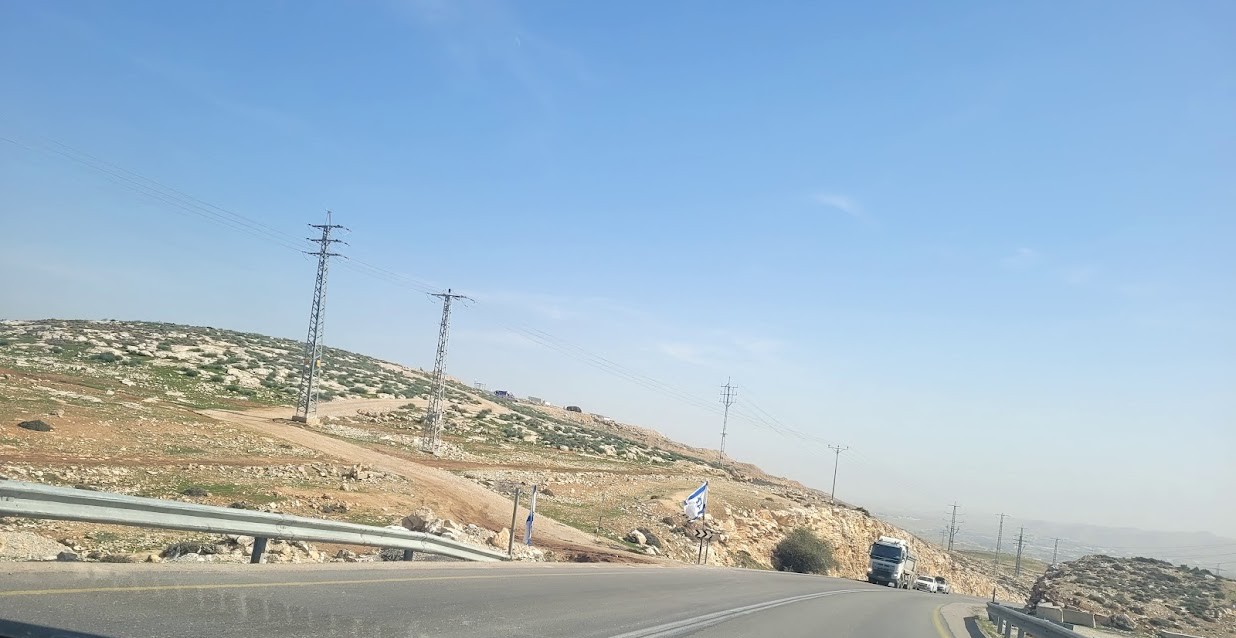 Anat TuegJan-25-2026Anata: A new outpost has been built south of the junction
-
Jaba' (Lil)
See all reports for this place-
Jaba' (Lil) In fact, the Jaba checkpoint is east of the Qalandiya checkpoint. Its declared purpose is the prevention of Israeli citizens from entering Area A. A road checkpoint for vehicles, located on Road 65, borders the southern fence of Kfar Jaba, about three kilometers east of the Qalandiya checkpoint, on the road leading to the settlement of Adam on Road 60. Archaeological excavations within the village found the remains of a cloth house from the First Temple period. The events that led to the construction of the checkpoint are precisely here: on the day of the abduction of Gilad Shalit and before the outbreak of the Second Lebanon War, a 17-year-old man from one of the settlements was abducted by a Palestinian cell. His body was found several days later at the entrances to Ramallah. A military investigation revealed that his abductors had taken him along this route. The checkpoint was set up to prevent future kidnappings and to warn settlers from traveling to Ramallah and entering Area A (which is forbidden for Israelis). The checkpoint that operates around the clock. Usually only vehicles traveling in the direction of Ramallah are inspected. (November 2016): Every morning, when the settlers en masse travel to Jerusalem on Route 60 and every afternoon they return from Jerusalem on Route 60, the army initiates a traffic jam at the entrance to the Jaba checkpoint and stops the movement of Palestinians traveling toward Route 60. (February 2020): In the last two years the checkpoint has not always been manned. Sometimes the soldiers come and just stand, sometimes they come and stop and check those who enter the village, sometimes they patrol the alleys of the village, sometimes they fire stun grenades and gas and sometimes they invade houses and stop young people, say those passing through the Hazma checkpoint. (Updated February 2020)
-
