
South Hebron Hills
South Hebron Hills Monday morning, 11 October 2004.Watchers : Hagit B., Lea S., Ilana L., Nomi S. (reporting) Departure 6:30 from Tel Shoket. Note: As of October 10, Palestine is also on winter time.The Sansana Checkpoint has been moved 500 m to the Green Line. It is manned by the Border Police.Dura –al FawwarPeople were crossing freely, except for three men who were detained (at random) for ca. 20 minutes and were released 10 minutes after our arrival (possibly after our inquiries?)Good were transferred from one side to the other by wagons, some horse-drawn. The merchandise was brought there by car, had to be transferred to the wagons, and then back onto cars again.According to the soldiers the closure [restriction on leaving and entering] will be lifted in two days.Israeli flags were hoisted on top of the pillbox and on a water-tower nearby. Sheep’s crossing – open.We talked to taxi drivers on the Yatta side.Shiyukh junction – open.Hagit met the taxi-driver whose permit and keys were confiscated on September 23. They are still lost. He complained that the soldiers in the pillbox overlooking Hwy #60 near Beni Naim, are present around the clock and come down to stop drivers every now and then.”Humanitarian” Checkpoint (junction of Hwys #60 and #35):A line of ca. 9 cars and trucks. Only when the representative from the DCO [IDF Civil Administration, in charge of passage in the Territories] arrived, could the vehicles be checked. He arrived a few minutes after us and the line started moving.Hebron- Halhul Bridge – open.The pedestrians pass through a narrow opening observed by the soldiers in the pillbox above.Junction with Hwy #3536 near Beit Kahil (the road passes underneath Hwy #35).As reported last week, there were endless lines of vehicles on both sides as well as a lot of pedestrians: women with babies, and with parcels carried on their heads, and students. On each side only two soldiers who have to check both vehicles and pedestrians. The road is fairly narrow and so both can’t be done simultaneously. Hagit went down there, and as a result the women with the babies were allowed to pass. She called the Hebron Brigade Commander. He said he would look into it. Halhul East (junction of Hwys #60 and #3560 to Sair):Only taxis and cars with permits were allowed to continue on Hwy #60 in the direction of Bethlehem.A taxi driver said he had waited for around 2 hours after his keys and permit were confiscated. He was allowed to continue on his way soon after our arrival.YattaNew mounds of dirt on the sides of Hwy #356. A few cars were stuck trying to cross them.Hirbet TawaniHagit had made an appointment with the head of the municipality to promote a solution for the kids of Tuba to get to the school in Hirbet Tawani by the short road which passes by Havat Ma’on (after the beatings of the foreign volunteers by Havat Ma’on settlers. The volunteers have been escorting the kids to school to protect them.)Junction of Hwys #317 and #316 –: A checkpoint has been active there since the terrorist attack in Beersheba.Junction of Hwys #317 and #3178 – A checkpoint in the direction of the Yatir forest.We returned to Tel Shoket after noon.
South Hebron Hills
See all reports for this place-
South Hebron Hills
South Hebron Hills is a large area in the West Bank's southern part.
Yatta is a major city in this area: right in the border zone between the fertile region of Hebron and its surroundings and the desert of the Hebron Hills. Yatta has about 64,000 inhabitants.
The surrounding villages are called Masafer Yatta (Yatta's daughter villages). Their inhabitants subsist on livestock and agriculture. Agriculture is possible only in small plots, especially near streams. Most of the area consists of rocky terraces.Since the beginning of the 1980s, many settlements have been established on the agricultural land cultivated by the Palestinians in the South Hebron Hills region: Carmel, Maon, Susia, Masadot Yehuda, Othniel, and more. Since the settlements were established and Palestinians cultivation areas have been reduced; the residents of the South Hebron Hills have been suffering from harassment by the settlers. Attempts to evict and demolish houses have continued, along with withholding water and electricity. The military and police usually refrain from intervening in violent incidents between settlers and Palestinians do not enforce the law when it comes to the investigation of extensive violent Jewish settlers. The harassment in the South Hebron Hills includes attacking and attempting to burn residential tents, harassing dogs, harming herds, and preventing access to pastures.
There are several checkpoints in the South Hebron Hills, on Routes 317 and 60. In most of them, no military presence is apparent, but rather an array of pillboxes monitor the villages. Roadblocks are frequently set up according to the settlers and the army's needs. These are located at the Zif Junction, the Dura-al Fawwar crossing, and the Sheep Junction at the southern entrance to Hebron.
Updated April 2022
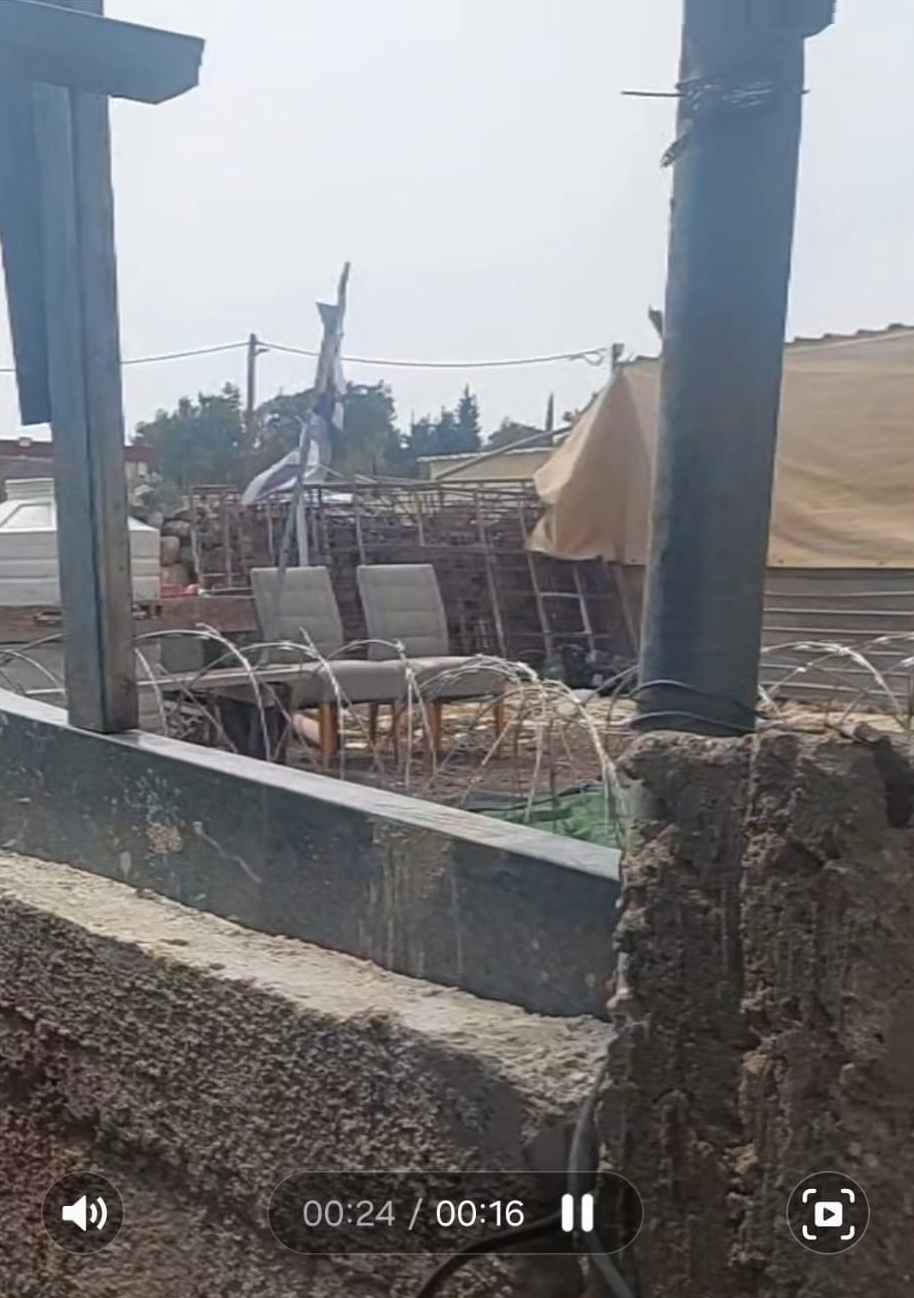 Michal TsadikOct-12-2026Umm al-Khair - Concertina wire and fences
-
