South Hebron Hills
South Hebron Hills Tuesday morning, 5 October 2004Watchers: Nurit, Chaya and Dana (reporting).It was an uneventful morning.Shiyuch and Sheep Junction – Open for passage, without the presence of soldiers.Halhoul bridge – Open to pedestrians, although they were watched “from above” by the soldiers in the tower. Dura – Al Fawwar junction – There were soldiers from a new company at the crossroads, although pedestrians passed freely without being checked at all. At this crossroads there was an attempt by one of the soldiers to get us out of there. We subsequently found out that he was afraid of “those women that distribute inciting leaflets and stop Israeli vehicles on the road”. Our conversation there eventually became more pleasant and relaxed, and ended with that soldier’s laying to rest his “myth,” and he definitely agreed with us that the Occupation must be brought to an end.
South Hebron Hills
See all reports for this place-
South Hebron Hills
South Hebron Hills is a large area in the West Bank's southern part.
Yatta is a major city in this area: right in the border zone between the fertile region of Hebron and its surroundings and the desert of the Hebron Hills. Yatta has about 64,000 inhabitants.
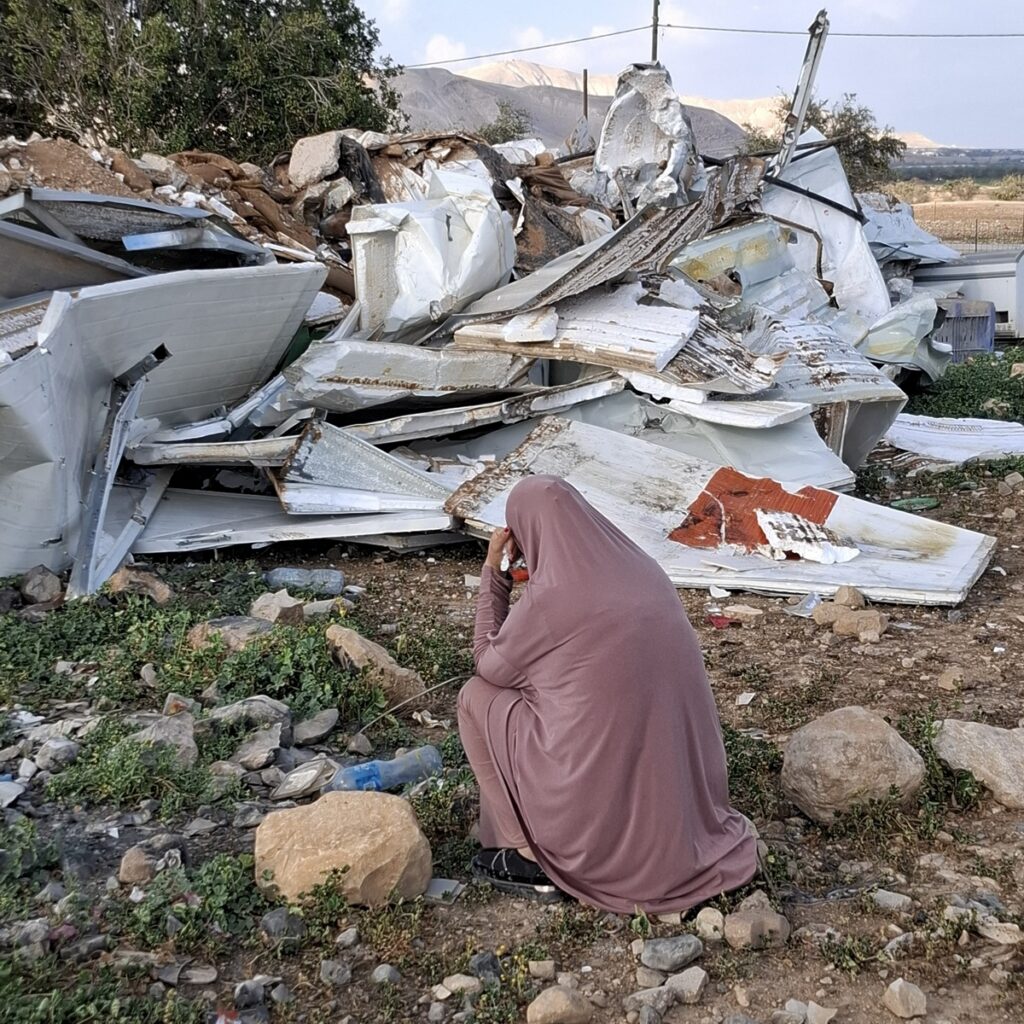
The surrounding villages are called Masafer Yatta (Yatta's daughter villages). Their inhabitants subsist on livestock and agriculture. Agriculture is possible only in small plots, especially near streams. Most of the area consists of rocky terraces.Since the beginning of the 1980s, many settlements have been established on the agricultural land cultivated by the Palestinians in the South Hebron Hills region: Carmel, Maon, Susia, Masadot Yehuda, Othniel, and more. Since the settlements were established and Palestinians cultivation areas have been reduced; the residents of the South Hebron Hills have been suffering from harassment by the settlers. Attempts to evict and demolish houses have continued, along with withholding water and electricity. The military and police usually refrain from intervening in violent incidents between settlers and Palestinians do not enforce the law when it comes to the investigation of extensive violent Jewish settlers. The harassment in the South Hebron Hills includes attacking and attempting to burn residential tents, harassing dogs, harming herds, and preventing access to pastures.
There are several checkpoints in the South Hebron Hills, on Routes 317 and 60. In most of them, no military presence is apparent, but rather an array of pillboxes monitor the villages. Roadblocks are frequently set up according to the settlers and the army's needs. These are located at the Zif Junction, the Dura-al Fawwar crossing, and the Sheep Junction at the southern entrance to Hebron.
Updated April 2022
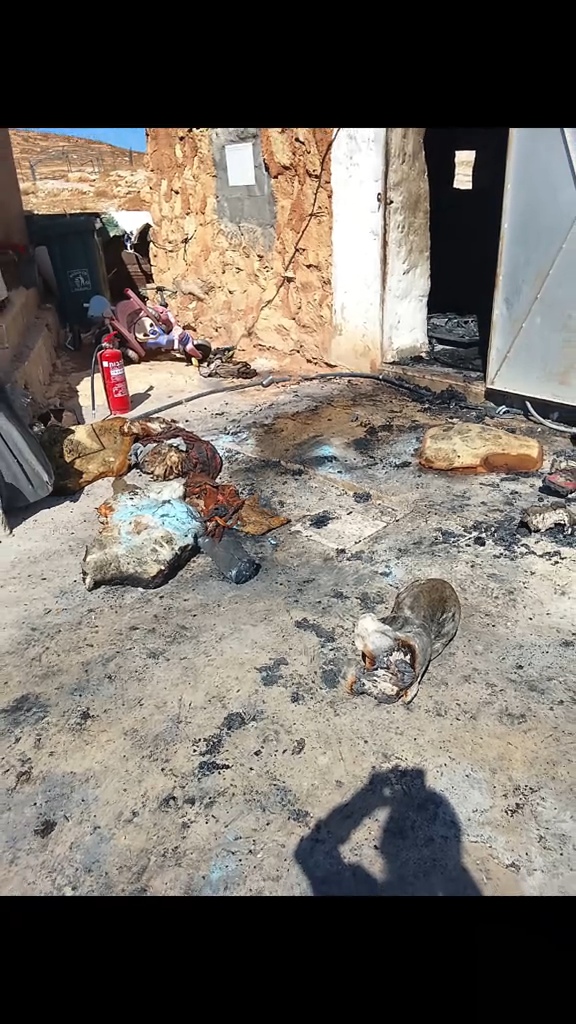 Muhammad D.Aug-10-2026The fire in Tuba 2
-