
South Hebron hills
South Hebron Hills, Monday morning 20.2.06Observers: Michal Z (reports Hebrew)., Hagit B. Route 60All the way to Hebron the side roads are blocked, children walk to school.Saama – New mobile houses where once was the CP.Daharia – Oil tanks deliver the oil “back to back”Dura El Pawar – A soldier up on the tower shouts at the girls demands to see their begs. They shout back and show.Sheep J. – No military presence, people pass quickly on their way to HebronHebronNo problems at the gate, we rushed towards Tel Rumaida CP 7.20-Palestinian sideWe had heard about women teachers not allowed to pass near the magnometer.The headmaster of Kordoba school told us the army had occupied her house causing humiliation to a family once rescuing jews at 1920. She told the teachers not to pass through the magnometer. The children pass and the teachers stand at the Palestinian side of the CP with the CPA volunteers.The Israeli sideTwo soldiers from 101 division are guarding the CP. They got new orders: not to let anyone pass outside the magnometer. A police car with a border police soldier arrive, he tells us they are obliged to obey the army rules. They came to watch and help in times of demonstrations.We tried to call the battalion commander A. He brought along the commander of Hebron police, the head of DCO to see what can be done.We handed them a document from the civilian administration. According to the Hebrew version pregnant women and children may pass near the machine. In the Arabic version (kept with the headmaster) teachers may pass without checking. Large military forces are gathered, the Palestinians ask as to stay so as to avoid problems, some press photographers come to take pictures and leave. A lawyer who lives by tries to convince the headmaster to let some of the teachers pass through. Only after 3 hours he succeeded, with the help of the officer in charge who was flexible enough to let some teachers pass outside the magnometer. On the way back we had a call from the commander of the DCO who had reached an agreement with the brigade commander to let the teachers pass through the gate not the magnometer.Back to the car: We saw our driver surrounded by local Palestinians telling him their problems. We gave them the Humanitarian Center’s card hoping they will find some kind of a solution.
Hebron
See all reports for this place-
According to Wye Plantation Accords (1997), Hebron is divided in two: H1 is under Palestinian Authority control, H2 is under Israeli control. In Hebron there are 170,000 Palestinian citizens, 60,000 of them in H2. Between the two areas are permanent checkpoints, manned at all hours, preventing Palestinian movement between them and controlling passage of permit holders such as teachers and schoolchildren. Some 800 Jews live in Avraham Avinu Quarter and Tel Rumeida, on Givat HaAvot and in the wholesale market.
Checkpoints observed in H2:
- Bet Hameriva CP- manned with a pillbox
- Kapisha quarter CP (the northern side of Zion axis) - manned with a pillbox
- The 160 turn CP (the southern side of Zion axis) - manned with a pillbox
- Avraham Avinu quarter - watch station
- The pharmacy CP - checking inside a caravan with a magnometer
- Tarpat (1929) CP - checking inside a caravan with a magnometer
- Tel Rumeida CP - guarding station
- Beit Hadassah CP - guarding station
Three checkpoints around the Tomb of the Patriarchs
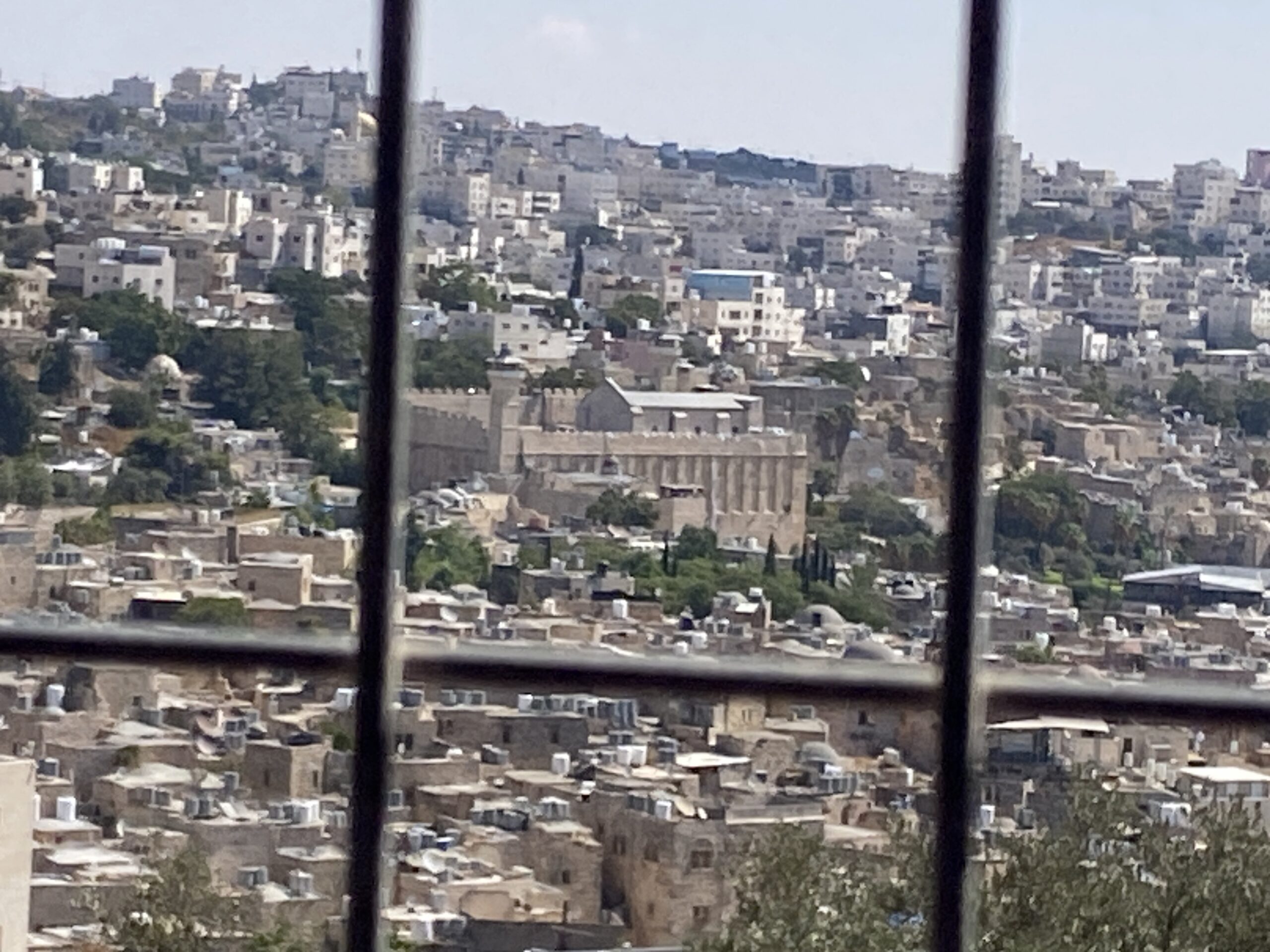 Yael ZoranSep-24-2026Hebron and the Cave of the Patriarchs from Beit Hashalom
-
South Hebron Hills
See all reports for this place-
South Hebron Hills
South Hebron Hills is a large area in the West Bank's southern part.
Yatta is a major city in this area: right in the border zone between the fertile region of Hebron and its surroundings and the desert of the Hebron Hills. Yatta has about 64,000 inhabitants.
The surrounding villages are called Masafer Yatta (Yatta's daughter villages). Their inhabitants subsist on livestock and agriculture. Agriculture is possible only in small plots, especially near streams. Most of the area consists of rocky terraces.Since the beginning of the 1980s, many settlements have been established on the agricultural land cultivated by the Palestinians in the South Hebron Hills region: Carmel, Maon, Susia, Masadot Yehuda, Othniel, and more. Since the settlements were established and Palestinians cultivation areas have been reduced; the residents of the South Hebron Hills have been suffering from harassment by the settlers. Attempts to evict and demolish houses have continued, along with withholding water and electricity. The military and police usually refrain from intervening in violent incidents between settlers and Palestinians do not enforce the law when it comes to the investigation of extensive violent Jewish settlers. The harassment in the South Hebron Hills includes attacking and attempting to burn residential tents, harassing dogs, harming herds, and preventing access to pastures.
There are several checkpoints in the South Hebron Hills, on Routes 317 and 60. In most of them, no military presence is apparent, but rather an array of pillboxes monitor the villages. Roadblocks are frequently set up according to the settlers and the army's needs. These are located at the Zif Junction, the Dura-al Fawwar crossing, and the Sheep Junction at the southern entrance to Hebron.
Updated April 2022
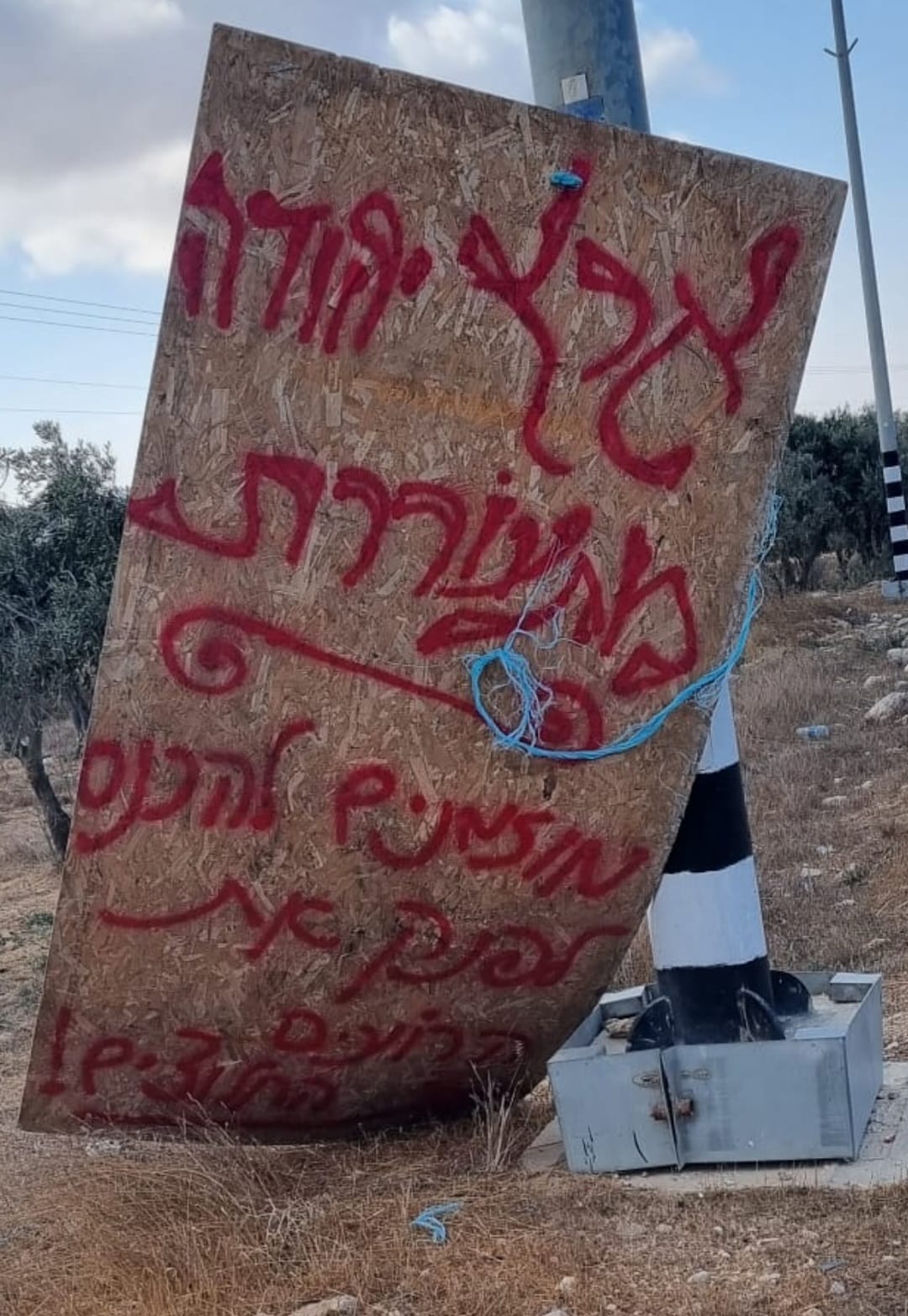 Smadar BeckerOct-17-2026A sign placed by those who call themselves the Pioneer Shepherds, at the outpost adjacent to Qawawis
-
