
South Hebron Hills
South Hebron Hills and Hebron, Thursday 2.3.06 AM Observers: Netanya (from Jerusalem ), Ziva B. P. Elena L (reporting)6:45- 9:457:00 Shim’a (formerly Sansana) CP: About 40 workers and about 20 cars and trucks were queuing on the Palestinian side. The checking was slow. The reservists who manned the CP apologized for their slowness, explaining that they were new at the job and hadn’t yet mastered the procedures. An Israeli contractor on the spot told us that earlier, before the reservists took over, the CP had been manned by border police who had behaved brutally towards the workers. Workers and vehicles continued to arrive and join the queue. We left after 15 minutes.Dahariya: The turn-off is blocked as usual.Route 60: A lot of little kids (aged 6-7) were observed walking to school ALONE along route 60 in the direction of Dura and al Fawwar.Dura-al Fawwar: The crossing is open to vehicles and pedestrians. No soldiers on the ground.Sheep’s Crossing: Open to pedestrians. No soldiers.Junction of routes 60 and 317: no flying CP.Shiyukh-Hebron: Open to pedestrians. No soldiersHebron We met Netanya at the petrol station outside Kiryat Arba. At 7:45.Pharmacy CP: it is manned by Battalion 101. Two CPT volunteerstold us just before we arrived that there had been a commotion, when a lot of schoolboys bunched up near the CP and the soldiers would not let them through. We saw a Palestinian man at the CP who complained that the soldiers had made some of the boys late for school and some had “gone home”. (We learned afterwards that many pupils had got to school by a roundabout way). The soldiers at the CP told us that the boys had refused to pass through the magnometer “in an orderly way” and had tried to go through by the side of the CP (where there are coils of barbed wire and plastic barriers) – the soldiers had prevented this (” only one boy managed to get through” said the soldier) and hence the commotion. We observed a few solitary children pass through the magnometer without a fuss.The Kasba CP: Closed and no one to be seen.Tel Romeida CP: We observed only a few individuals passing through to the Palestinian side.
Hebron
See all reports for this place-
According to Wye Plantation Accords (1997), Hebron is divided in two: H1 is under Palestinian Authority control, H2 is under Israeli control. In Hebron there are 170,000 Palestinian citizens, 60,000 of them in H2. Between the two areas are permanent checkpoints, manned at all hours, preventing Palestinian movement between them and controlling passage of permit holders such as teachers and schoolchildren. Some 800 Jews live in Avraham Avinu Quarter and Tel Rumeida, on Givat HaAvot and in the wholesale market.
Checkpoints observed in H2:
- Bet Hameriva CP- manned with a pillbox
- Kapisha quarter CP (the northern side of Zion axis) - manned with a pillbox
- The 160 turn CP (the southern side of Zion axis) - manned with a pillbox
- Avraham Avinu quarter - watch station
- The pharmacy CP - checking inside a caravan with a magnometer
- Tarpat (1929) CP - checking inside a caravan with a magnometer
- Tel Rumeida CP - guarding station
- Beit Hadassah CP - guarding station
Three checkpoints around the Tomb of the Patriarchs
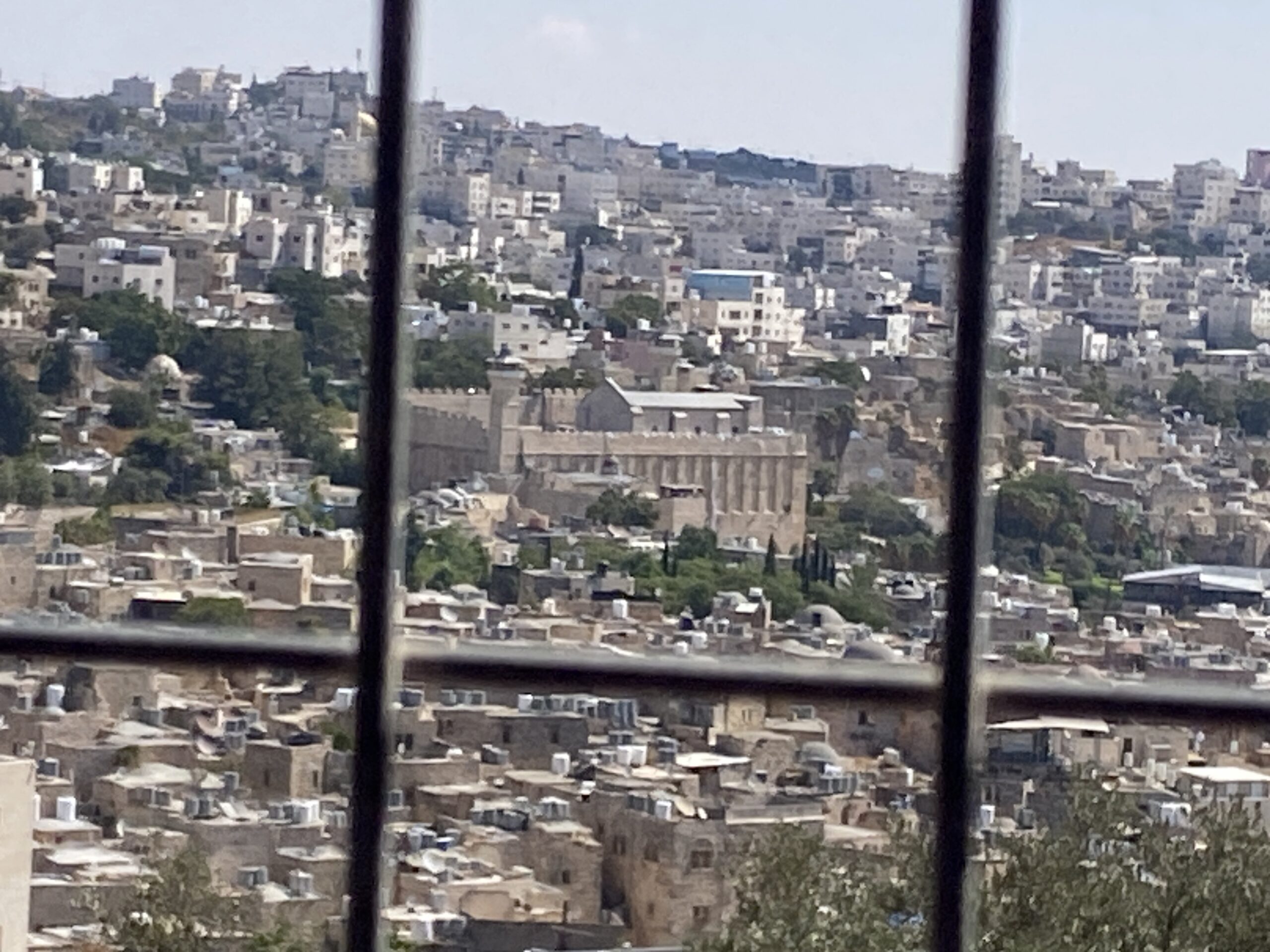 Yael ZoranSep-24-2026Hebron and the Cave of the Patriarchs from Beit Hashalom
-
Jerusalem
See all reports for this place-
The places in East Jerusalem which are visited routinely by MachsomWatch women are Silwan and Sheikh Jarrah. During the month of Ramadan, also the Old City and its environs are monitored.
-
South Hebron Hills
See all reports for this place-
South Hebron Hills
South Hebron Hills is a large area in the West Bank's southern part.
Yatta is a major city in this area: right in the border zone between the fertile region of Hebron and its surroundings and the desert of the Hebron Hills. Yatta has about 64,000 inhabitants.
The surrounding villages are called Masafer Yatta (Yatta's daughter villages). Their inhabitants subsist on livestock and agriculture. Agriculture is possible only in small plots, especially near streams. Most of the area consists of rocky terraces.Since the beginning of the 1980s, many settlements have been established on the agricultural land cultivated by the Palestinians in the South Hebron Hills region: Carmel, Maon, Susia, Masadot Yehuda, Othniel, and more. Since the settlements were established and Palestinians cultivation areas have been reduced; the residents of the South Hebron Hills have been suffering from harassment by the settlers. Attempts to evict and demolish houses have continued, along with withholding water and electricity. The military and police usually refrain from intervening in violent incidents between settlers and Palestinians do not enforce the law when it comes to the investigation of extensive violent Jewish settlers. The harassment in the South Hebron Hills includes attacking and attempting to burn residential tents, harassing dogs, harming herds, and preventing access to pastures.
There are several checkpoints in the South Hebron Hills, on Routes 317 and 60. In most of them, no military presence is apparent, but rather an array of pillboxes monitor the villages. Roadblocks are frequently set up according to the settlers and the army's needs. These are located at the Zif Junction, the Dura-al Fawwar crossing, and the Sheep Junction at the southern entrance to Hebron.
Updated April 2022
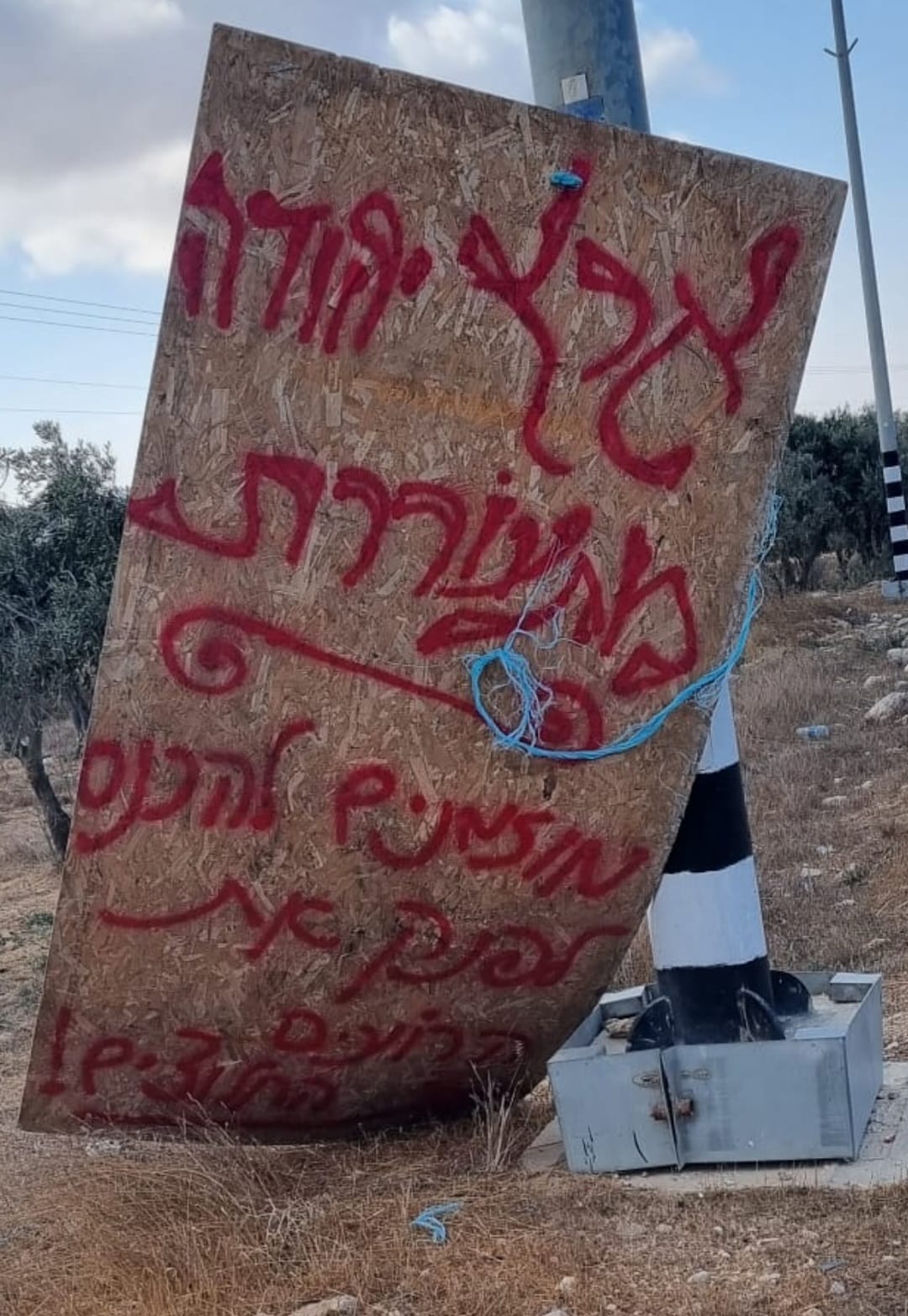 Smadar BeckerOct-17-2026A sign placed by those who call themselves the Pioneer Shepherds, at the outpost adjacent to Qawawis
-
