
South Hebron Hills
Hebron and South Hebron Hills, 4/06/2006 AMObservers, Michal Ch, Hagit B (reporting)07:00 – 12:30We set out later than usual. The schoolchildren are now on their summer holidays so there is no need to keep an eye on what is happening at the Schoolchildren’s Crossing.Sansana Checkpoint On the main road there was traffic both of regular and temporary workers, which makes the situation dangerous. We stayed there until 7:40. The workers crossed without problems, and only cars with Arab passengers were stopped. The settlers’ cars pass freely. We were permitted to stay and to observe. But not before we hear one of the soldiers saying to us – “You came to see the devil?” And one of the settlers shouting at us from his car, “Filth of the earth, get away from here!” Once the workers were through, we left.Ramadin CheckpointThe border police run the checkpoint; we saw from the distance that there was a group of Palestinian youth collecting garbage from the checkpoint. We were somewhat surprised that they are already abusing them. It appears that the Palestinians, on their way to Dahariya, distribute plastic garbage bags. The police tell them to collect them and allow them to continue on their way. Someone told us that because we were there, the electricity workers from Ramadin had already passed through. They had received passes until the end of their job. An old man from Dahariya was standing there, and he wanted to leave and get to Siroka where his son is hospitalized after being stabbed. He waited twenty minutes and then was allowed through. Hebron: The town was almost empty of people, with an abandoned feel about it in the places where we went. The town has taken on the life of Area H1 and all Palestinians that come here go through checkpoints. Very few pedestrians manage to get through without problems at the Pharmacy Checkpoint, at Tel Ramaida, at the Police checkpoint. The gate to the Casba is locked. The settlers walk around there as they always do. The summer holidays have not yet started. At the Machpela Cave Checkpoint, there’s a new company of Border Police, two people were detained, and the policeman was wandering around, shouting about “MY checkpoint”, wanting our IDS from the month of May and from our driver. It seemed that if we stayed, he would, out of spite, detain more Palestinians, so we left.Road 60Samua blocked.Dahariya closed and blockedDora Al Fuad They are building a roundabout. Traffic passes without problems, the pillbox is manned.Sheep Crossing Traffic going through with no problemsB’Nei Noam On our way back, there was a rolling road block, detaining one car, which was freed before we arrived.Shiuch Sair A rolling road block (890 Battalion of the Paratroopers), with all the time in the world, and 10 cars were delayed, every ID of every passenger was inspected, every passenger in the taxi, taking 25 minutes. There is more Palestinian traffic, so they are given permission to travel on the apartheid road, and get round the apartheid in another way. A rolling checkpoint, while all settlers’ cars and Egged buses pass without standing in line.East Halhul The pillbox is manned, and there are no Army presence on the road.Roadworks also at HaMaaka, the stupid defense post, also electricity works. All guarded by soldiers, the bulldozers are resting in their places alongside the base at Har Manoah.Road 35 the pillbox is mannedOn the bridge Halhul – Hebron There’s a flying road block, but the soldiers are taking it lightly and only stop cars after they have checked IDs on the cars they have stopped, so there is no line.Road 356 Zif junction is open, the pillbox is manned, the cameras are working, and there is almost no traffic.Road 317 Just before Susia, we met a huge truck loaded with massive concrete blocks, and the security staff were busy at their work. There were about 60 Palestinians, residents of the area, demonstrating against what was happening. Newspaper headline:Tens of Palestinian agricultural workers demonstrating at this time on Road 317, in the South Hebron Hills, against the installation of concrete road-blocks by the Army. According to the demonstrators, the installation prevents them taking their flocks across the road to their fields.
Hebron
See all reports for this place-
According to Wye Plantation Accords (1997), Hebron is divided in two: H1 is under Palestinian Authority control, H2 is under Israeli control. In Hebron there are 170,000 Palestinian citizens, 60,000 of them in H2. Between the two areas are permanent checkpoints, manned at all hours, preventing Palestinian movement between them and controlling passage of permit holders such as teachers and schoolchildren. Some 800 Jews live in Avraham Avinu Quarter and Tel Rumeida, on Givat HaAvot and in the wholesale market.
Checkpoints observed in H2:
- Bet Hameriva CP- manned with a pillbox
- Kapisha quarter CP (the northern side of Zion axis) - manned with a pillbox
- The 160 turn CP (the southern side of Zion axis) - manned with a pillbox
- Avraham Avinu quarter - watch station
- The pharmacy CP - checking inside a caravan with a magnometer
- Tarpat (1929) CP - checking inside a caravan with a magnometer
- Tel Rumeida CP - guarding station
- Beit Hadassah CP - guarding station
Three checkpoints around the Tomb of the Patriarchs
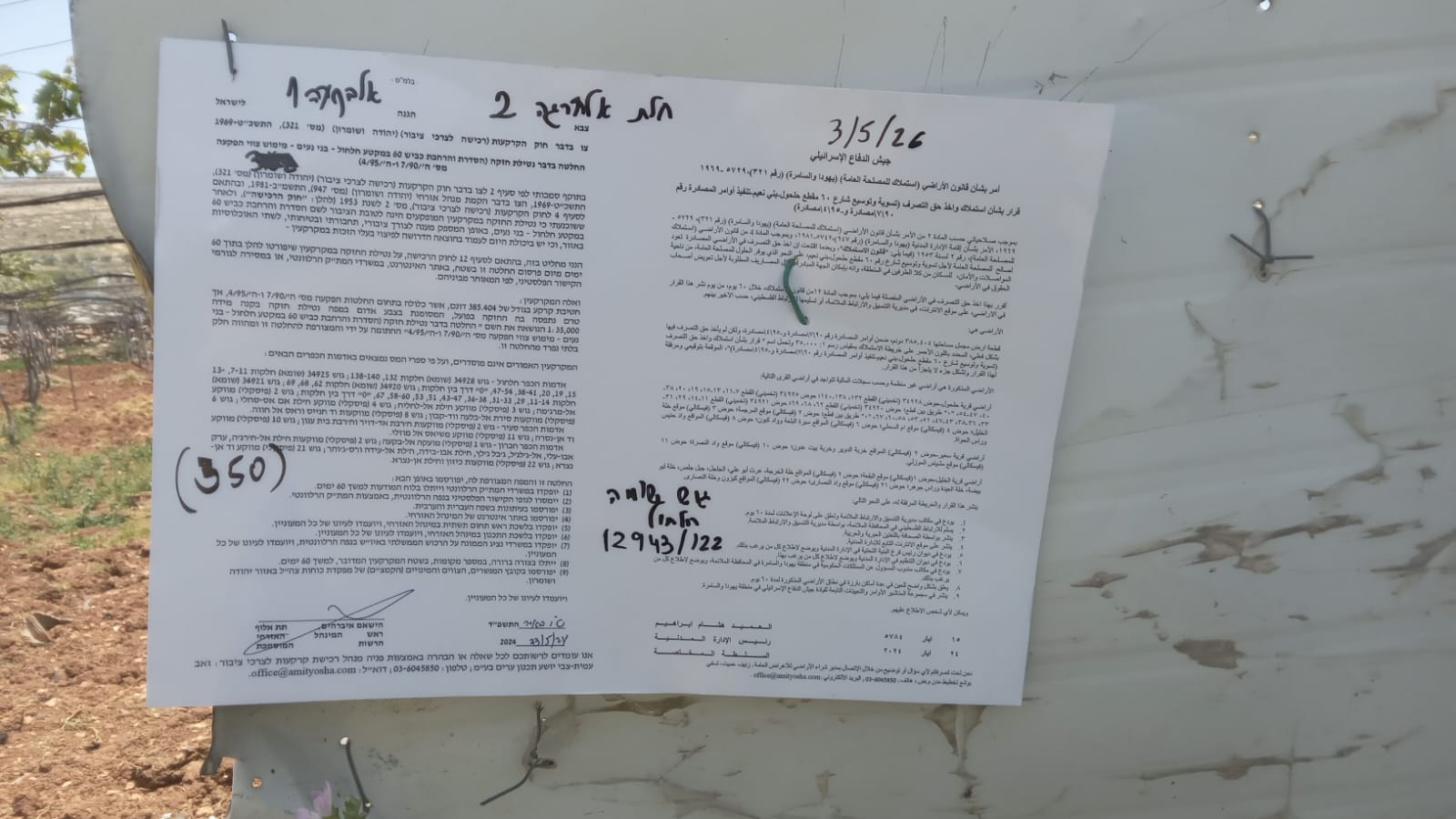 Muhammad D.May-13-2026Hebron - Request for compensation for land expropriation
-
South Hebron Hills
See all reports for this place-
South Hebron Hills
South Hebron Hills is a large area in the West Bank's southern part.
Yatta is a major city in this area: right in the border zone between the fertile region of Hebron and its surroundings and the desert of the Hebron Hills. Yatta has about 64,000 inhabitants.
The surrounding villages are called Masafer Yatta (Yatta's daughter villages). Their inhabitants subsist on livestock and agriculture. Agriculture is possible only in small plots, especially near streams. Most of the area consists of rocky terraces.Since the beginning of the 1980s, many settlements have been established on the agricultural land cultivated by the Palestinians in the South Hebron Hills region: Carmel, Maon, Susia, Masadot Yehuda, Othniel, and more. Since the settlements were established and Palestinians cultivation areas have been reduced; the residents of the South Hebron Hills have been suffering from harassment by the settlers. Attempts to evict and demolish houses have continued, along with withholding water and electricity. The military and police usually refrain from intervening in violent incidents between settlers and Palestinians do not enforce the law when it comes to the investigation of extensive violent Jewish settlers. The harassment in the South Hebron Hills includes attacking and attempting to burn residential tents, harassing dogs, harming herds, and preventing access to pastures.
There are several checkpoints in the South Hebron Hills, on Routes 317 and 60. In most of them, no military presence is apparent, but rather an array of pillboxes monitor the villages. Roadblocks are frequently set up according to the settlers and the army's needs. These are located at the Zif Junction, the Dura-al Fawwar crossing, and the Sheep Junction at the southern entrance to Hebron.
Updated April 2022
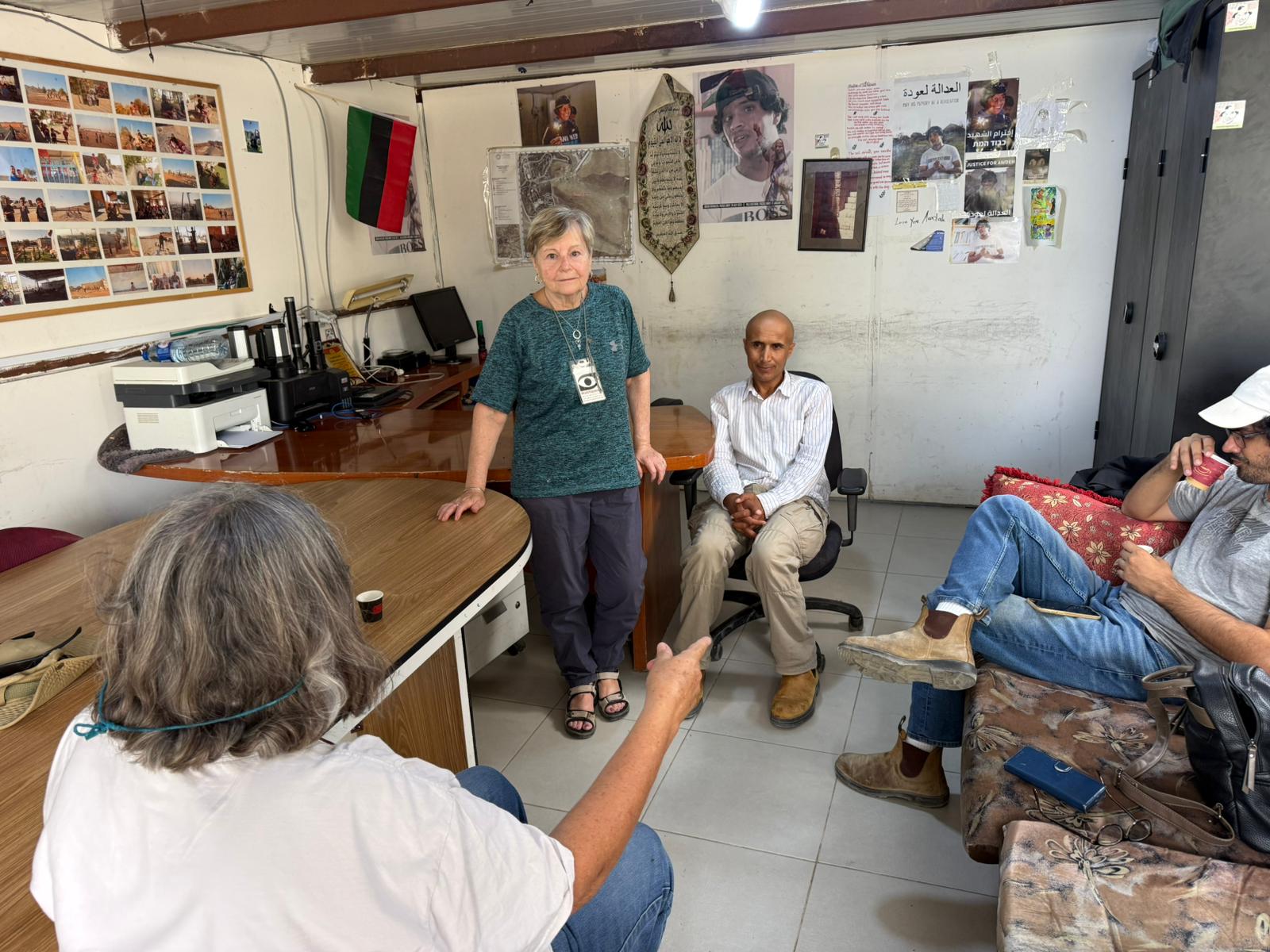 Muhammad D.Aug-30-2026Umm al-Khair, Smadar with Eid, Or and Timna, in the Situation Room
-
