
South Hebron Hills
Hebron and South Hebron Hills 19.9.06, AMWatchers: Michal TS. Hagit B. (Reporting)6:30-10:30 AMSansana checkpoint: A few workers are passing, continuation of electricity works.60, 317, 356 roads: No cabs traffic at all. No army vehicles. The pill boxes are manned. Children who start studying at 9:00 AM, are walking on road sides. Dura el Fawar, the ‘sheep intersection’, and Shiuch Sair, there is a bit more traffic passing 60 Rd. Ramadan starts on Sunday, and there is almost no people or merchandise movement. People are probably dying from poverty and no work opportunities. “Hatzavim” are blooming, and it is the end of the Hebron-figs’ and tasty purpule grapes’ season. andHebron – from the Machpela cave, loud sounds of Jewish music. Ramadan and Hebrew New-Year are falling almost on the same days, and we wander how they will divide visiting hours between Jews and Muslims…. Children are passing freely through Farmacy and Tel Rumeida stopwatches. The teachers too are passing through a side gate – we have succeeded in our efforts. Everything is so deserted that it is tearing my heart. One of the phalestinians told us that we are most needed on Shabat. We met Priel, the last head master of the school, stepping the stairs towards Cordova School . She sends regards to all her friends. She is quite bored with pension life. We are talking to the peace activists and they tell us that sometimes the police disturb them when they stand on the stairs leading to Cordova School . Police officers tell them not to stand on the stairs since it disturbs the settlers. The soldier standing near by tells us that this order is nonsense and he does not keep it.Checkpoints are manned by 2 soldiers each. A few more soldiers are standing in different spots. The soldiers are from “Lavi”. One of them is very angry at us but very caring for a female dog that had 3 babies and does not have milk. He takes care of the puppies.No special happenings. Just a big sadness for this dying city. Look at the pictures and see how the betonades are turned into peace pictures, only with no Arabs.
Hebron
See all reports for this place-
According to Wye Plantation Accords (1997), Hebron is divided in two: H1 is under Palestinian Authority control, H2 is under Israeli control. In Hebron there are 170,000 Palestinian citizens, 60,000 of them in H2. Between the two areas are permanent checkpoints, manned at all hours, preventing Palestinian movement between them and controlling passage of permit holders such as teachers and schoolchildren. Some 800 Jews live in Avraham Avinu Quarter and Tel Rumeida, on Givat HaAvot and in the wholesale market.
Checkpoints observed in H2:
- Bet Hameriva CP- manned with a pillbox
- Kapisha quarter CP (the northern side of Zion axis) - manned with a pillbox
- The 160 turn CP (the southern side of Zion axis) - manned with a pillbox
- Avraham Avinu quarter - watch station
- The pharmacy CP - checking inside a caravan with a magnometer
- Tarpat (1929) CP - checking inside a caravan with a magnometer
- Tel Rumeida CP - guarding station
- Beit Hadassah CP - guarding station
Three checkpoints around the Tomb of the Patriarchs
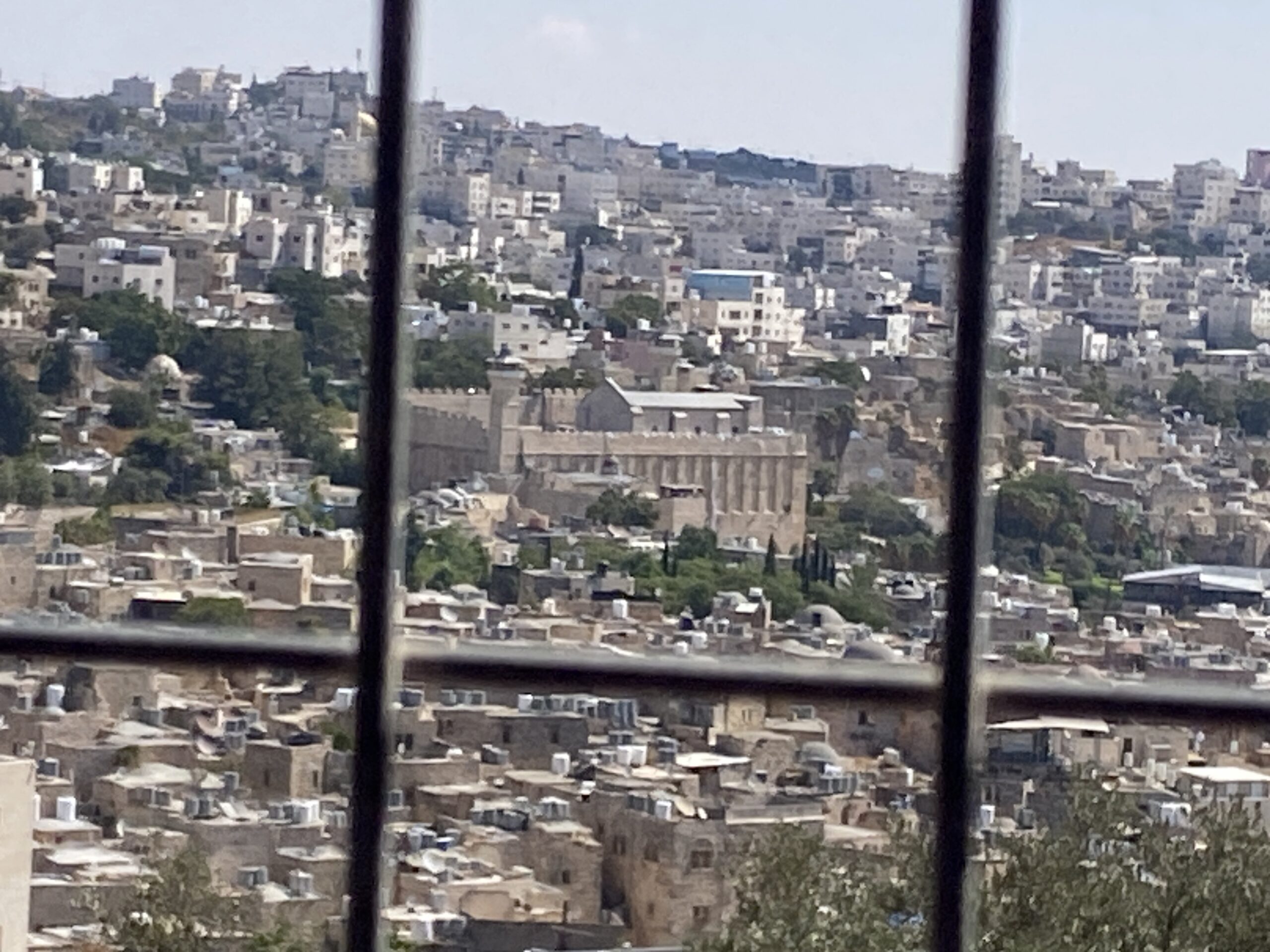 Yael ZoranSep-24-2026Hebron and the Cave of the Patriarchs from Beit Hashalom
-
South Hebron Hills
See all reports for this place-
South Hebron Hills
South Hebron Hills is a large area in the West Bank's southern part.
Yatta is a major city in this area: right in the border zone between the fertile region of Hebron and its surroundings and the desert of the Hebron Hills. Yatta has about 64,000 inhabitants.
The surrounding villages are called Masafer Yatta (Yatta's daughter villages). Their inhabitants subsist on livestock and agriculture. Agriculture is possible only in small plots, especially near streams. Most of the area consists of rocky terraces.Since the beginning of the 1980s, many settlements have been established on the agricultural land cultivated by the Palestinians in the South Hebron Hills region: Carmel, Maon, Susia, Masadot Yehuda, Othniel, and more. Since the settlements were established and Palestinians cultivation areas have been reduced; the residents of the South Hebron Hills have been suffering from harassment by the settlers. Attempts to evict and demolish houses have continued, along with withholding water and electricity. The military and police usually refrain from intervening in violent incidents between settlers and Palestinians do not enforce the law when it comes to the investigation of extensive violent Jewish settlers. The harassment in the South Hebron Hills includes attacking and attempting to burn residential tents, harassing dogs, harming herds, and preventing access to pastures.
There are several checkpoints in the South Hebron Hills, on Routes 317 and 60. In most of them, no military presence is apparent, but rather an array of pillboxes monitor the villages. Roadblocks are frequently set up according to the settlers and the army's needs. These are located at the Zif Junction, the Dura-al Fawwar crossing, and the Sheep Junction at the southern entrance to Hebron.
Updated April 2022
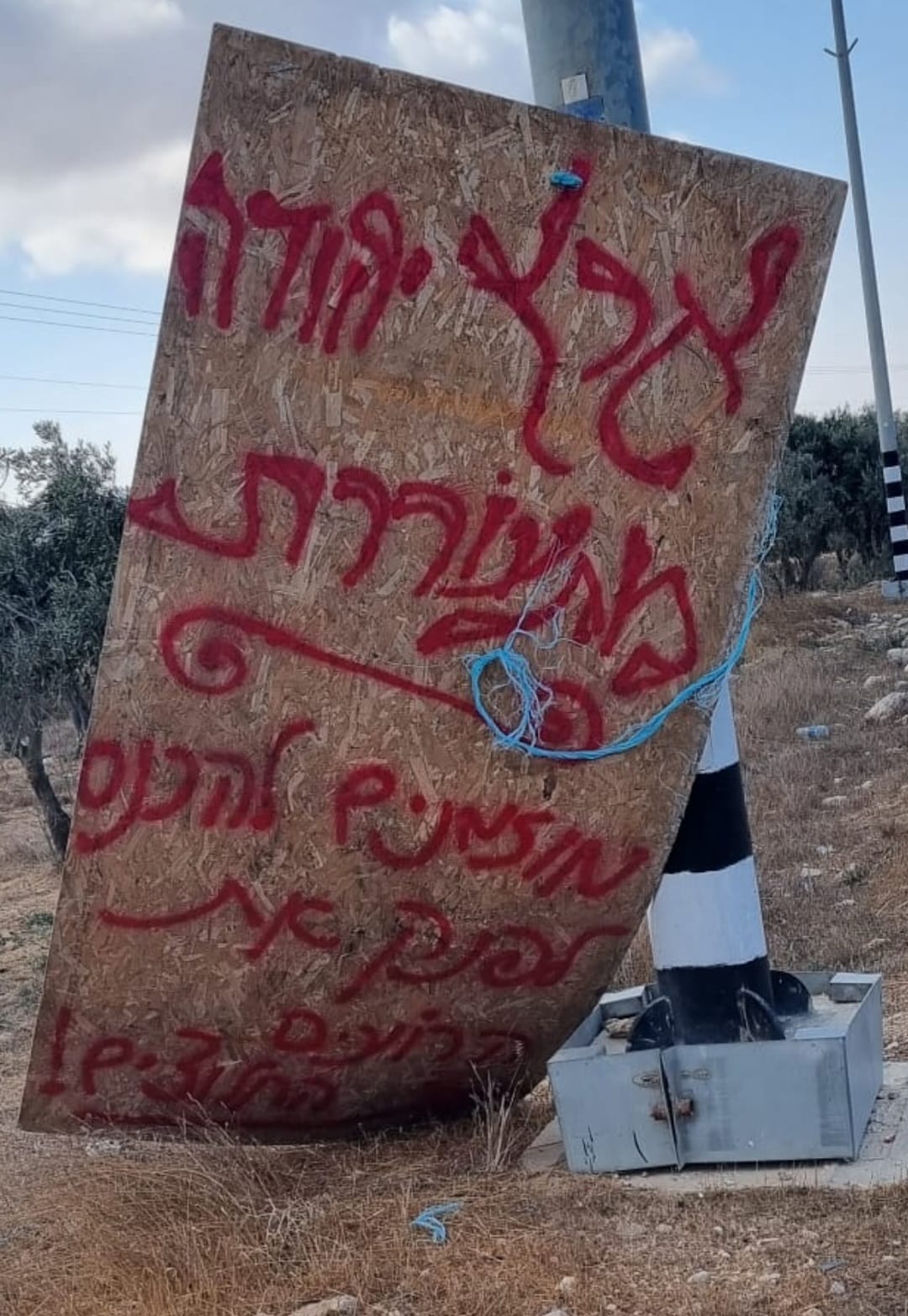 Smadar BeckerOct-17-2026A sign placed by those who call themselves the Pioneer Shepherds, at the outpost adjacent to Qawawis
-
