
South Hebron Hills
We entered through the Tarqumiya crossing and drove south to Umm-el-Hir to visit the small kindergarten where Huda’s sister works together with two more women (kindergarten teachers?). The kindergarten is fairly spare; the children are very cute, of course, happy to see us, playing and dancing with us. They enjoy seeing the photos Raya takes of them. We hadn’t originally planned to go there – we regretted not having brought the bundles of clothes and toys we had collected. We’ll try to be better organized in the future.
We drove through the village of Ka’av, which we weren’t familiar with. It has a large school, a relatively large amount of vegetation (even a few mature pine trees) and built homes, some of them large and attractive.
We continued to Umm Faqra; Fadel and his two wives welcomed us. They invited us to the smoky cave they live in; we spent time with three of their nine children, were offered pita and labaneh – all produced by them, of course. As we left the village we encountered the children who’d been driven home from school and were walking to the village.
Back via Highway 60. We saw no problems at the Al-Fawwar junction. The southern entrance to Hebron that opened is well-marked with red signs of Area A. We saw no soldiers.
Time grew short. We returned to Tarqumiya, stopped briefly at our friendly grocery store, and crossed again with no problems (this morning we’d complimented a staffer on the recent procedural improvements. Let’s hope they continue).
South Hebron Hills
See all reports for this place-
South Hebron Hills
South Hebron Hills is a large area in the West Bank's southern part.
Yatta is a major city in this area: right in the border zone between the fertile region of Hebron and its surroundings and the desert of the Hebron Hills. Yatta has about 64,000 inhabitants.
The surrounding villages are called Masafer Yatta (Yatta's daughter villages). Their inhabitants subsist on livestock and agriculture. Agriculture is possible only in small plots, especially near streams. Most of the area consists of rocky terraces.Since the beginning of the 1980s, many settlements have been established on the agricultural land cultivated by the Palestinians in the South Hebron Hills region: Carmel, Maon, Susia, Masadot Yehuda, Othniel, and more. Since the settlements were established and Palestinians cultivation areas have been reduced; the residents of the South Hebron Hills have been suffering from harassment by the settlers. Attempts to evict and demolish houses have continued, along with withholding water and electricity. The military and police usually refrain from intervening in violent incidents between settlers and Palestinians do not enforce the law when it comes to the investigation of extensive violent Jewish settlers. The harassment in the South Hebron Hills includes attacking and attempting to burn residential tents, harassing dogs, harming herds, and preventing access to pastures.
There are several checkpoints in the South Hebron Hills, on Routes 317 and 60. In most of them, no military presence is apparent, but rather an array of pillboxes monitor the villages. Roadblocks are frequently set up according to the settlers and the army's needs. These are located at the Zif Junction, the Dura-al Fawwar crossing, and the Sheep Junction at the southern entrance to Hebron.
Updated April 2022
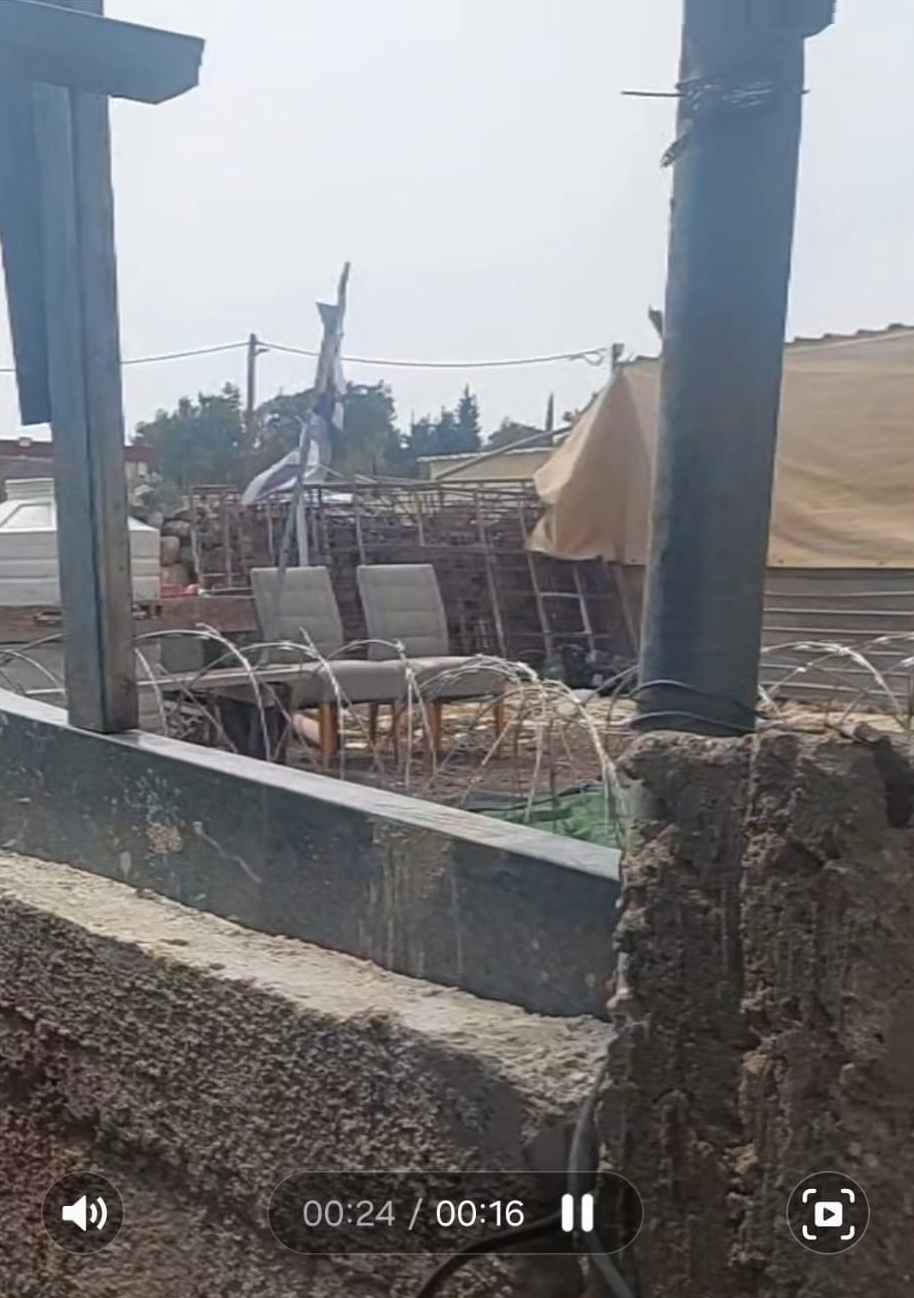 Michal TsadikOct-12-2026Umm al-Khair - Concertina wire and fences
-
