
South Hebron Hills - a mutilated vineyard
We decided to focus on a visit to Abu Na’im.
Muhammad Shukri Abu Rajab of the Tamimi family from Hebron, is the owner of a large vineyard which settlers have destroyed. The vineyard is located in a triangle between Bani Naim – Hebron – Yatta, an area called the Baluta in Area C
Abu Naim and his family have 15 dunams of vineyards which form their livelihood. He invites us to the small building where he spends his working days.
Last Thursday, the 24.5.2018, he returned home from the vineyard for Iftar, the meal which breaks the fast of the day. The next day was Friday prayers. But when he came to the vineyard on Saturday, his eyes were horrified. A thousand grapevines were cut down with an electric saw in both plots, and there was graffiti in large letters… “Agricultural terror will reach everyone.” Lucky they ran out of gas. So part of the vineyard survived and with a bitter smile he shows us the magnitude of the horror.
He called the police of Kiryat Arba. when they arrived, and the army and trackers who searched the area and left
He wants to convey a message to the Israeli public.
“I am 63 years old and have lived with Jews on good terms all my life. Even with the settlers of Kiryat Arba, I was on good terms, but settlers of the settlements around us are always attacking us. y wayF
We, the little people, cannot change anything. In the seventies we would visit each other for every event, either good or bad. I never hurt anyone nor did I harm anyone in any way. They came and caused me such grievous harm that my heart has been broken forever. I am on pension and the vineyard supplemented by income. I now have a lot of expenses to deal with. Trees are like humans. The Jews say it is forbidden to uproot trees and they do this to me? We want to live in peace with everyone. There is a plot next to mine which belonged to the Jews from the Ottoman period and they returned to it after the war. We know that it belongs to them and no one harms them. It is well cared for and yields more than my plot did because they are given water and security. We are not given water to irrigate or to drink. But when they come to work on their plot, a unit of the IDF comes to guard them and because of this plot we are not allowed to build in the area. I do not understand. Law is a law so why is it not the law for all? Why does the administration not guard us, the ordinary people? If they had guarded me the way they guard the settlers nothing would have happened to my vineyards. If one stone is thrown at them, all the police and the army come for the settlers. No one is guarding Area C and the army is responsible for us. This is a military government. We have no civil rights. why why?”
Abu Naim speaks with the blood of his heart.We only express deep sorrow and great shame at the sight of this beautiful large vineyard, most of which is now destroyed.


South Hebron Hills
See all reports for this place-
South Hebron Hills
South Hebron Hills is a large area in the West Bank's southern part.
Yatta is a major city in this area: right in the border zone between the fertile region of Hebron and its surroundings and the desert of the Hebron Hills. Yatta has about 64,000 inhabitants.
The surrounding villages are called Masafer Yatta (Yatta's daughter villages). Their inhabitants subsist on livestock and agriculture. Agriculture is possible only in small plots, especially near streams. Most of the area consists of rocky terraces.Since the beginning of the 1980s, many settlements have been established on the agricultural land cultivated by the Palestinians in the South Hebron Hills region: Carmel, Maon, Susia, Masadot Yehuda, Othniel, and more. Since the settlements were established and Palestinians cultivation areas have been reduced; the residents of the South Hebron Hills have been suffering from harassment by the settlers. Attempts to evict and demolish houses have continued, along with withholding water and electricity. The military and police usually refrain from intervening in violent incidents between settlers and Palestinians do not enforce the law when it comes to the investigation of extensive violent Jewish settlers. The harassment in the South Hebron Hills includes attacking and attempting to burn residential tents, harassing dogs, harming herds, and preventing access to pastures.
There are several checkpoints in the South Hebron Hills, on Routes 317 and 60. In most of them, no military presence is apparent, but rather an array of pillboxes monitor the villages. Roadblocks are frequently set up according to the settlers and the army's needs. These are located at the Zif Junction, the Dura-al Fawwar crossing, and the Sheep Junction at the southern entrance to Hebron.
Updated April 2022
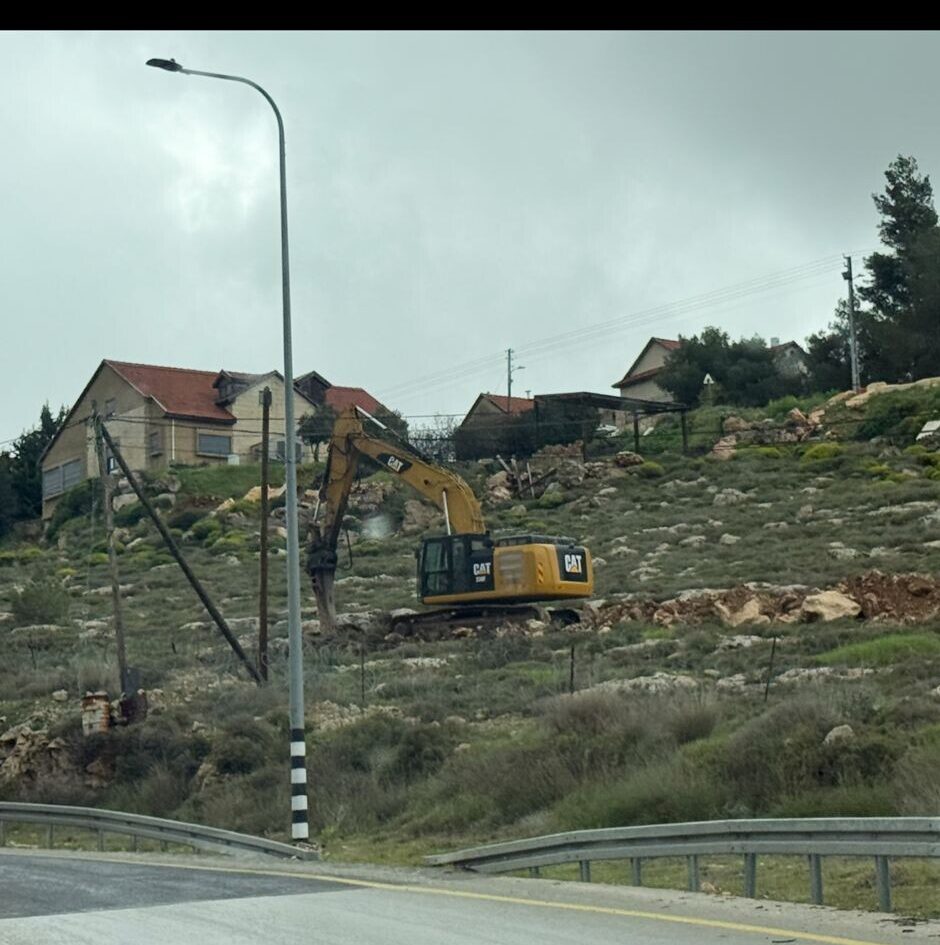 MuhammadFeb-24-2026South Hebron Hill, Beit Hagai: Paving an internal security road
-