
South Hebron Hills, Hashem alDarij
Activity at Huda preschool, Hashem-al-Daraj
Topic of activity: olive harvest
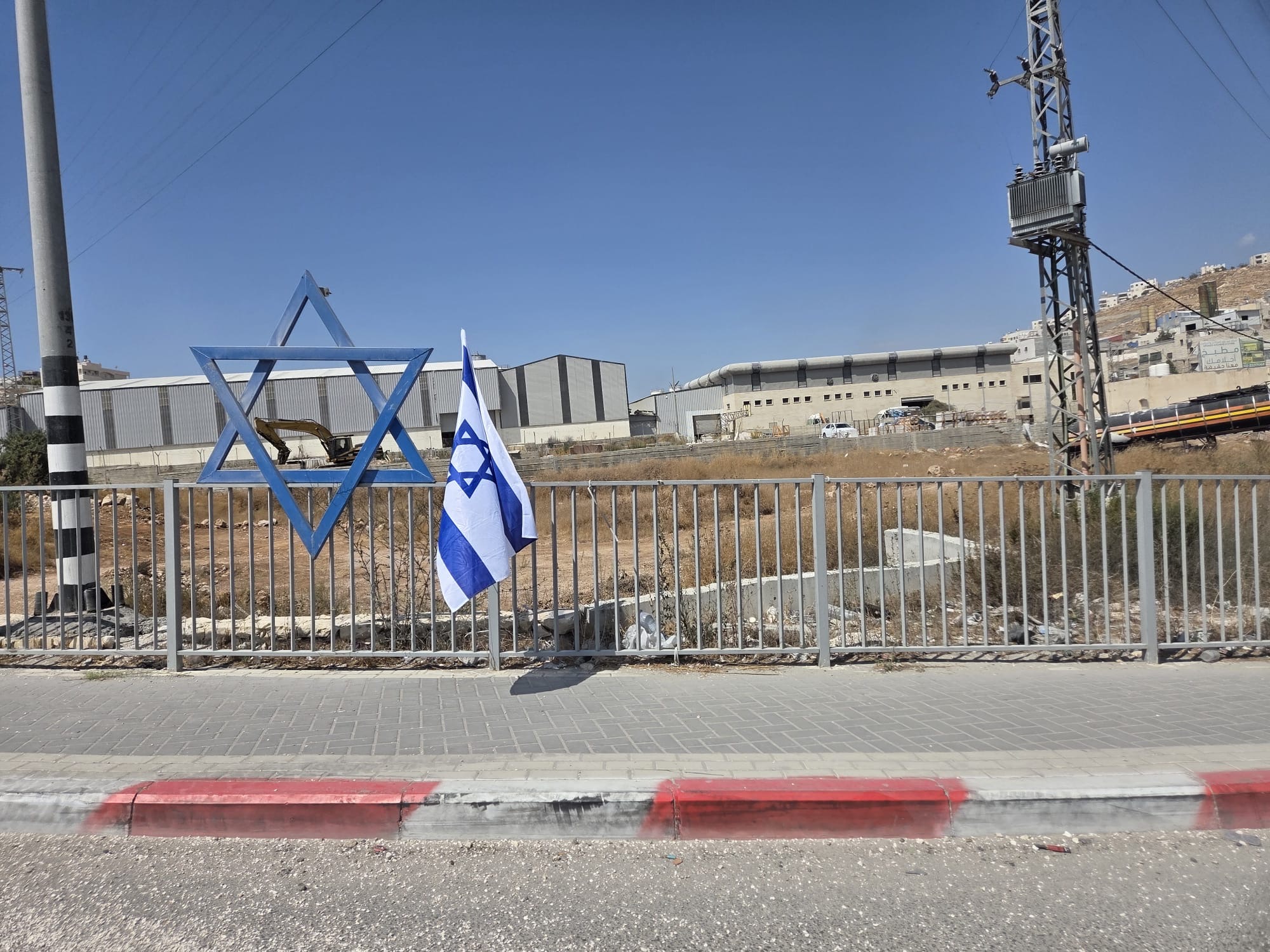
Road 317: The roads are flanked by Israeli flags, not just at the entrances to the settlements. Soldiers are mainly stationed at entrances to Palestinian villages and on the road to Yatta. They look calm and relaxed. It turns out that there was a race in the memory of colonel (reserve) Dror Weinberg, that left from the Carmel settlement. There was settler transportation to Sussiya and along the way there were road marking indicating the number of kilometers in the race. As if it was a normal routine – for Jews only; no occupation, roadblocks, pillboxes.
Hashem-el-Daraj: Huda, Chaula, and Amna were happy to see us and greeted each of us with hugs. Twenty-five children were present. A new floor, on top of the kindergarten is being constructed. The noise is unbearable. We did not understand who builds, who funds, and for what purpose. There is a need to follow.
Zeinab is an Israeli-Palestinian from Hura. She is lecturer in early childhood education at Kaye College. We recruited Zeinab to provide educational guidance to the Hashem-el-Daraj preschool teachers during the school year. She joined us on this visit to become acquainted with the preschool; and in the coming weeks, she will meet with the preschool teachers for guidance sessions, most likely on Shabbat.
We began the activity with a conversation and the reading of a story about olive trees and their products – we brought olive oil, olives, olive branches. Zeinab organized, and in fact, read the story in a professional and impressive way. The continuation of the activity included pasting and coloring of a picture of an olive tree on A3 paper which we brought with us. A variety of materials were provided to the children for pasting, including paper olives and leaves, some leaves from an olive tree which we provided (there are no olive trees in the desert…), dirt that the children took from the yard. The children were enthusiastic. Some of the children immediately participated; others more slowly. It seemed that some of the children had never worked with pasting materials. At the end of the activity, the children were very proud of their creations and needed to be convinced to leave their pictures hanging in the preschool. We concluded the activity by giving each child a pita filled with lebana, olives and olive oil.
As usual, we had tea and biscuits with the teachers. We discussed the type of guidance Zeinab would provide. Huda and Chaula described life in the village and explained the necessity of covering their faces with a veil when they go outside. They even gave us a demonstration on how to tie the veil. We promised to check on the issue of salary payment. We have raised money to support some of the salaries.
Pictures of the activity in the preschool – 29.11.2018 album in the album gallery of Gan Huda:
South Hebron Hills
See all reports for this place-
South Hebron Hills
South Hebron Hills is a large area in the West Bank's southern part.
Yatta is a major city in this area: right in the border zone between the fertile region of Hebron and its surroundings and the desert of the Hebron Hills. Yatta has about 64,000 inhabitants.
The surrounding villages are called Masafer Yatta (Yatta's daughter villages). Their inhabitants subsist on livestock and agriculture. Agriculture is possible only in small plots, especially near streams. Most of the area consists of rocky terraces.Since the beginning of the 1980s, many settlements have been established on the agricultural land cultivated by the Palestinians in the South Hebron Hills region: Carmel, Maon, Susia, Masadot Yehuda, Othniel, and more. Since the settlements were established and Palestinians cultivation areas have been reduced; the residents of the South Hebron Hills have been suffering from harassment by the settlers. Attempts to evict and demolish houses have continued, along with withholding water and electricity. The military and police usually refrain from intervening in violent incidents between settlers and Palestinians do not enforce the law when it comes to the investigation of extensive violent Jewish settlers. The harassment in the South Hebron Hills includes attacking and attempting to burn residential tents, harassing dogs, harming herds, and preventing access to pastures.
There are several checkpoints in the South Hebron Hills, on Routes 317 and 60. In most of them, no military presence is apparent, but rather an array of pillboxes monitor the villages. Roadblocks are frequently set up according to the settlers and the army's needs. These are located at the Zif Junction, the Dura-al Fawwar crossing, and the Sheep Junction at the southern entrance to Hebron.
Updated April 2022
 Timna OrevSep-24-2026Replacing flags on Highway 6
-
