
South Hebron Hills, Khashem-Al-Daraj, Umm Al-Khair: Mon 10.1.11, Morning
Khashem-Al-Daraj Preschool/Kindergarten
Umm Al-Khair Preschool/Kindergarten
7:45 Crossed the Meytar checkpoint into the Southern Hebron Hills. After being waved through by the first guard, we were stopped by a second guard who wanted to know what I was writing in my notebook. I had pulled out the notebook as we entered the checkpoint and it seems that the first guard thought that was suspicious and notified the second guard to check us more thoroughly.
We passed Susiyah and it was clear that a major building project is about to get underway.
8:20 We arrive at Huda’s preschool after picking up Eid along the way. 13 children between the ages of 3-6 were present with 2 more arriving toward the end of our visit. Huda greeted us warmly and made tea. The children sat quietly at their tables never taking their eyes off us, clearly fascinated by our visit. Huda gave each child a piece of paper and pencil/crayons and the children began to draw. Throughout the visit, not a word was said by any child.
Noa gave Huda a couple of big balls for the children and reported on Yaakov Fishman’s progress in making an architectural plan for the preschool.
Huda reported that the winter is especially difficult for her and the children because the wind and rain enter the preschool. Sometimes the wind is so strong that the smallest children do not come to the preschool for fear of being blown over. The room is cold because there is no heater. Huda asked if it were possible to acquire one. It would have to be a gas heater because there is no electricity in the preschool.
Once or twice a week, Huda gives instruction to the preschool teachers at the new preschool in Umm Al-Khair. When she is there, she is replaced by a substitute so that her preschool can continue to function. She pays the substitute NIS100/month. She herself receives NIS400 (not clear if this is to be a monthly salary) for her work with the Umm Al-Khair teachers.
Huda is eager for the renovations to begin but it is clear she doesn’t realize that they cannot be accomplished within a week or so.
8:50 Arrived at the newly renovated preschool at Umm Al-Khair. The building was once a three-room house with no internal doors connecting the rooms. The renovations done by UNRWA (there was a plaque on the building attesting to that fact) did not include internal structural changes which if they had been done would have made it more suitable as a preschool. Each room is about 360cm by 480cm – too small a space to adequately function as a preschool. The rooms have been wired for electricity but as yet there is no electricity. The outside entry/play area to the school was paved in concrete with a green plastic net around two sides of the entry/play area to prevent children from falling off its edges. There was an outside sink but no toilet facilities. It was clear that the renovations were not done in consultation with anyone knowledgeable about preschool school children and their needs. Twelve children between the ages of 3-5 years were sitting at desks arranged in school room fashion. Two preschool teachers (without much training from what Eid told us) were present. There were no toys in sight and seemed to be very few educational supplies. The children were more rambunctious than the children in Huda’s preschool; they kept trying to run outside when the door was open. One young child was left standing alone on the hillside near the preschool. As we were standing in the concrete play area, we could hear the teachers yelling at the children.
According to Eid, more children are expected to attend the preschool and when they do, the other rooms will be opened. He told us that some parents are afraid to send their children to the preschool because they have to walk along a road connecting the villages and parents are worried about their children being run over. He said there was some talk about providing transportation to the preschool.
9:20 There was a military jeep parked on the road to Al-Tuwani with soldiers sitting in the front and back. There were more military vehicles traveling on Route 317 than I have seen on previous to the Huda’s preschool.
9:45 Crossed the Meytar checkpoint back into Israel.
South Hebron Hills
See all reports for this place-
South Hebron Hills
South Hebron Hills is a large area in the West Bank's southern part.
Yatta is a major city in this area: right in the border zone between the fertile region of Hebron and its surroundings and the desert of the Hebron Hills. Yatta has about 64,000 inhabitants.
The surrounding villages are called Masafer Yatta (Yatta's daughter villages). Their inhabitants subsist on livestock and agriculture. Agriculture is possible only in small plots, especially near streams. Most of the area consists of rocky terraces.Since the beginning of the 1980s, many settlements have been established on the agricultural land cultivated by the Palestinians in the South Hebron Hills region: Carmel, Maon, Susia, Masadot Yehuda, Othniel, and more. Since the settlements were established and Palestinians cultivation areas have been reduced; the residents of the South Hebron Hills have been suffering from harassment by the settlers. Attempts to evict and demolish houses have continued, along with withholding water and electricity. The military and police usually refrain from intervening in violent incidents between settlers and Palestinians do not enforce the law when it comes to the investigation of extensive violent Jewish settlers. The harassment in the South Hebron Hills includes attacking and attempting to burn residential tents, harassing dogs, harming herds, and preventing access to pastures.
There are several checkpoints in the South Hebron Hills, on Routes 317 and 60. In most of them, no military presence is apparent, but rather an array of pillboxes monitor the villages. Roadblocks are frequently set up according to the settlers and the army's needs. These are located at the Zif Junction, the Dura-al Fawwar crossing, and the Sheep Junction at the southern entrance to Hebron.
Updated April 2022
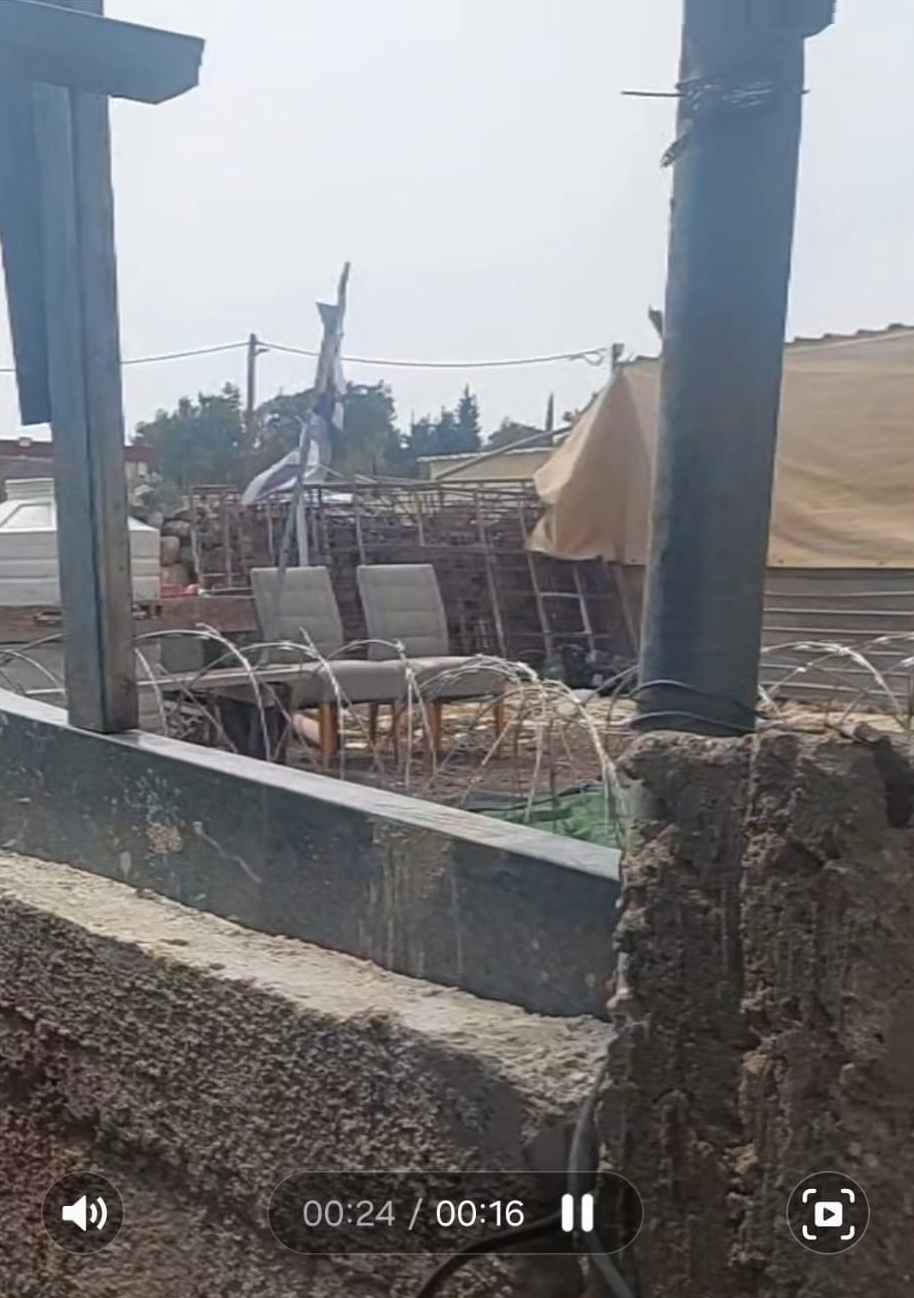 Michal TsadikOct-12-2026Umm al-Khair - Concertina wire and fences
-
