
South Hebron Hills, Tue 21.9.10, Morning
Translator: Charles K.
Route 317
All the illegal outposts (as if the others had been legal) watch us from the hilltops. All have paved access roads, water and electric lines, and a number of Hummers for protection. Some also have a directional sign on the road. All the Palestinian villages – without signage. A person has to guess how to reach Sussia, the Palestinian locality.
The turnoff to Avigail – an illegal outpost – is still marked on the boulder at the start of the road. We recently learned, from Leah S.’s letter, that the Avigail settlers are publicizing a nearby spring they took over as a tourist and bathing site. We should note that Avigail adjoins (part of) Tyawanni, where people live in caves, on whose other side is Havat Ma’on (the Maon Farm, also illegal). Tyawanni has no running water. In the past, settlers polluted Tyawanni’s wells more than once.
The Hisham-al-Daraj kindergarten
We picked up Eid, from Umm-al-Hir, and drove to Hisham-al-Daraj. We’d made an appointment (with Eid’s help) with Huda, the kindergarten teacher, to visit the kindergarten. It began operating this week, after summer vacation and the month of Ramadan. There are about 35 children who appear to be 3-4 years old. They were seated in a circle when we arrived. One of the mothers and another woman were present.We discussed their needs again:
Yard: The sandbox – needs sand. The wind blows the sand away. The playground equipment has to be repaired and reset in concrete. Yaela, who has experience working with the Bedouin, insisted the villagers organize to do the work themselves. We’ll only provide the sand and material for the concrete. Eid will speak with the mukhtar. We’ll follow up and see what happens.
Help running the kindergarten. It’s hard to handle 35 children without help. The kindergarten has to be divided into different areas: a kitchen corner, an area for activities to encourage reading and writing, and coloring, that will stimulate the children. It’s now important to locate professionals to help with setting up the kindergarten and devising a curriculum. Huda seems pretty isolated.
Inside the kindergarten. They need a storage cabinet that can be closed. Maybe shelves – since it’s a small space, they should use the walls. Maybe a rug for the cement floor. Maybe they should devote a special day to setting up the kindergarten, organizing the “activity corners,” hanging shelves. Put up a bulletin board for displaying drawings, posters, etc.Maybe, in a few months, they’ll also have electricity…
On our way back we glanced at the kindergarten being built in Umm-al-Hir. The building apparently belongs to the mukhtar of Hisham-al-Daraj. "Kvutzat Hakfarim" (literally: "the villages group”: a predominantly Palestinian group working in, and at aiding, West Bank Palestinian villagers) obtained money to renovate the building. It’s much larger that the building in Hisham-al-Daraj. It isn’t open yet. Bottom line – there’s a lot to do!
South Hebron Hills
See all reports for this place-
South Hebron Hills
South Hebron Hills is a large area in the West Bank's southern part.
Yatta is a major city in this area: right in the border zone between the fertile region of Hebron and its surroundings and the desert of the Hebron Hills. Yatta has about 64,000 inhabitants.
The surrounding villages are called Masafer Yatta (Yatta's daughter villages). Their inhabitants subsist on livestock and agriculture. Agriculture is possible only in small plots, especially near streams. Most of the area consists of rocky terraces.Since the beginning of the 1980s, many settlements have been established on the agricultural land cultivated by the Palestinians in the South Hebron Hills region: Carmel, Maon, Susia, Masadot Yehuda, Othniel, and more. Since the settlements were established and Palestinians cultivation areas have been reduced; the residents of the South Hebron Hills have been suffering from harassment by the settlers. Attempts to evict and demolish houses have continued, along with withholding water and electricity. The military and police usually refrain from intervening in violent incidents between settlers and Palestinians do not enforce the law when it comes to the investigation of extensive violent Jewish settlers. The harassment in the South Hebron Hills includes attacking and attempting to burn residential tents, harassing dogs, harming herds, and preventing access to pastures.
There are several checkpoints in the South Hebron Hills, on Routes 317 and 60. In most of them, no military presence is apparent, but rather an array of pillboxes monitor the villages. Roadblocks are frequently set up according to the settlers and the army's needs. These are located at the Zif Junction, the Dura-al Fawwar crossing, and the Sheep Junction at the southern entrance to Hebron.
Updated April 2022
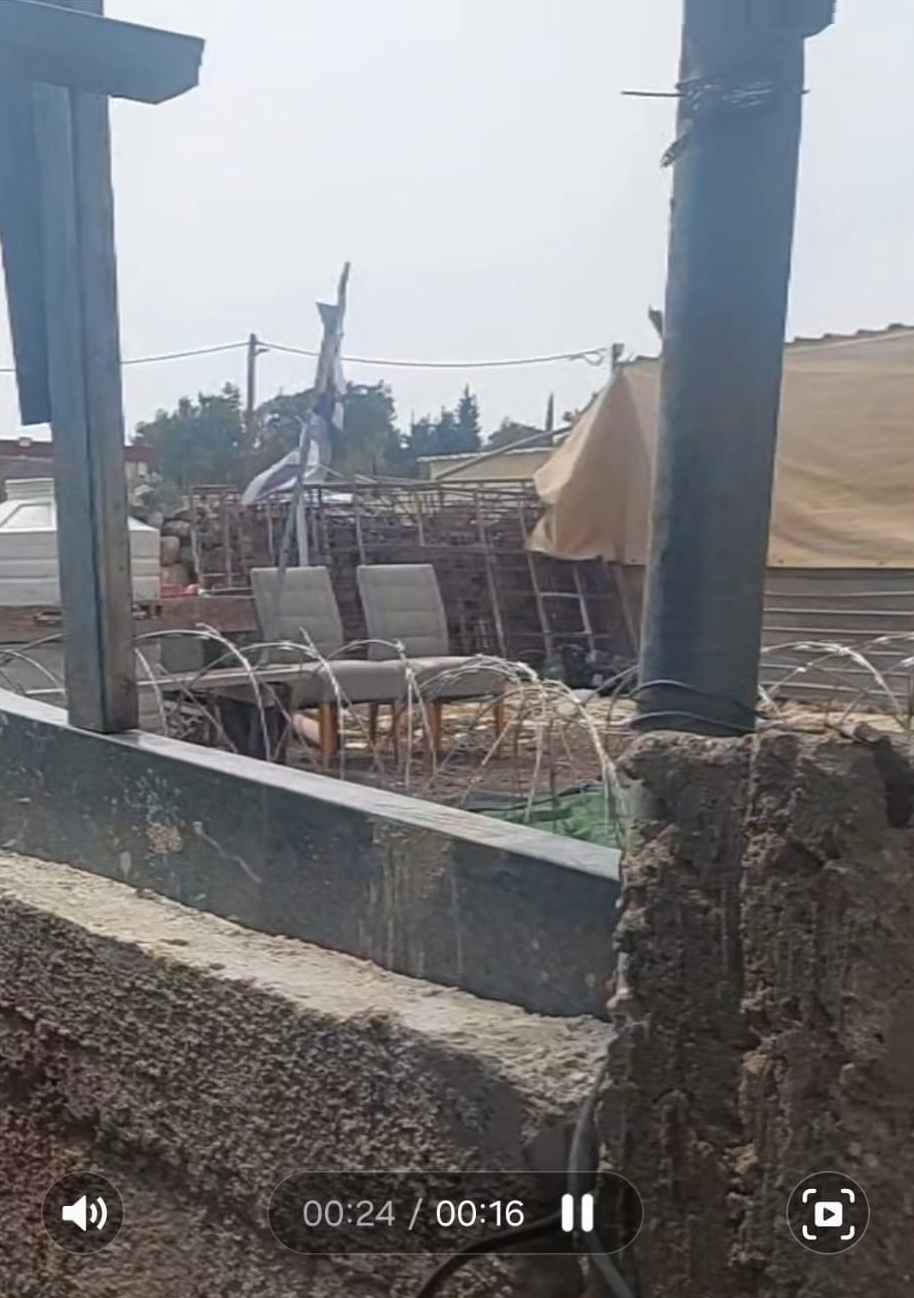 Michal TsadikOct-12-2026Umm al-Khair - Concertina wire and fences
-
