
taysir hamra
Jordan Valley Checkpoints, Tuesday, 12.6.07 amObservers: Neta G, Shula BTranslated by L.W07:00 – 09:0007:00 – 07:50 Tayasir CheckpointAs usual the road to the Jordan Valley checkpoints is a magnificent nature movie mixed with Biblical scenes. Many soldiers, come to train in the area, sprawled on the asphalt at the entrance to an emplacement. While there is no movement through the checkpoint, we hold a conversation with a second lieutenant and a first sergeant: the worn down agenda of peace seekers facing the cliches of Israel Eternal.Three trucks in the direction of the valley, and two taxis in the direction of the West Bank, waiting for us to finish the (restrained) argument with the checkpoint commander, who is holding up traffic until we obey the order of the hour: “Watch – out of here!” We move to the entrance and from there we see what is going on. At least for the time we are there, the rate of transit is relatively brisk, without delays. Taxis travelling to the West Bank deposit their passengers at the checkpoint, the drivers present the IDs of everyone and, within minutes, they continue on their way. Vehicles coming from the West Bank drop their passengers, who pass through the transit hut and are picked up by their onward transport at the east end of the checkpoint.08:05 Beqaot CheckpointIn the midst of a sea of waving grain, a locked iron gate closing off, for the Beduin and farmers, the way east, in the direction of the settlements of Roi and Beqaot, and including a chain of earthern slopes extending north and south from the gate.08:20 Hamra CheckpointFifteen youngsters (school kids on holiday) are detained . They were caught “bypassing” the checkpoint on some distant dirt track, on their way to the area of Jiftlik. They will stay in the pen until 09:00 while they internalise the “preventive punishment” (so described by a soldier). We enter the picture when the punishment is two and a half hours old, and phone all sorts of places, but it’s doubtful whether we are helping. Here too, they insist – politely – that we back off a little from the heart of the checkpoint, and we find no reason for a confrontation on the issue.A mother and daughter and two more family members, residents of Jericho, are returning from a visit with their mother/grandmother in Nablus, who they haven’t seen for a year. As a resident of Nablus, the 59 year old grandmother is not entitled to cross the valley checkpoints to visit her family. The trip from Nablus to Jericho costs them 150 shekels. Their taxi driver collects them outside the checkpoint. He stops by us to note that the soldiers are “okay” today…Two anxious passengers are waiting for their taxi, while the soldiers delay the driver and they don’t understand – will he pass, won’t he pass… After ten long minutes he passes and collects them.Fairly lively traffic of taxis and trucks in all directions. A soldier says that it starts at 04:00, a lot of farm workers (summer fruit in full swing), and the waiting time of vehicles can be up to an hour and a half. The soldiers transfer traffic alternately in both directions. From the West Bank to the Rift Valley, the drivers are asked to do the “dance.” The behaviour of the soldiers is restrained but indifferent. On the way home we hear from a local yet again about the escapades of K.
Jordan Valley
See all reports for this place-
Jordan Valley The Jordan Valley is the eastern strip of the West Bank. Its area consists of almost a third of the West Bank area. About 10,000 settlers live there, about 65,000 Palestinian residents in the villages and towns. In addition, about 15,000 are scattered in small shepherd communities. These communities are living in severe distress because of two types of harassment: the military declaring some of their living areas, as fire zones, evicting them for long hours from their residence to the scorching heat of the summer and the bitter cold of the winter. The other type is abuse by rioters who cling to the grazing areas of the shepherd communities, and the declared fire areas (without being deported). The many groundwaters in the Jordan Valley belong to Mekorot and are not available to Palestinians living in the Jordan Valley. The Palestinians bring water to their needs in high-cost followers.
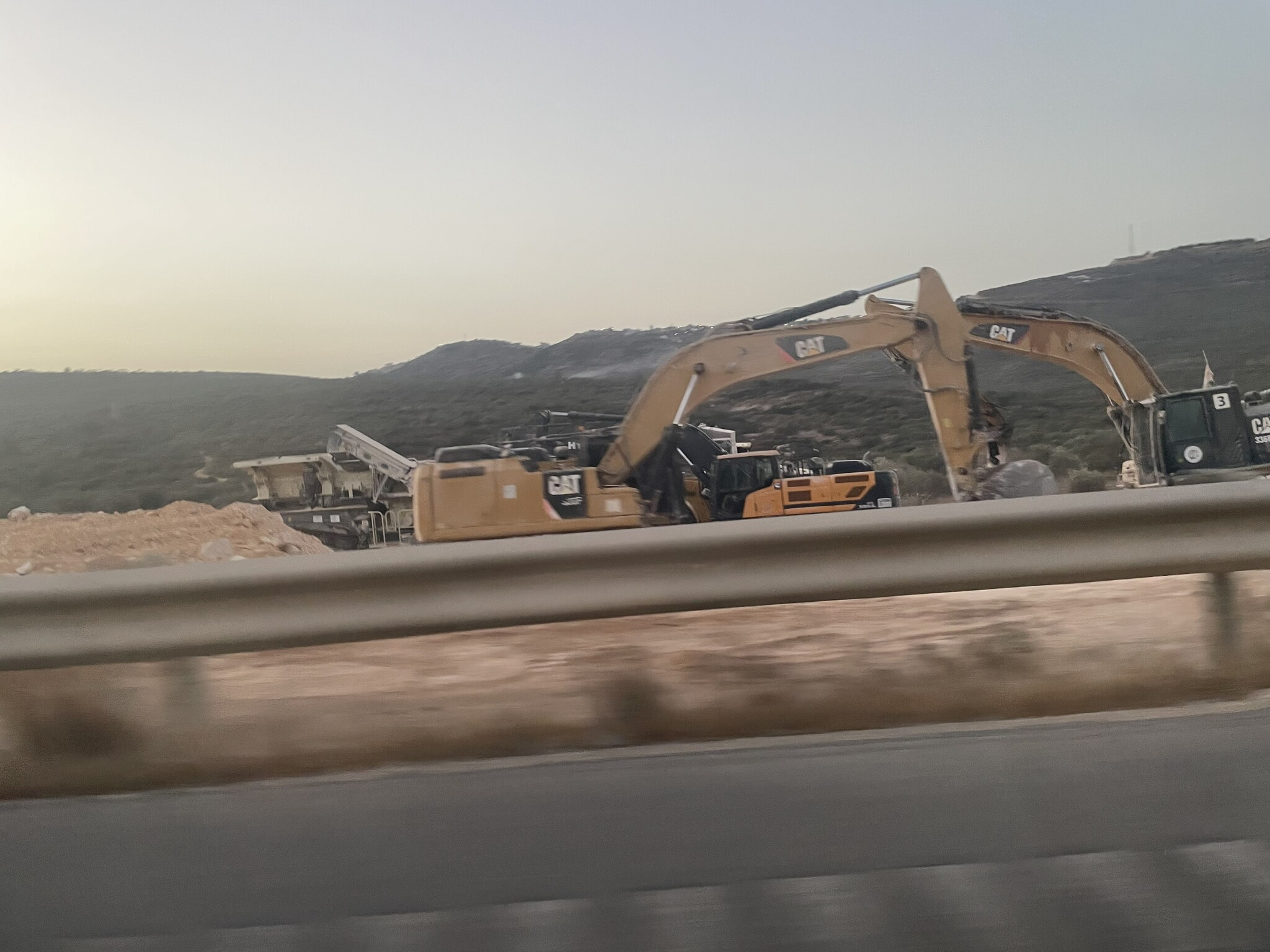 Rachel AfekOct-8-2026Jordan Valley. Widening of Road 505
-
