
The first multi-site shift after three months absence because of the Covid 19
Older Palestinians (age 50+) who weren’t required to have permits aren’t crossing; construction on the American road has advanced; the Olives checkpoint DCL has closed; house demolition in the Shu’afat refugee camp.
Bethlehem checkpoint:
Seven in the morning. The checkpoint area is relatively deserted, even at this hour. The absence of older workers, who until now hadn’t needed a crossing permit, is definitely felt. It’s an intentional limiting of the number of permitted entry because of the coronavirus. We met a Palestinian who’d managed to get here even though he’s a few months over the age limit. He told us he convinced them he had to get to work – ten people at home waiting for his income after three months of unemployment. We saw two open inspection stations on the Israeli side while we were there, which were enough to handle those crossing without lines forming. A woman said this time it was crowded on the Palestinian side; only one door was open for inspection, but someone else said that now there’s no congestion, even though in the days following Eid el Fitr it was jammed. Many hoped to return to work and faced the new, limiting regulations.
Sheikh Sa’ad checkpoint:
Our contact in the isolated neighborhood told us two days ago that the checkpoint will be closed for two days beginning June 17 for renovation and widening the American road leading to the center of Al-Quds. But that’s the last day of the high school baccalaureate exams which take place in Jabal al-Mukaber, Sheikh Sa’ad’s principal neighborhood from which it’s divided by a wall and a checkpoint. In order to reach the school located 200 meters from their homes pupils from Sheikh Sa’ad will have to go through the distant Olives checkpoint and return from it – at least an hour and a half and two taxi rides. The neighborhood committee already appealed unsuccessfully to the Jerusalem outskirts liaison office. We also contacted them as well as the northern outskirts Operations office, and finally spoke with Chana B. who got in touch with Ir Amim. Amir Tartarsky promised to deal with it. We learned he’d succeeded – the work was postponed to June 18 and was completed the following day without any closure.
Residents thought the pillbox on the hill opposite the checkpoints was to be demolished today. The soldiers know nothing about it, nor is there any heavy equipment near the pillbox hill.
Olives checkpoint (Ras el Sbitan):
Many taxis, minibusses and two buses are evidence that many people cross here in the morning. We cross to the Palestinian side (Area B) and discover the entry of transport vehicles from Azzariyya has been blocked by concrete barriers placed at the edge of the parking lot. Now people arriving at the checkpoint must walk up a long, steep way to reach the checkpoint. We were told the barriers were erected for Ramadan and were simply left there. When we reached the inspection station after a short wait on line we learned (in response to our question about security coordination with the Palestinian Authority) that the Israeli DCL on site has been closed and moved to Qalandiya (where there’s already a DCL; has it been reinforced?). An additional difficulty for someone in the southern outskirts of Jerusalem wishing to obtain an entry permit and a magnetic card – they’ll have to drive to Qalandiya in the north and wait in a long line. We decided to find out the reason for the additional burden, and report what we discover.
Shu’afat refugee camp: Our driver reports he heard over his radio that a house is being demolished in the refugee camp and there are many security forces present. G., from the neighborhood committee, confirms that an extension to an old house in the Sheikh Khaled neighborhood is being demolished – two structures and three shops. There’s a huge security presence – three or four armed police/border police stand at the corner of every alley and street, and there’s a long traffic jam of cars heading toward the Jerusalem exit stretching to the middle of the neighborhood. Many shops are closed, there are no gatherings and people are moving around as usual through the neglected streets (the camp is part of the Jerusalem municipality, residents pay property taxes but don’t receive municipal services in return). G. says there are more demolition orders on the way, but only these buildings have been demolished for now.
We end our shift with a drive along the wall bordering the apartheid road from Anata to A-Zayyam toward E1 and Ma’aleh Adumim. A-Zayyam, smack on Jerusalem’s municipal boundary, is today connected to it and to the south via two checkpoints: A-Zayyam checkpoint on Highway 1, accessible only to Palestinians holding blue resident ID cards, and a metal gate checkpoint in the separate wall toward A-Tur, primarily for pedestrians holding entry permits to Israel. Before Ramadan, the gate was open 6-8 AM and 12-6 PM. The bus to and from East Jerusalem went through here. After Ramadan, the hours were reduced: 6-7 AM, 12-3 PM. That makes it harder for workers crossing on foot, and the bus is forced to make a huge detour to enter the neighborhood via Anata. Why? We’ll try to find that out as well.
Bethlehem (300)
See all reports for this place-
Located adjacent to the Separation Wall ("Jerusalem Wrap") at the north entrance to Bethlehem, this checkpoint cuts off Bethlehem and the entire West Bank from East Jerusalem, with all the serious implications for health services, trade, education, work and the fabric of life. The checkpoint is manned by the Border police and private security companies. It is an extensive infrastructure barrier and is designated as a border terminal, open 24 hours a day for foreign tourists. Israeli passport holders are not allowed to pass to Bethlehem, and Palestinian residents are not allowed to enter Jerusalem, except those with entry permits to Israel and East Jerusalem residents. Israeli buses are allowed to travel to Bethlehem only through this checkpoint.The checkpoint, which demonstrated harsh conditions of crowding and extreme passage delays for years, started employing advanced electronic identification posts and has upgraded its gates' system as of the middle of 2019 - and conditions improved.Adjacent to the checkpoint, in an enclosure between high walls and another passage, is the historic Rachel's Tomb, which is now embedded within a concrete fortified building. It contains prayer and study complexes for Jews only, as well as a residential complex. updated November 2019 .
-
Checkpoint Shu'afat camp / Anata-Shu'afat (Jerusalem)
See all reports for this place-
The Shu’afat checkpoint is located in the northern part of East Jerusalem at the exit from the village of Anata and the Shu’afat refugee camp, which are located in the area annexed to Jerusalem in 1967. The refugee camp borders the Shu’afat neighborhood to the west, Pisgat Ze’ev to the north, the French Hill neighborhood to the south and the planned expansion of Ma’aleh Adumim to E-1 in the east. It was established in 1966 for 1948 refugees from the West Bank and was populated after the Six Day War by persons who had been expelled from the Jewish Quarter. Today its population comprises some 25,000 people holding blue ID cards and some 15,000 people with Palestinian ID cards. The camp lacks adequate infrastructure and services, and suffers from poverty, neglect and overcrowding. All its buildings are connected to the public electricity and water infrastructure, but not all are connected to the sewer system. The camp’s services are provided by UNRWA, except for those such as health clinics and transportation of pupils to schools in Jerusalem. In 2005, the Israeli High Court of Justice rejected a suit by the residents requesting that the route of the separation fence be drawn such that the camp would remain on the Israeli side, but conditioned its approval of the route on the establishment of a convenient and rapid crossing facility for the inhabitants of the neighborhood, most of whom are residents of Jerusalem.
A temporary checkpoint operated there until December, 2011. It was extremely congested during rush hours, and dangerous for pedestrians (especially children) because of inadequate safety provisions. The new checkpoint was inaugurated south of the old one, for public and private transportation and for pedestrians, intended solely for the residents of the camp – holders of blue ID cards, and those with Palestinian ID cards who possess appropriate permits. There are five vehicle inspection stations at the checkpoint, and two for pedestrians (one of which is currently closed) where scanners have been installed but are not yet operating. According to the army, representatives of government agencies will also be present to provide services to residents of the neighbourhood. The pedestrian lanes are very long, located far from the small parking lots, and accessible through only a single revolving gate.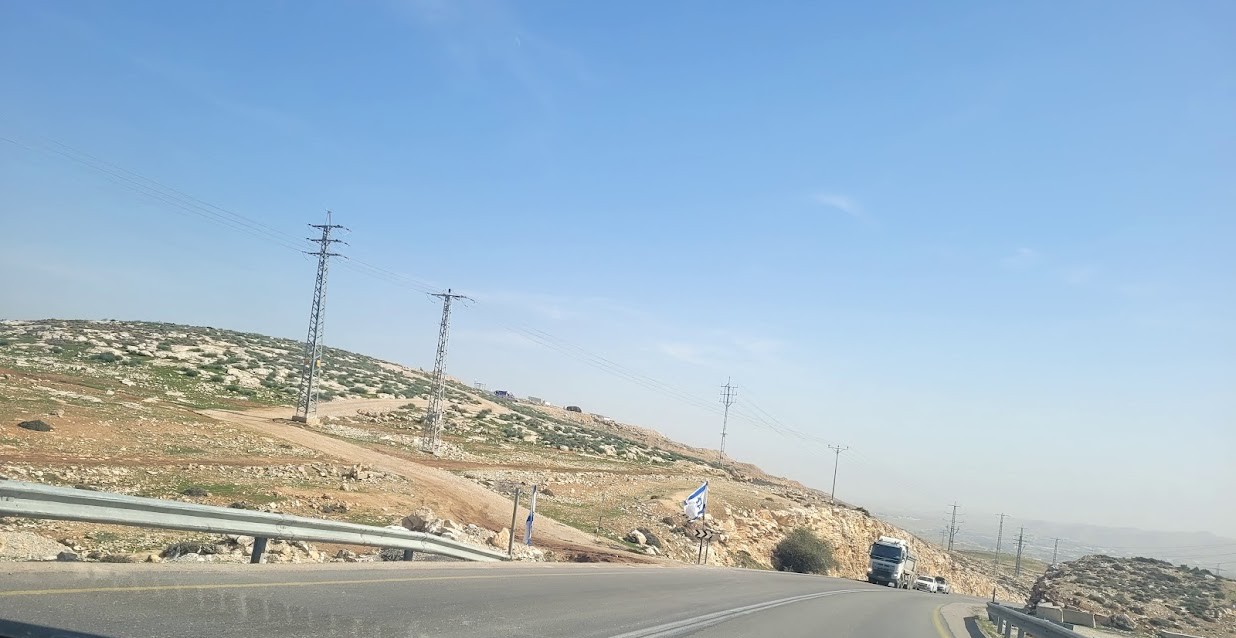 Anat TuegJan-25-2026Anata: A new outpost has been built south of the junction
-
Ras Abu Sbitan (Olive Terminal)
See all reports for this place-
A large checkpoint/crossing to the area of a-Tur, Abu Dis and the Old City; only for pedestrians. Located on Jerusalem’s municipal boundary.
One of the major crossings in Jerusalem’s central sector. It is located on the separation fence between the northern portion of the al-Ezariya neighborhood and the neighborhood of a-Tur and the rest of East Jerusalem. It is manned by Border Police soldiers and private security companies and operates 24 hours a day. Palestinians are forbidden to go through, other than permanent residents of East Jerusalem (holders of blue ID cards) and holders of work and commercial permits who are allowed through only on foot.
-
Sheikh Sa'ed
See all reports for this place-
A checkpoint limited to pedestrians, located on Jerusalem’s municipal boundary.
The checkpoint sits on the separation fence at the entrance to Sheikh Sa’ad, dividing it from its neighbourhood of Jabel Mukkabar. It’s manned by Border Police soldiers and private security companies and operates 24 hours a day. Palestinians are forbidden to go through, other than residents of Jabel Mukkabar or Sheikh Sa'ad who have permits. Both groups are permitted through only on foot. Residents of East Jerusalem who don’t live in Jabel Mukkabar are also allowed to cross to Sheikh Sa’ad, but not in the opposite direction; they must return through the Sawahira ash Sharqiya checkpoint.
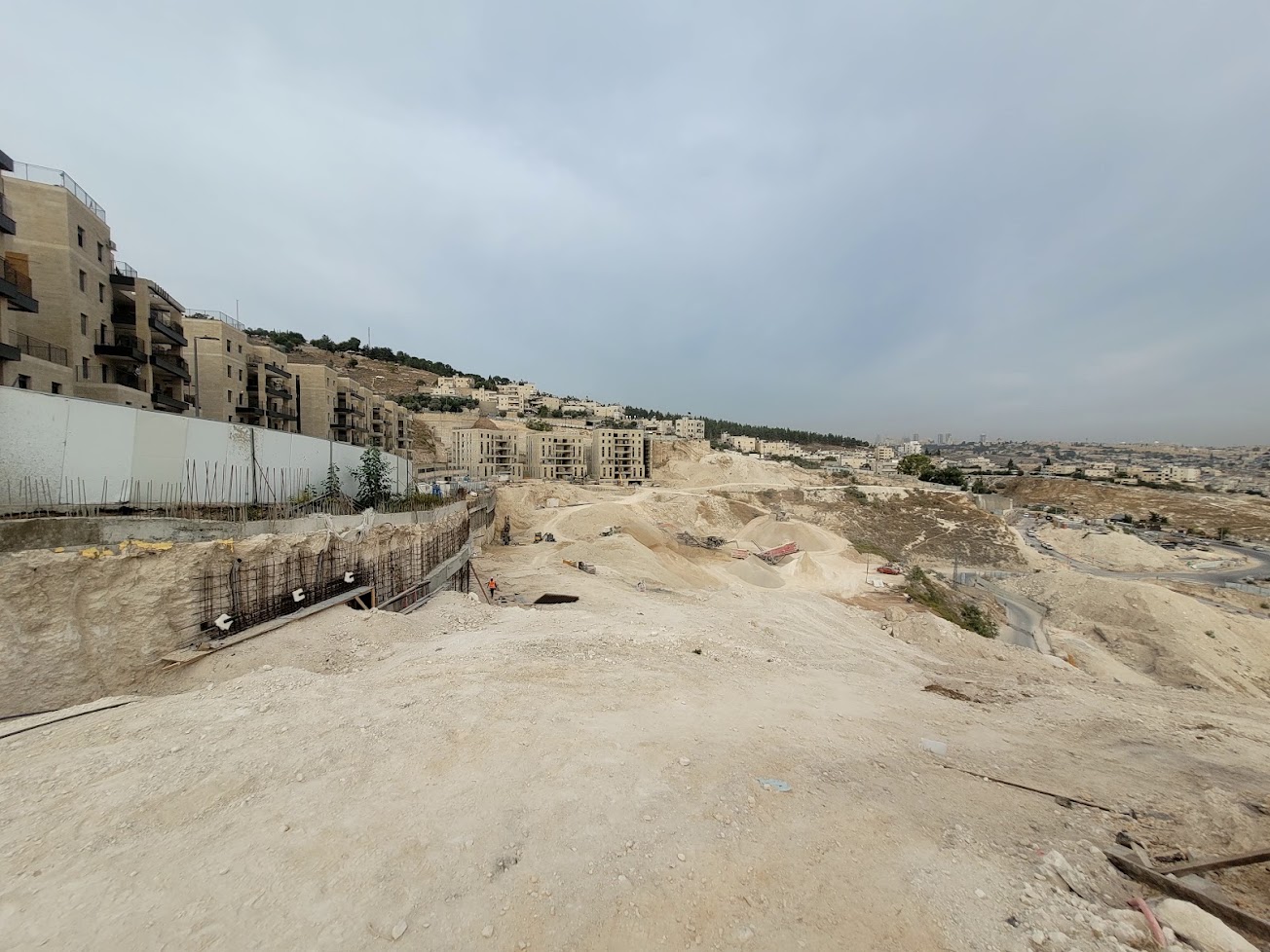 Anat TuegOct-14-2026Jerusalem. Nof Zion Expanding Down the Slope
-
