
The renovated Bethlehem checkpoint opens on April 1. Truth or hoax?
6:15 Bethlehem Checkpoint (300) There are four gates for automatously crossing (with a magnetic card and photography) and three more manned passages, where they check the permits on computers. According to people departing, the crossing to Israel “flows” today. We ask about the situation on the Palestinian side of the checkpoint, where it was badly overcrowded this week and hence two people were severely injured and had to be evacuated by an ambulance. They told us that during the last two days the situation improved and more magnetometer windows were opened. On the bridges over the heads of the passing people, armed soldiers and policemen are patrolling, and down, there are security soldiers and even two members of the Civil Administration. We hear that on the 1 of April the new crossing with all its innovations would open. Hopefully, this is not an April 1st prank…
7:30 a-Sheikh Sa’ed Checkpoint: We climbed to the checkpoint from the lower parking lot. On the right (east) there is an electronic fence and a supporting wall, which prevents from seeing what is happening on the secluded hill from Jabal al-Mukabber’s neighborhood. The checkpoint is big and imposing with its concrete dimensions, although it turns out from passers’ testimony that only one passage is open. A cute boy is waiting impatiently for the only door that opens to the outside. It turned out that he waited for a woman and two small children. When she passed, they all went their way. We did not investigate the scenario of this morning’s meeting. In all likeliness the situation of separated families is not uncommon in these neighborhoods. For those who do not know, the exit from this checkpoint to Jerusalem is allowed only to residents of a-Sheikh Sa’ed and Jabal al-Mukabber – they of course have permits. That way, if someone from a different neighborhood in East Jerusalem enters, or even a resident of Jabal al-Mukabbrr without a permit, he must go back through the a-Zeitun Checkpoint, which is very far away – about half an hour’s drive on inadequate roads. Although a-Sheikh Sa’ed is an area B, it means for our shift that to see what goes on during the passage, we will have to take the risk that they will not let us come back through this checkpoint.
On the way back to the car we meet N., a resident of a-Sheikh Sa’ed and a neighborhood activist, the principal of a Jabal al-Mukabber high school. We haven’t met for three years, and he says that a lot has changed.
A. The beltway road that will lead from Route 60 to the Old City is already in the process of being paved. We see evidence to this on the journey from the checkpoint to the turn to Silwan. Contrary to what is expected of beltway roads, it seems that the road will expand and shrink in a strange way: there are places where there are two tracks at work, and other places where there is no such option because of built houses and rock walls. N., says that the problem is critical especially on the road at the foot of the checkpoint, where work has stopped. But the checkpoint cannot be undone, since there is a ruling by the Supreme Court, that there has to be a passage between the mother neighborhood and the daughter neighborhood that were separated because of this barrier.
B. Something good happened: they began working on the regulation of sewage streaming from all of Jerusalem into Kidron Valley, namely, to bury pipelines and build a sewage treatment station. The plan has been around for a long time, but was delayed because of disagreement between the municipality, the Palestinian Authority and residents living along the route. According to the plan they are going to expropriate many farmlands on the slopes of a-Sheikh Sa’ed. N.’ believes that objections have to be filed by next week, and the lawyer of a-Sheikh Sa’ed does not get responses. We suggest to approach “Bamkom” organization, dealing with the rights of urban planning, and connect Sari Kronish, who is in charge of Jerusalem, with this lawyer. N., will provide photographs of signs on the expropriation and dates of submission of objections and “Bamakom” will visit the location and get updates. We will continue to follow.
Bethlehem (300)
See all reports for this place-
Located adjacent to the Separation Wall ("Jerusalem Wrap") at the north entrance to Bethlehem, this checkpoint cuts off Bethlehem and the entire West Bank from East Jerusalem, with all the serious implications for health services, trade, education, work and the fabric of life. The checkpoint is manned by the Border police and private security companies. It is an extensive infrastructure barrier and is designated as a border terminal, open 24 hours a day for foreign tourists. Israeli passport holders are not allowed to pass to Bethlehem, and Palestinian residents are not allowed to enter Jerusalem, except those with entry permits to Israel and East Jerusalem residents. Israeli buses are allowed to travel to Bethlehem only through this checkpoint.The checkpoint, which demonstrated harsh conditions of crowding and extreme passage delays for years, started employing advanced electronic identification posts and has upgraded its gates' system as of the middle of 2019 - and conditions improved.Adjacent to the checkpoint, in an enclosure between high walls and another passage, is the historic Rachel's Tomb, which is now embedded within a concrete fortified building. It contains prayer and study complexes for Jews only, as well as a residential complex. updated November 2019 .
-
Sheikh Sa'ed
See all reports for this place-
A checkpoint limited to pedestrians, located on Jerusalem’s municipal boundary.
The checkpoint sits on the separation fence at the entrance to Sheikh Sa’ad, dividing it from its neighbourhood of Jabel Mukkabar. It’s manned by Border Police soldiers and private security companies and operates 24 hours a day. Palestinians are forbidden to go through, other than residents of Jabel Mukkabar or Sheikh Sa'ad who have permits. Both groups are permitted through only on foot. Residents of East Jerusalem who don’t live in Jabel Mukkabar are also allowed to cross to Sheikh Sa’ad, but not in the opposite direction; they must return through the Sawahira ash Sharqiya checkpoint.
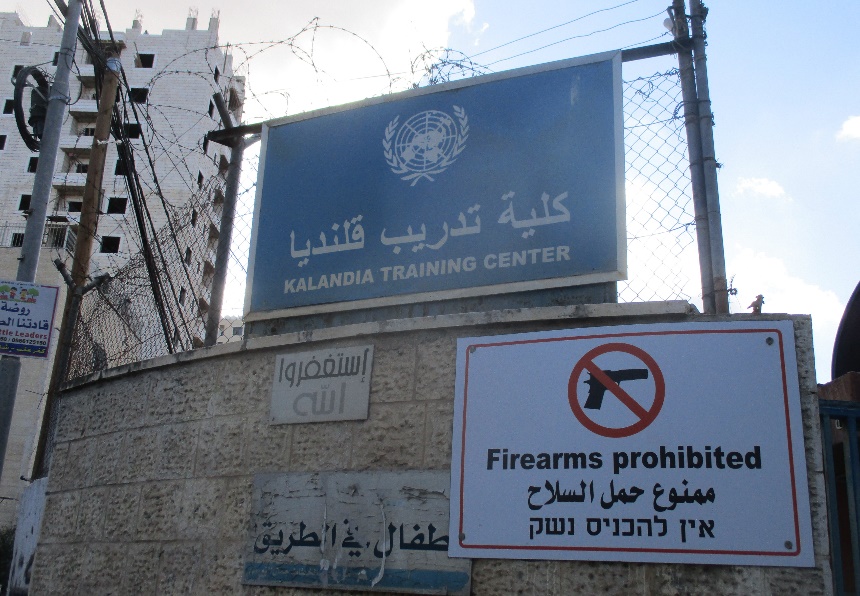 Tamar FleishmanAug-31-2026Kfar Aqab (Jerusalem). Signs on the fence at the UNRWA compound
-
