
Umm al-Khair: A music lesson with a volunteer from Norway
We had planned to visit Al-Fakhit following the severe events there in recent days, but on the way, we were informed that the mother of Nasser N. from Susya had passed away. As she was a well-known and respected woman, most people were traveling to the funeral in Yatta. Since an interesting event was about to take place in Umm al-Khair, ensuring that some community leaders would remain, we traveled there instead. We stopped at the grocery store in At-Tuwani to buy coffee, tea, sugar for the Umm al-Khair community center, and some sweets for the children.

At the entrance to the grocery store, we met the brother of G. from Khallet ad-Daba, who had arrived on a donkey to do his shopping. ‘How long did it take you to get here?’ I asked. ‘An hour and a half!’… A taxi ride of half an hour now costs 200 ILS. So, this is their mode of transport now.

In Umm al-Khair, H. welcomed us and invited us to watch a music lesson for the local children given by Kai, a Norwegian teacher who also teaches in Israel. I was happy to see many young volunteers from Israel and around the world, some of them students of this teacher, who came to take part and assist him in working with the children. Before the lesson, H. showed us the small adjacent football pitch. This morning, they laid out synthetic grass mats to make it more pleasant for the children to run. Immediately, neighbors from the Carmel settlement arrived, claiming this was a forbidden activity. They summoned the police and the army. However, the inspection revealed that there was nothing illegal or a security risk. The security forces left just as they had come, much to the settlers’ chagrin.
The lesson began with 20 children of various ages. It was the first time we saw and heard sounds of joy, hope, and love during our visit to this small and haunted village. It was moving and heartening to see and hear children simply singing, as children do in a music lesson, despite everything currently happening in their lives.
Location Description
A-Tuwani
See all reports for this place-
A-Tuwani
The locals came to a-Tuwani during the 20th century from the village of Yatta. They settled in abandoned ruins, utilizing the arable land, pastures for grazing sheep and the abundance of natural caves for habitation. The residents who settled in the caves came from families who could not purchase land for houses in the mother villages, as well as shepherds who did not have enough land to graze. They were joined by clan members who quarreled with other families in the mother locality.
Some of the residents today live in concrete buildings built above the caves. In the area of the village are several water cisterns and an ancient water well called 'Ein a-Tuwani. Local residents are forced to buy water in containers and transport them through many road blocks to the village. With the help of international organizations, an electrical system was installed in the village. In the late 90s of the 20tTh century, an elementary school was established in the serving several small villages in the area.
In 2004, MachsomWatch began visiting and reporting from the Khirbet Tuwani cave village, which suffers badly from the settlers of nearby outposts, and especially from the extremist Ma'on outpost. . The settlers contaminate cisterns, poison the flocks and uproot trees.Particularly notable is the harassment of children from the surrounding villages on their way to school in a-Tuwani, so much so that military escort of children is required to separate them from the attackers (this was arranged following an initiative of the organization's members). In the past year, the escort has been without the vital presence of overseas volunteers.
Near a-Tuwani there are several families who have returned to the caves due to the incessant demolitions of the civil administration (as there is a total construction ban in all of area C). Destroyed are not only residential and agricultural buildings, but also water pipes, machinery. Even water cisterns are clogged up. a-Tuwani residents have created an association for non-violent demolition protests, but in the past year the army’s harsh harassment and settler violence have intensified and escalated. The incident of the small generator confiscation, which left a young man paralyzed, is one of many examples - any legitimate protection of property rights leads to violence and even shootings by the army and the civil administration.
Updated April 2022
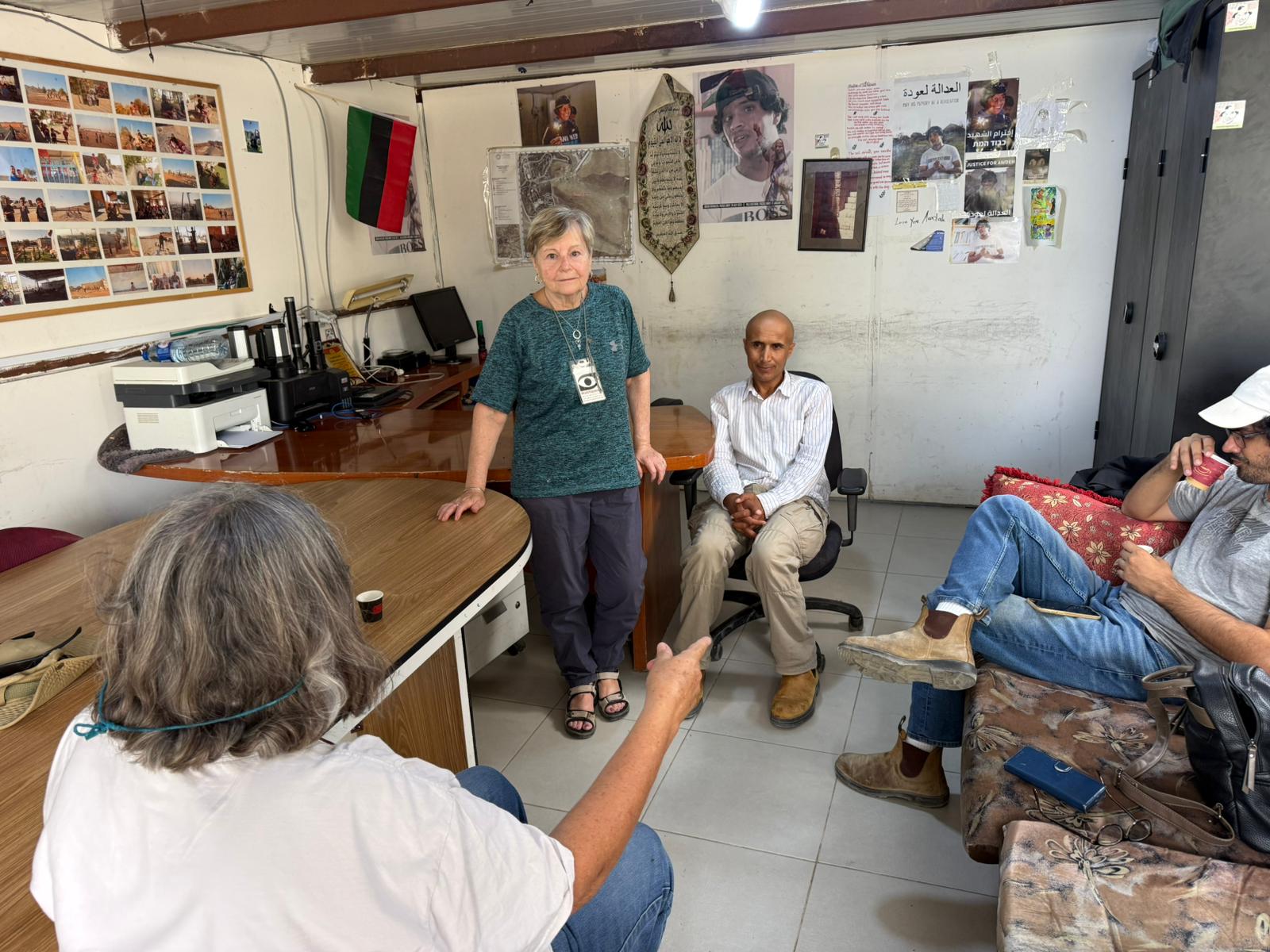 Muhammad D.Aug-30-2026Umm al-Khair, Smadar with Eid, Or and Timna, in the Situation Room
-
Umm al-Khair
See all reports for this place-
Umm al-Kheir
A Palestinian village in the southern Hebron governorate, populated by five families. The Palestinian residents settled there decades ago, after Israel expelled them from the Arad desert and purchased the land from the residents of the Palestinian village of Yatta. The village suffers from the violence of nearby Carmel settlers, from water shortage and is subject to frequent demolition of buildings by the Civil Administration.
-
