
Umm al-Khair - A state of constant violence
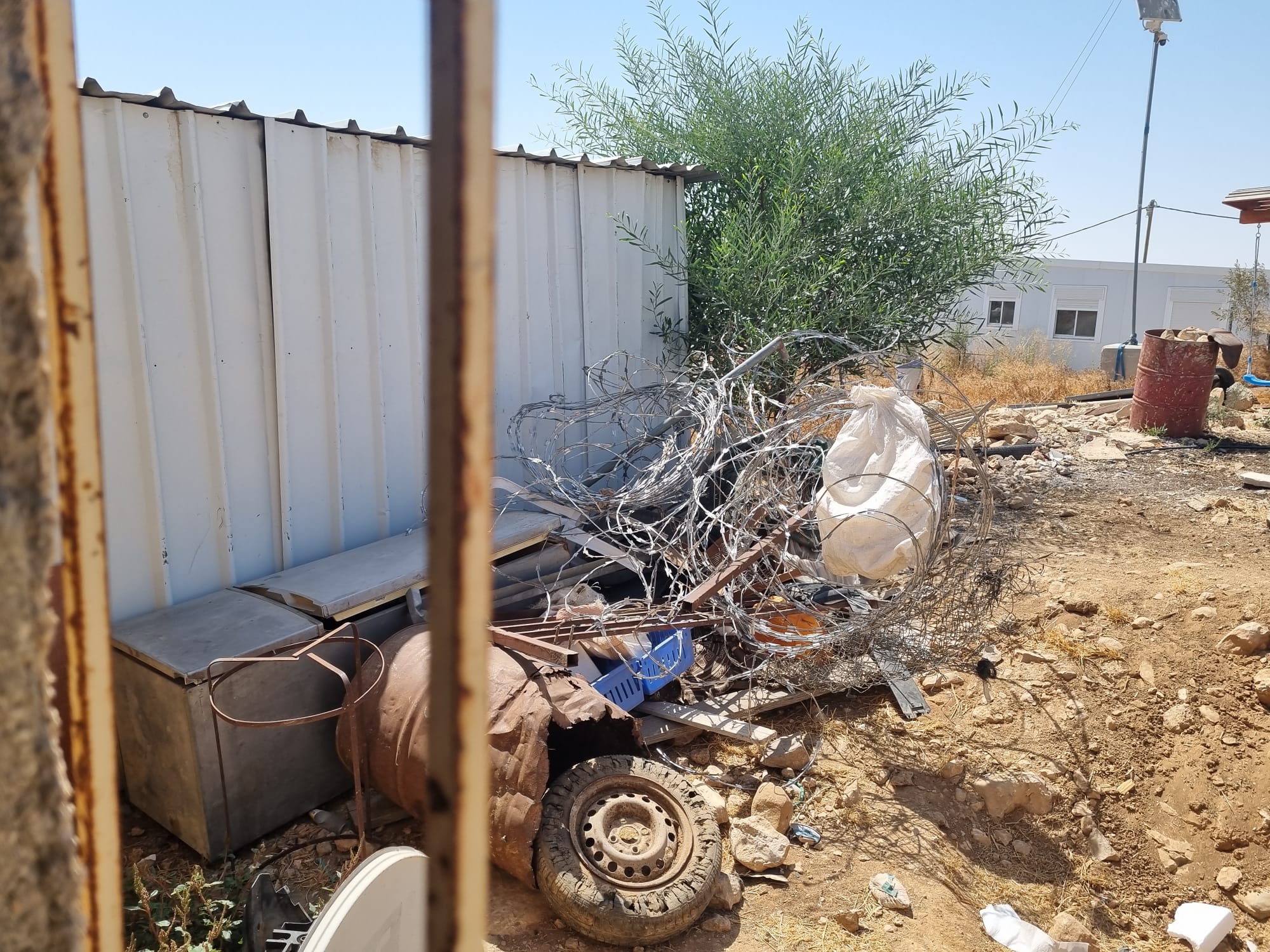
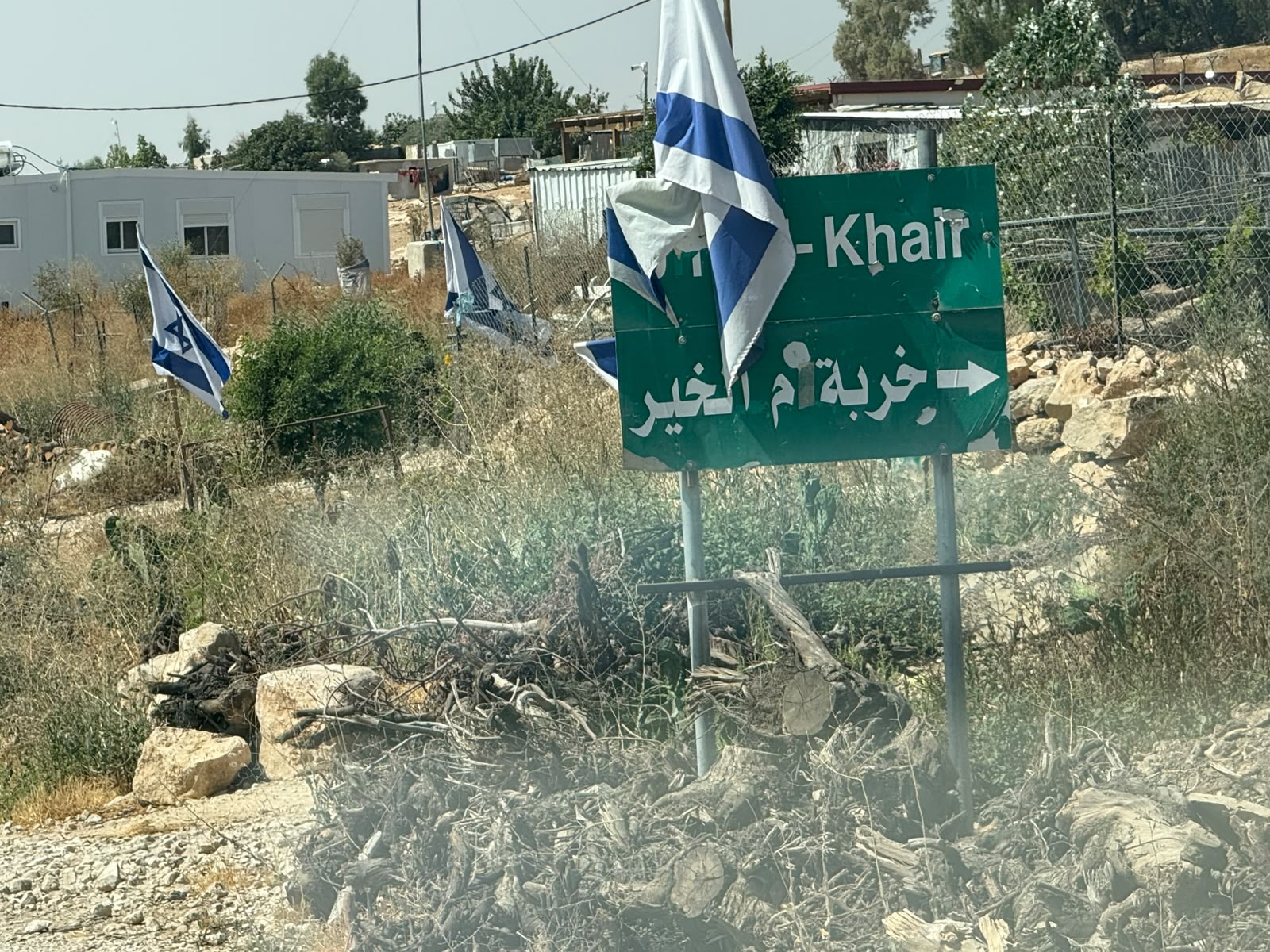
Choosing the place we are going to visit is becoming increasingly difficult. Sometimes we plan to go to a particular village and then, following events, change direction. It is already difficult to keep track of the atrocities taking place throughout the occupied territories, and even in the area we are visiting, Masafer Yatta.
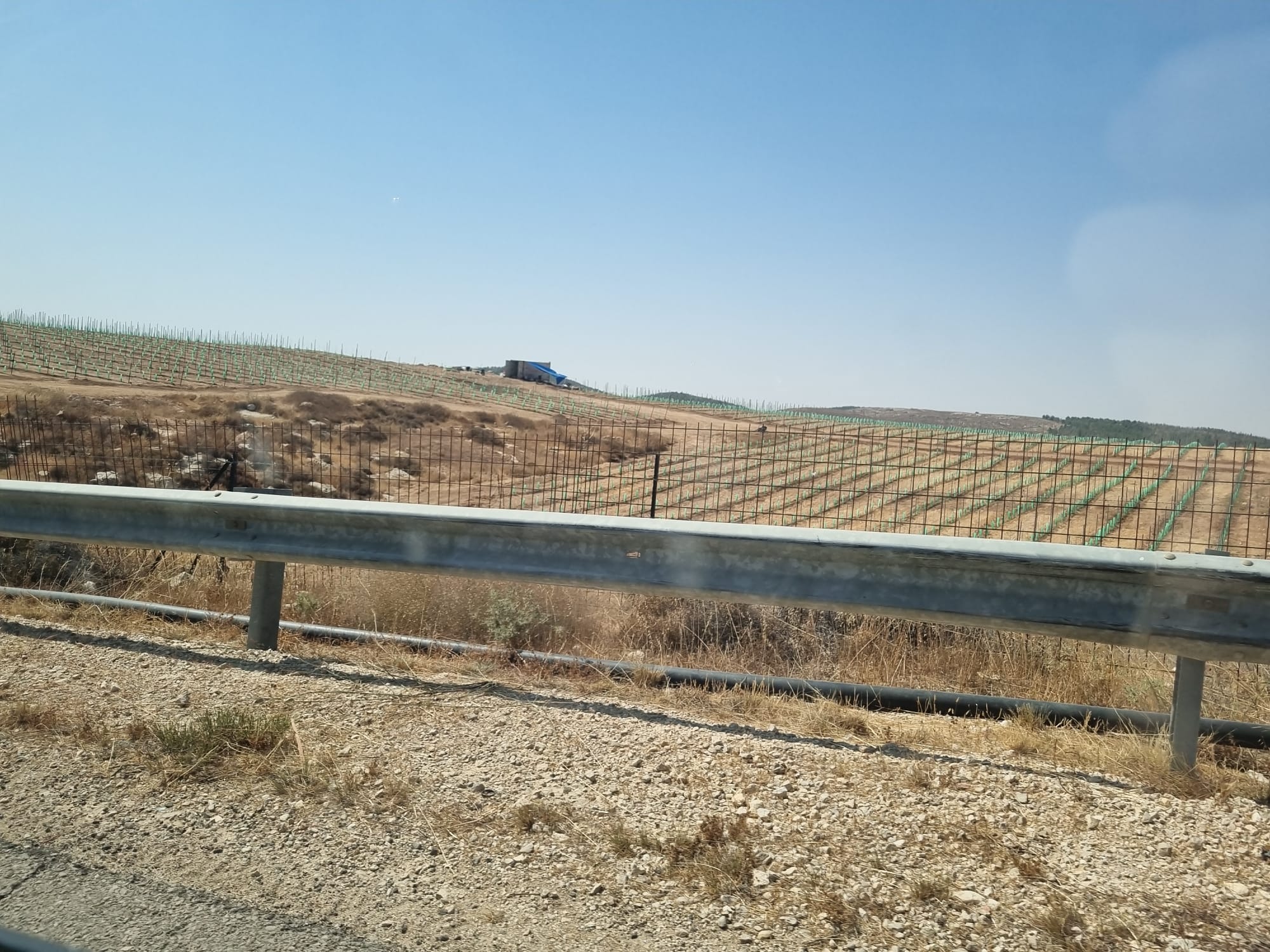
Umm al-Khair, a small village surrounded by several settler farms, such as those of Yissachar Man, Shimon Attia and Moshe, who established a farm nearby about a year ago, toward Huwwara, as well as the Carmel settlement, which is adjacent to the village. A little over a year ago, caravans began to be placed next to the fence surrounding Umm al-Khair, the Barkai neighborhood, part of Carmel. Despite an order instructing that the expansion of the outpost be halted, they violated it without any difficulty. No one stops them.
Why? Because it is consistent with the government’s policy of carrying out ethnic cleansing.
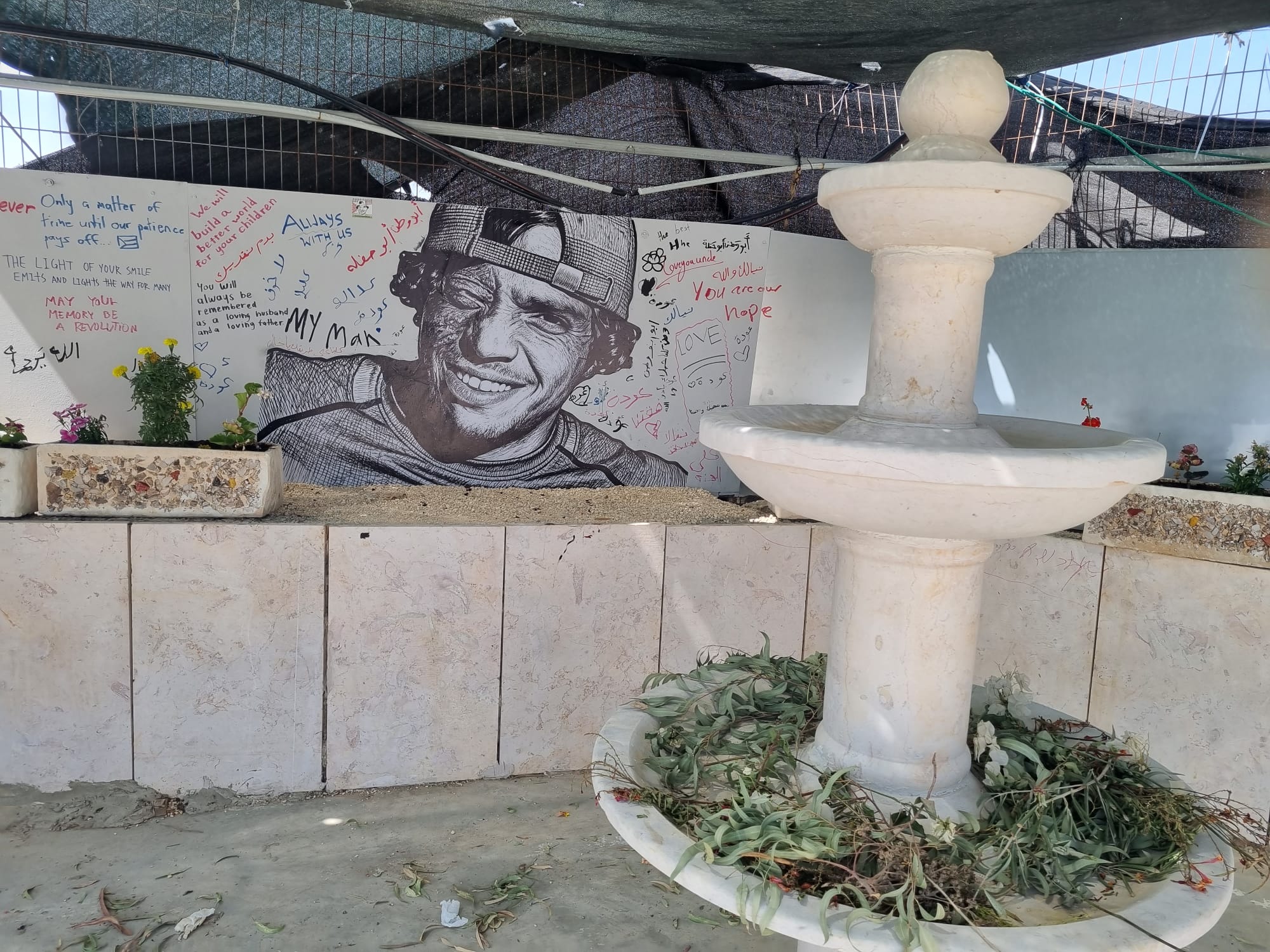
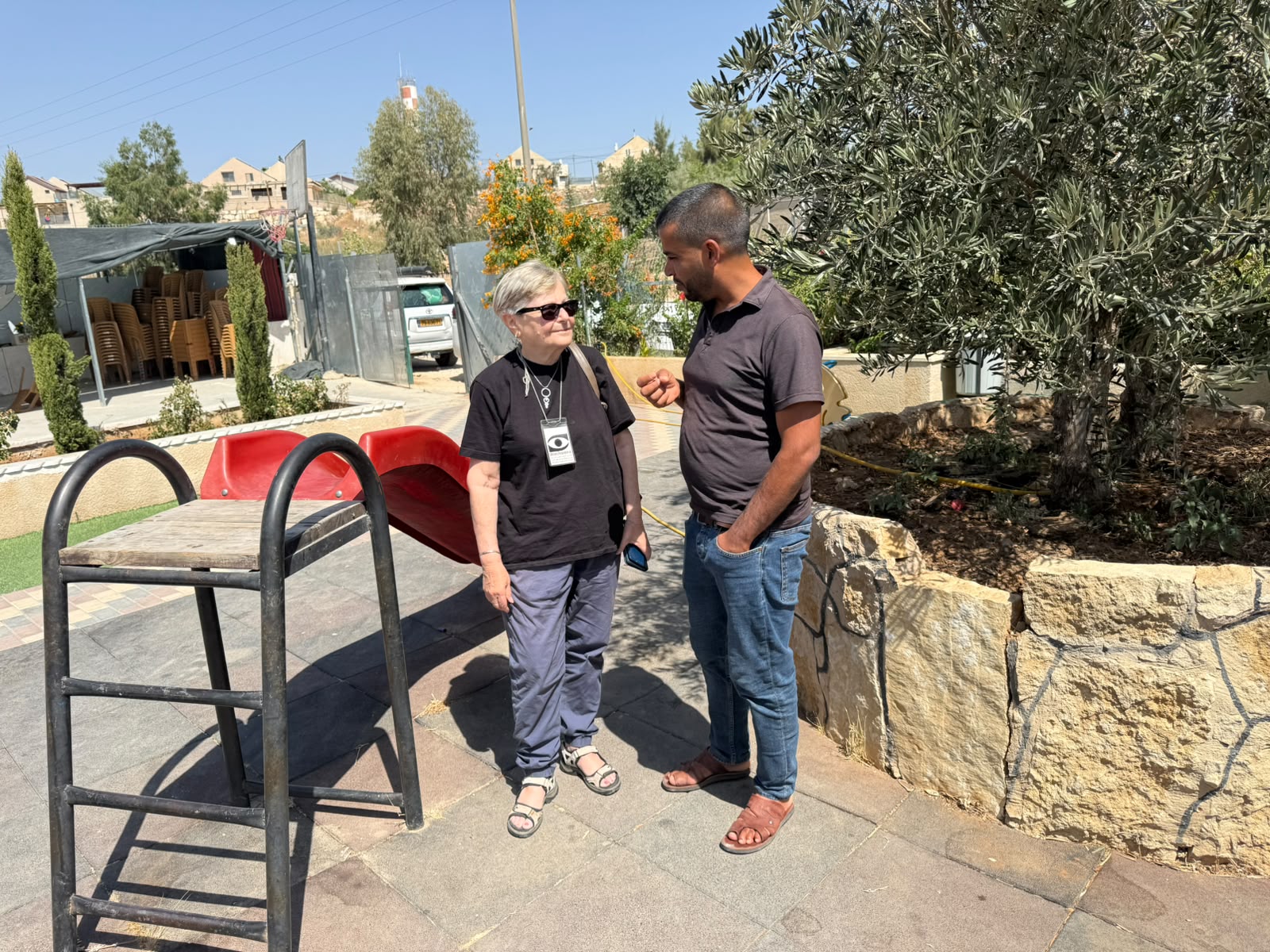
I enter the meticulously maintained area of the playground and meeting room. I photograph what was written in memory of Odeh al-Hathaleen, whom the brutal Yinon Levi murdered, and in memory of Suleiman al-Hathaleen, who was murdered several years ago. The children play with the hula hoops they received and look happy, but fear has already become part of their daily lives.
About a week ago, a memorial ceremony was held for Odeh, a teacher and a man of peace. Activists and friends came to honor his memory.
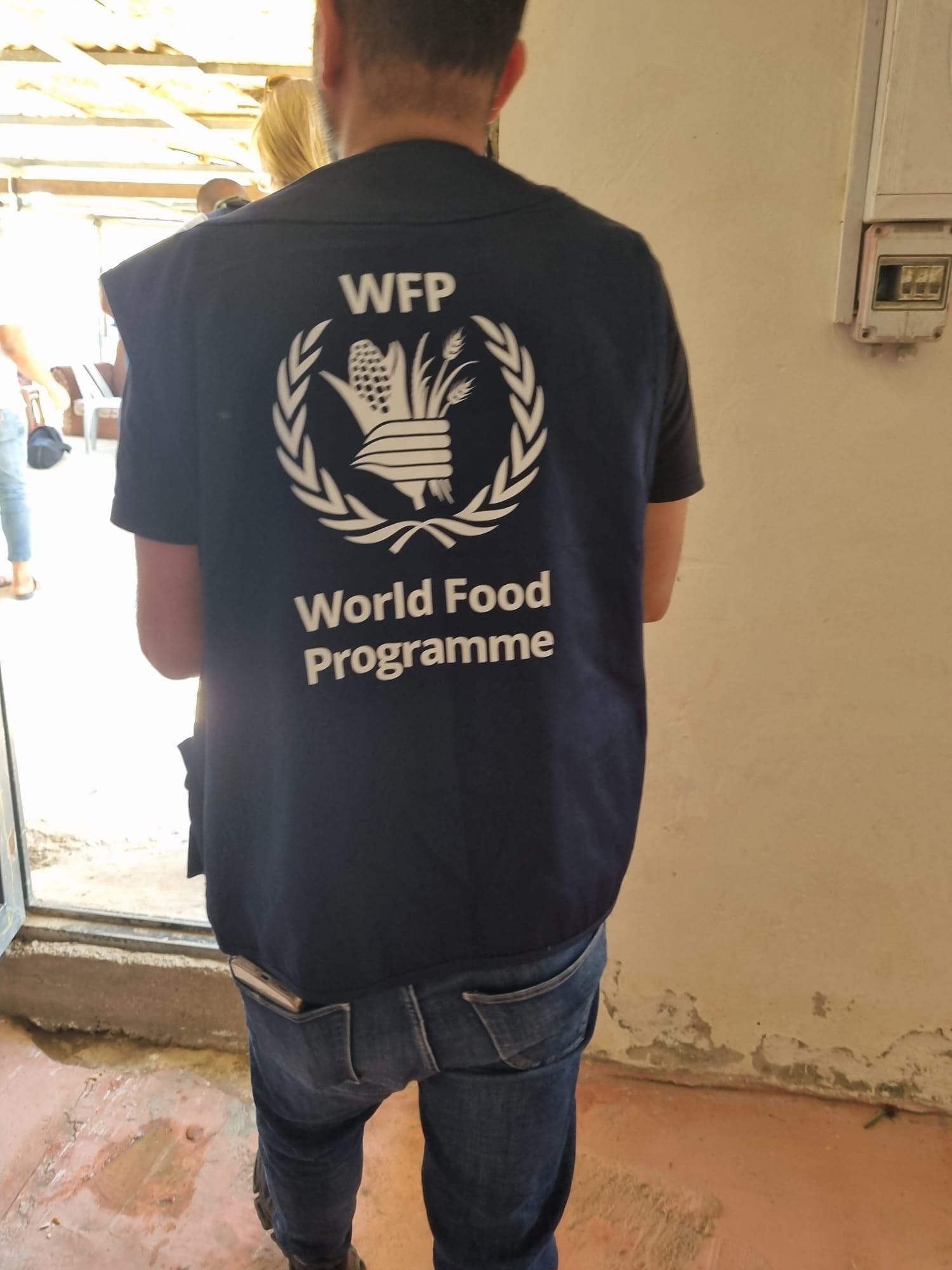
Khalil al-Hathaleen welcomes us, along with several visitors from the World Food Programme (WFP), which provides food vouchers to families in the West Bank for three months.
I accompany them and see the relentless expansion of the new neighborhood. They are the ones in charge here. We visit Salem’s home, and from the window we can see how close the outpost is. Salem’s house has become a target, and every day they harass the family, coming extremely close and shouting.
A toilet cubicle stands right next to the house, surrounded by barbed wire, forcing everyone in the household to use the toilets in the office and playground.
Khalil tells us that on 3 July, settlers from Carmel and from the settlement adjacent to Umm al-Khair tried to enter Salem’s home. Villagers blocked them, and five residents were injured. The police and army dealt with the situation.
On 6 July, a larger group returned with barbed wire. They put up a flag and wanted to erect a fence around the house. The area surrounding the house, including the toilet, was declared a closed military zone.
A state of constant violence.
Eid comes from Sha’ab al-Butum, where two classrooms in the elementary school, which provides an educational framework for the village’s children, were demolished. During our visit, teachers were playing with the children, Kati and Sulfa, mothers from Mothers Against Violence.
We brought donations, a food basket, and a few toys.
In one word: hell.
#ThisIsTheOccupation
Location Description
Mesafer Yatta
See all reports for this place-
This is happening in Fire Area 918 in the South Hebron Hills
On the eve of Remembrance Day (the day before Israel Independence Day), 4th May, 2022, the Israeli High Court decided on the transfer and expulsion of residents from 8 Palestinian communities in the area of Masafar Yata in the South Hebron Hills. Residents of the villages have been living under the threat of demolition, evacuation and expropriation since the IDF issued evacuation orders in 1999 based on the 1980s proclamation of their area of residence as a firing zone for IDF drills. None of the nearby settlements were included in this zone. The Masafer Yata Palestinian villages retain a special lifestyle and ancient agricultural culture. They also posess a clear historical documentation that testifies to a Palestinian settlement in this area, generations before the establishment of Israel, long ago in the caves and at later times outside them.
Evacuating residents from the area means destroying these historic villages and leaving entire families (about 2,000 people, children, adults, and the elderly) homeless. This is contrary to international law.
In June 2022, a firing drill started, and life became harder.
-
South Hebron Hills
See all reports for this place-
South Hebron Hills
South Hebron Hills is a large area in the West Bank's southern part.
Yatta is a major city in this area: right in the border zone between the fertile region of Hebron and its surroundings and the desert of the Hebron Hills. Yatta has about 64,000 inhabitants.
The surrounding villages are called Masafer Yatta (Yatta's daughter villages). Their inhabitants subsist on livestock and agriculture. Agriculture is possible only in small plots, especially near streams. Most of the area consists of rocky terraces.Since the beginning of the 1980s, many settlements have been established on the agricultural land cultivated by the Palestinians in the South Hebron Hills region: Carmel, Maon, Susia, Masadot Yehuda, Othniel, and more. Since the settlements were established and Palestinians cultivation areas have been reduced; the residents of the South Hebron Hills have been suffering from harassment by the settlers. Attempts to evict and demolish houses have continued, along with withholding water and electricity. The military and police usually refrain from intervening in violent incidents between settlers and Palestinians do not enforce the law when it comes to the investigation of extensive violent Jewish settlers. The harassment in the South Hebron Hills includes attacking and attempting to burn residential tents, harassing dogs, harming herds, and preventing access to pastures.
There are several checkpoints in the South Hebron Hills, on Routes 317 and 60. In most of them, no military presence is apparent, but rather an array of pillboxes monitor the villages. Roadblocks are frequently set up according to the settlers and the army's needs. These are located at the Zif Junction, the Dura-al Fawwar crossing, and the Sheep Junction at the southern entrance to Hebron.
Updated April 2022
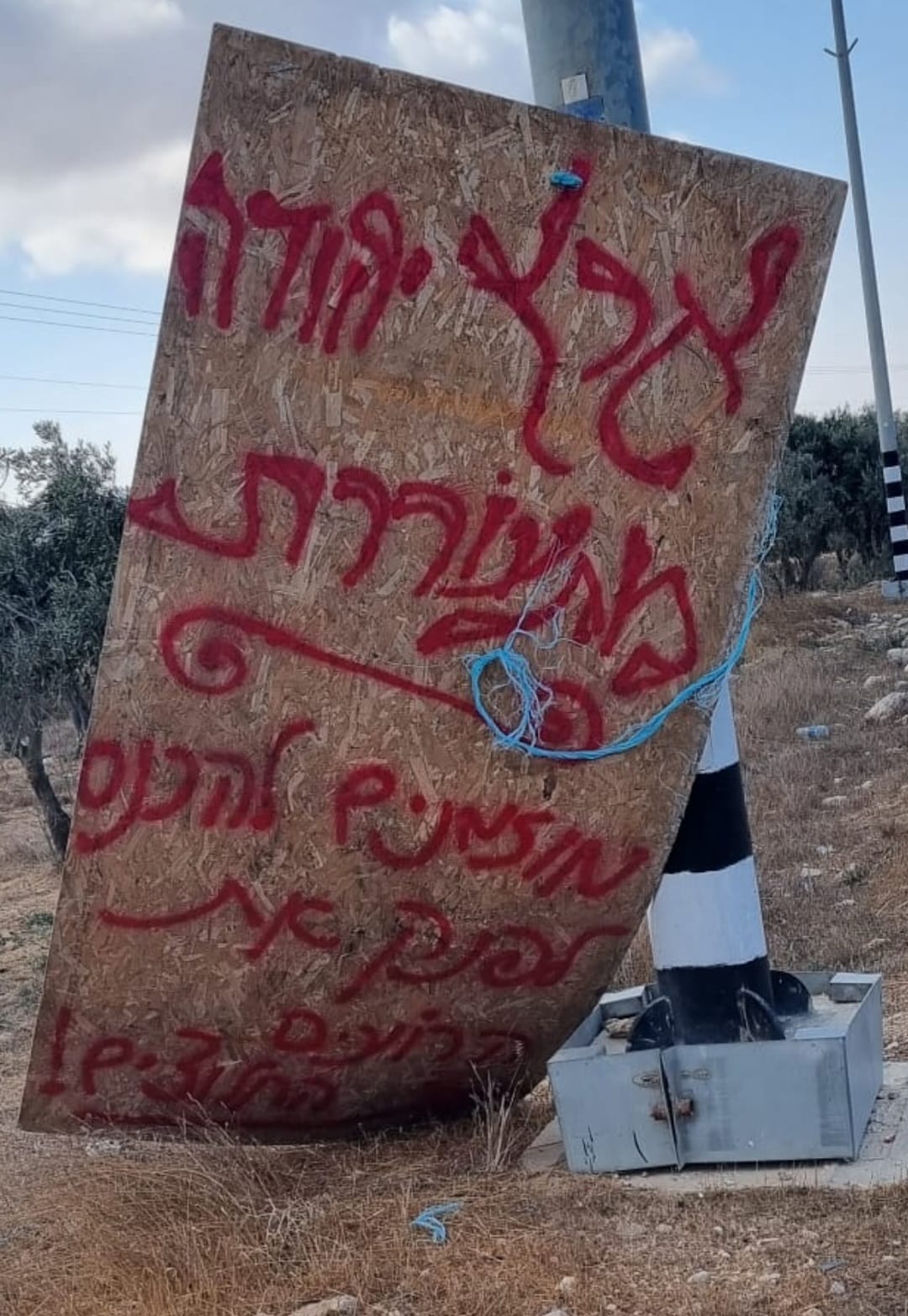 Smadar BeckerOct-17-2026A sign placed by those who call themselves the Pioneer Shepherds, at the outpost adjacent to Qawawis
-
Umm al-Khair
See all reports for this place-
Umm al-Kheir
A Palestinian village in the southern Hebron governorate, populated by five families. The Palestinian residents settled there decades ago, after Israel expelled them from the Arad desert and purchased the land from the residents of the Palestinian village of Yatta. The village suffers from the violence of nearby Carmel settlers, from water shortage and is subject to frequent demolition of buildings by the Civil Administration.
-
