
Hebron - Settlers, on their way to pray at the Cave of the Patriarchs, threw stones and hit parked cars
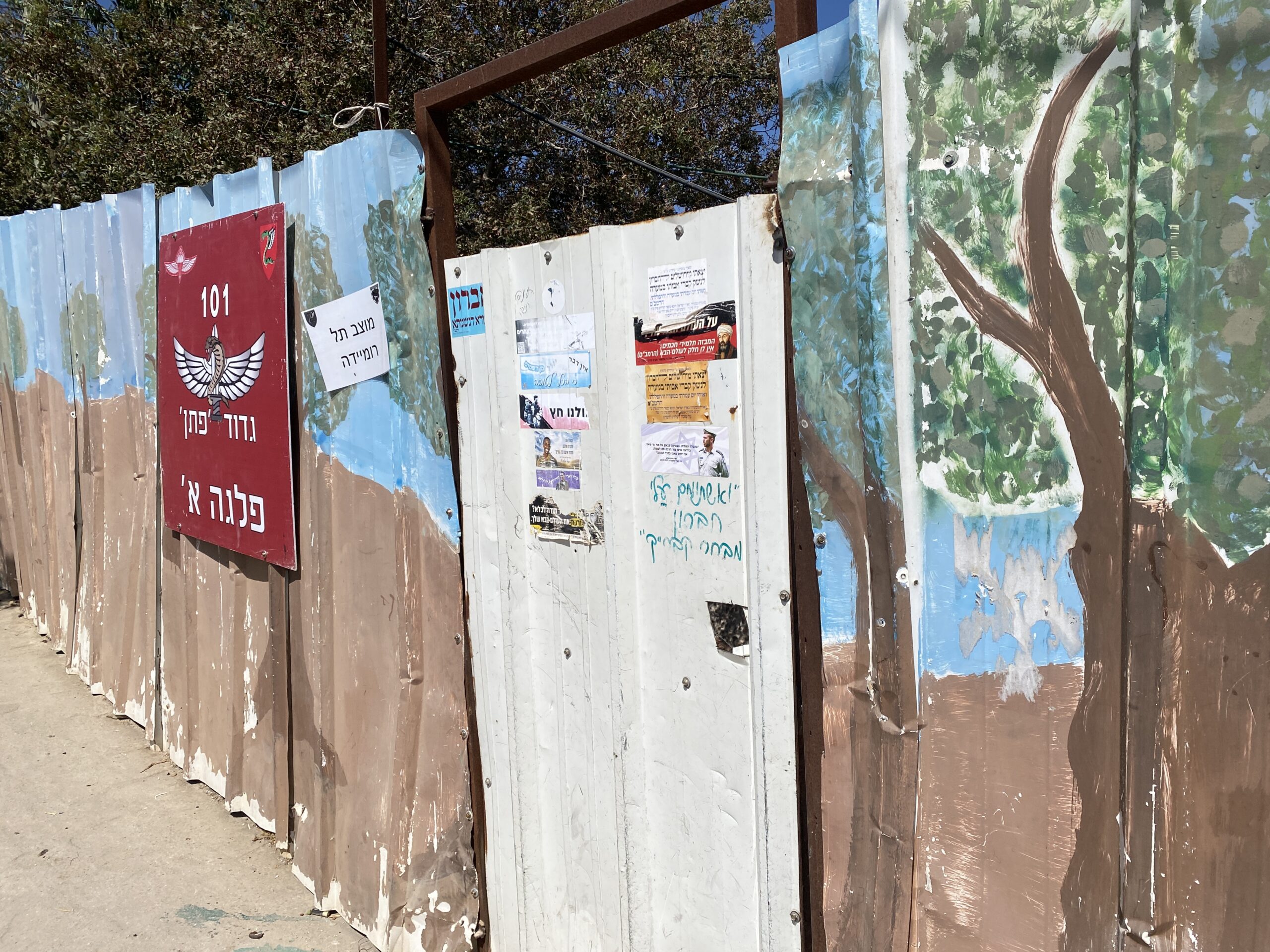
For a long time, we had avoided entering Hebron. Our friends there were afraid to meet us, and we were afraid to face the reality there. This time we came on Rachel Afek’s behalf to deliver money to Issa Amro.
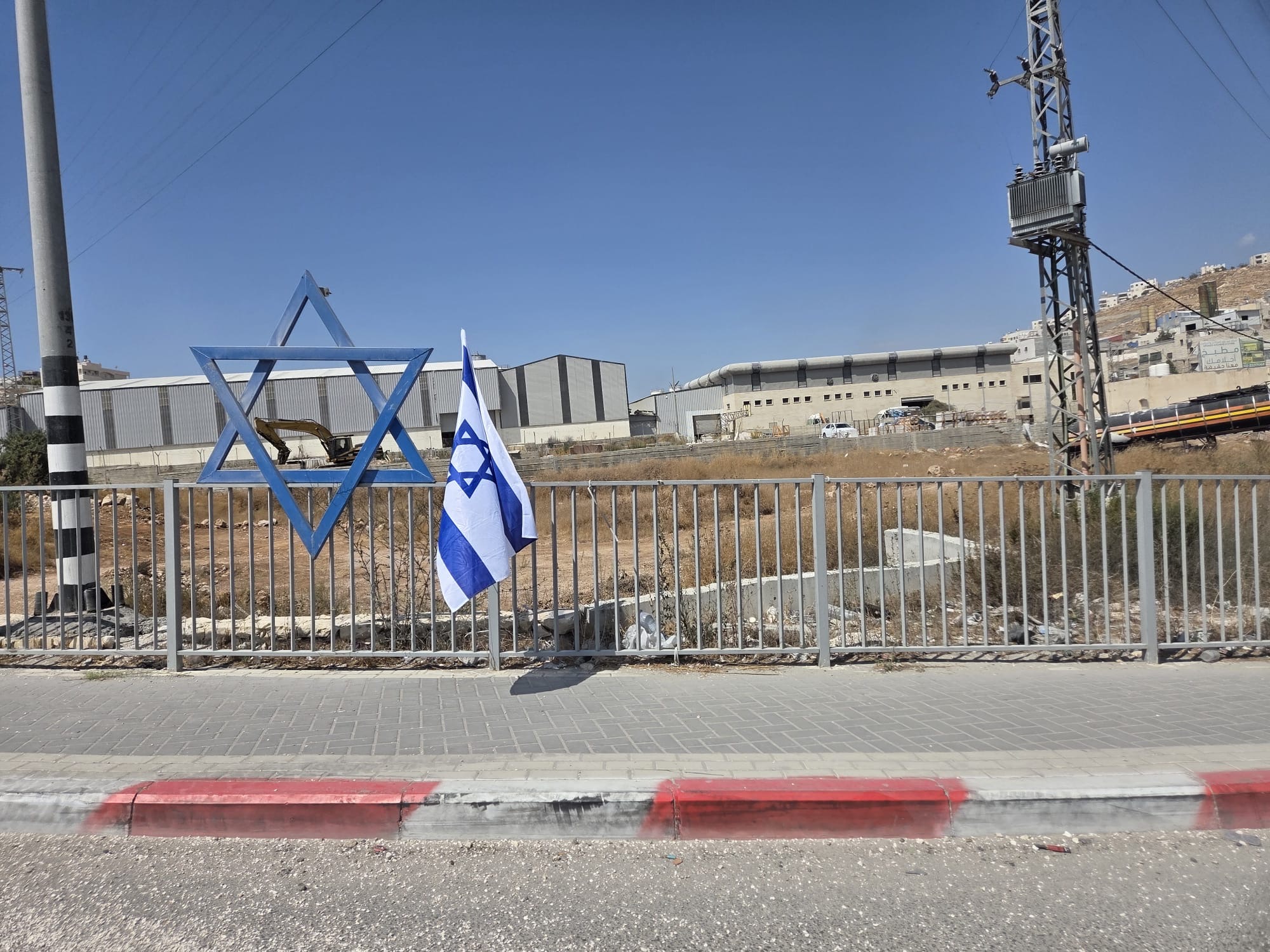
Highway 60 – The Israeli flags displayed along both sides of the road are now being replaced. A tractor is pulling a trailer full of new flags, and two adults and a child are replacing the old ones.
Hebron
The gate toward the industrial area was open, as was the gate from Kiryat Arba into Hebron. There were no guards.
The area approaching Baruch Goldstein’s grave has been turned into a park, with a lawn, trees and benches in their shade. The grave stands behind a wall.
On the way to Shuhada Street, the Kapisha checkpoint was closed, and the checkpoint at Junction 160 was closed and unmanned.
Issa met us near the Tarpat checkpoint (the sign now reads “The Policeman”), and we walked with him along a path that bypasses the army and settler positions to the “House of Peace.” The house is now completely enclosed by bars. “A gilded cage,” I said to him.
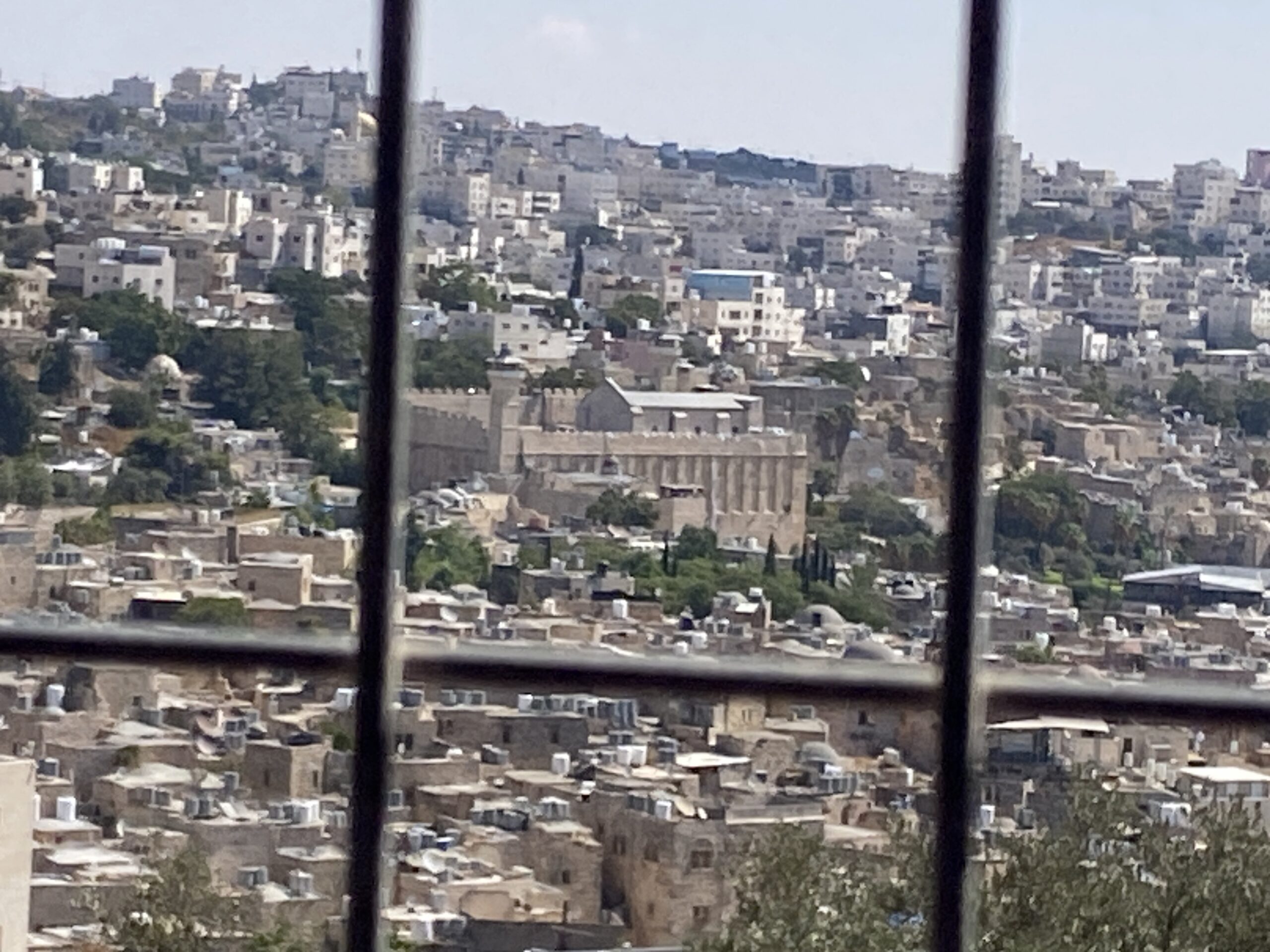
Through the bars, one can see the Cave of the Patriarchs in one direction. On the northern ridge stands the police building, to which a huge antenna was added only a few months ago. They continue to fortify their positions…
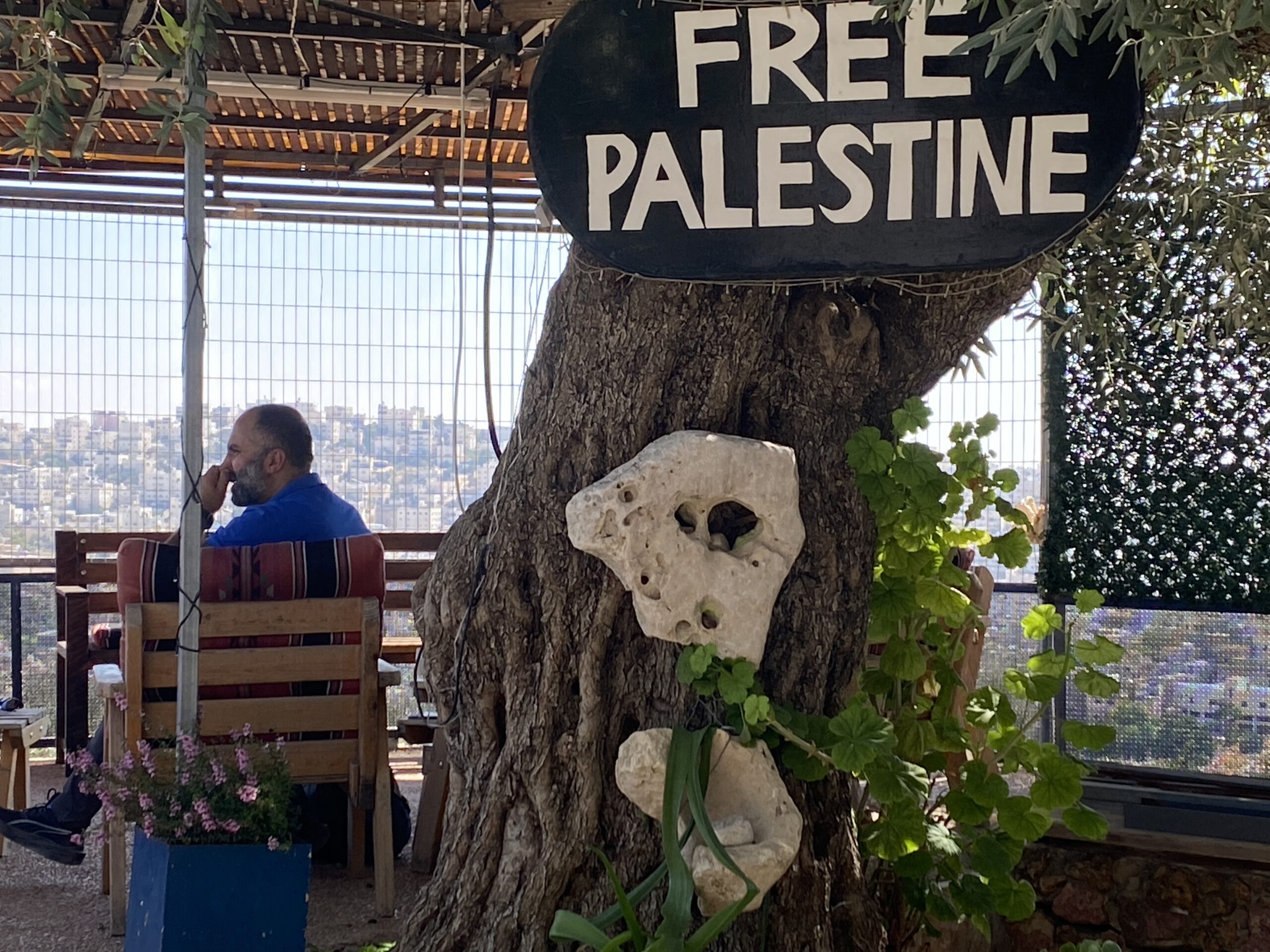
As always, it is beautiful there, and very clean, but it is a cage. Issa is no longer afraid. He continues to welcome anyone who wants to hear about the situation into his home: Palestinians, Israeli Jews and international volunteers. Paratroopers are now stationed in Hebron, and he says they act according to the law. In general, he says, everything depends on the commander on the ground.
Over a plate of grapes brought by a neighbor—the famous Hebron grapes—he told us about his community work. Every Sunday, he screens a documentary at home and invites Hebron residents, as well as others who want to listen and talk.
Issa said that filmmaker Tomer Heymann is following the House of Peace projects and that one day there will be a film about them.
He also mentors local young people. Over the course of a year, he helps them acquire practical skills that will allow them to work in trades such as plumbing or metalworking—services people still need and from which they can earn at least a little.
The money we brought will go toward a women’s empowerment project he runs in the city. He has made an arrangement with a particular supermarket and gives women coupons to shop there. In addition to food, the emphasis is on hygiene and women’s personal care products. Cigarettes cannot be purchased with the coupons, and sweets can be bought only for children. This gives the women independence and the opportunity to make decisions. He also says that most of the people who come to the film screenings are women.
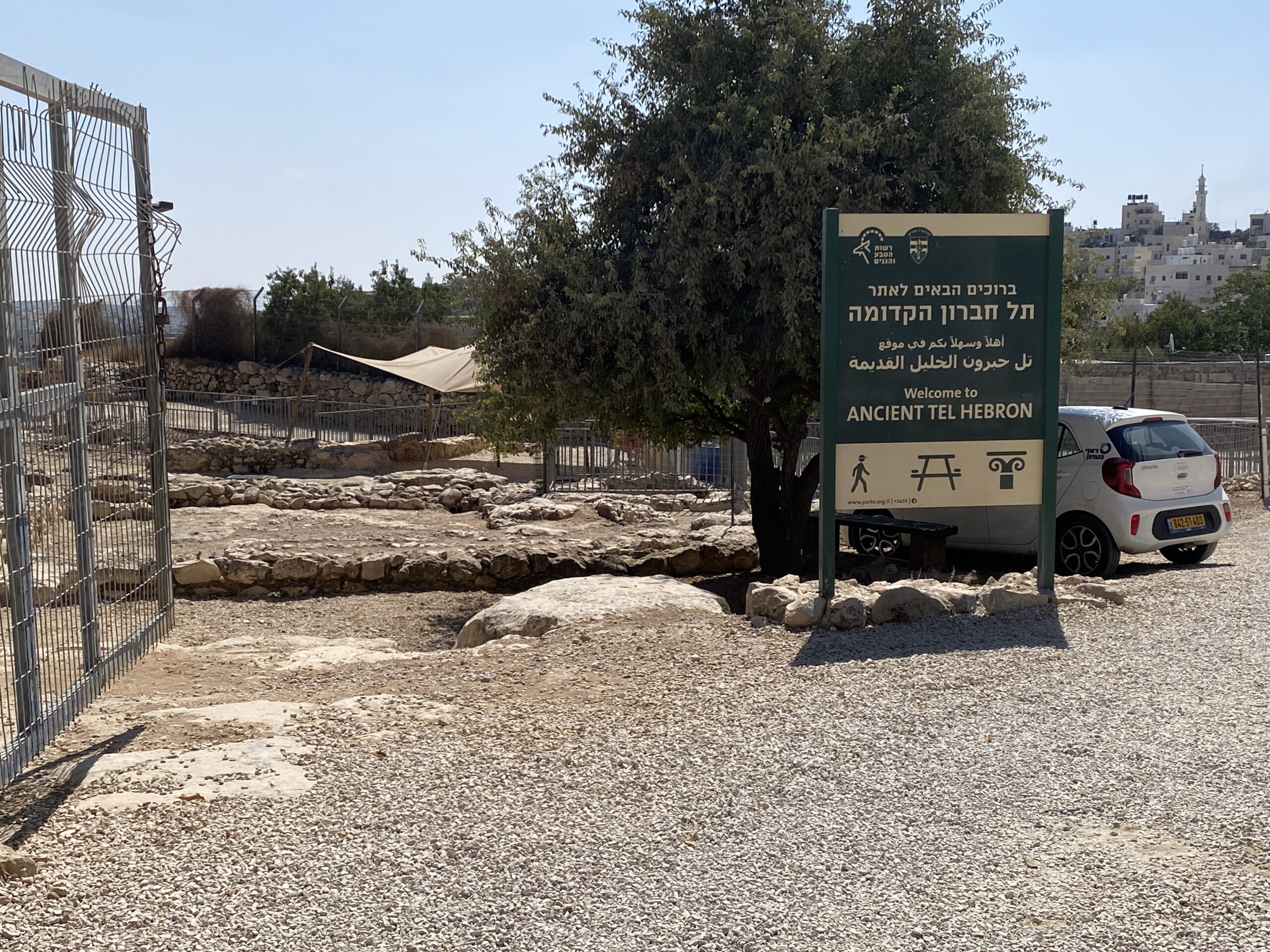
From Issa’s home, we walked down a winding path between the army post, now occupied by the paratroopers, and the caravans of the Tel Rumeida settlers. It looks as though they have been receiving a lot of money lately: the path has been improved with steps and a handrail. At the bottom, a surprise awaited us—a vehicle belonging to the Israel Nature and Parks Authority, with two workers beside it. When we expressed our surprise, we learned that an archaeological park is officially being established around the excavations of ancient Hebron (perhaps). This is further evidence of what was described in a Channel 11 report about Israeli authorities directing funding preferentially to projects beyond the Green Line.
The route down from the top of Tel Rumeida has changed considerably. More fences have been added, as well as a checkpoint at the top of the hill on the way to Shuhada Street. We stood at the checkpoint with a Palestinian family and saw that the soldiers did indeed treat them well while searching through their bags and checking their IDs. The process was relatively quick. For us, of course, they opened the gate without a search. They asked what we were doing; we said we had come to visit friends, and that was that…
On the way back toward Kiryat Arba, we stopped to visit Bassem Jaber, who has a grocery store and a barbershop opposite the House of Contention. His location has caused him trouble with the settlers for many years, but the situation is now getting much worse. About a month ago, settlers on their way to pray at the Cave of the Patriarchs threw stones at the family’s parked cars and struck them with sticks. When the men came out to try to prevent the damage, the settlers summoned the army, and soldiers shot Bassem’s brother, Nasr, and his son Fahed in the legs. The two lay bleeding on the ground for more than an hour while the settlers delayed the ambulance. Eventually, they were taken to Shaare Zedek Hospital in Jerusalem, each with both legs shattered. After initial treatment, the younger son was transferred to the hospital at Ramla Prison. He is under arrest. The father returned home but still cannot walk.
We sat in their grocery store and saw the horrifying photos of the attack and their injuries. We left all the bags of clothes that had filled the car, along with the toys, which the children eagerly pounced on. They are such noble people, and it is so hard to stand beside them without being able to help or even offer comfort.
Location Description
Hebron
See all reports for this place-
According to Wye Plantation Accords (1997), Hebron is divided in two: H1 is under Palestinian Authority control, H2 is under Israeli control. In Hebron there are 170,000 Palestinian citizens, 60,000 of them in H2. Between the two areas are permanent checkpoints, manned at all hours, preventing Palestinian movement between them and controlling passage of permit holders such as teachers and schoolchildren. Some 800 Jews live in Avraham Avinu Quarter and Tel Rumeida, on Givat HaAvot and in the wholesale market.
Checkpoints observed in H2:
- Bet Hameriva CP- manned with a pillbox
- Kapisha quarter CP (the northern side of Zion axis) - manned with a pillbox
- The 160 turn CP (the southern side of Zion axis) - manned with a pillbox
- Avraham Avinu quarter - watch station
- The pharmacy CP - checking inside a caravan with a magnometer
- Tarpat (1929) CP - checking inside a caravan with a magnometer
- Tel Rumeida CP - guarding station
- Beit Hadassah CP - guarding station
Three checkpoints around the Tomb of the Patriarchs
Yael ZoranSep-24-2026Hebron and the Cave of the Patriarchs from Beit Hashalom
-
