
M. Abu Qbeita - Only living in hope of change keeps us sane
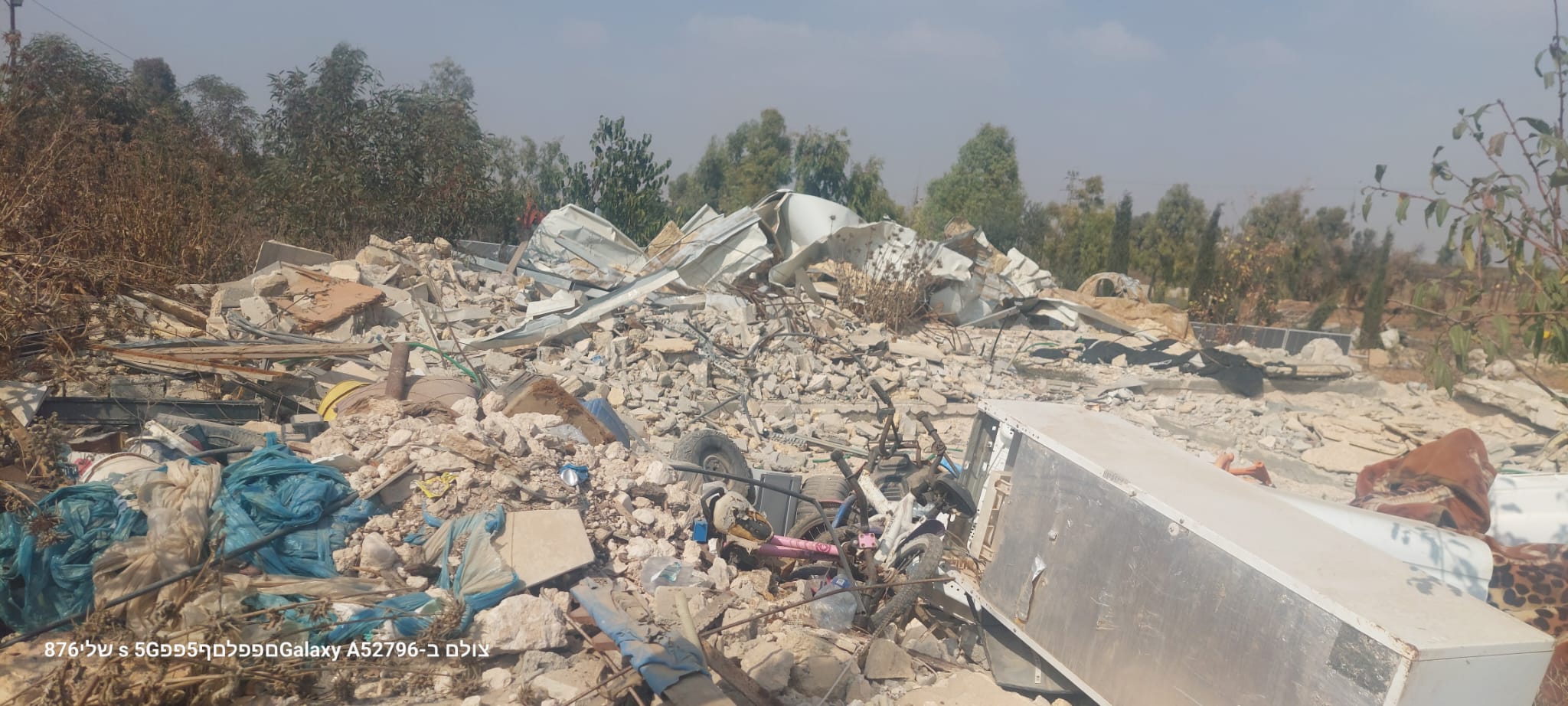
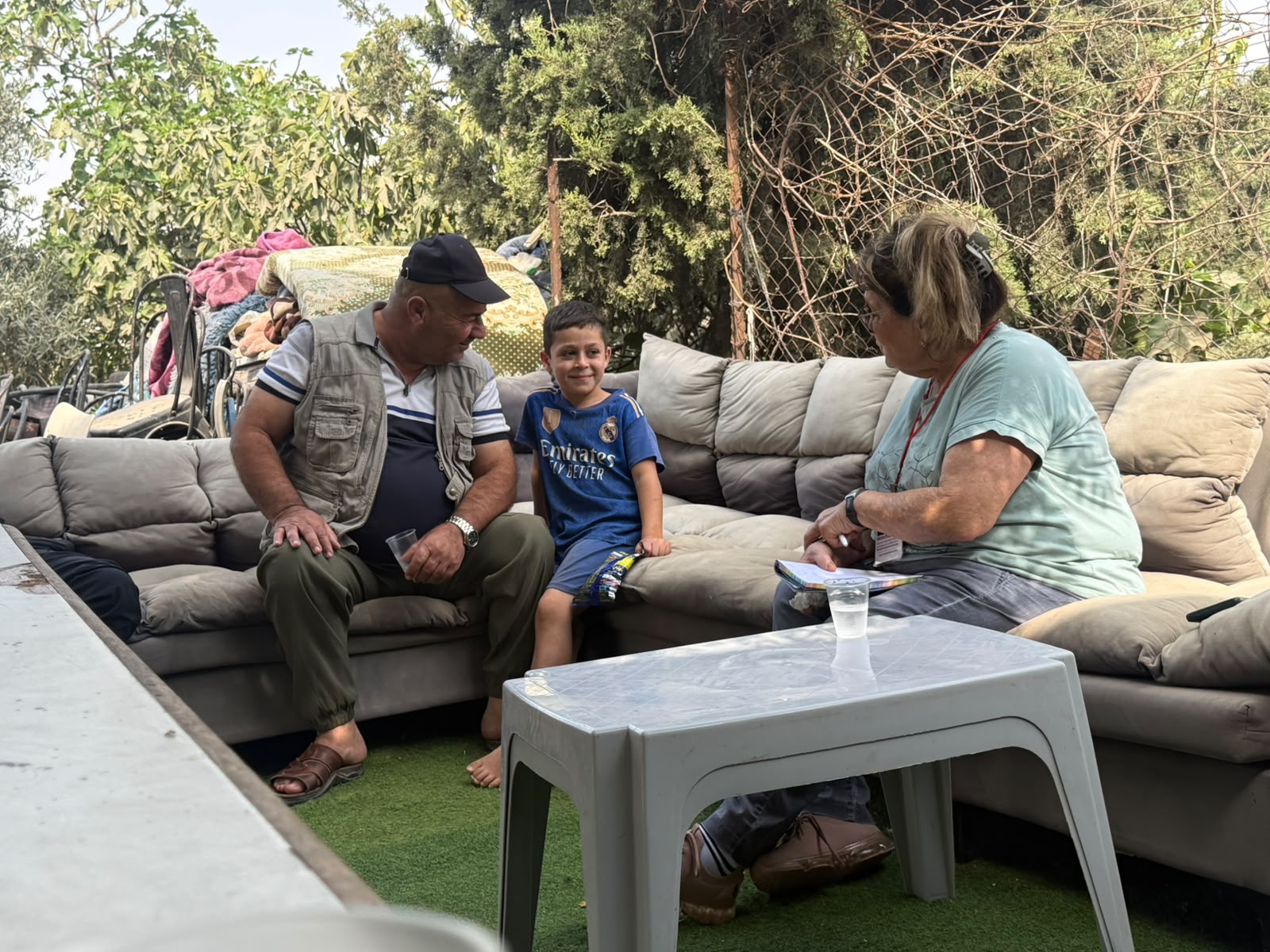
The shift was devoted to the family of M. Abu Kbeita.
“If we really thought about our situation, we would lose our sanity. Only living in hope of change and faith in God keep us sane,” M. says at the end of our conversation.
- is a strong man, physically and mentally. All his sons live with him on the same plot of land, in structures he built for them all. He has still not cleared away the ruins of a house he built for one of them three years ago.
We sat with him and his son A., who is married and the father of five, in the well-kept yard. Around us were about ten children of different ages, some his children and others his grandchildren.
A little boy of about two arrives. “You see,” A. says, “he’s my brother. He’s my sons’ uncle, but he’s younger than they are… Dad just keeps having children.”
“Of course,” says M. “That’s how it should be.”
- tells us about their struggles with the Talia family, who live at Lucifer Farm across the road, and with the people of Beit Yatir, whose fence runs right up against them. All are on the Israeli side, beyond the separation barrier. We have been telling their unusual story for years.
Two months have passed since the start of the school year, and the bus to take the children to school in Imneizil has still not been approved. To reach the school, they must cross the Metzadot Yehuda checkpoint.
- has also not received the permit for his vehicle, which is issued once every four years. Some months ago he received a one-year permit, but without authorization for the vehicle.
“How are we supposed to live? How can we go shopping and run errands in Yatta? How can I take my ten-year-old son with Down syndrome to his special school, and three times a week to speech therapy? Even the donkey and the horse have no permits.”
For now, A. has a permit, but it will expire in two months. And the child with special needs refuses to travel with anyone except his father. “We have permanent residency,” M. says, “but judging by the authorities’ behavior lately, we have a feeling there is a plan to revoke it.”
They are not allowed access to their land—30 dunams, legally registered and covered by a High Court of Justice ruling—not even to harvest the olives. Yet the men of the Talia family, who have received IDF uniforms and officer ranks since 7 October 2023, act there as though it were their own land, bringing their flock to eat the olive leaves and destroy the trees.
Before 7 October, the settlers fenced off the Palestinians’ plots and gave them keys to the gate so they could open it as needed. The fence was designated a “security” fence to prevent entry by Palestinians without permits. Since the war began, they have not been allowed into their plots at all. When M. tried to enter using the key he had been given, soldiers arrived and detained him at the checkpoint for eight hours, with his hands bound and his eyes blindfolded. After eight hours they simply released him.
His son A. also approached the fence with the sheep. Before he could even open the gate, soldiers, Beit Yatir security coordinator Ze’ev Shapira and his son Re’em, together with Bezalel Talia, arrived and drove him away with threats. “If you come back, you’ll get a bullet between the eyes,” they told him.
Meanwhile, the authorities have changed the locks. There is a more extreme group within the hilltop youth called “Hatifa” (“Abduction”). They wear uniforms that are not military-colored. We see them everywhere. Re’em Shapira and Bezalel Talia are particularly extreme; they look like soldiers and give orders to the IDF.
According to M., the situation has worsened over the past three years, and all agreements with the army have been broken. The residents have legal documents, but when they show them to soldiers, the soldiers reply: “We don’t care what documents you have… We don’t care… We don’t want to see them…”
“If we really thought about our situation, we would lose our sanity. Only living in hope of change keeps us sane,” M. concludes.
Location Description
Beit Yatir / Metsadot Yehudah Checkpoint
See all reports for this place-
An terminal barrier towards Israel on the Separation Barrier (far from the Green Line) near the Beit Yatir settlement. Palestinian passage is prohibited, except for members of the Qabita family living on the western side of the separation fence (which are also not allowed movement in Israel).
-
South Hebron Hills
See all reports for this place-
South Hebron Hills
South Hebron Hills is a large area in the West Bank's southern part.
Yatta is a major city in this area: right in the border zone between the fertile region of Hebron and its surroundings and the desert of the Hebron Hills. Yatta has about 64,000 inhabitants.
The surrounding villages are called Masafer Yatta (Yatta's daughter villages). Their inhabitants subsist on livestock and agriculture. Agriculture is possible only in small plots, especially near streams. Most of the area consists of rocky terraces.Since the beginning of the 1980s, many settlements have been established on the agricultural land cultivated by the Palestinians in the South Hebron Hills region: Carmel, Maon, Susia, Masadot Yehuda, Othniel, and more. Since the settlements were established and Palestinians cultivation areas have been reduced; the residents of the South Hebron Hills have been suffering from harassment by the settlers. Attempts to evict and demolish houses have continued, along with withholding water and electricity. The military and police usually refrain from intervening in violent incidents between settlers and Palestinians do not enforce the law when it comes to the investigation of extensive violent Jewish settlers. The harassment in the South Hebron Hills includes attacking and attempting to burn residential tents, harassing dogs, harming herds, and preventing access to pastures.
There are several checkpoints in the South Hebron Hills, on Routes 317 and 60. In most of them, no military presence is apparent, but rather an array of pillboxes monitor the villages. Roadblocks are frequently set up according to the settlers and the army's needs. These are located at the Zif Junction, the Dura-al Fawwar crossing, and the Sheep Junction at the southern entrance to Hebron.
Updated April 2022
 Muhammad D.Oct-29-2026Michal in Shaab Al-Butum with Ishaq Jabarin
-
