
Qawawis - The settlers arrive with their herds to the olive groves and vineyards and eat from the trees and vines
“Only God Can Save Us from the Settlers”
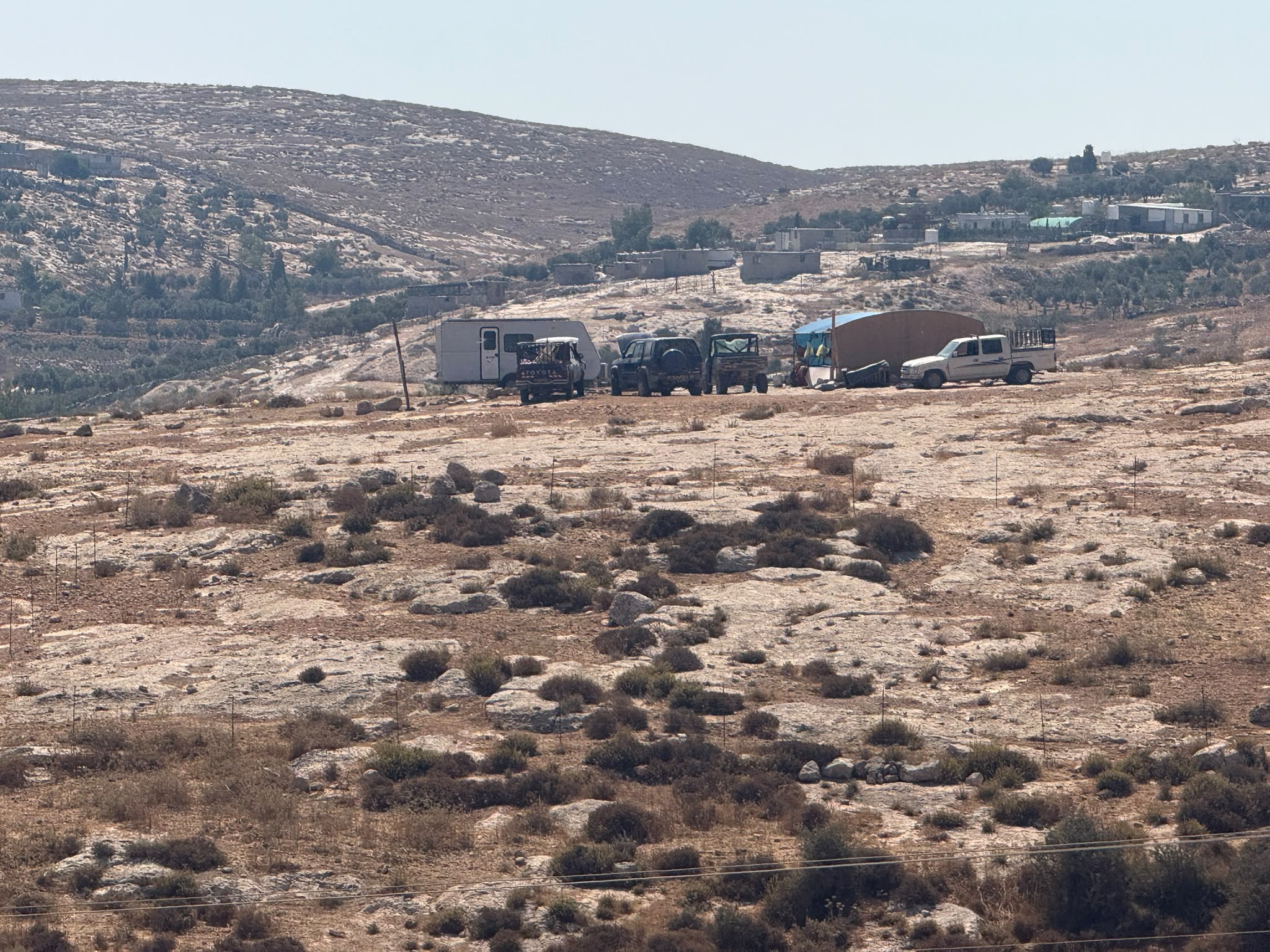
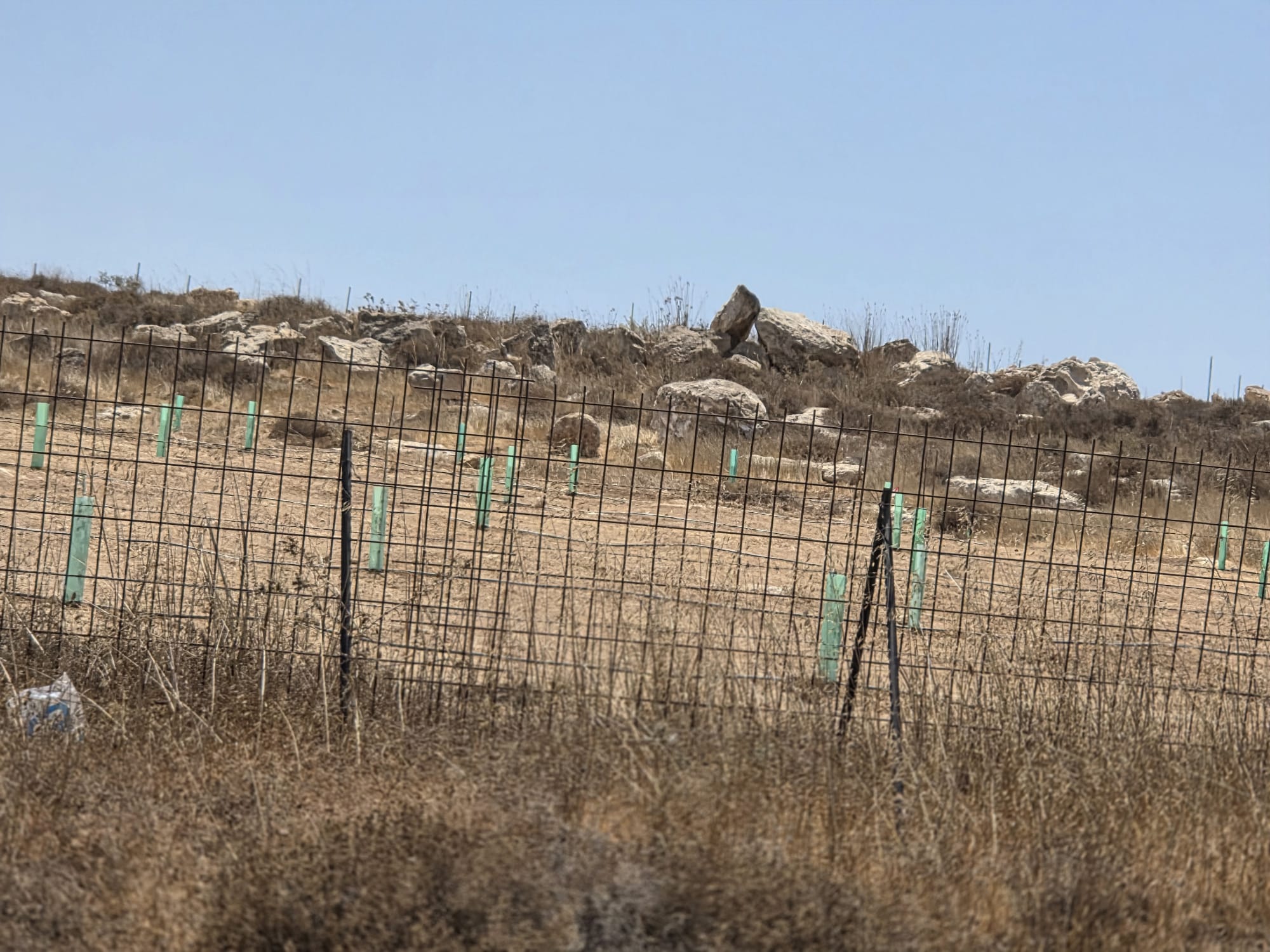
Once again, we find ourselves jolting along barely passable tracks because of all the roadblocks erected by the settlers. A new settlement can already be seen from the road. Its establishment was the reason we devoted this patrol to visiting a family in Sha’ab al-Butum whom we had not met before. The family asked us to visit because of the harassment and threats they have been subjected to by people from the new settlement.
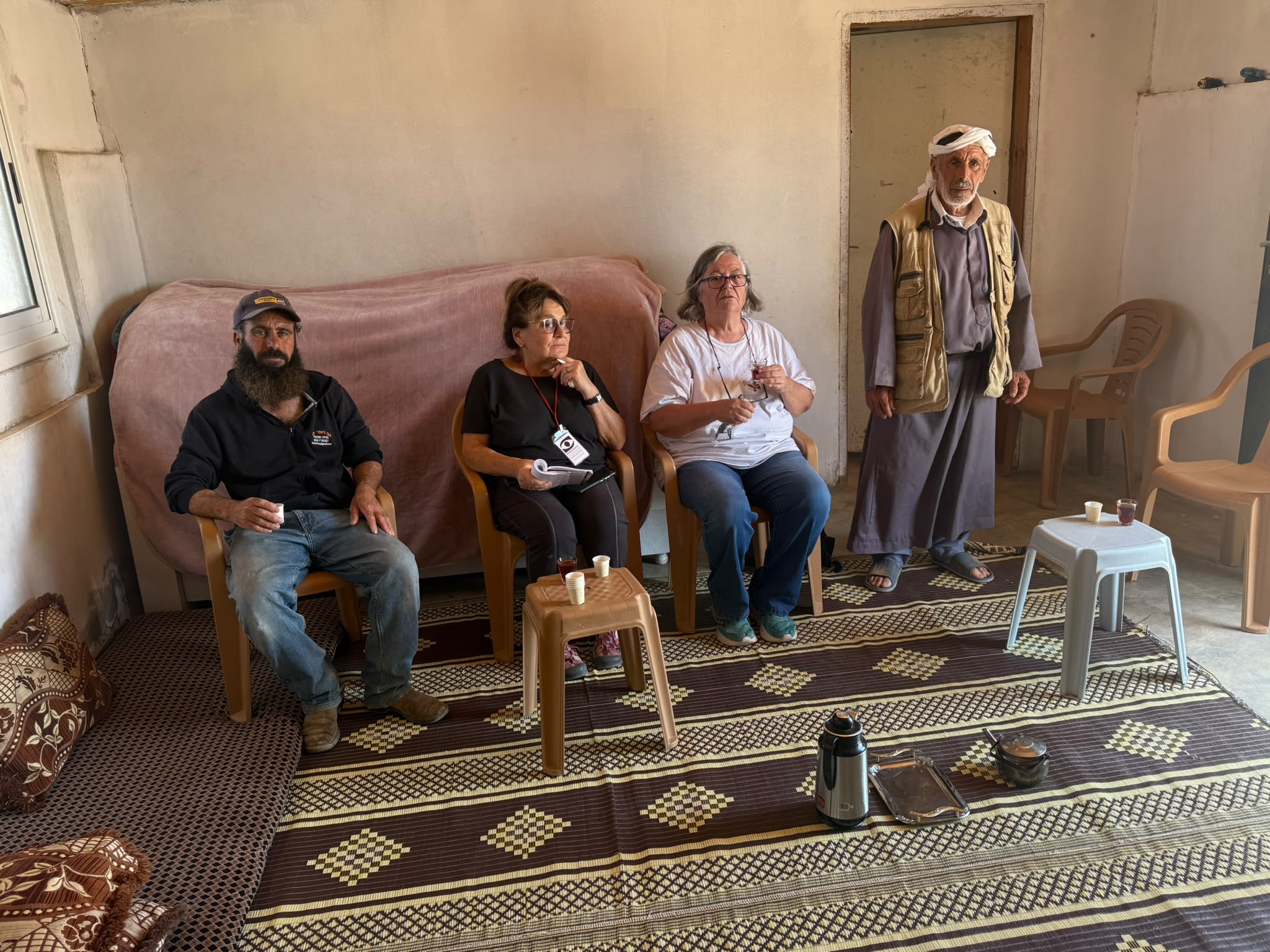
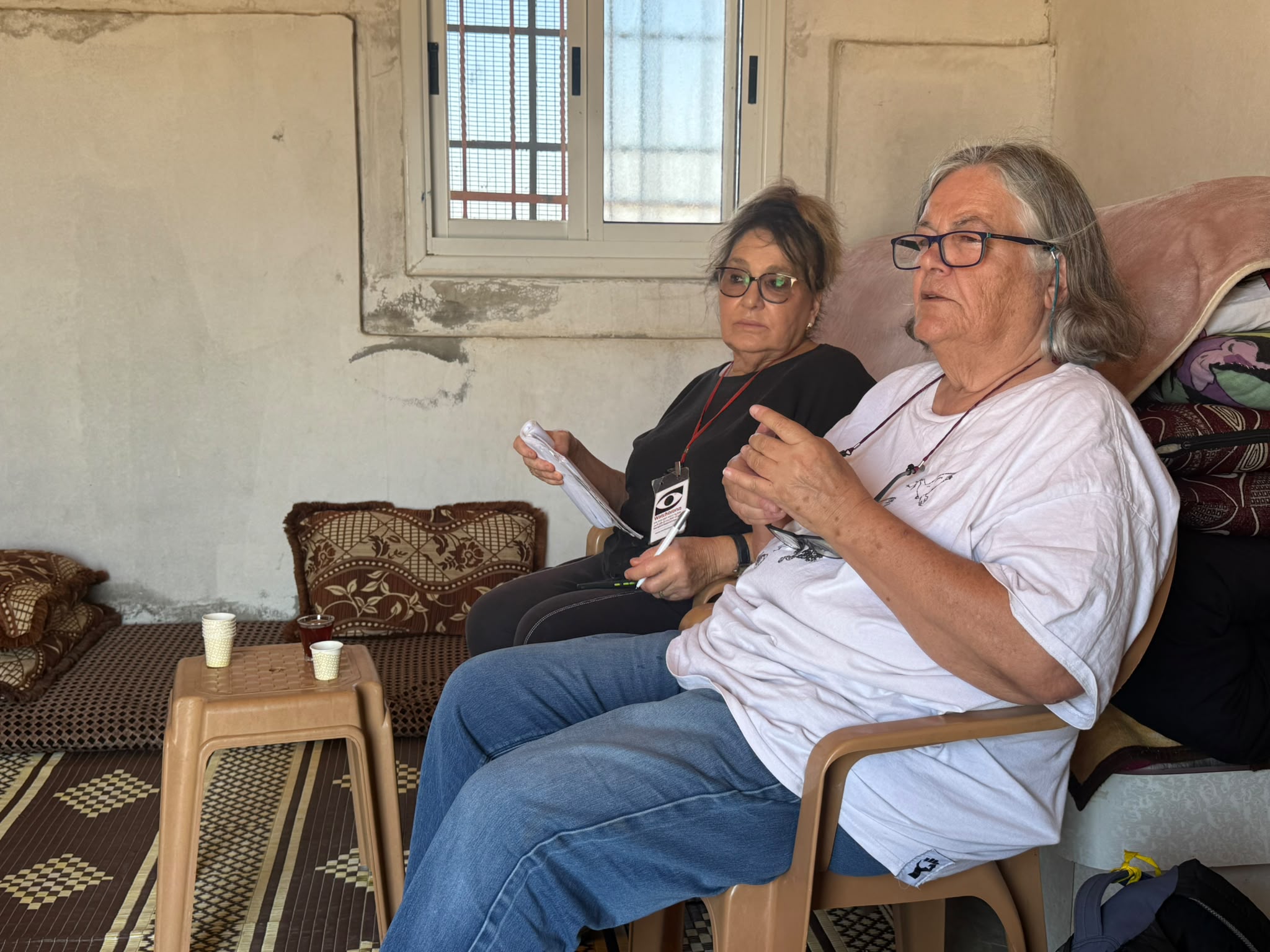
We arrived at the Abu al-Haram family’s home, bringing them a large quantity of vegetables and fruit donated by a shop in Lakiya, thanks to Muhammad. I gave them NIS 250, as they had requested, because that sum has greater purchasing power in the shops in Yatta than elsewhere.
We met M. and his father, H., who agreed to be photographed and to tell us their story.
Sixteen people live there, including six children. Eighty days ago, on May 25, two new settlers, Dvir and Yosef, arrived. They were joined by the long-time settler Amichai Shilo, who lives on the hill opposite the home of the Jabarin family, whom we know, as well as by several youths. Altogether, between three and five people come to the area.
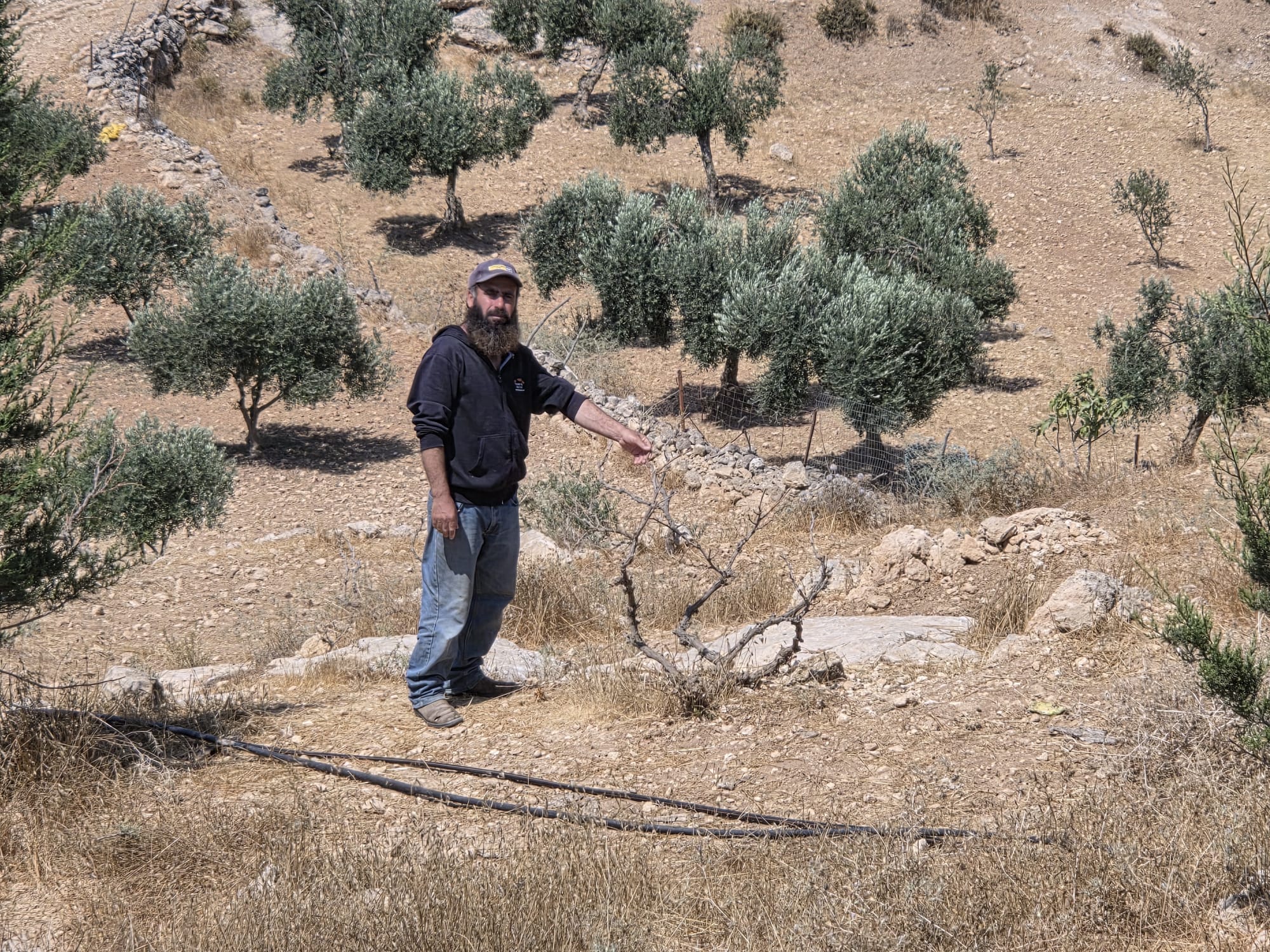
Every day, twice a day—at 6:30 in the morning and again in the evening—they bring their flock into the family’s olive groves and vineyards. The sheep and goats feed on the trees and vines. The Palestinians are forbidden to approach the intruders or even their own groves and vineyards. The settlers come right up to the entrance of the house and shout: “Go to Iran! Go to Saudi Arabia!” M. says that his neighbor recognized some of his stolen sheep among their flock.
This is the family’s daily reality, and it is getting worse. Immediately after October 7, 2023, assailants arrived and destroyed their neighbors’ home. The neighbors were forced to leave, are not permitted to return, and now live in Qawawis.
A year ago, the settlers also came to this family’s home and turned everything inside upside down while shouting: “Get out of here! This is not your home!” They also stole two donkeys. The settlers fled after the family called the police. The officers arrived only two hours later, and one of them told the family, “I didn’t see anything; I didn’t hear anything,” and refused to accept their photographs.
H., the father of the family, worked in Israel for many years. In recent years, however, he has devoted himself solely to tending his flock, olive groves, and vineyards. He owns 50 sheep and goats.
“I used to have 300 trees,” he says. “There were olive, lemon, and almond trees. Now the settlers’ flocks eat everything. Because we are afraid of the settlers, we cannot go near the remaining trees or tend them. We take our sheep out to graze only very close to the house, because if they see us, they immediately come and try to steal them. I hope we will manage to harvest the olives this year and that you will come and help us.”
As if all this were not enough, Border Police officers arrived last Thursday. According to the family, the officers had seen documentation of the events on social media and claimed that the shepherds were causing trouble for the settlers by publicizing their actions. They threatened them: “You are not allowed to film. If you continue, we will arrest you and demolish your house.”
International volunteers are also threatened, and they leave when they see the Border Police. An Al Jazeera reporter who had come to his parents’ home in Dura was taken in for questioning. He was released two hours later after being warned. Only the settlers are unafraid, because they are not arrested.
We also met their neighbor from the Najjar family, whom we had visited a few weeks earlier. On Friday, he tried to ride his donkey to Yatta. A settler came and began throwing stones at him, forcing him to flee and return home. On another day, one of the youths associated with Amichai Shilo came and threw stones at his son.
This is their life: a life filled with fear, under relentless threats to their safety and their lives. There is no one to stop the settlers and no one to prevent them from continuing.
Location Description
Dura Al-Fawwar Junction
See all reports for this place-
Junction on Route 60: west - the town of El Dura, east - the Al Fawwar refugee camp. There is a manned pillbox at the junction. From time to time the army sets up flying checkpoints at the entrance to El Fawwar and Al Dura. Al-Fawwar is a large refugee camp (7,000 inhabitants in 2007) established in 1949 to accommodate Palestinian refugees from Be'er Sheva and Beit Jubrin and environs. There are many incidents of stone-throwing. In the vicinity of the pillbox there are excellent agricultural areas, Farmers set up stalls adjacent to the plots close to the road. In recent months the civil administration has set up dirt embankments thereby blocking access to the stalls, and making it impossible for the farmers to sell their vegetables. Updated April 2021, Michal T.
-
Sha'ab al-Butum
See all reports for this place-
This is one of the small Palestinian communities in Masafer Yatta in the southern Hebron Hills, near the settlement of Mitzpe Avigail.
Since the outbreak of the October 7, 2023 war, settler violence against residents has escalated greatly, as in the entire Palestinian community. This violent conduct receives full backing from the state and full cooperation from the IDF. The goal is to make the lives of the Palestinian residents miserable and make them abandon and leave.
The population consists of mostly shepherds who peacefully seek to cultivate the land and graze their sheep, whom the settlers treat as a dangerous enemy. They prohibit them from any movement related to herding sheep and cultivating the land and harm everything: trampling crops, breaking olive trees, smuggling herds, scaring shepherds, conducting wild searches of houses, shouting, cursing and threatening - at all hours of the day. "We are Besieged, but will not move from our land," says Lila G. New settlements are springing up around them. At first it's a bus or a truck that turns into residential buildings, on top of which every week more residential buildings and animal sheds are added. With the open encouragement of the current government, Jewish terrorism is raising its head, with authority and permission. The settlers have received army uniforms and weapons, and no one is stopping them. The police, who are supposed to protect the Palestinians from the settlers' riots, sometimes respond to calls for help, but in practice they don't do much more than provide them with a report, and they are required to go and file a complaint in Kiryat Arba Settlemnt police station . Though the settlers' identities are known, they are !never arrested.
-
South Hebron Hills
See all reports for this place-
South Hebron Hills
South Hebron Hills is a large area in the West Bank's southern part.
Yatta is a major city in this area: right in the border zone between the fertile region of Hebron and its surroundings and the desert of the Hebron Hills. Yatta has about 64,000 inhabitants.
The surrounding villages are called Masafer Yatta (Yatta's daughter villages). Their inhabitants subsist on livestock and agriculture. Agriculture is possible only in small plots, especially near streams. Most of the area consists of rocky terraces.Since the beginning of the 1980s, many settlements have been established on the agricultural land cultivated by the Palestinians in the South Hebron Hills region: Carmel, Maon, Susia, Masadot Yehuda, Othniel, and more. Since the settlements were established and Palestinians cultivation areas have been reduced; the residents of the South Hebron Hills have been suffering from harassment by the settlers. Attempts to evict and demolish houses have continued, along with withholding water and electricity. The military and police usually refrain from intervening in violent incidents between settlers and Palestinians do not enforce the law when it comes to the investigation of extensive violent Jewish settlers. The harassment in the South Hebron Hills includes attacking and attempting to burn residential tents, harassing dogs, harming herds, and preventing access to pastures.
There are several checkpoints in the South Hebron Hills, on Routes 317 and 60. In most of them, no military presence is apparent, but rather an array of pillboxes monitor the villages. Roadblocks are frequently set up according to the settlers and the army's needs. These are located at the Zif Junction, the Dura-al Fawwar crossing, and the Sheep Junction at the southern entrance to Hebron.
Updated April 2022
 Michal TsadikOct-12-2026Umm al-Khair - Concertina wire and fences
-
