
A heavy morning at Qalandiya
05.15. Today, once again, we saw no groups at prayer when we arrived. On the Palestinian side there were long queues.
All 5 checking stations were open and speed of passage was reasonable. It seemed that today we would not see the horrors that had been happening in recent weeks. On the fence was a notice saying that merchants should approach before 8 or in the hours written on their permits. From today they would photographer Lauren joined us again today. By this time he knew the way here.
.

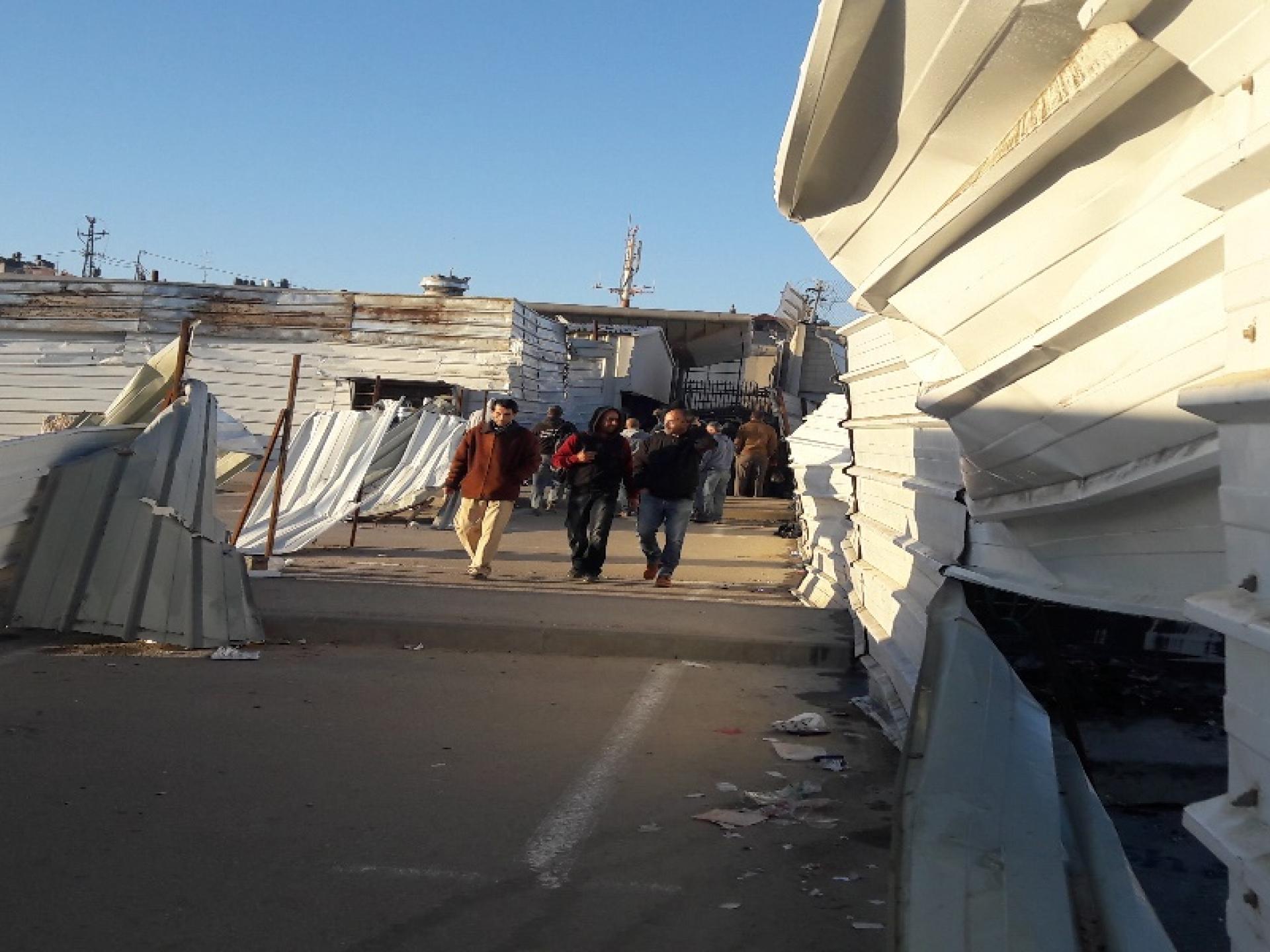
At about 5.45, for no apparent reason, the lines suddenly collapsed. Luckily, after about 15 minutes they re-formed and continued to stream slowly. The humanitarian gate opened at 6.15. We went outside for tea at the kiosk. The metal border lining the queues’ passage is in very poor state, still unrepaired since the winds.
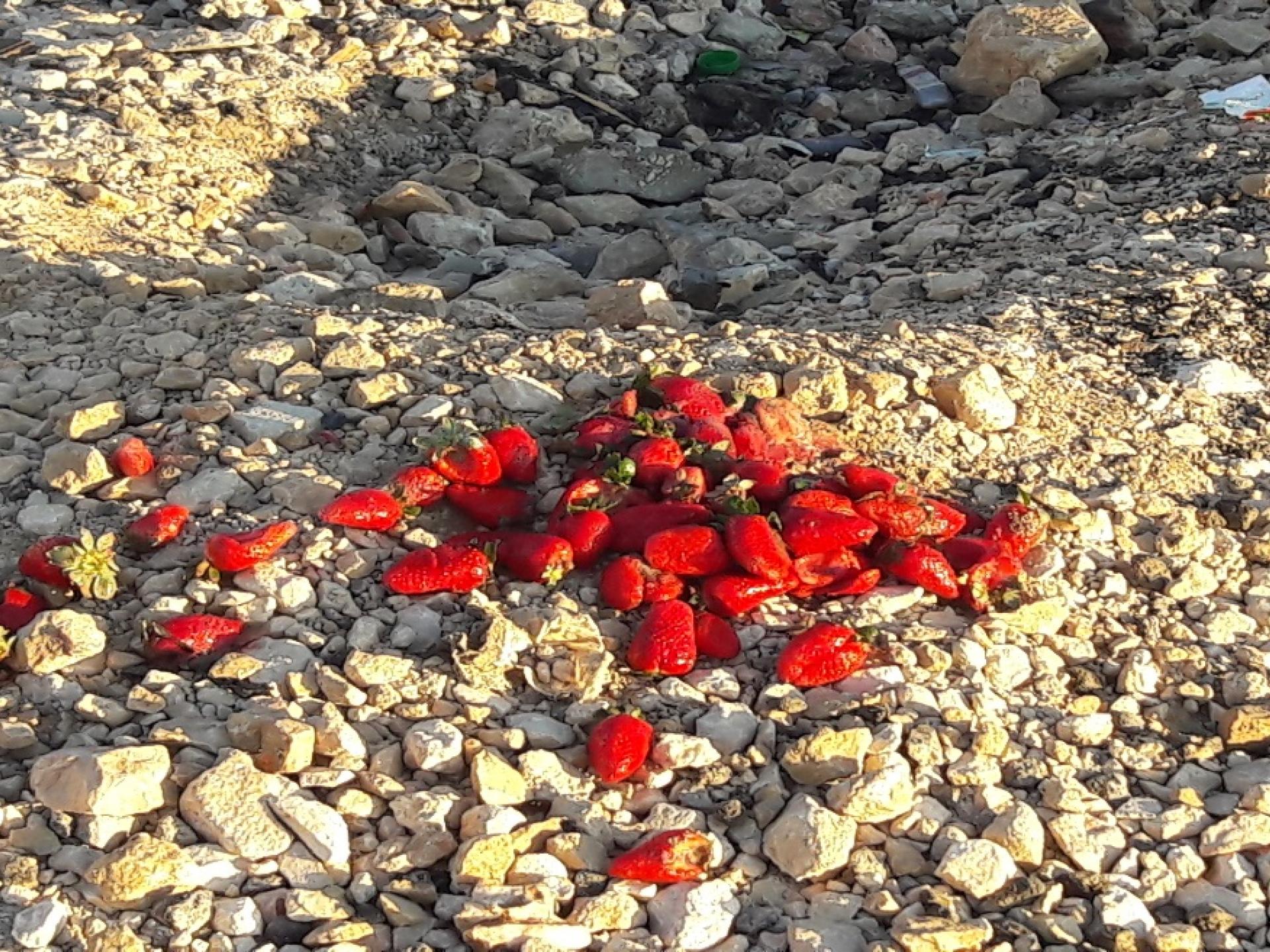
On the fringe of the carpark we saw remains of strawberries that were apparently discarded at the end of the seller’s working day. Then we saw also remains of cabbage, and boxes of tomatoes waiting till the stall’s opening later in the day. Apparently at present peddlers are not in danger of getting reports.
In the square is a notice saying “we are renewing for you.”

It is a pity only that they destroyed the square such a long time ago (6 months) and the renewal is nowhere to be seen.
Returning inside the shed we saw a notice asking for street cleaners in Tel Aviv. One must hold a Jerusalem document or a permit to work in Israel. (The word “cleaning” is incorrectly spelled.)

We had met our acquaintance H. who chatted with Lauren and answered his questions. He told us that on difficult days he and friends had been going via ha-Zeitim checkpoint. This meant adding another 15 minutes travelling and increased fares. If they could use the short route from their village via Ramot or through nearby Jib checkpoint, they would save both time and money. But at Jib only local residents, listed by name, are allowed to pass.
At about 6.30 the lines again collapsed and this time it took 40 minutes before order was restored. The humanitarian gate stayed open till almost 8. A pity that it did not stay open till 8, allowing all those older people without permits (who may enter only after 8) to use the humanitarian gate, instead of struggling with the regular lines. Meanwhile only the cats enjoy the relative freedom of crawling through the bars. Even they have to retreat and wait for the stream of people to pass …
At about 8.15 we joined the lines which by then were shorter and it took three quarters of an hour to pass. Compared with what we had experienced in recent weeks, today we had only “the usual horror.”
Qalandiya Checkpoint / Atarot Pass (Jerusalem)
See all reports for this place-
Click here to watch a video from Qalandiya checkpoint up to mid 2019 Three kilometers south of Ramallah, in the heart of Palestinian population. Integrates into "Jerusalem Envelope" as part of Wall that separates between northern suburbs that were annexed to Jerusalem in 1967: Kafr Aqab, Semiramis and Qalandiya, and the villages of Ar-Ram and Bir Nabala, also north of Jerusalem, and the city itself. Some residents of Kafr Aqab, Semiramis and Qalandiya have Jerusalem ID cards. A terminal operated by Israel Police has functioned since early 2006. As of August 2006, northbound pedestrians are not checked. Southbound Palestinians must carry Jerusalem IDs; holders of Palestinian Authority IDs cannot pass without special permits. Vehicular traffic from Ramallah to other West Bank areas runs to the north of Qalandiya. In February 2019, the new facility of the checkpoint was inaugurated aiming to make it like a "border crossing". The bars and barbed wire fences were replaced with walls of perforated metal panels. The check is now performed at multiple stations for face recognition and the transfer of an e-card. The rate of passage has improved and its density has generally decreased, but lack of manpower and malfunctions cause periods of stress. The development and paving of the roads has not yet been completed, the traffic of cars and pedestrians is dangerous, and t the entire vicinity of the checkpoint is filthy. In 2020 a huge pedestrian bridge was built over the vehicle crossing with severe mobility restrictions (steep stairs, long and winding route). The pedestrian access from public transport to the checkpoint from the north (Ramallah direction) is unclear, and there have been cases of people, especially people with disabilities, who accidentally reached the vehicle crossing and were shot by the soldiers at the checkpoint. In the summer of 2021, work began on a new, sunken entrance road from Qalandiya that will lead directly to Road 443 towards Jerusalem and Tel Aviv. At the same time, the runways of the old Atarot airport were demolished and infrastructure was prepared for a large bus terminal. (updated October 2021)
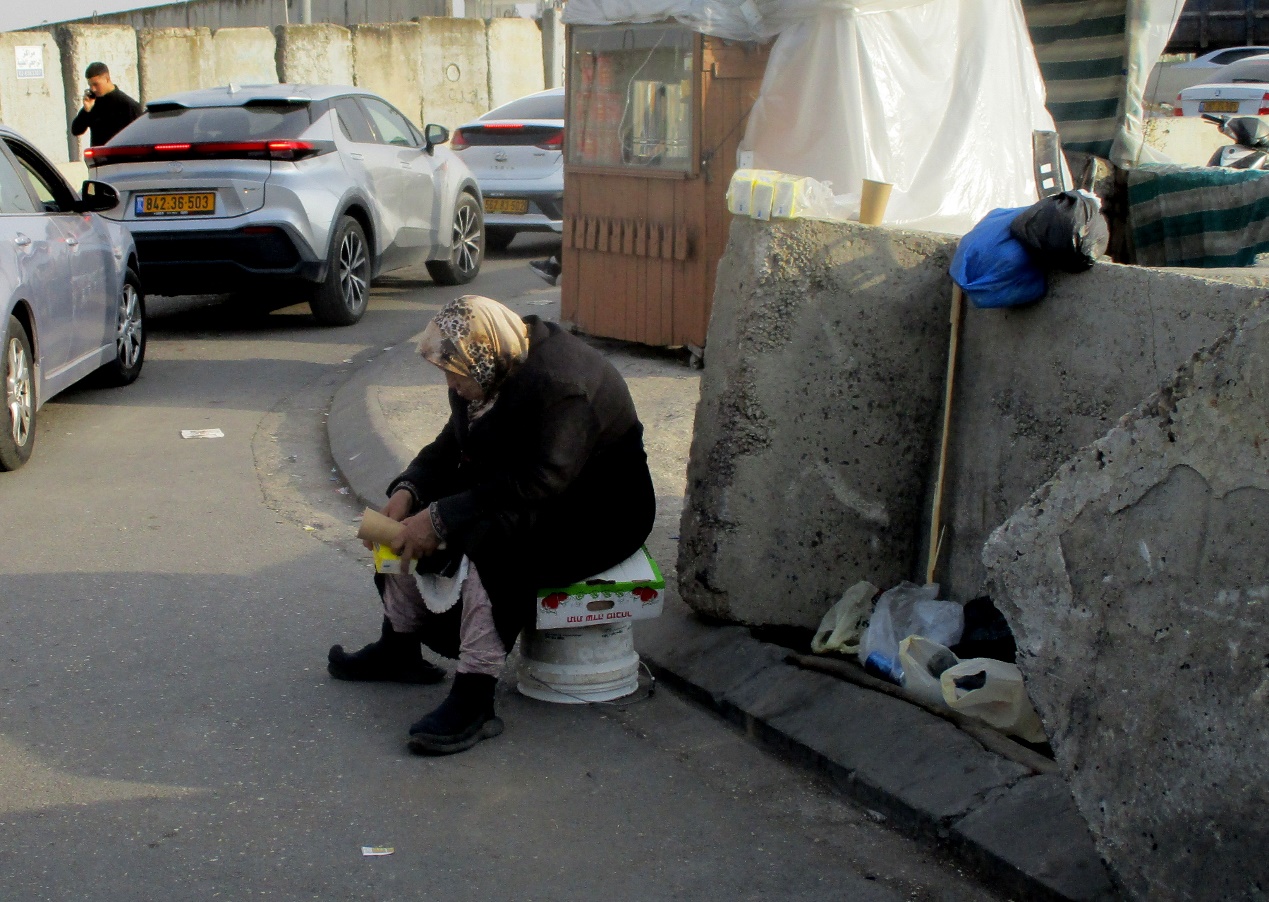 Tamar FleishmanOct-11-2026Qalandiya. Female Beggar
-
