
Jordan Valley: Israeli activists blocked on their way to the blocked shepherd communities
All along our way, all the villages have been locked behind yellow gates since the beginning of the war. Aqraba, a large town populated by over 10,000, is locked as well. We saw a bus unloading passengers near the locked gate, most of them picked up by other cars. Others walked to town (nearly a kilometer to the outskirts of the town).
Qusra residents (the town locked up since October 7, 2023) had to drive on a potholed track to Jurish to get to the main road, and even this exit was locked to them and Jurish residents and other villages in the area.
We drove to Duma and were glad to find the gate open. We met H. Dawabsha shepherding his small flock among the village houses near the entrance track to the village. All of the open areas were closed to him as ordered by the settlers. They even came to the center of the village and instructed him to get away. He told us that the gate is open only from 8 a.m. until 3 p.m.
We drive to meet D., whom we had tried for over half a year to defend by our presence, while the settlers tried repeatedly to attack the 15 families in the 2 compounds. The army, doing the bidding of the hill criminal settlers issued a “closed military zone” order with the outbreak of the war. It prevents activists from coming to defend the communities but enables settlers (“whoever lives in the area”) to reach them, attack them, and steal from these poor people. And this is what they did. A week ago, late at night, armed criminals came, broke into the compounds, smashed the falling out houses, looted and beat up the residents. Knowing we could not come to help them, the families escaped with their shocked children into Duma village. Now they are scattered all around the village. From the structure where D. lives with his family, one sees the tended fields of the Mu’arajam community. Inside the fields graze the settlers’ fat cows, trampling the fruit of Mu’arajam residents’ labor.
On our way down to the valley, our main purpose was to bring food crates to Nasariya residents who suffer greatly from the settlers of Moshe Sharvit’s outpost who deny their grazing, burn their homes and trample their fields with an ATV and/or his cattle.
These residents were hungering, and calling me for weeks every day, asking us to bring them food. The problem was that they reside on the western side of the Beqa’ot checkpoint which was moved one kilometer to the west but still blocking our way to reach them. When we arrived at the Palestinian Jordan Valley, we learned that the Checkpoint was closed until 2 p.m. This was after until today it had been closed at all hours.
So, we drove on to Al-Hadidiya next to which a new outpost was erected about 2 months ago, and its settlers attack the Al-Hadidiya residents non-stop. We wanted to visit our friend Abu Saker, and the family lives alone north of Al-Hadidiya but realized that the way to him and to the main road is now blocked by a barbed wire fence put up by the settlers.
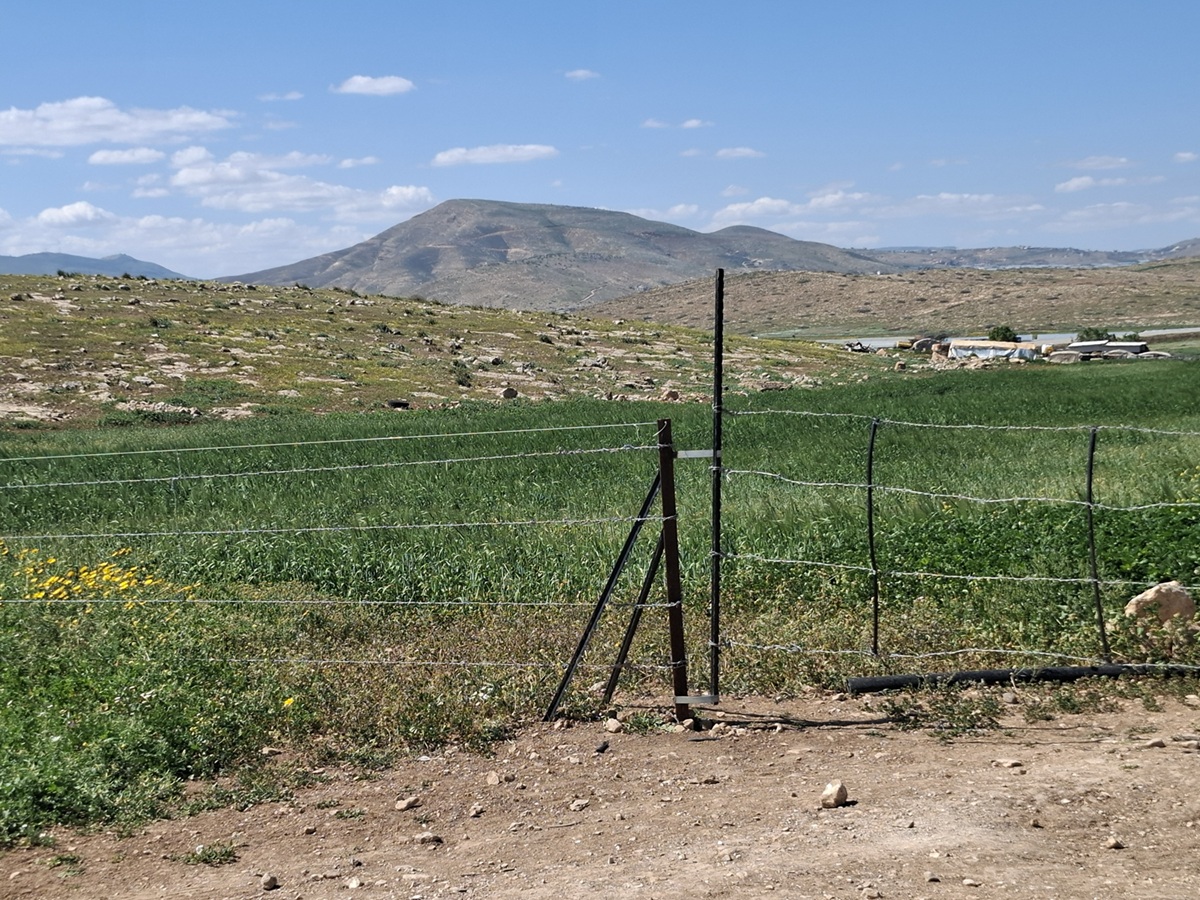
When I took a picture of this fence, one of the criminals came on an ATV, asked what I was photographing. In view of the violence suffered by my friends lately I was very scared. I said I was photographing the flowers. Naturally he didn’t buy it and threatened me. I wanted to get back to my car and he was standing in the way.
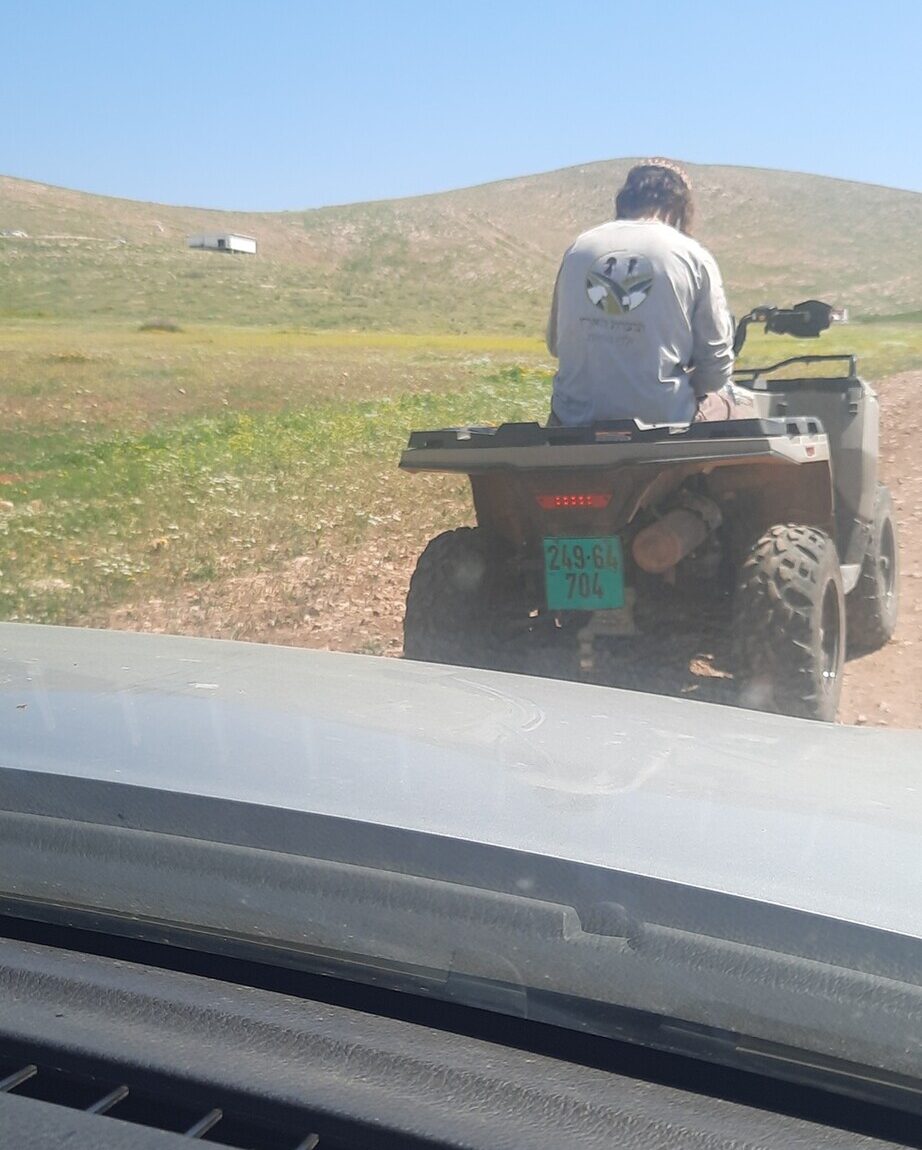
Finally, I managed to enter the car and began to drive back. He chased us, occasionally he drove around and blocked me. Finally, he blocked the track and forced me to turn into Al Hadidiya.|
We entered the village and were glad to meet the wives of the brothers whom we had accompanied in the past. For the past 10 years, after repeated harassment, the brothers T., A., and H. stopped grazing on the hills and made do with the ground near the village, so we hadn’t seen them since. Now this, too, was taken away from them.
From there, we continued to Humsa, after a long time. After 2 weeks of spending time in stairwells as the alarm sirens went off, the huge, flowering spaces broadened our hearts, and we stopped, breathing a bit.
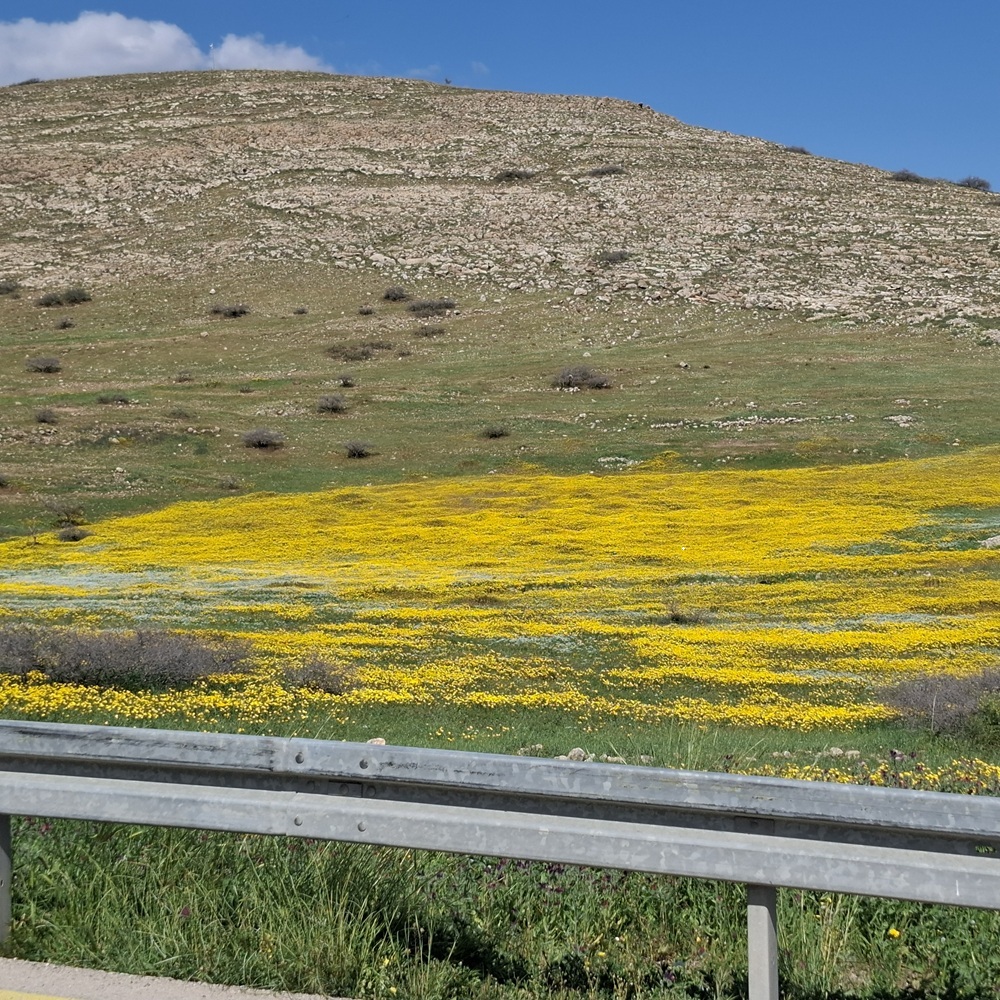
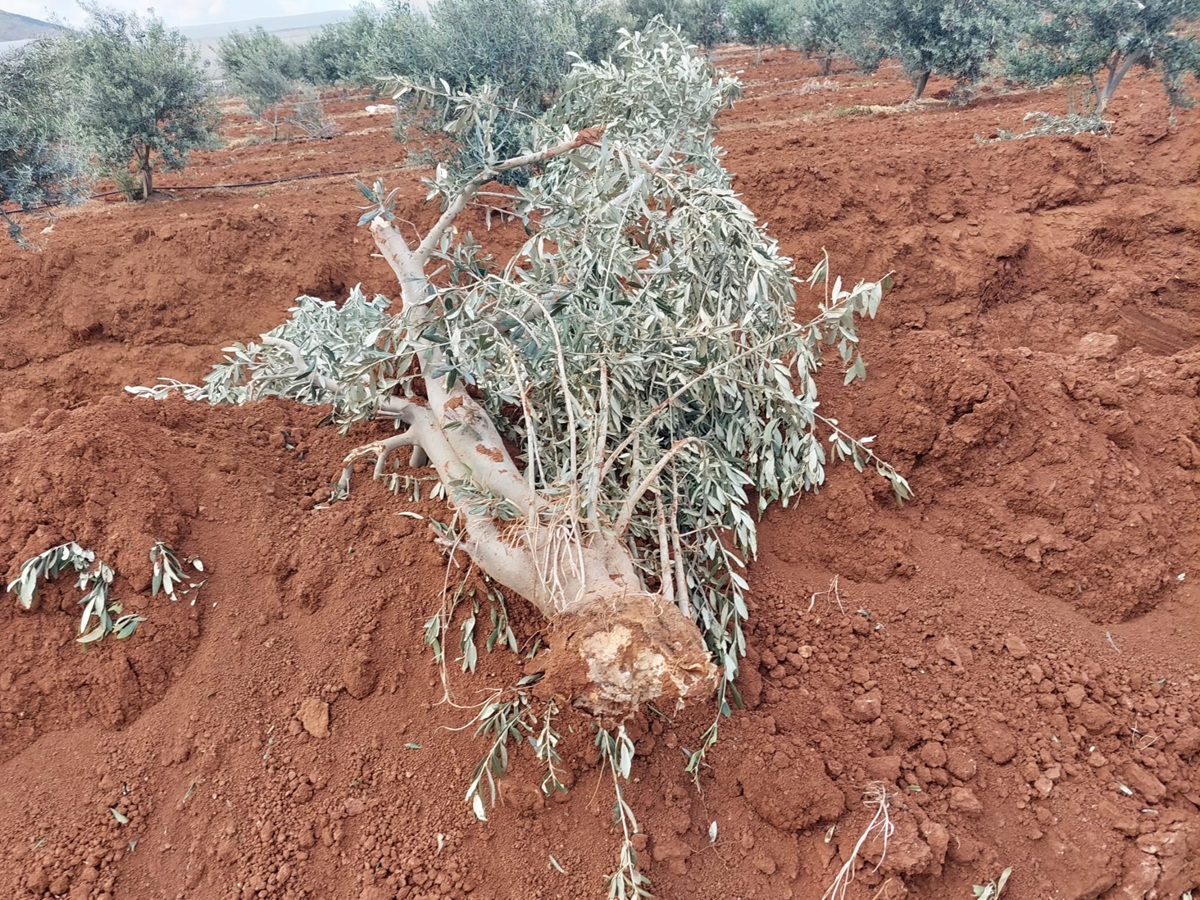
Coming out of the Humsa to the main road, opposite the entrance of Beqa’ot, eastward, the West Bank center, we saw huge bulldozers and soldiers opening the gate that usually block the Palestinians on their way to Tamun and Atouf. Clearly, they were beginning a rampage of the area, and indeed in that afternoon I got pictures from Palestinian friends of ruined pipes, cut down olive trees and destruction of infrastructures. I suppose that this destruction was meant to dry up the fertile valley of Atouf area and chase the farmers away beyond the fence that Israel intends to put up west of Allon Road.
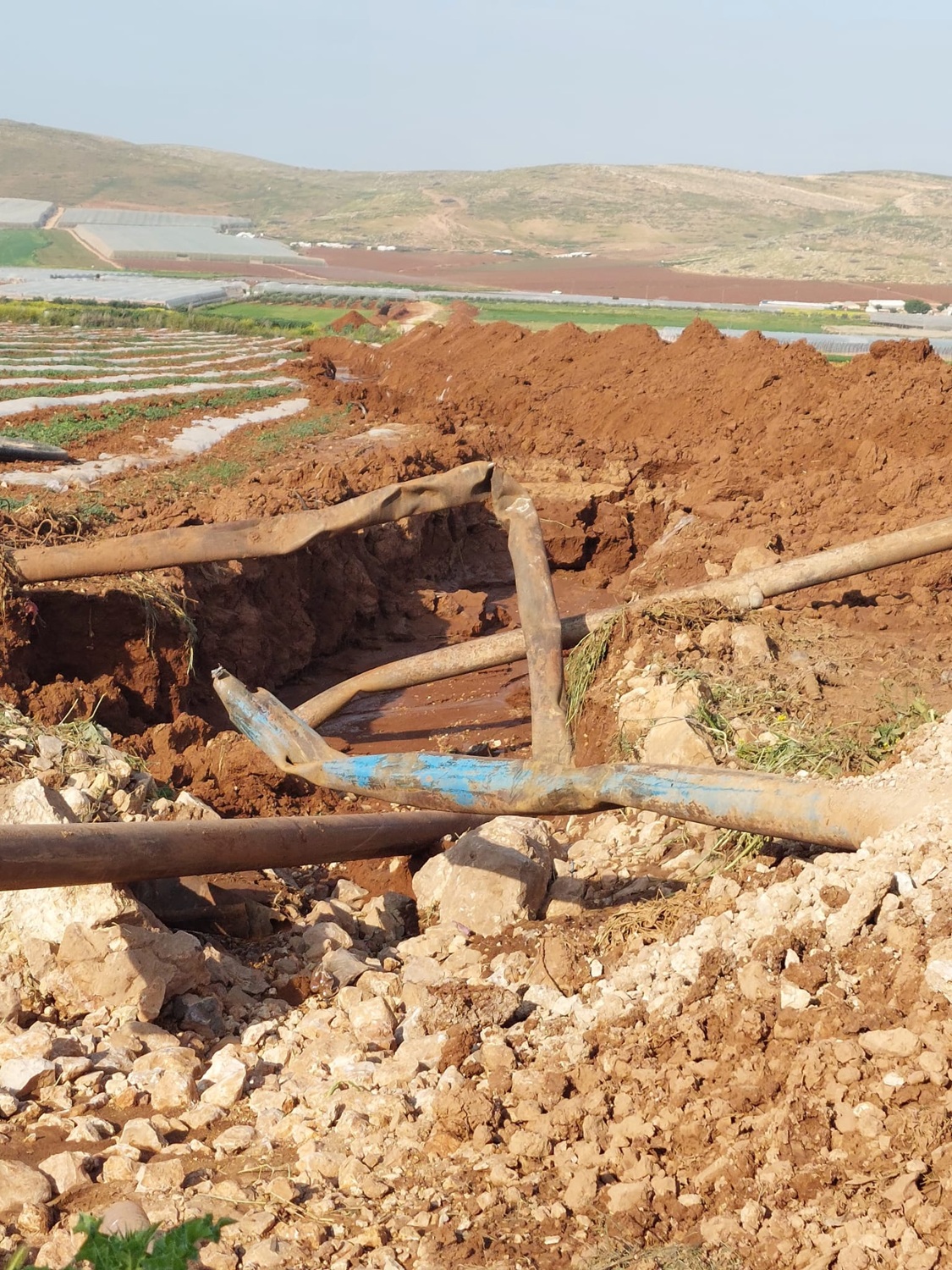
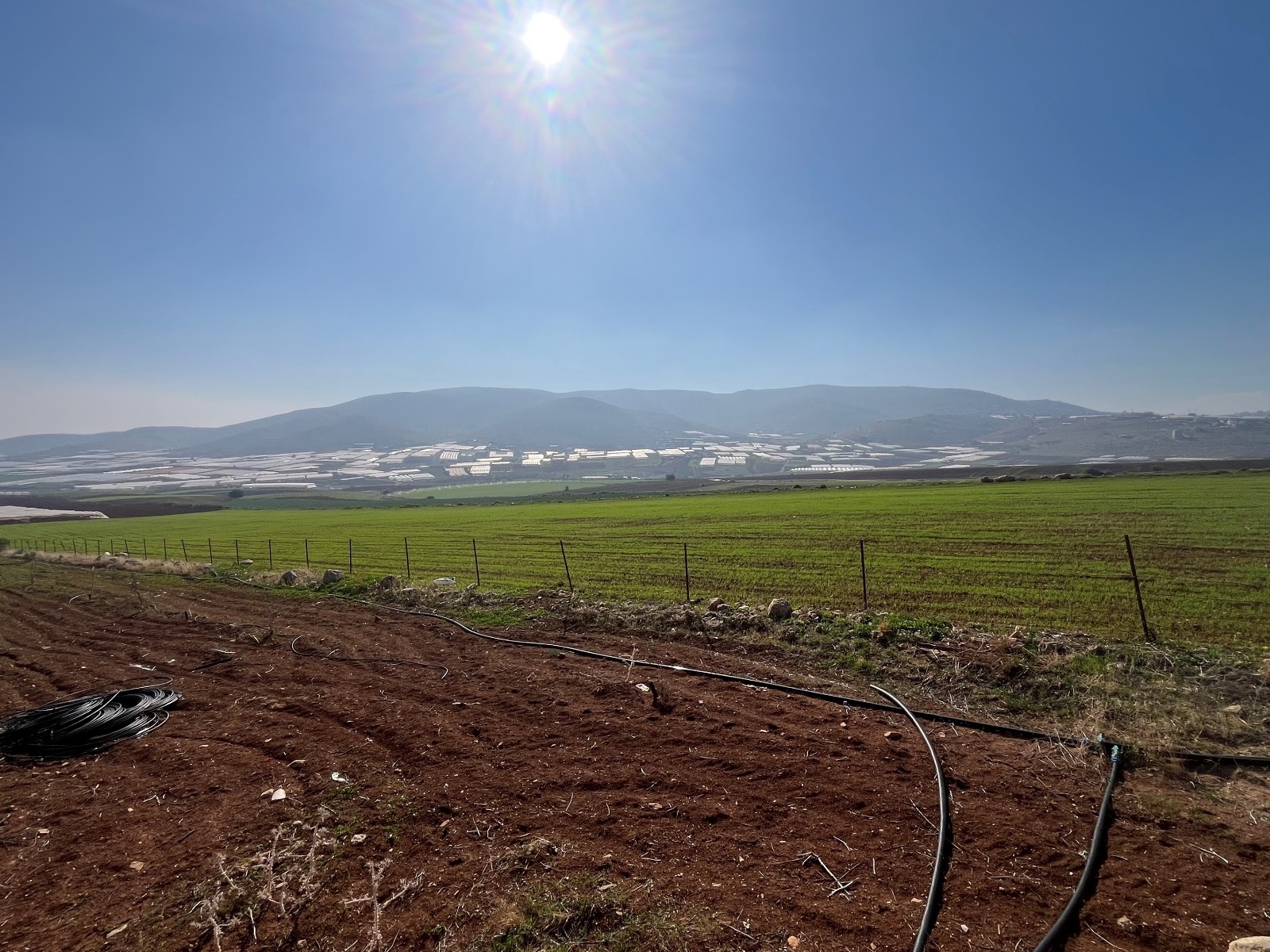
At 1:30 p.m. we met Kai from Rabbis for Human Rights, who donated the food crates. On our way to the checkpoint, we ran into a very long line of hundreds of cars waiting to pass into the West Bank.
As we feared, we were not allowed to pass, although Gil had coordinated this with the operations officers. They also ordered us out of the area, and we could not wait until the persons who were supposed to receive the food crates we brought, as our side was also very long lined with vehicles. Finally, we drove to Z. who lives several kilometers from the checkpoint and unpacked the crates at his place. On that occasion, we picked strawberries and also took away cucumbers and cheese. While we were picking the strawberries, Palestinians from across the checkpoint came with a pickup truck and collected the crates. At least some families would be able to enjoy breaking the fast that evening.
Location Description
Duma
See all reports for this place-
Duma
A village in the Nablus governorate, with 3,000 residents. They owned some 18,000 dunams, 500 dunams of which the village itself was built. However, after the settlement of Migdaleim annexed a large part of their land, their area was reduced to only 2,000 dunams.On July 31, 2015, two houses in the town were torched with petrol bombs. Sa'ad and Riham Dawabsha, and their infant, Ali Sa'ad Dawabsha, were burned to death. Another son was seriously injured. "Revenge" and "King Messiah" were spray painted on the walls of the house. The trial of the arsonist, the settler Amiram Ben Uliel, is still underway (2019), and a plea bargain was signed in May 2018 with the minor who participated in the planning of the arson.
The closure imposed by the army, the poor roads that they are forced use due to the lack of paving permits from the Civil Administration, along with the lack of public transportation, all these difficulties cut off the village from nearby Nablus and Ramallah.
-
Jordan Valley
See all reports for this place-
Jordan Valley The Jordan Valley is the eastern strip of the West Bank. Its area consists of almost a third of the West Bank area. About 10,000 settlers live there, about 65,000 Palestinian residents in the villages and towns. In addition, about 15,000 are scattered in small shepherd communities. These communities are living in severe distress because of two types of harassment: the military declaring some of their living areas, as fire zones, evicting them for long hours from their residence to the scorching heat of the summer and the bitter cold of the winter. The other type is abuse by rioters who cling to the grazing areas of the shepherd communities, and the declared fire areas (without being deported). The many groundwaters in the Jordan Valley belong to Mekorot and are not available to Palestinians living in the Jordan Valley. The Palestinians bring water to their needs in high-cost followers.
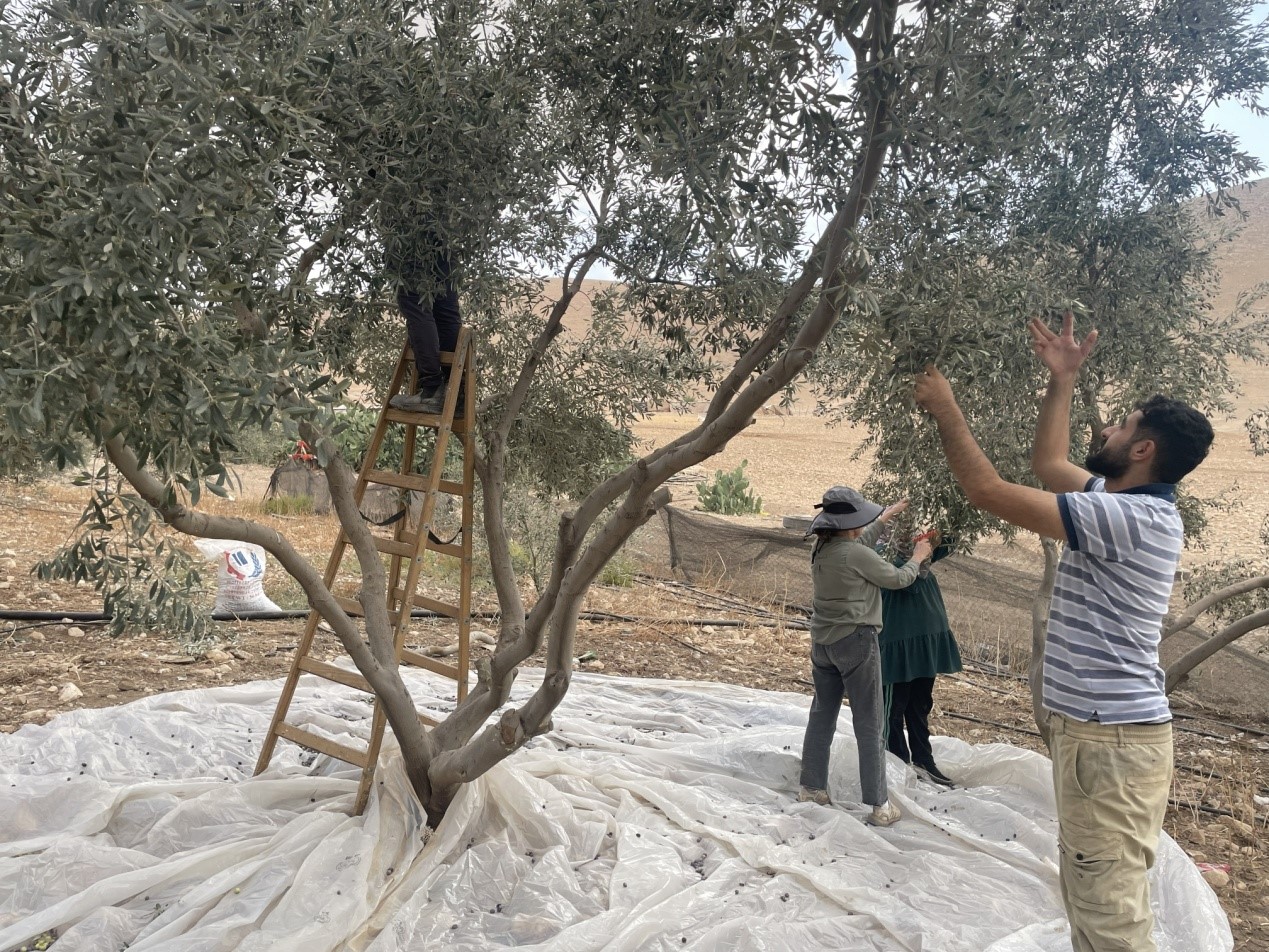 Rachel AfekOct-15-2026Olive Harvest in the Jordan Valley
-
