
Khalet al-Far'a - Settlers threw a burning object into the bedroom

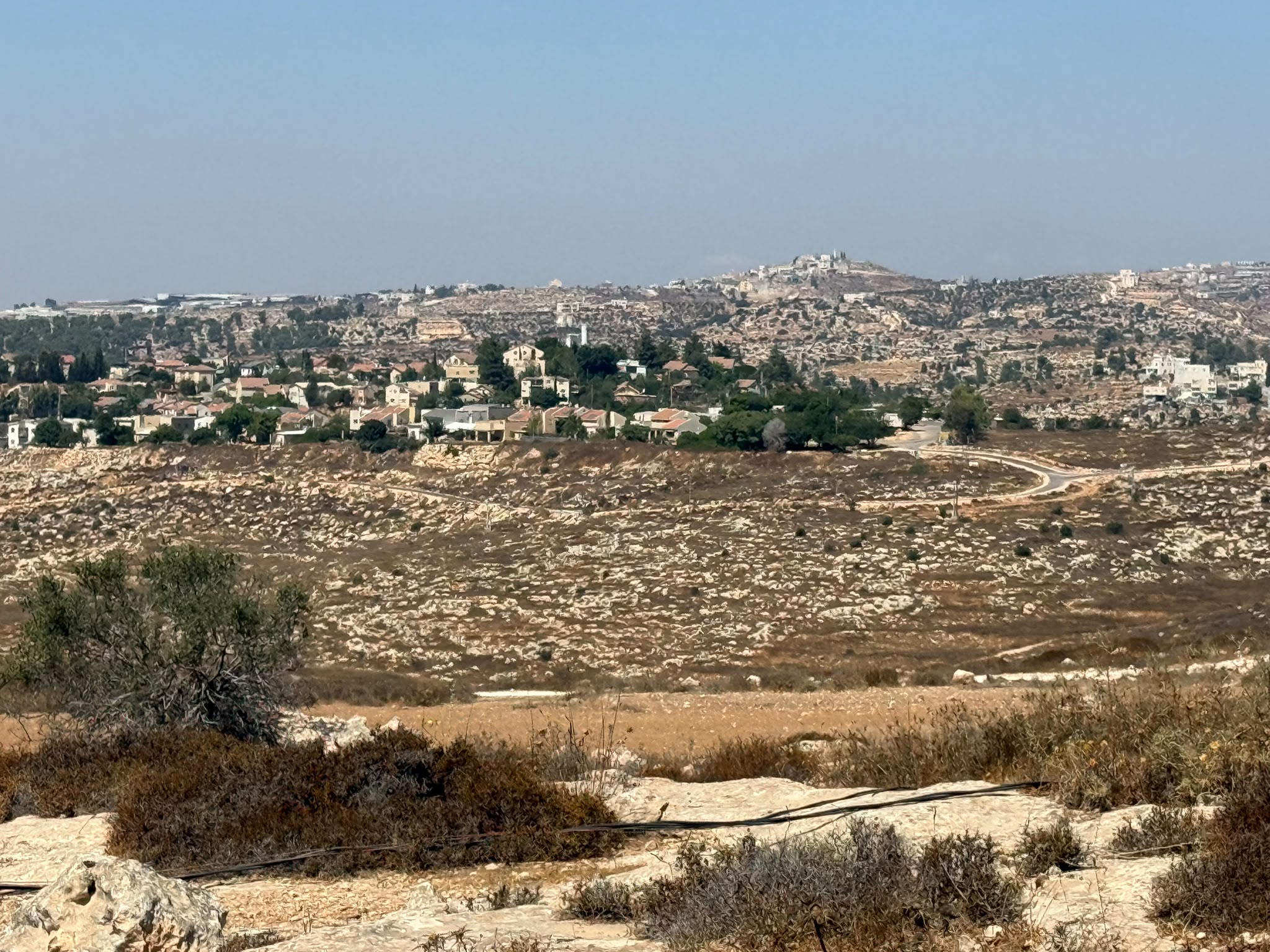
Khalet al-Far’a is typical of the communities in this area: houses scattered across the hills east of the long-established settlement of Otniel, which overlooks them from a hill on the other side of the wadi.
Whenever we travel along Route 60, which runs below Otniel, we see the settlement on our right. It is built on a high hill, and its well-known yeshiva building serves as a landmark. On the other side of the road, to our left, is the access road to Dahariya, which has been closed since October 7, 2023.
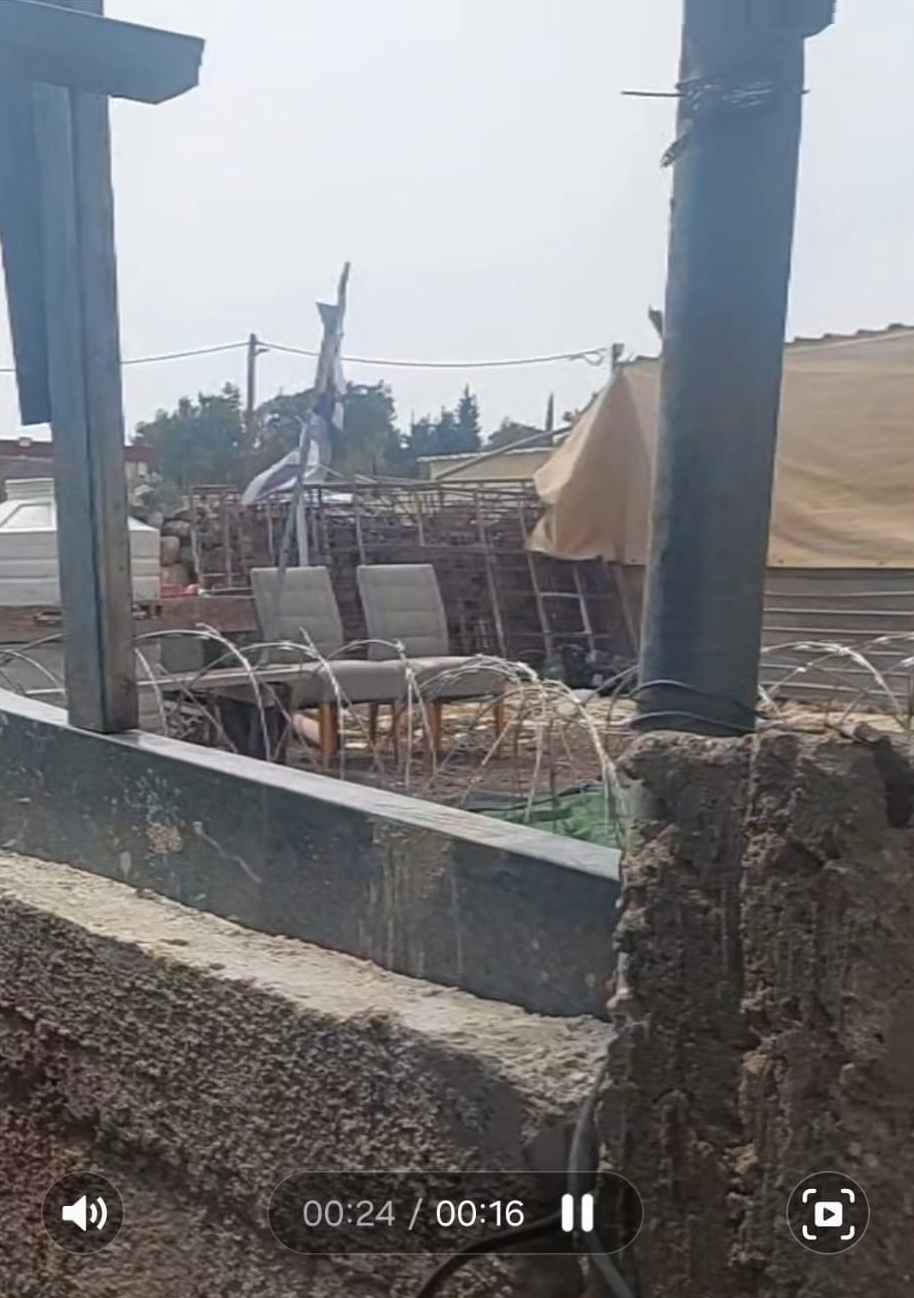
This time, we took a winding road around the “back” of the settlement to reach the residents of Khalet al-Far’a and view Otniel from there. Farther along the road, we also saw a new settlement that we had not known about and that cannot be seen from Route 60.
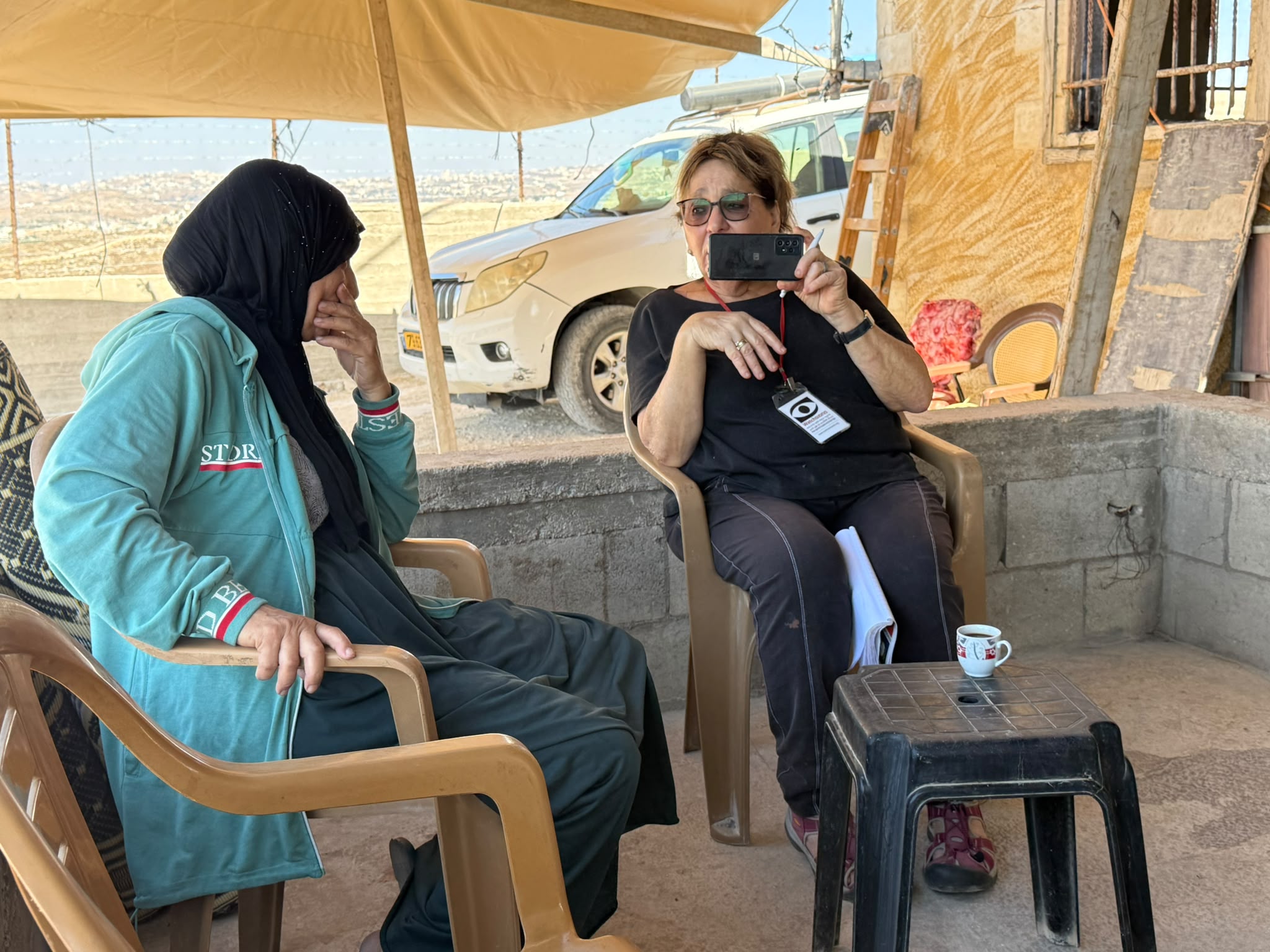
We went there to meet the Nawaja family, A. and B. We brought them a large quantity of supplies—clothes, blankets, and food.
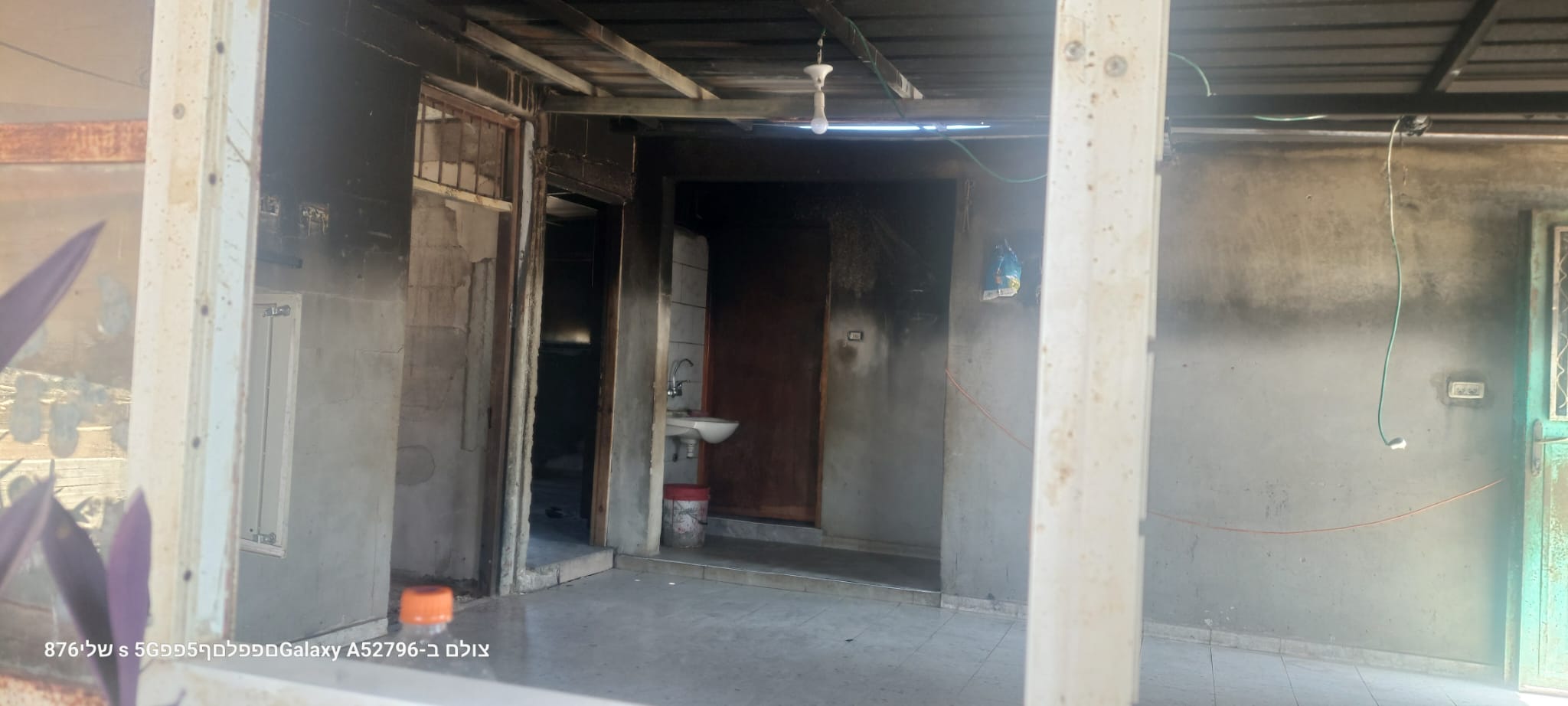
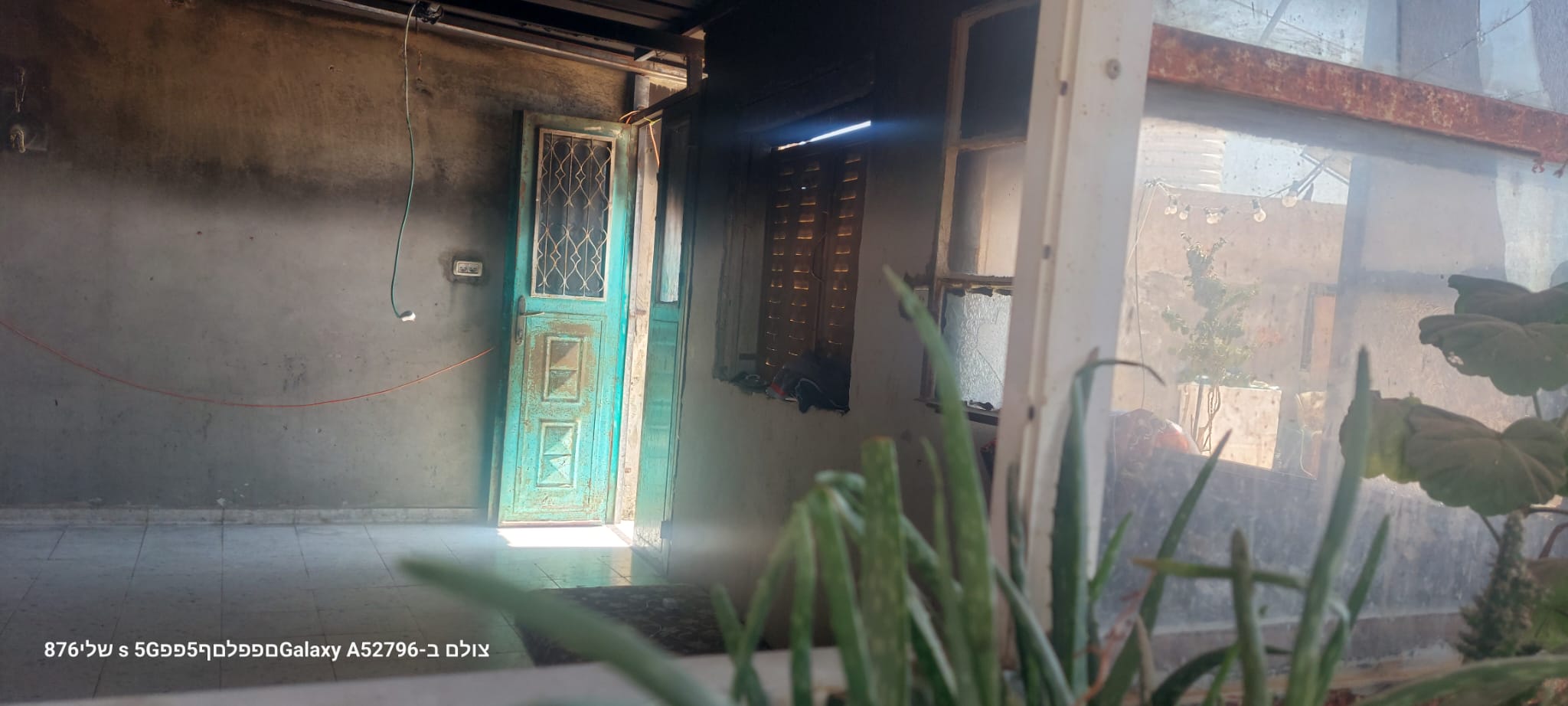
We wanted to visit A. after her release from two weeks in detention. She had been arrested after reporting that settlers had set fire to her home. The police officers who came to the burned house claimed that she had filed a false complaint and that, in their view, the fire had been caused by an electrical short circuit.
The terrible fire destroyed almost everything in the house.
A. says that she woke before dawn and saw masked figures through the window. They shouted and asked whether the people in the house belonged to the family of N. Nawaja’a from Susiya—a B’Tselem field researcher whom we know. According to her account, they threw a burning object into the bedroom. She and her daughter managed to escape; her husband was in Yatta at the time.
She did not call the police, but the large flames could be seen from far away. She does not know who alerted the police. When the officers arrived, they questioned her and decided to arrest her and her 15-year-old son. They were taken to the army base in Otniel. A. was then transferred to detention in Kiryat Arba. A day later, she was taken to the Russian Compound in Jerusalem, and two days afterward she was transferred to Damon Prison.
During her interrogation, she said that the incident had been like a nightmare. According to her, the interrogators “broke” her and said: “Maybe you really dreamed it?” She replied: “Maybe I dreamed it—but the house burned down in reality.”
The family is now sleeping outdoors on mattresses. Since it is still summer, this is possible for the time being.
After two weeks, she was told that she would be released on bail of NIS 3,000 and tried for filing a false complaint. The trial is expected to take place in early October. Palestinians in the area understand that when there are no cameras or other documentation, responsibility for acts of arson can be placed on them.
B. says that two weeks before the fire, Otniel’s security coordinator and several other people came and took his son, who had been grazing the flock, to the base inside the settlement. When B. saw the sheep return from pasture without his son, he went to look for him. According to B., he found his son lying on the ground, bound and tied, with his face toward the earth. B. was then also arrested. The two were held there until 11:00 p.m., after which they were released and dumped outside the settlement gate. “Go home,” they were told.
They walked about one kilometer to Karma, the neighboring community, where B.’s eldest son picked them up.
B. goes on to describe the series of incidents he has experienced since October 7. He shows me a hospital discharge form dated May 3, 2024. He says that soldiers beat him while he was out grazing his flock, causing a fracture in his leg.
He also shows me complaints that he filed on September 28, 2026 [date to be checked], as instructed by the Hebron police. According to him, the complaint does not include details of the incidents, nor does it state that soldiers shot and wounded two sheep.
An earlier complaint, from December 2023, documents a threat. According to B., about two months after October 7, eight or nine settlers from Otniel arrived in an all-terrain vehicle and a pickup truck. They asked him: “Have you heard about Be’eri? We are from Be’eri”—and then began beating him. His head was split open, and he needed five stitches. Since then, he says, there have been about 15 similar incidents in which he has been prevented from approaching the area with his flock and has been violently attacked.
During the most recent incident, two weeks ago, they asked him: “Why didn’t you file a complaint?” He replied: “I filed several complaints and nothing helped, so why should I file another one?”
He shows us the electricity poles outside and says that he installed five of them himself. After October 7, the Palestinian electricity company sought to install the poles, but the army expelled its workers. After B. installed three of the poles himself, he was taken in for questioning and ordered to dismantle them. According to him, demolition orders have now been issued for 22 electricity poles in the area.
“Why? Because people are not allowed to live,” he says.
According to B., three houses have recently been demolished here. “This is Area C,” he says. “Everything was quiet here before October 7. We used to take the sheep down as far as the houses of Otniel without anyone bothering us. Now they do not let us live.”
Location Description
South Hebron Hills
See all reports for this place-
South Hebron Hills
South Hebron Hills is a large area in the West Bank's southern part.
Yatta is a major city in this area: right in the border zone between the fertile region of Hebron and its surroundings and the desert of the Hebron Hills. Yatta has about 64,000 inhabitants.
The surrounding villages are called Masafer Yatta (Yatta's daughter villages). Their inhabitants subsist on livestock and agriculture. Agriculture is possible only in small plots, especially near streams. Most of the area consists of rocky terraces.Since the beginning of the 1980s, many settlements have been established on the agricultural land cultivated by the Palestinians in the South Hebron Hills region: Carmel, Maon, Susia, Masadot Yehuda, Othniel, and more. Since the settlements were established and Palestinians cultivation areas have been reduced; the residents of the South Hebron Hills have been suffering from harassment by the settlers. Attempts to evict and demolish houses have continued, along with withholding water and electricity. The military and police usually refrain from intervening in violent incidents between settlers and Palestinians do not enforce the law when it comes to the investigation of extensive violent Jewish settlers. The harassment in the South Hebron Hills includes attacking and attempting to burn residential tents, harassing dogs, harming herds, and preventing access to pastures.
There are several checkpoints in the South Hebron Hills, on Routes 317 and 60. In most of them, no military presence is apparent, but rather an array of pillboxes monitor the villages. Roadblocks are frequently set up according to the settlers and the army's needs. These are located at the Zif Junction, the Dura-al Fawwar crossing, and the Sheep Junction at the southern entrance to Hebron.
Updated April 2022
 Michal TsadikOct-12-2026Umm al-Khair - Concertina wire and fences
-
Susiya
See all reports for this place-
Susiya The Palestinian area lies between the settlement of Susya and a military base. The residents began to settle in areas outside the villages in the 1830s and lived in caves, tents and sukkot. To this day they maintain a traditional lifestyle and their livelihood is based on agriculture and herding. Until the 1948 war, the farmers cultivated areas that extended to the Arad area. As a result of the war, a significant portion of their land left on the Israeli side was lost. After the 1967 war and the Israeli occupation, military camps were established in the area, fire zones and nature reserves were declared, and the land area was further reduced. The Jewish settlement in Susya began in 1979. Since then, there has been a stubborn struggle to remove the remains of Palestinian residents who refuse to leave their place of birth and move to nearby town Yatta. With the development of a tourist site in Khirbet Susya in the late 1980s (an ancient synagogue), dozens of families living in caves in its vicinity were deported. In the second half of the 1990s, a new form of settlement developed in the area - shepherds' farms of individual settlers. This phenomenon increased the tension between the settlers and the original, Palestinian residents, and led to repeated harassment of the residents of the farms towards the Palestinians. At the same time, demolition of buildings and crop destruction by security forces continued, as well as water and electricity prevention. In the Palestinian Susya, as in a large part of the villages of the southern Hebron Mountains, there is no running water, but the water pipe that supplies water to the Susya Jewish settlement passes through it. Palestinians have to buy expensive water that comes in tankers. Solar electricity is provided by a collector system, installed with donation funds. But the frequent demolitions in the villages do not spare water cisterns or the solar panels and power poles designed to transfer solar electricity between the villages. Updated April 2021, Anat T.
-
