
Umm al-Khair - Children from the Carmel settlement hang Israeli flags on Palestinian homes
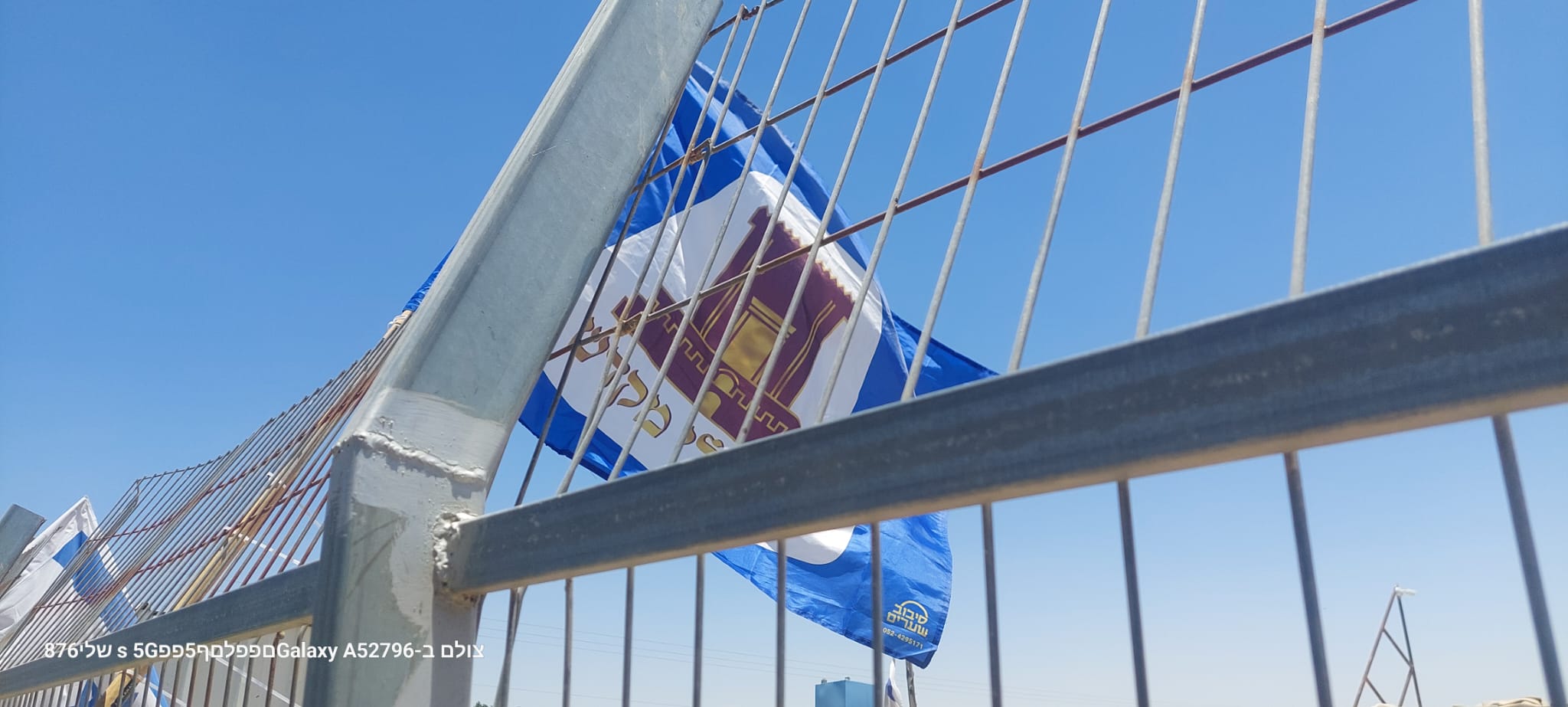
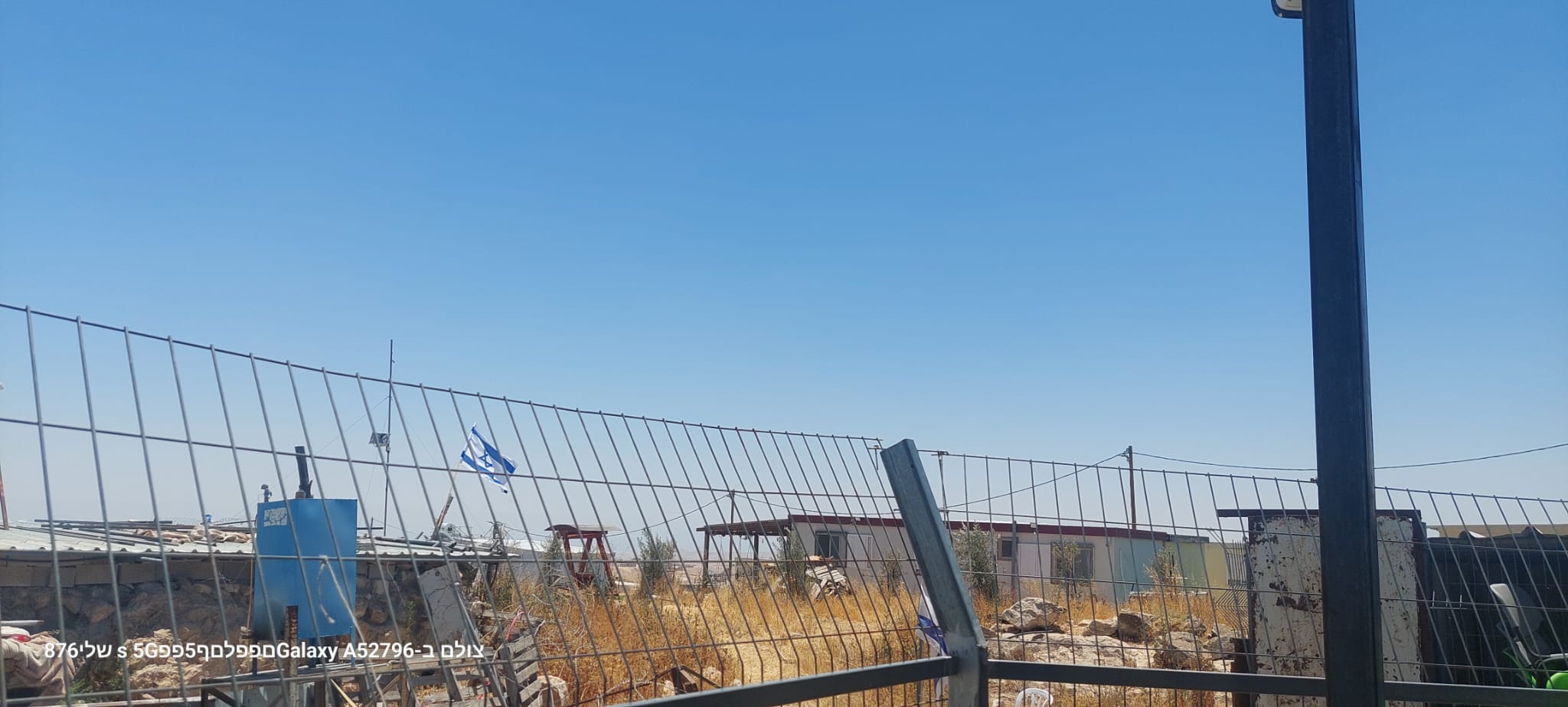
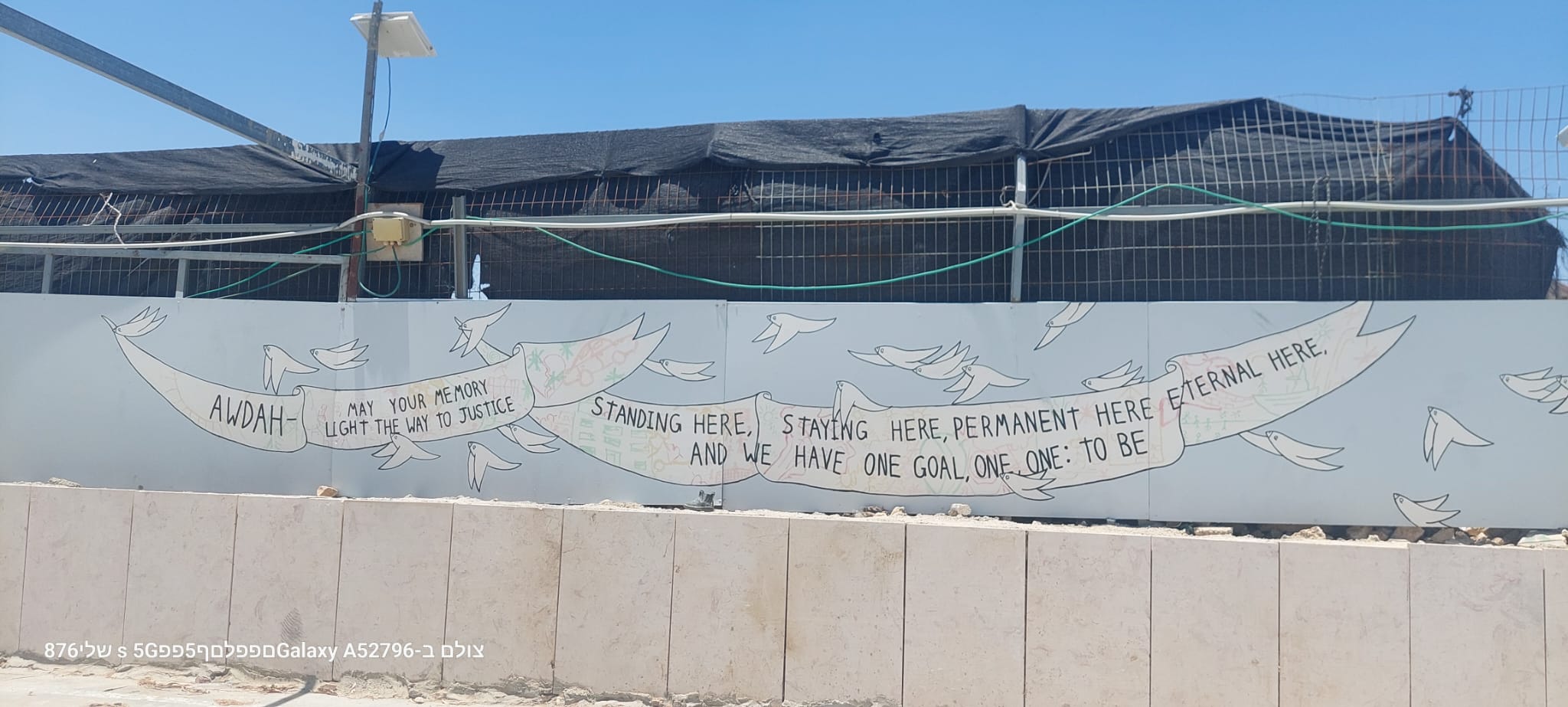
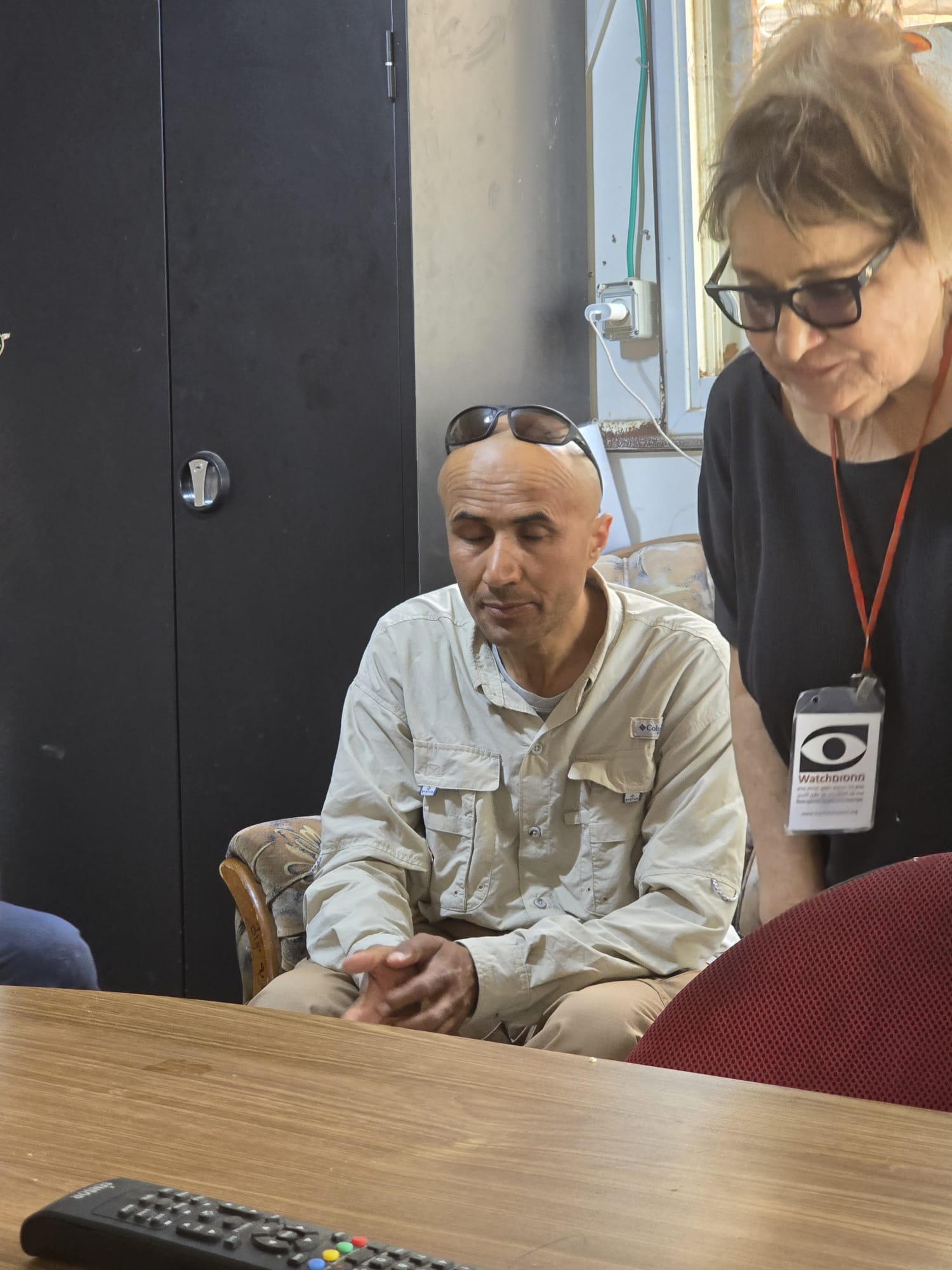
Saturday and Sunday, we were sent bothersome videos on the goings-on in Umm al Khair. They show blatant and harsh conduct of Carmel colony children. They climb on the roof tops of Umm al Khair and hang Israel flags, clashing with the residents fearlessly. We then went there to meet A. and H. Delicate A. looks exhausted and desperate, while H. is busy with volunteers and journalists from all over the world. We were glad to realize the Palestinians there are not lone, but were humiliated that this is what Israel shows these days.
A. says that every night, about 10 children 8-14-years-old from Carmel colony, all well known, climb on roof tops with Israel flags and hang them up with zip ties. Yesterday they accompanied this deed with shouts: “This is ours, no Arabs allowed here. Go away, Arabs!”
The new neighborhood being built next door, Barkai Neighborhood, is impressive and looking forward to numerous residents. They are trying to surround Umm al Khair and make a territory contiguous with Carmel colony. New caravans are added the whole time, as they come only at night, get connected to electricity and water and infrastructures. They even installed the yellow gate as part of the fence installed a bit before we got there.
Lately Bogie Ya’alon, Meridor, Mandelblit and other have-been seniors of the army and Shabaq visited. They heard, saw, and promised to write the present commanders of the army and police, inform them of their rejection of these actions and help as much as they can. A’ believes this might help.
A.’s neighbors are constantly “visited” by colonists with their flocks from the Mordechai Zecharia colonist outpost. The sheep invade Palestinian land and drink of the water hole.
From the new colony opposite Samu’a, Havat Aniyim, colonists come to the Darmin family together with Mordechai Zecharia colonists and threaten to burn their houses. When the Palestinians summon the police and army, they are told the formal bodies will only come if illegal things take place. And if they come, they go after a few minutes and then the colonists and their sheep come back. Or of Protective Presence says that today the colonists were already there six times with their sheep, and none of them were arrested.
Volunteers of Protective Presence as well as internationals do come and spend time there, which makes them feel a bit more secure, but the situation is getting worse.
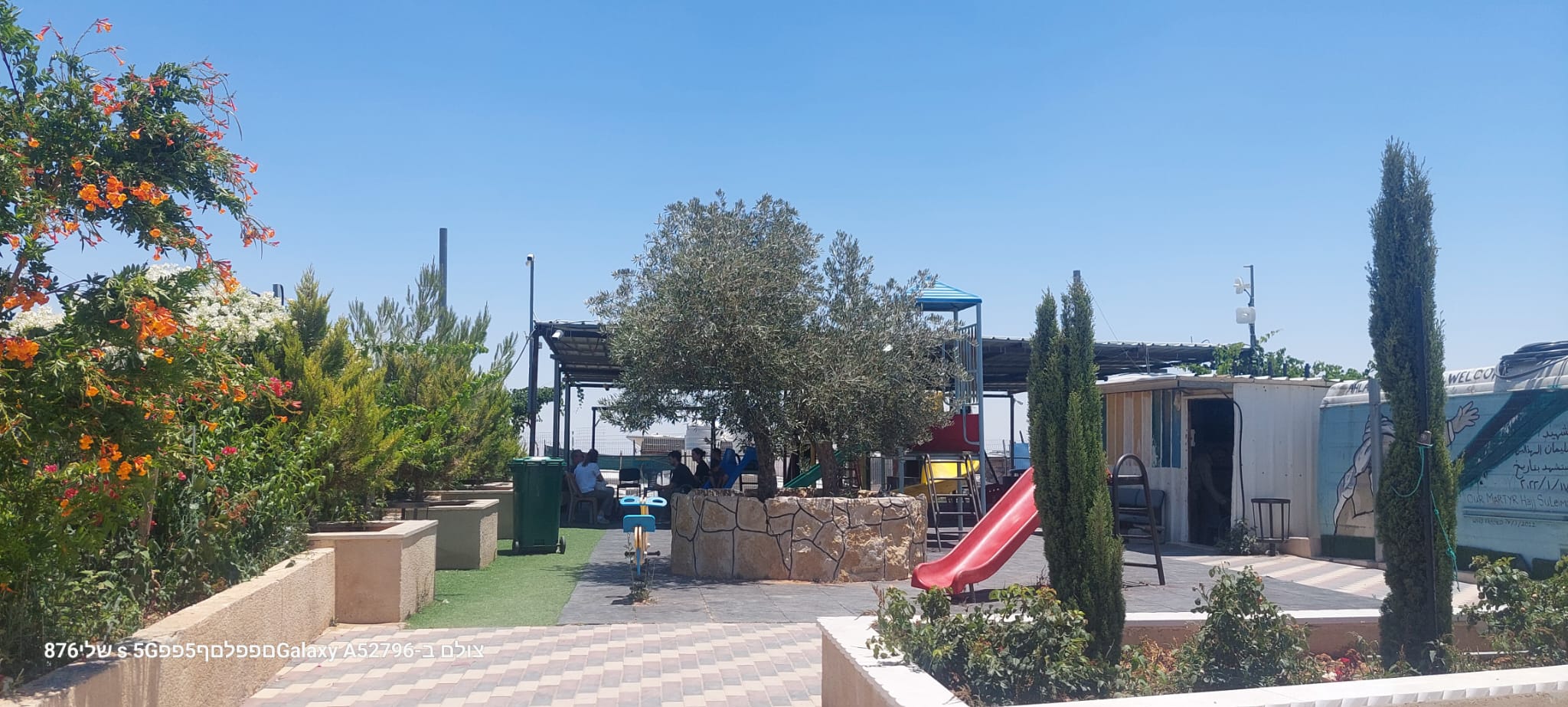
We brought them coffee, tea and refreshments at their assembly site, well groomed including children’s play devices.
Later we had a picture from A. of both of us. He also wrote who important our visits and support are for them.
Everything is just so sad, frustrating and worrying, to say the least.
שנינו וגם כתב כמה חשובים להם הביקורים והתמיכה, שלנו.
עצוב הכול מכעיס ומדאיג.
Location Description
South Hebron Hills
See all reports for this place-
South Hebron Hills
South Hebron Hills is a large area in the West Bank's southern part.
Yatta is a major city in this area: right in the border zone between the fertile region of Hebron and its surroundings and the desert of the Hebron Hills. Yatta has about 64,000 inhabitants.
The surrounding villages are called Masafer Yatta (Yatta's daughter villages). Their inhabitants subsist on livestock and agriculture. Agriculture is possible only in small plots, especially near streams. Most of the area consists of rocky terraces.Since the beginning of the 1980s, many settlements have been established on the agricultural land cultivated by the Palestinians in the South Hebron Hills region: Carmel, Maon, Susia, Masadot Yehuda, Othniel, and more. Since the settlements were established and Palestinians cultivation areas have been reduced; the residents of the South Hebron Hills have been suffering from harassment by the settlers. Attempts to evict and demolish houses have continued, along with withholding water and electricity. The military and police usually refrain from intervening in violent incidents between settlers and Palestinians do not enforce the law when it comes to the investigation of extensive violent Jewish settlers. The harassment in the South Hebron Hills includes attacking and attempting to burn residential tents, harassing dogs, harming herds, and preventing access to pastures.
There are several checkpoints in the South Hebron Hills, on Routes 317 and 60. In most of them, no military presence is apparent, but rather an array of pillboxes monitor the villages. Roadblocks are frequently set up according to the settlers and the army's needs. These are located at the Zif Junction, the Dura-al Fawwar crossing, and the Sheep Junction at the southern entrance to Hebron.
Updated April 2022
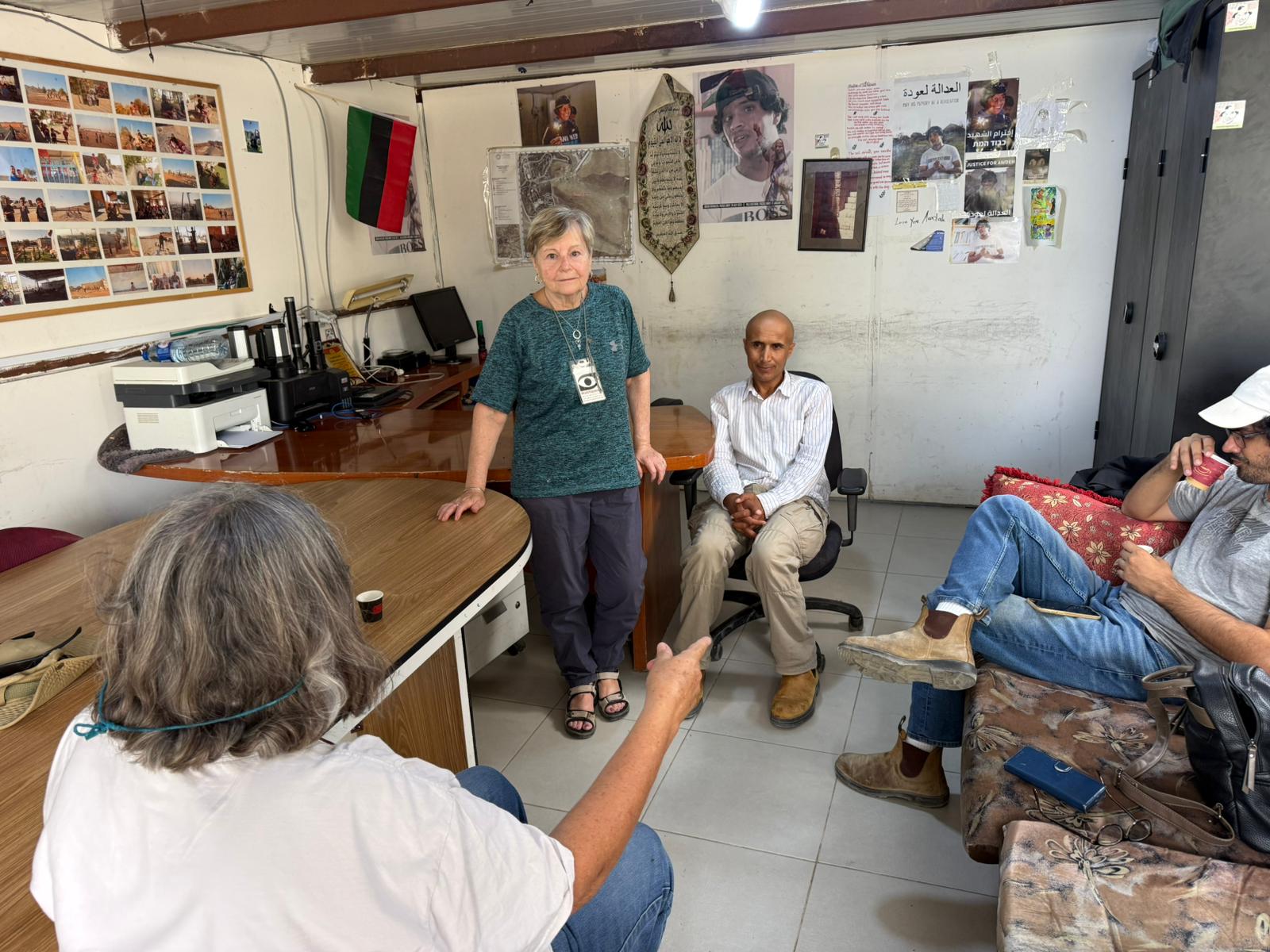 Muhammad D.Aug-30-2026Umm al-Khair, Smadar with Eid, Or and Timna, in the Situation Room
-
Umm al-Khair
See all reports for this place-
Umm al-Kheir
A Palestinian village in the southern Hebron governorate, populated by five families. The Palestinian residents settled there decades ago, after Israel expelled them from the Arad desert and purchased the land from the residents of the Palestinian village of Yatta. The village suffers from the violence of nearby Carmel settlers, from water shortage and is subject to frequent demolition of buildings by the Civil Administration.
-
