
Visiting the Nasser family, who raise prickly pears in Ras al-Jirfan
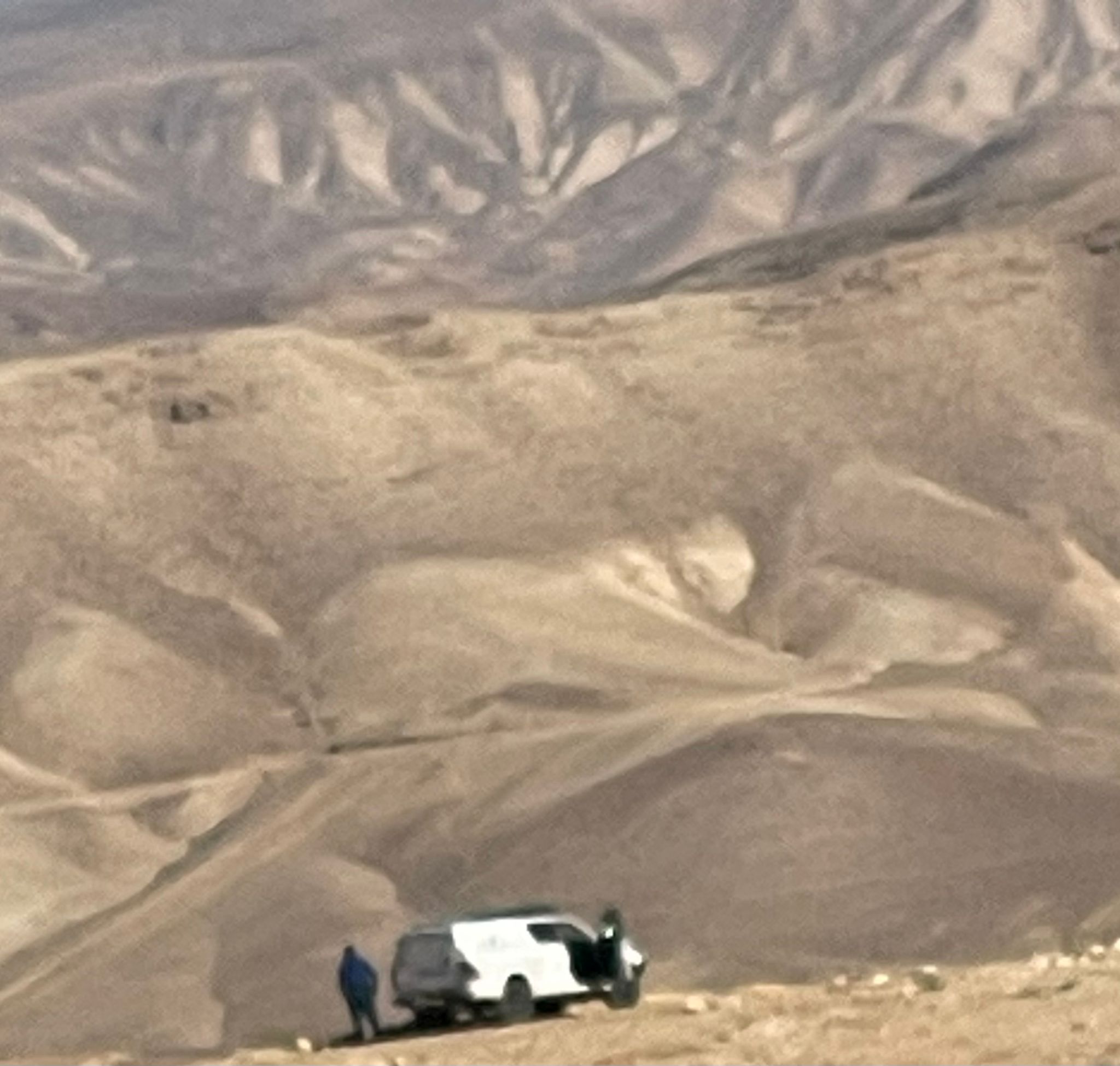
We drove along Route 60.
Samu’ checkpoint – open. (All the stalls which had been there before have been removed).
Dura checkpoint – open.
Al-Fawwar checkpoint – while we were at the gas station, 4 soldiers from the nearby pillbox came to open the checkpoint, until 3:30 p.m. (information from the gas station attendant).
Dahariya checkpoint – closed.
Zif Junction checkpoint to Yatta is open.
We stopped at Nabil’s grocery store to buy groceries for the Nasser family.
A short drive and we turned left from Route 356 towards Dirat and Al-Bawawub, the two largest villages in the area.
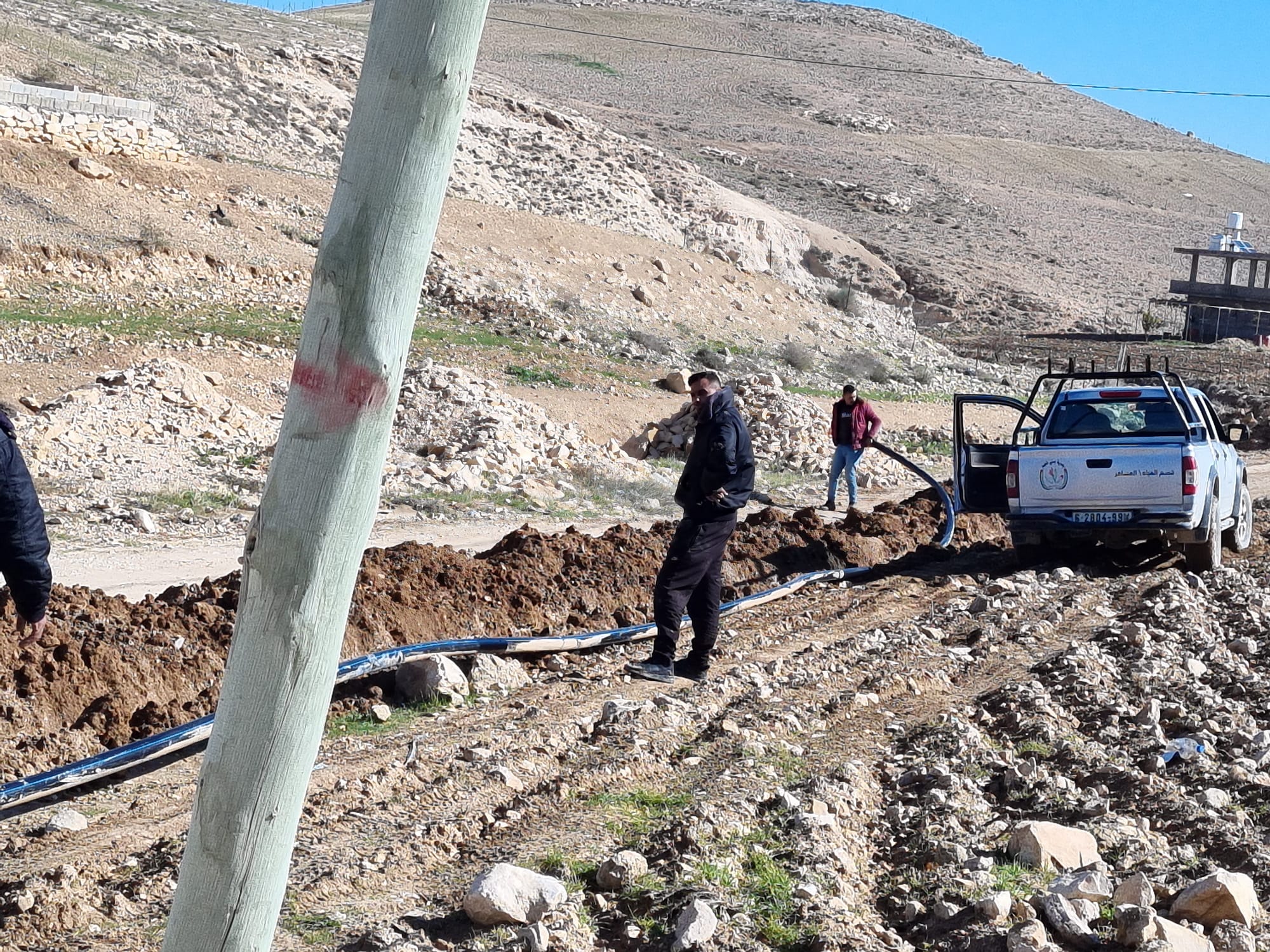
On the way, we come across a group of people laying a water pipe from Bani Naim to the area of the village of Kula and the village of Ras Wadi al-Jirfan. They laid the pipe in a trench which they had dug, asked us to wait a few minutes, and covered a few meters for us to pass. Along the way, there are scattered houses, some of which are closed, used as vacation homes during the summer.
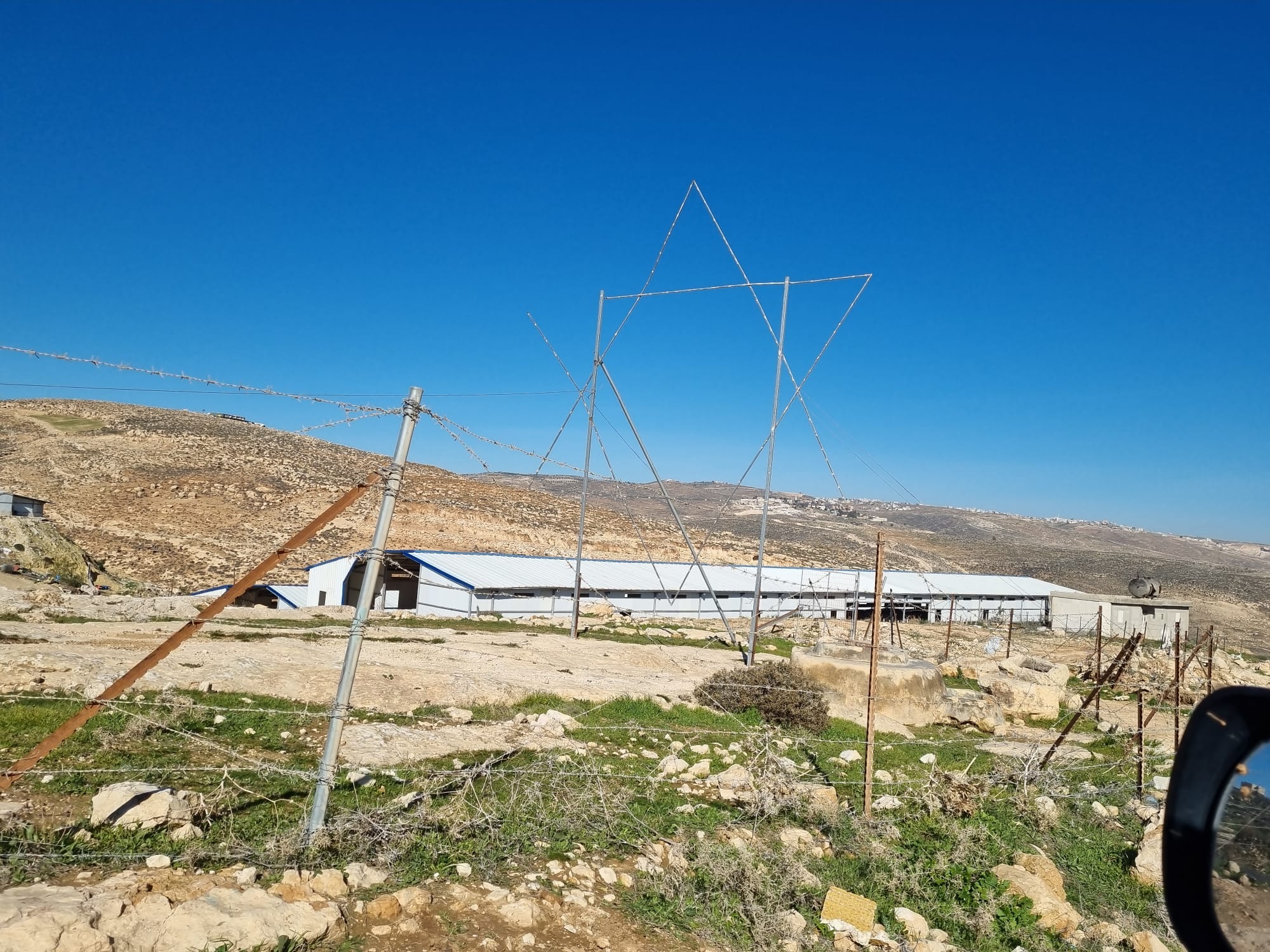
A large metal Star of David is placed on the side of the road to mark the road leading to two outposts established nearby by Natan Baruch and Matanya Kitsis.
As in all villages in the occupied territories, here too, the settlers mistreat the Palestinians, and care is taken to show who are the lords of the land.
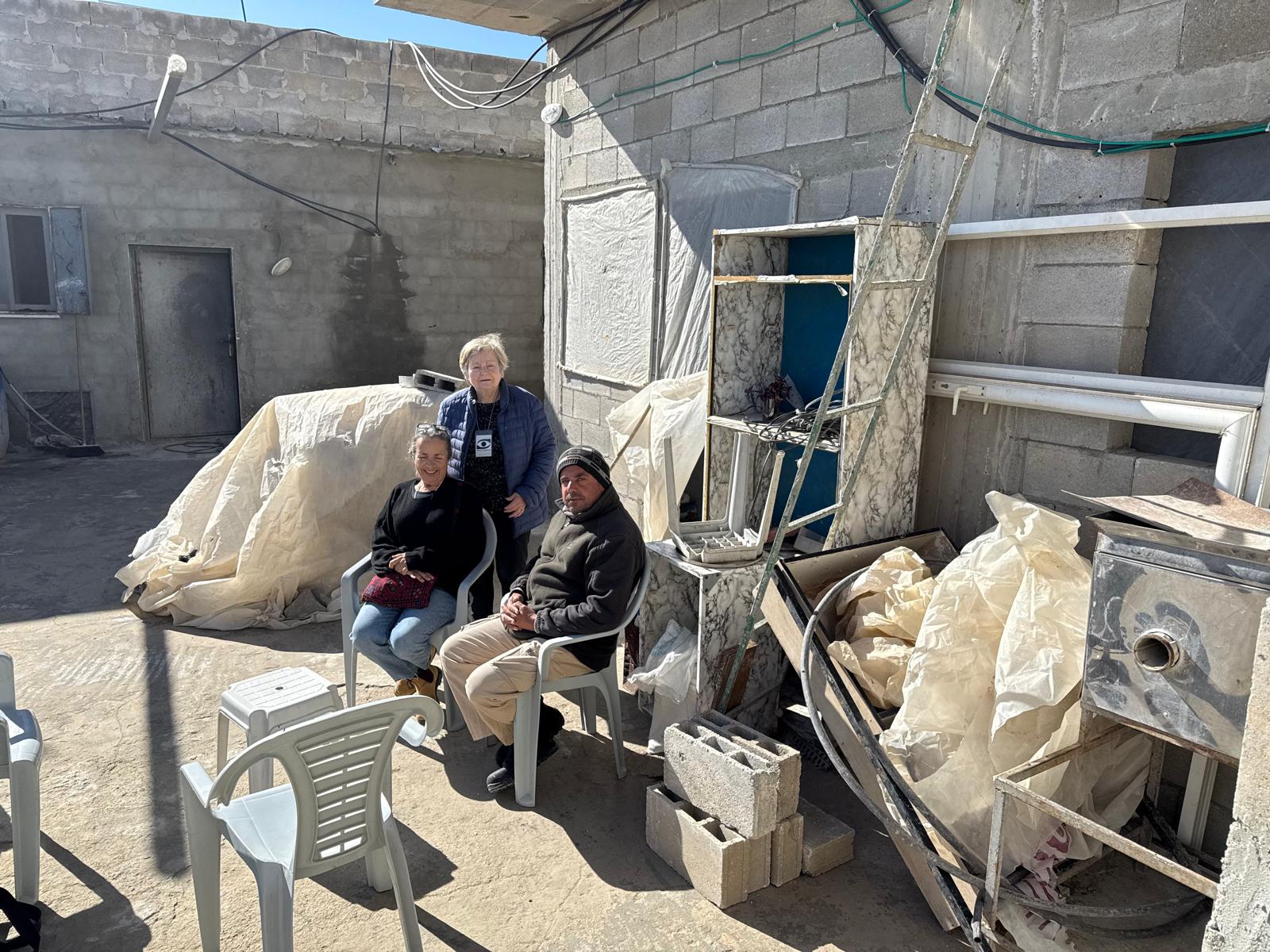
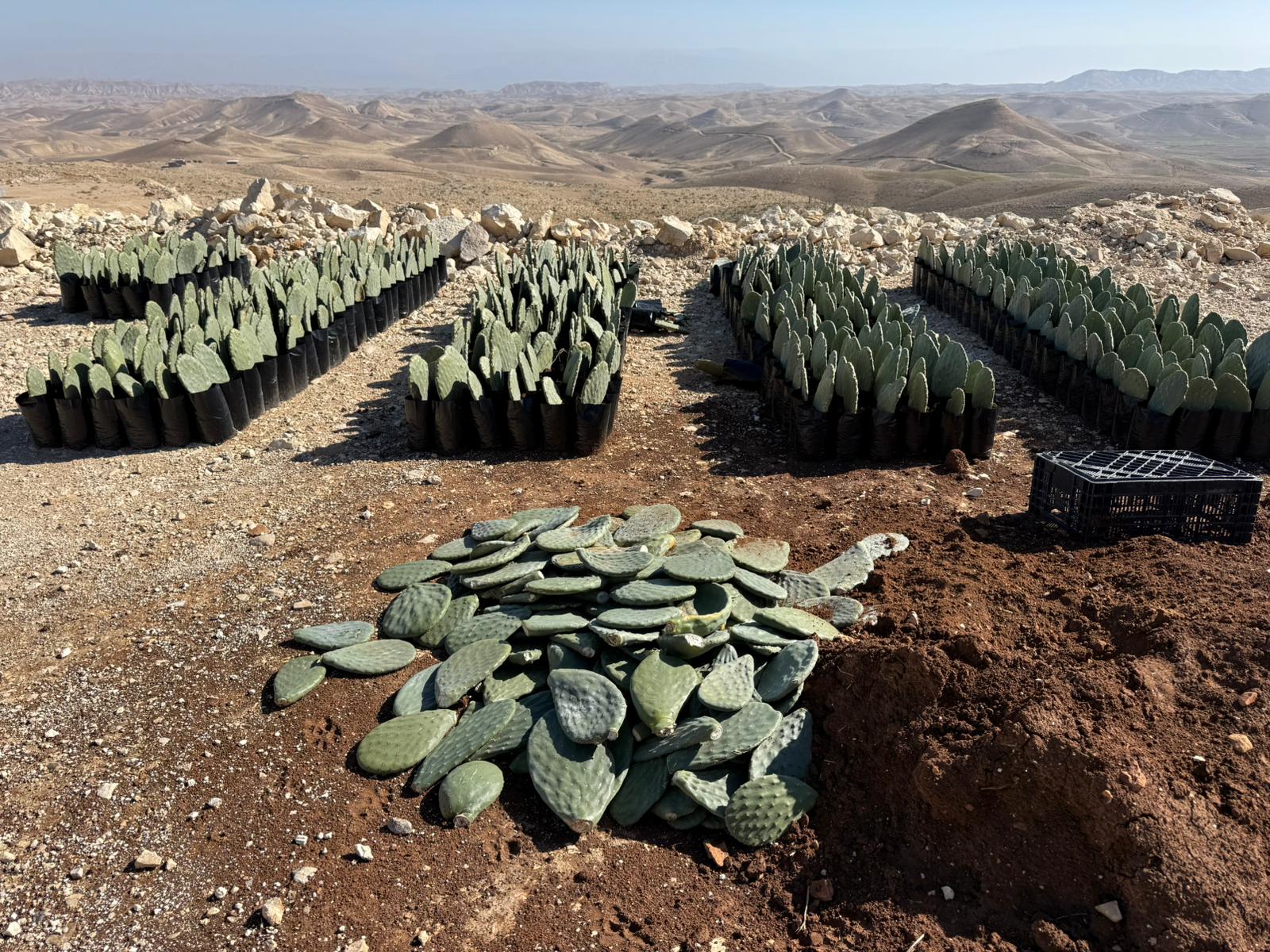
The family welcomes us happily and thanks us for coming. We sit outside, in the pleasant sun and admire the desert landscape, enjoying cold prickly pears and hot pitas from the Tabun, from the prickly pears fields which Adel grows to support the family, in front of their house.
The scene does not show how hard the difficulties of daily life are.
Two of the family’s 11 children are married and live in Yatta. Aya is an online English teacher, and earns very little. Her sister has graduated from high school and really wants to continue her academic studies at Hebron University, but the lack of money and the circumstances do not allow her to do so. Two of the brothers study at Bani Naim, and every day Adel or the son, who already has a driver’s license, drives the two to school. Each way is almost an hour’s drive, in some places it’s not an easy road.
The army and settlers often roam the area to harass and show their presence.
They tell us about an incident that occurred on August 31, 2025, when soldiers who were dropped off by helicopter directly at their house came from two directions, about 20 of them. They stayed in the house and yard for about 7 hours, looking for weapons and money and making a big mess.
At first, they wanted to arrest Adel, but they didn’t.
Before we left, the boys returned from school and one of the married girls, Mita, arrived.
They asked us to come again, and, as always, we left with a heavy heart.
On the way back, Adel called and said that a van with settlers was roaming around the area of the prickly pears.
Location Description
Dura Al-Fawwar Junction
See all reports for this place-
Junction on Route 60: west - the town of El Dura, east - the Al Fawwar refugee camp. There is a manned pillbox at the junction. From time to time the army sets up flying checkpoints at the entrance to El Fawwar and Al Dura. Al-Fawwar is a large refugee camp (7,000 inhabitants in 2007) established in 1949 to accommodate Palestinian refugees from Be'er Sheva and Beit Jubrin and environs. There are many incidents of stone-throwing. In the vicinity of the pillbox there are excellent agricultural areas, Farmers set up stalls adjacent to the plots close to the road. In recent months the civil administration has set up dirt embankments thereby blocking access to the stalls, and making it impossible for the farmers to sell their vegetables. Updated April 2021, Michal T.
-
South Hebron Hills
See all reports for this place-
South Hebron Hills
South Hebron Hills is a large area in the West Bank's southern part.
Yatta is a major city in this area: right in the border zone between the fertile region of Hebron and its surroundings and the desert of the Hebron Hills. Yatta has about 64,000 inhabitants.
The surrounding villages are called Masafer Yatta (Yatta's daughter villages). Their inhabitants subsist on livestock and agriculture. Agriculture is possible only in small plots, especially near streams. Most of the area consists of rocky terraces.Since the beginning of the 1980s, many settlements have been established on the agricultural land cultivated by the Palestinians in the South Hebron Hills region: Carmel, Maon, Susia, Masadot Yehuda, Othniel, and more. Since the settlements were established and Palestinians cultivation areas have been reduced; the residents of the South Hebron Hills have been suffering from harassment by the settlers. Attempts to evict and demolish houses have continued, along with withholding water and electricity. The military and police usually refrain from intervening in violent incidents between settlers and Palestinians do not enforce the law when it comes to the investigation of extensive violent Jewish settlers. The harassment in the South Hebron Hills includes attacking and attempting to burn residential tents, harassing dogs, harming herds, and preventing access to pastures.
There are several checkpoints in the South Hebron Hills, on Routes 317 and 60. In most of them, no military presence is apparent, but rather an array of pillboxes monitor the villages. Roadblocks are frequently set up according to the settlers and the army's needs. These are located at the Zif Junction, the Dura-al Fawwar crossing, and the Sheep Junction at the southern entrance to Hebron.
Updated April 2022
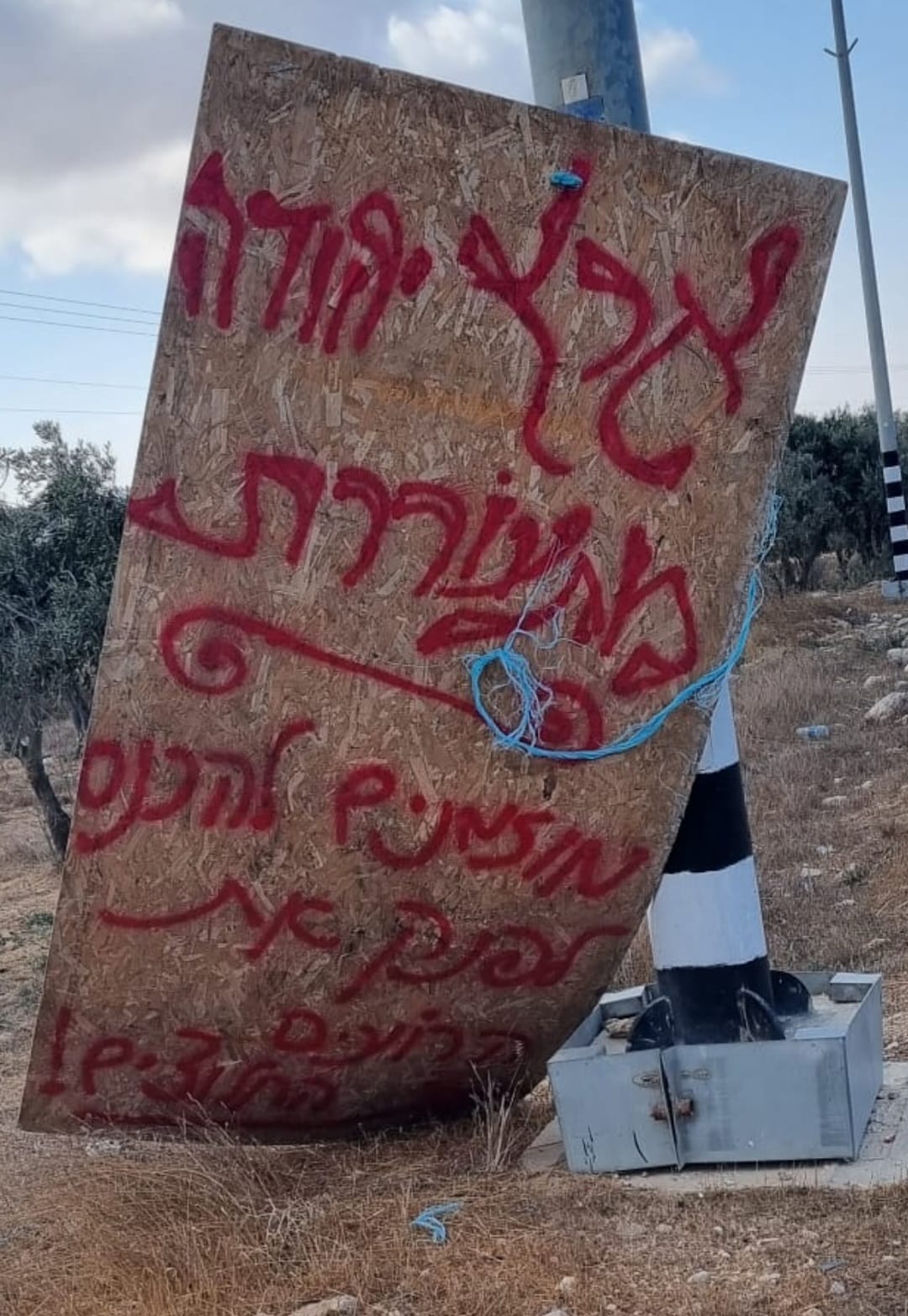 Smadar BeckerOct-17-2026A sign placed by those who call themselves the Pioneer Shepherds, at the outpost adjacent to Qawawis
-
Zif Junction
See all reports for this place-
Zif Junction located on the crossroads that directs towards Road 356 to Yata. Yata is the district city of the southern Hebron Mountains. Usually, this junction is open to traffic. The nearby pillbox is unmanned. But the army and police are present occasionally, sometimes setting up a checkpoint and sometimes detaining residents from the big city. Often, the Israeli policemen inspect vehicles and distribute driving reports to Palestinian vehicles. s
-
