
South Hebron Hills, the Police: “We only come if they beat you. If they are just eating the olives, it is not so terrible.”
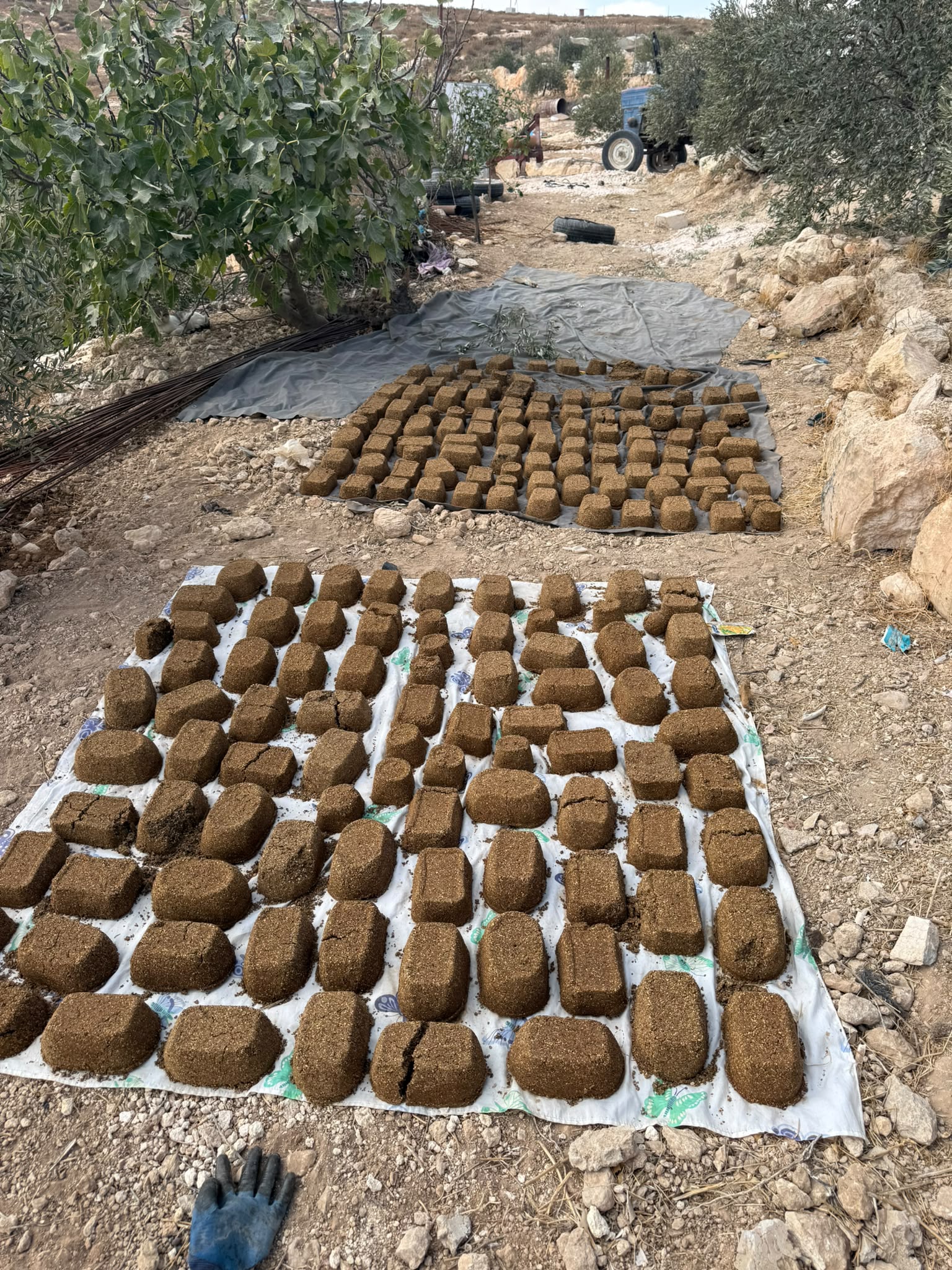
We Will Not Move from Here. This Has Been Our Land Forever, and Always Will Be. Sumud!
“Today we dreamed and prayed that someone would come and bring us something, and here you have arrived as if from heaven. Our refrigerators are empty,” Sheikh Sa’id’s two wives tell Muhammad as he unloads the food we bought for them, along with clothes and equipment donated to us, including produce from a vegetable shop in Lakiya.
As always, Sheikh Sa’id welcomes us with extraordinary warmth. He stands on two legs, one of them a prosthesis, radiating strength and optimism. A deeply religious man, he draws inner strength from Allah. “After everything I have been through, I am afraid of no one and nothing,” he says. As a reminder, Sheikh Sa’id lost a leg after being shot by the security coordinator of the Mitzpe Avigayil settlement about two years ago. We have reported on this more than once.
We came to visit the family, as we do roughly once a month, both to help and to hear how they are managing.
He and his family managed to harvest olives without interference on five dunams of his 20 dunams of land. He feels fortunate. He says he knows that the police instructed the settlers to leave him alone. According to him, the shooting and assault received worldwide publicity and caused considerable embarrassment, as did the images of him standing on one leg with crutches, trying to protect his vineyard and fields.
“They no longer bother me,” he says. But this morning his neighbor called to say he had summoned the police after the settler Amichai Shilo once again arrived with his flock. The animals entered the olive grove and damaged the trees.
According to the neighbor, the police replied: “We only come if they beat you. If they are just eating the olives, it is not so terrible.”
The police told Sheikh Sa’id: “Go and file a complaint at the Kiryat Arba police station.”
He replied boldly: “If an Arab dared to steal grapes or olives from a Jew, you would come immediately, and it is obvious what would happen to him. But Jewish thieves do not interest you.”
“Did they answer you?” I ask. “They did not,” he says.
Later in our conversation, he emphasizes that the Quran says in several places that neighbors are like brothers and that, when they live in peace, they must protect and look after one another in times of war.
The sheikh’s grandfather lived here in 1890, under Ottoman rule. His father was born here in 1925 and lived here before 1948 and, of course, before the Israeli occupation in 1967. The sheikh himself was born here in 1965, in the cave where his family still lives. The cave is very well kept, but I did not photograph it because the women were inside.
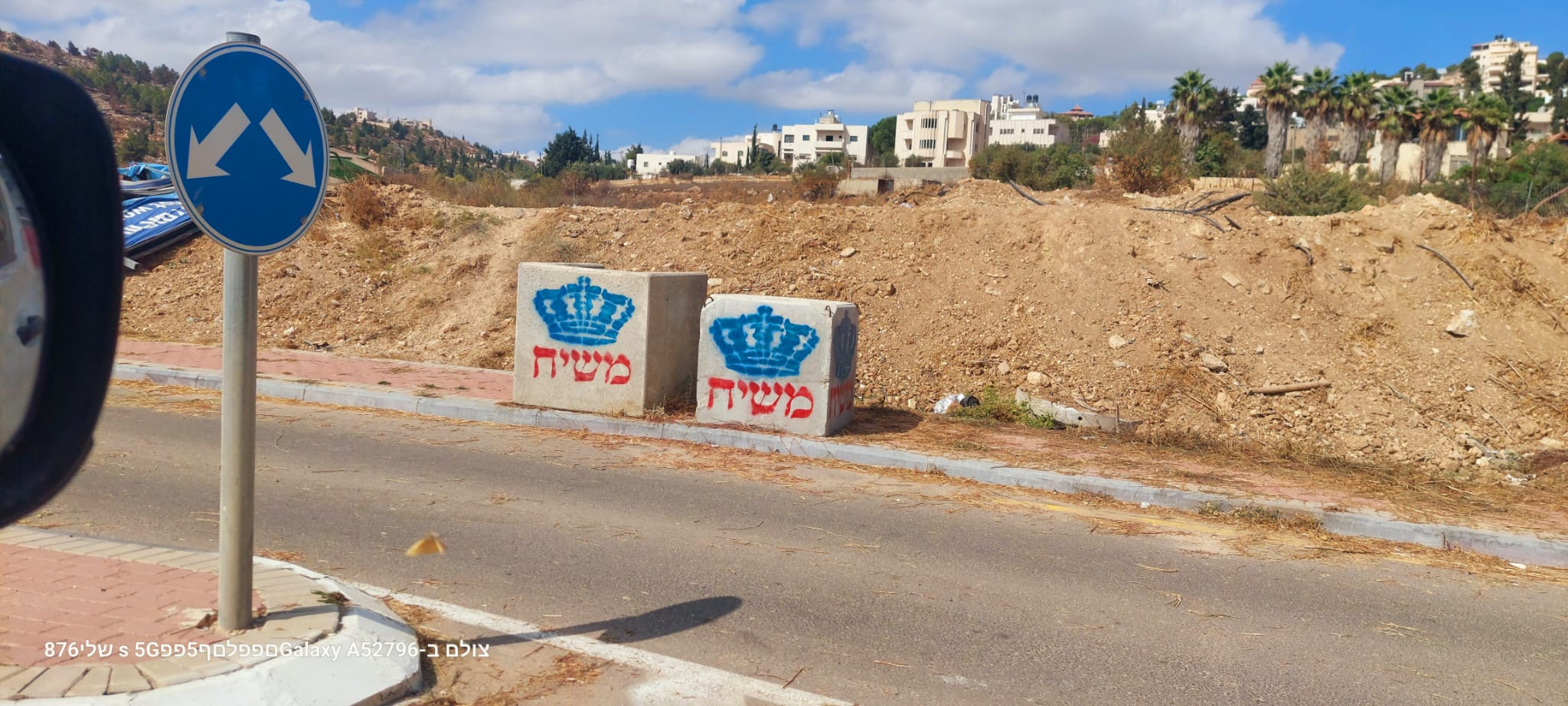
On the way back, we photographed extensive new additions of messianic symbols on numerous concrete road barriers.
The entrances to Dura and al-Fawwar are open, as is the entrance to Yatta at Zif Junction.
Location Description
Dura Al-Fawwar Junction
See all reports for this place-
Junction on Route 60: west - the town of El Dura, east - the Al Fawwar refugee camp. There is a manned pillbox at the junction. From time to time the army sets up flying checkpoints at the entrance to El Fawwar and Al Dura. Al-Fawwar is a large refugee camp (7,000 inhabitants in 2007) established in 1949 to accommodate Palestinian refugees from Be'er Sheva and Beit Jubrin and environs. There are many incidents of stone-throwing. In the vicinity of the pillbox there are excellent agricultural areas, Farmers set up stalls adjacent to the plots close to the road. In recent months the civil administration has set up dirt embankments thereby blocking access to the stalls, and making it impossible for the farmers to sell their vegetables. Updated April 2021, Michal T.
-
South Hebron Hills
See all reports for this place-
South Hebron Hills
South Hebron Hills is a large area in the West Bank's southern part.
Yatta is a major city in this area: right in the border zone between the fertile region of Hebron and its surroundings and the desert of the Hebron Hills. Yatta has about 64,000 inhabitants.
The surrounding villages are called Masafer Yatta (Yatta's daughter villages). Their inhabitants subsist on livestock and agriculture. Agriculture is possible only in small plots, especially near streams. Most of the area consists of rocky terraces.Since the beginning of the 1980s, many settlements have been established on the agricultural land cultivated by the Palestinians in the South Hebron Hills region: Carmel, Maon, Susia, Masadot Yehuda, Othniel, and more. Since the settlements were established and Palestinians cultivation areas have been reduced; the residents of the South Hebron Hills have been suffering from harassment by the settlers. Attempts to evict and demolish houses have continued, along with withholding water and electricity. The military and police usually refrain from intervening in violent incidents between settlers and Palestinians do not enforce the law when it comes to the investigation of extensive violent Jewish settlers. The harassment in the South Hebron Hills includes attacking and attempting to burn residential tents, harassing dogs, harming herds, and preventing access to pastures.
There are several checkpoints in the South Hebron Hills, on Routes 317 and 60. In most of them, no military presence is apparent, but rather an array of pillboxes monitor the villages. Roadblocks are frequently set up according to the settlers and the army's needs. These are located at the Zif Junction, the Dura-al Fawwar crossing, and the Sheep Junction at the southern entrance to Hebron.
Updated April 2022
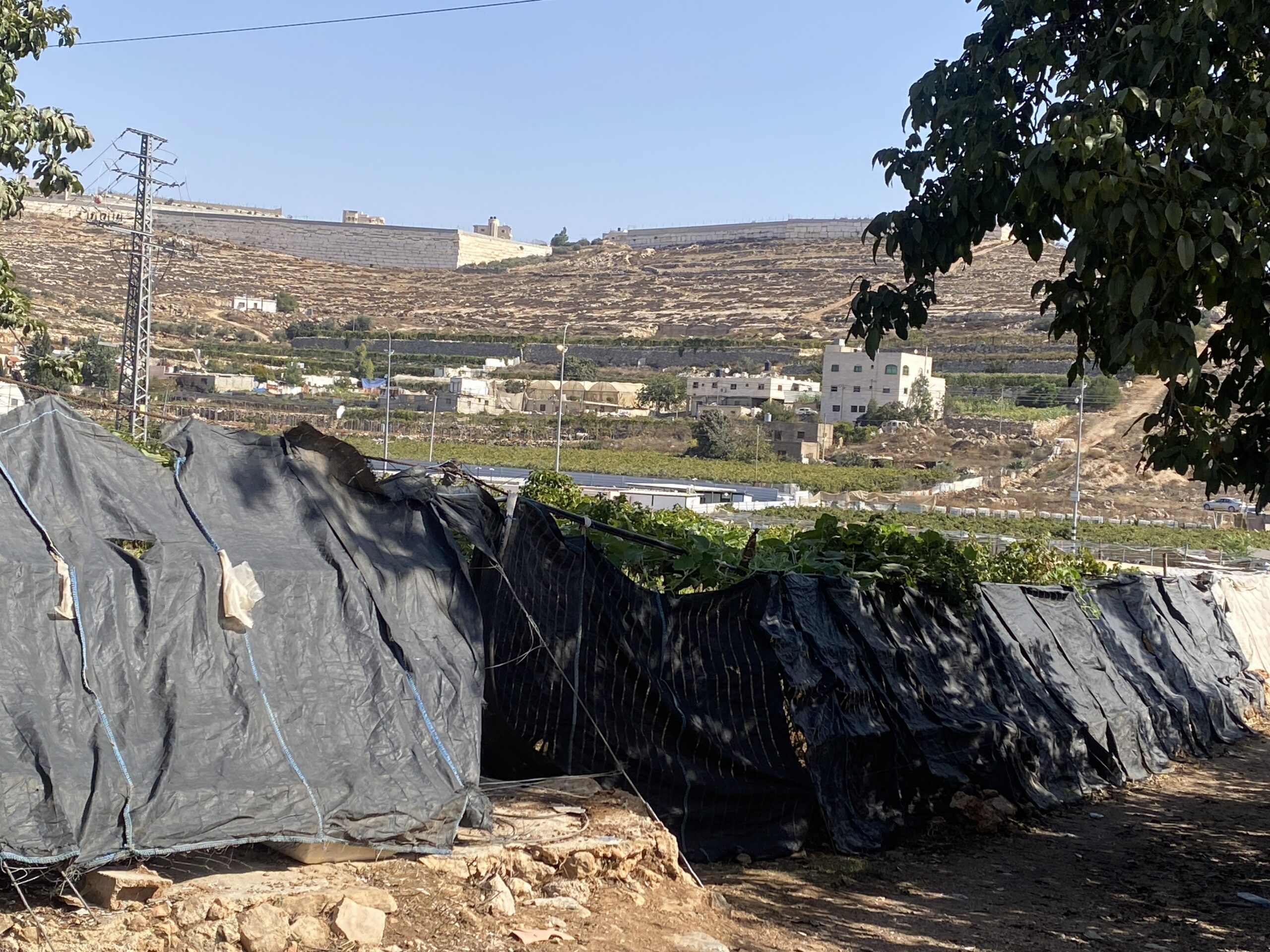 Yael ZoranNov-1-2026Jaber's vines are protected from the dust
-
Zif Junction
See all reports for this place-
Zif Junction located on the crossroads that directs towards Road 356 to Yata. Yata is the district city of the southern Hebron Mountains. Usually, this junction is open to traffic. The nearby pillbox is unmanned. But the army and police are present occasionally, sometimes setting up a checkpoint and sometimes detaining residents from the big city. Often, the Israeli policemen inspect vehicles and distribute driving reports to Palestinian vehicles. s
-
