
South Hebron Hills - Families fear that destructive forces could appear any day without warning
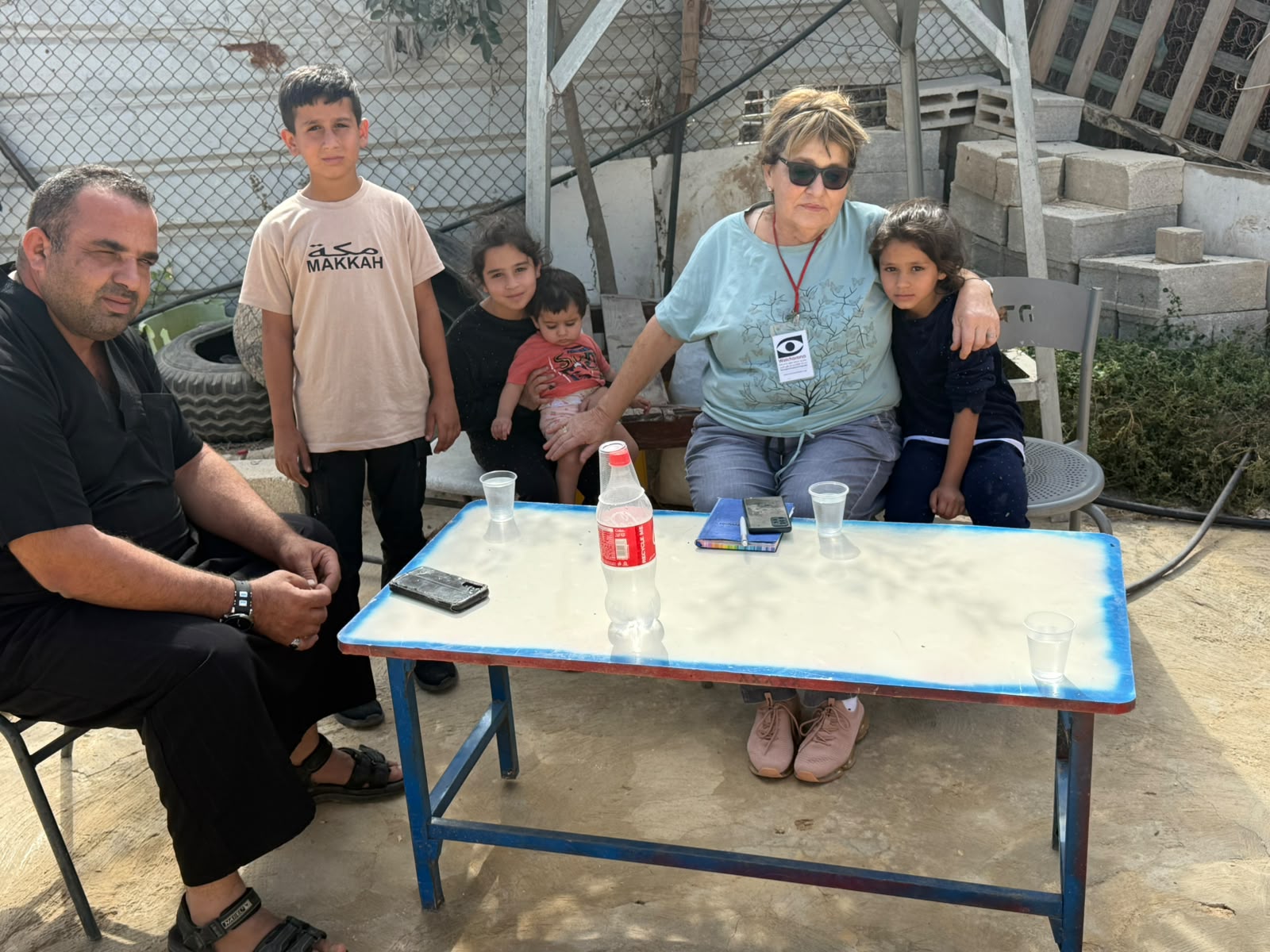
The visit was again devoted to the families of Mustafa Abu Qabita, whose land adjoins the settlement of Beit Yatir, on the Israeli side of the separation barrier, not far from the Metsadot Yehuda checkpoint.
All the families live legally on their own land and have documents attesting to the court’s ruling in their favor. This is because settlers have been trying for many years to take over their land, including members of the Talia family from Lucifer Farm, who live nearby. Two months ago, they again received demolition orders for the tin shacks that serve as their homes, adjoining the caves used to house them and their flocks.
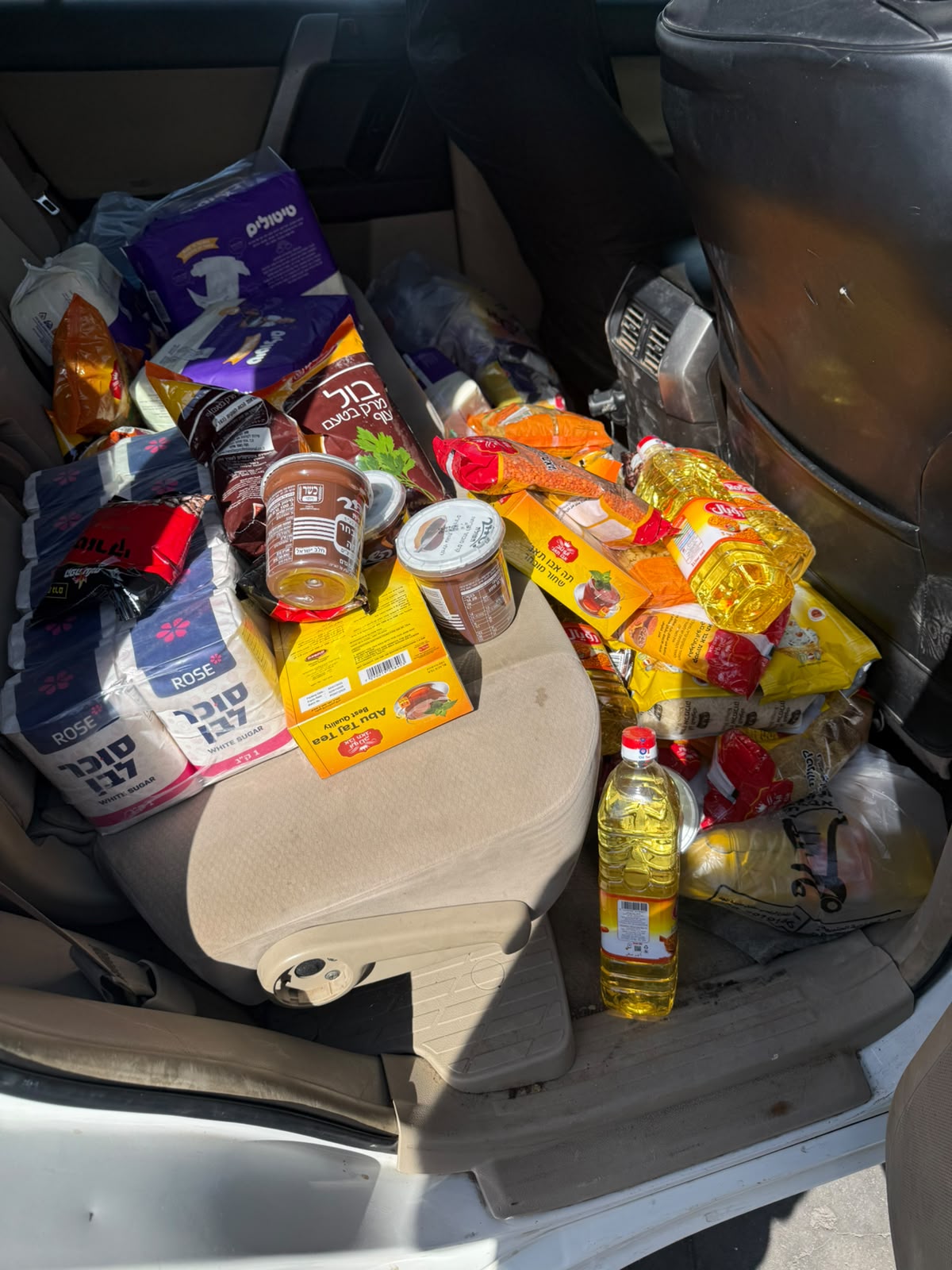
The threat of demolition and expulsion hangs over their heads, and once again they are fighting a legal battle with the assistance of attorney Qamar Mishraki, who is very busy. They fear that the demolition forces could appear any day without prior warning. They also asked for our help in funding a petition to the High Court of Justice, which could improve their situation if filed. I explained that, unfortunately, the little money we have is enough only to buy food. This time, we came after their desperate requests for food supplies and diapers.
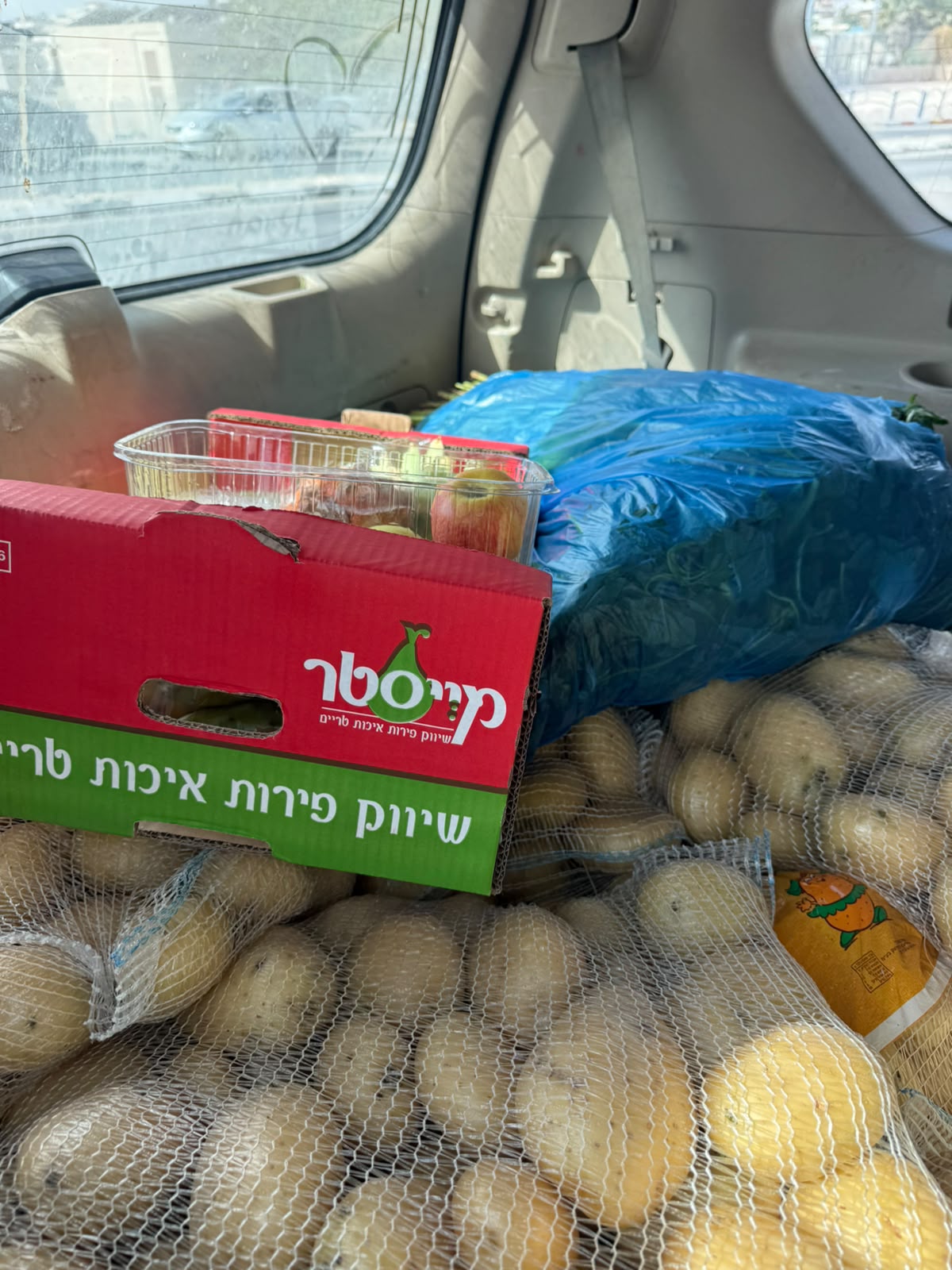
- and his wife A. live in a tin shack that remained after settlers destroyed their residential building several years ago, where they had lived with their four children—M., M., W., and baby A. When we approached the supermarket in Hura to buy the supplies (for five families), the owner reduced the price from NIS 600 when he heard whom the purchase was intended for. Muhammad brought vegetables donated by a shop in Laqiya.
When we arrived, the children were at home. They had not gone to school because of a closure imposed for the October 7 ceremonies, which had already begun that day. M. feared there would be problems taking them to and from the school in Imneizil, on the Palestinian side of the checkpoint.
- says that a month ago, Re’em Shapira, the son of Beit Yatir’s security coordinator, arrived with other people and an Arab contractor. They observed the families and measured the land. The families know there is a plan to expand the settlement, which will lead to an incursion into and encroachment on their land.
The proper procedure generally requires publishing the plan and allowing those affected time to respond, whether they approve or object. Of course, they were not informed.
He shows us how and where they will cross the fence and extend into the area of the sheep pen, the dwelling cave, and the cistern adjoining the residential structure. “They will come at us as they did in Jinba a few days ago, and in other places in our area. Winter is almost here. Where will we go with the children and babies?”
And we can only hope that something will stop this process in this Sodom and Gomorrah.
Location Description
Beit Yatir / Metsadot Yehudah Checkpoint
See all reports for this place-
An terminal barrier towards Israel on the Separation Barrier (far from the Green Line) near the Beit Yatir settlement. Palestinian passage is prohibited, except for members of the Qabita family living on the western side of the separation fence (which are also not allowed movement in Israel).
-
South Hebron Hills
See all reports for this place-
South Hebron Hills
South Hebron Hills is a large area in the West Bank's southern part.
Yatta is a major city in this area: right in the border zone between the fertile region of Hebron and its surroundings and the desert of the Hebron Hills. Yatta has about 64,000 inhabitants.
The surrounding villages are called Masafer Yatta (Yatta's daughter villages). Their inhabitants subsist on livestock and agriculture. Agriculture is possible only in small plots, especially near streams. Most of the area consists of rocky terraces.Since the beginning of the 1980s, many settlements have been established on the agricultural land cultivated by the Palestinians in the South Hebron Hills region: Carmel, Maon, Susia, Masadot Yehuda, Othniel, and more. Since the settlements were established and Palestinians cultivation areas have been reduced; the residents of the South Hebron Hills have been suffering from harassment by the settlers. Attempts to evict and demolish houses have continued, along with withholding water and electricity. The military and police usually refrain from intervening in violent incidents between settlers and Palestinians do not enforce the law when it comes to the investigation of extensive violent Jewish settlers. The harassment in the South Hebron Hills includes attacking and attempting to burn residential tents, harassing dogs, harming herds, and preventing access to pastures.
There are several checkpoints in the South Hebron Hills, on Routes 317 and 60. In most of them, no military presence is apparent, but rather an array of pillboxes monitor the villages. Roadblocks are frequently set up according to the settlers and the army's needs. These are located at the Zif Junction, the Dura-al Fawwar crossing, and the Sheep Junction at the southern entrance to Hebron.
Updated April 2022
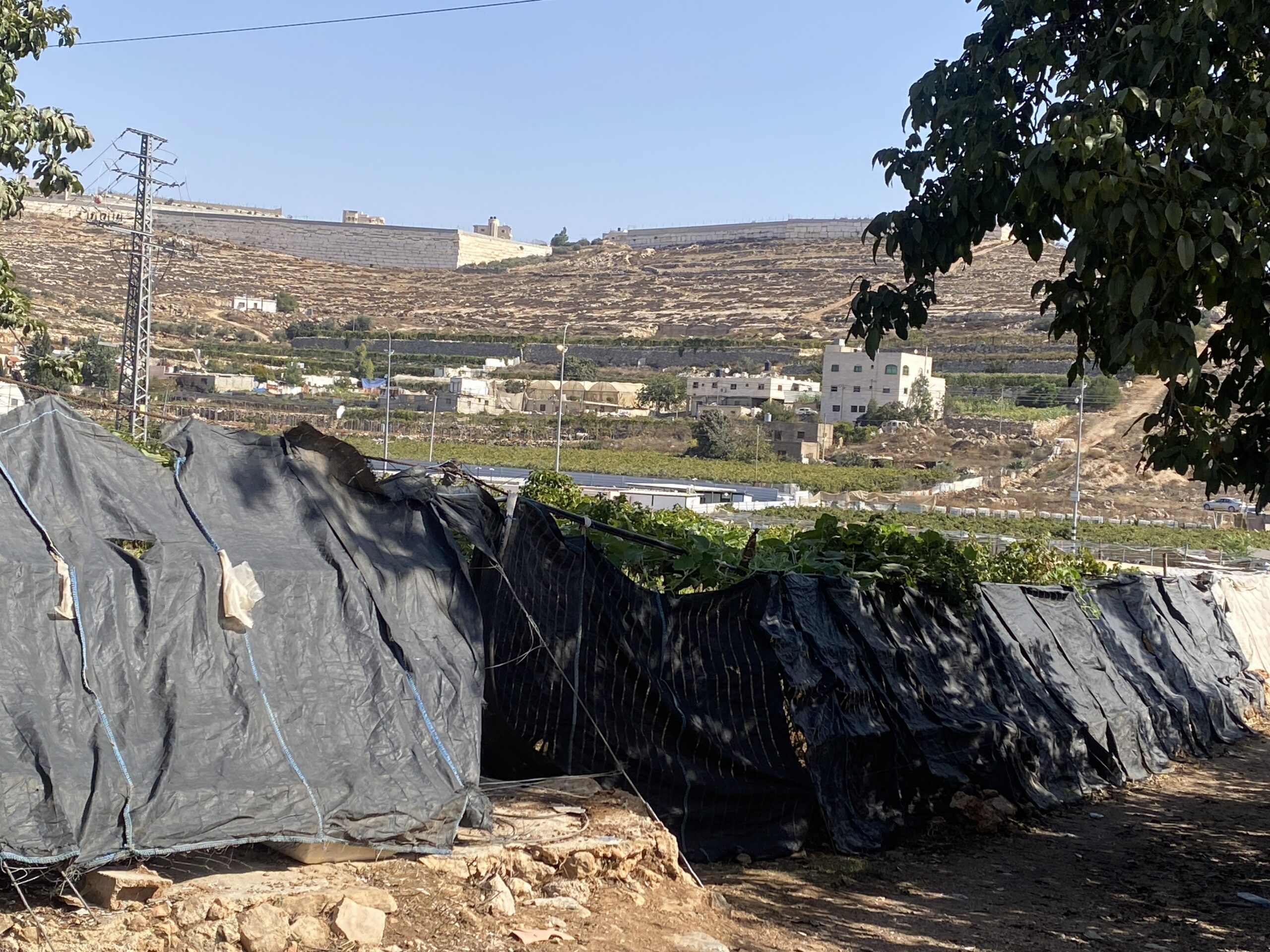 Yael ZoranNov-1-2026Jaber's vines are protected from the dust
-
